In the quiet town of Richmond, Surrey, in the early months of 1879, a widow named Julia Martha Thomas lived a life of predictable routine. She attended church every Sunday morning, walked the same streets, and maintained a respectable household. But behind the closed doors of 2 Vine Cottages, a storm was brewing. When she hired a new maid, Kate Webster, in January 1879, she unknowingly invited death into her home.
Kate Webster was not who she seemed. A woman with a criminal record and a hidden past, she had spent years drifting between jobs, stealing to survive, and concealing her true nature from employers. Within weeks of her arrival, the relationship between mistress and maid soured. Julia Thomas was exacting and critical; Kate Webster was unprepared and resentful. By the end of February, Thomas had dismissed her.
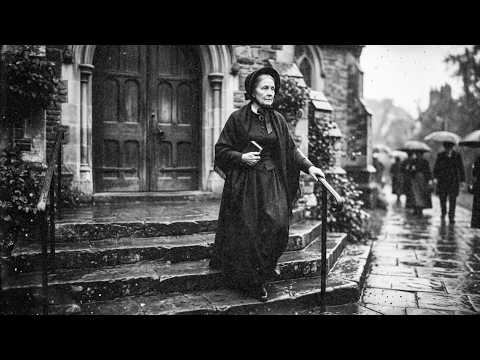
But Webster did not leave. On the evening of March 2, 1879, after Julia Thomas returned from church, a violent quarrel erupted inside the cottage. When it was over, Julia Thomas was dead, strangled in her own home. What followed was a gruesome attempt to erase every trace of the crime. Over the next days, Webster dismembered the body in the cottage, using the large cast-iron copper in the kitchen. Parts of the remains were boiled, and the rendered fat was offered to a neighbor as “pure lard.” The neighbor refused.
Webster packed the dismembered remains into a wooden box and enlisted the help of a man named Henry Porter to carry it to the Thames near Barnes. The box was left there, but the head was not in it. She had disposed of it separately, in a way that would remain a mystery for over a century.
In the days that followed, Kate Webster did not flee. Instead, she moved through the cottage as if it were her own. She wore Julia Thomas’s clothes, adorned herself with her jewelry, and began selling off the furniture and personal belongings. She presented herself to tradesmen and acquaintances as the mistress of the house, impersonating the woman she had killed. It was a performance of astonishing audacity, one that would both seal her fate and cement her place in criminal history.
The discovery of the remains in Barnes on March 5, 1879, and the growing suspicion of neighbors in Richmond who noticed Julia Thomas’s sudden absence and Kate Webster’s strange behavior, set in motion one of the most thorough investigations of the era. As the evidence mounted and the net closed in, Webster fled to Ireland, but she was soon arrested and brought back to face justice.
The trial at the Old Bailey in July 1879 captivated the nation. The prosecution wove a compelling case from circumstantial evidence: the identification of the remains, the testimony of witnesses who saw Webster wearing Thomas’s clothes, the sale of the stolen property, and Henry Porter’s account of moving the box. Webster’s defense—that her acquaintance John Church had committed the murder and forced her to cover it up—was rejected by the jury. She was found guilty and sentenced to death.
On the morning of July 29, 1879, Kate Webster confessed to the prison chaplain that she alone had killed Julia Thomas and that John Church was innocent. She was hanged at Wandsworth Prison later that day. The case seemed closed—except for one missing piece: the head.
For 131 years, the whereabouts of Julia Thomas’s head remained unknown. Then, in October 2010, during construction work in a garden on Mayfield Road in Richmond, a human skull was unearthed. Forensic analysis suggested it belonged to a woman aged 50 to 60, consistent with Julia Thomas. The skull had been buried less than a mile from the scene of the crime, hidden in plain sight for over a century.
The discovery brought the chilling case back into the public eye, a reminder that some mysteries refuse to stay buried. But the story of Julia Martha Thomas and Kate Webster is more than a tale of murder and dismemberment—it is a window into Victorian society, its fears, its prejudices, and its unrelenting pursuit of justice.
The skull’s discovery in 2010 did more than solve a forensic puzzle. It reopened a window onto a world that had long since vanished—the gaslit streets of Victorian Richmond, the cramped cottage kitchens where mistresses and maids negotiated the fragile boundaries of class and trust, and the courtroom at the Old Bailey where a woman’s fate was decided in a matter of days.
Historians of Victorian crime have long been drawn to the case for precisely this reason. It sits at the intersection of so many anxieties that preoccupied the era: the vulnerability of the respectable widow living alone, the perceived dangers of the servant class, the Irish question, and the growing faith in forensic science to solve even the most deliberately obscured crimes. The case became a template for the Victorian murder narrative—sensational, morally clear-cut, and deeply instructive about the social order.
Yet the story also raises uncomfortable questions that the Victorians themselves preferred not to confront. Kate Webster was, by any measure, a woman pushed to the margins. She was poor, Irish, uneducated, and burdened with an illegitimate child. Her criminal record closed doors that might otherwise have offered her a way out. When Julia Thomas dismissed her, Webster lost not just a job but her home, her income, and her tenuous foothold in respectable society. The murder was an act of unspeakable violence, but the circumstances that produced it were not unique to Richmond in 1879.
The press coverage of the trial reveals as much about Victorian society as it does about the crime itself. Newspapers dwelt on Webster’s appearance, her demeanor in the dock, and her alleged coldness. They described her as “masculine” in build and bearing, a framing that served to distance her from the feminine ideal of the era and make her punishment seem more natural. She was portrayed not as a woman driven to desperation, but as a monster who had infiltrated the household of a respectable widow.
John Church, the publican who had helped sell Thomas’s furniture, was tried separately and acquitted. His acquittal, and Webster’s final confession exonerating him, did little to quiet the public’s fascination with his role in the affair. Some contemporary commentators remained convinced that he had known more than he admitted, and the question of his true involvement lingered in the popular imagination long after the courtroom had emptied.
The 2010 discovery of the skull added a final, eerie chapter to the story. The garden where it was found had once belonged to a property on Mayfield Road, a quiet residential street that in 1879 would have been within easy walking distance of Vine Cottages. The skull had been buried in what was then a garden, hidden beneath soil and time, while generations of families lived and died above it.
Forensic anthropologists who examined the skull noted cut marks consistent with dismemberment, and the mineral composition of the bone suggested it had been buried for well over a century. The probability that it belonged to Julia Thomas was high, though not absolute. For the historians and criminologists who had studied the case, the discovery was a rare gift—a physical link to a crime that had previously existed only in documents and yellowed newspaper clippings.
Yet the skull also deepened the mystery. Why had Webster buried the head in a garden near the cottage rather than disposing of it in the Thames with the rest of the remains? Some speculated that she had kept it for a time, perhaps as a grim trophy, and then buried it when the risk of discovery grew too great. Others suggested that she had intended to retrieve it later but fled to Ireland before she could. The truth, like so much of what happened inside 2 Vine Cottages in March 1879, remains a matter of speculation.
The case of Julia Martha Thomas and Kate Webster has endured because it refuses to resolve neatly. It is a story of guilt and innocence, of justice and its limits, of a woman who committed an unspeakable crime and a woman who died because she dismissed her maid. It is also a story about the stories we tell—in courtrooms, in newspapers, and in the quiet work of historians who, more than a century later, are still trying to understand what happened in that small cottage on Park Road.
The skull now rests in the archives of the Museum of London, catalogued and preserved. It is no longer a missing piece but a documented artifact, one that has taken its place alongside the trial transcripts, the newspaper reports, and the prison records that together form the record of this case. The story, in its official dimensions, is complete. But the questions it raises—about class, about gender, about the fragility of respectability and the desperation of poverty—remain as urgent as they were in 1879.
In the end, the case of Julia Martha Thomas and Kate Webster is not merely a Victorian curiosity. It is a mirror held up to a society that judged women by their class, their accents, and their circumstances—and then punished them accordingly. Webster was guilty, undeniably, but the society that condemned her had also shaped her.
The skull in the Museum of London’s archives is a quiet reminder that evidence can outlast memory. It waited beneath a garden while generations walked past, unaware of what lay below. Justice, like that skull, sometimes takes a very long time to surface.
What remains is the record: the transcripts, the headlines, the confession, the hanging. And the question that refuses to fade—how many other stories lie buried beneath our feet, waiting for a spade and a century to bring them into the light?
What do you think the discovery of the skull finally settled—and what does it leave forever unanswered? Share your thoughts below.
Report this article
Select a reason for reporting:






