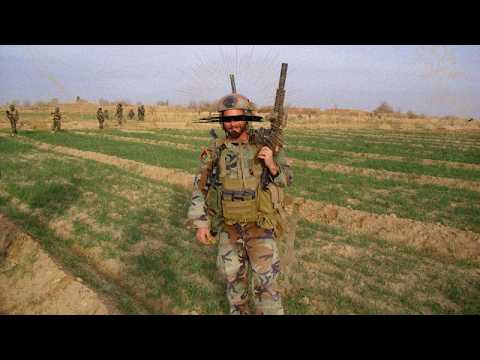
February 2010. A frozen ridgeline above the Arghandab Valley. An American sergeant from the 75th Rangers spots something that will haunt him for the rest of his life. Two figures rising from the rocks like corpses crawling out of their own graves. Beards matted with filth. Eyes completely hollow. The stench of men who had been lying motionless in their own waste for 14 days straight.
These were Australian SAS snipers. And what they were doing in those mountains would paralyze Taliban warlords across Kandahar province — make hardened insurgent commanders believe they were being hunted by supernatural creatures, and eventually trigger one of the most explosive war crimes investigations in modern military history.
The Americans called it the snipe and fade. The Taliban called it witchcraft. The Brereton report called it something far darker.
Tonight, we reveal the full story. How a handful of bearded Australians became the most feared hunters in Afghanistan. Why Navy SEALs felt naked riding in their vehicles. What happened inside those compounds that left no survivors and no witnesses. And the price these men paid for becoming something that terrified even their own allies.
39 alleged unlawful engagements. 19 soldiers facing prosecution. And one question nobody wants to answer: Did they lose their humanity to save ours?
The American sergeant spotted the Australian sniper team on that day. Two bearded figures materialized from a rocky outcrop like phantoms rising from a forgotten grave. No helicopter insertion. No convoy dust trail. Just earth-colored rags and the stench of men who had been buried alive for 14 days.
14 days on that godforsaken ridgeline above the Arghandab Valley. 14 days eating cold rations and urinating into plastic bottles to avoid any movement from their hide.
The sergeant from the 75th Ranger Regiment would later write in his personal journal that these men resembled Taliban fighters more than coalition soldiers. Long matted beards. Non-standard chest rigs designed for AK magazines. And eyes that held absolutely nothing. No fear. No excitement. No recognizable human emotion. Just the cold mathematical gaze of apex predators who had stopped counting their confirmed engagements years ago.
This was merely the opening act of a drama that would reshape American understanding of special operations warfare.
The Australian Special Air Service Regiment had arrived in Afghanistan with the very first wave of coalition forces back in 2001. While American media fixated on Navy SEALs conducting high-profile raids in Tora Bora, the Australians slipped into the mountains like water seeping through cracked stone. They brought a tactical philosophy forged in the jungles of Vietnam and the deserts of East Timor. A philosophy that prioritized patience over firepower. Invisibility over intimidation. And a willingness to suffer physical deprivation that made hardened American operators question their own training standards.
Kandahar province became their hunting ground. A landscape of rocky valleys and poppy fields where Taliban commanders had ruled unchallenged for years. Where American patrols in their hulking mine-resistant ambush-protected vehicles could be spotted from 10 kilometers away. By any shepherd with functioning eyeballs. Where improvised explosive devices lined every road like landmines in a forgotten war.
The Australians examined this terrain and recognized opportunity. A chessboard where the enemy had grown comfortable. Warlords sipping tea in their compounds, believing themselves untouchable. Coalition presence that had become predictable. Daytime patrols. Nighttime helicopter assaults. The Taliban had adapted to this rhythm perfectly.
Australian reconnaissance teams had already mapped every inch of their safe zones. And the bearded ghosts on the ridgelines watched everything.
The snipe and fade technique traced its origins to British special forces during the Malayan Emergency and the Borneo confrontation decades earlier. The Australians elevated it to an art form in the valleys around Kandahar. The concept was devastatingly simple. Insert a two-man sniper team days or weeks before any planned operation. Position them on dominant terrain overlooking known enemy locations. And wait.
Wait until Taliban commanders emerge to conduct their business. Wait until mid-level leaders gathered for strategy sessions. Wait until bomb makers moved their materials between caches. Then deliver a single .50 caliber round from beyond visual identification range.
The psychological effect proved catastrophic beyond any coalition planners’ expectations. Taliban fighters in Kandahar province began reporting to their commanders that invisible demons hunted them. Men struck down by Allah himself with no warning and no visible shooter. Standard counter-sniper tactics proved useless because the Australian teams had already relocated before bodies hit the ground.
The fade portion of the technique proved just as critical as the snipe. American military doctrine typically called for immediate extraction after a precision engagement. Helicopter pickup within minutes. The Australians rejected this approach entirely. They melted back into the terrain. Crawling sometimes hundreds of meters through rocky defiles. Changing positions in the dead of night. Remaining in the area of operations for days after the initial shot. Ready to engage secondary targets. Ready to observe enemy reaction patterns. Ready to feed intelligence back to headquarters for the next phase of coalition operations.
One American intelligence officer stationed at Kandahar Airfield during 2011 would describe the Australian sniper teams as the single most valuable intelligence asset in his entire sector. The value came from behavioral intelligence that satellite imagery and signals intelligence simply could not provide. The teams documented exactly how a Taliban commander reacted to losing his deputy. Which subordinate stepped up to fill leadership vacuums. Which compounds became newly fortified after successful strikes. Information gathered through weeks of patient observation from positions that enemy forces walked past without ever suspecting death watched from 3 meters away.
The physical toll defied comprehension. Sniper teams operating in the mountain winter faced temperatures dropping to minus 15°C after dark. Building fires was impossible. Standing to restore circulation was forbidden. They lay motionless for hours while fingers and toes screamed for warmth. Summer brought different torments. Temperatures exceeding 45°C transformed hide positions into ovens. Dehydration became a constant companion. The smell of their own bodies grew so intense they could taste it.
American special operators who encountered Australian sniper teams after extended deployments remarked on the thousand-yard stare that had become their default expression. Eyes that looked through you rather than at you. Men who had crossed some psychological threshold with no return path.
The Arghandab River Valley presented some of the most challenging terrain in southern Afghanistan. Dense orchards of pomegranate and grape vines created natural concealment for Taliban fighters. Ancient irrigation channels called karez ran underground for kilometers, allowing insurgent forces to move unseen between fortified compounds. American conventional units had dubbed it the green zone, though the designation carried bitter irony. This was a killing ground where improvised explosive devices claimed more coalition lives than enemy bullets. Patrols walked past Taliban positions hidden in vegetation without ever knowing their fate had been sealed by a simple radio command.
The Australian SASR received orders to penetrate this terrain in late 2009. Mission parameters diverged significantly from American direct action operations. Where US special operators conducted night raids lasting 4 to 6 hours, the Australians received authorization for extended-duration missions spanning weeks. Where American planners prioritized capturing high-value targets for intelligence exploitation, Australian rules of engagement permitted more permanent solutions when capture proved impractical. In the dense orchards of the Arghandab, capture almost always proved impractical.
A reconnaissance patrol from the 2nd Commando Regiment discovered evidence of Australian sniper activity during a routine clearance operation near the village of Kakrez. Their point man noticed something unusual about a compound identified as a Taliban command post. The metal gate that usually stood open during daylight was locked tight. Armed guards who typically lounged in the courtyard had vanished. A dark stain on the exterior wall suggested something violent had occurred recently.
The commandos approached cautiously. Bullet holes punched through the compound wall at a downward angle from elevated terrain to the northeast. Spent brass casings from a Barrett M82A1 rifle. Complete silence from the local population who refused eye contact with the Australian soldiers. Someone had sent a message.
Similar scenes repeated across the northern Arghandab over the following weeks. Compounds housing Taliban leadership suddenly abandoned. Mid-level commanders who had survived years of coalition operations simply disappearing. Local informants reported the insurgency gripped by paranoia. Meetings once conducted openly now occurred in underground chambers. Fighters refused to gather in groups larger than three because larger gatherings attracted the invisible shooters. The psychological operation had succeeded beyond anything coalition planners anticipated.
An American civil affairs officer attached to a provincial reconstruction team in Kandahar province noticed a disturbing pattern emerging in late 2010. Civilians in areas where Australian special operations forces had been active were becoming increasingly hostile to coalition presence. Active hostility beyond the usual suspicion and fear. Women wailing at patrol vehicles. Old men spitting as soldiers passed. Children throwing rocks instead of begging for candy. The officer began investigating.
The Brereton report released in 2020 would eventually document 39 instances where Australian special forces personnel allegedly unlawfully ended the lives of Afghan prisoners and civilians between 2005 and 2016. The report described a warrior culture that had metastasized into something darker. Junior soldiers reportedly pressured to achieve their first engagement through what veterans termed blooding. Prisoners allegedly eliminated after tactical questioning rather than processed through detention systems. Cover stories fabricated to explain weapons near bodies that may have been unarmed when they fell.
The bearded ghosts of Kandahar province had become something far more complicated than simple heroes. Tactical effectiveness remained undeniable throughout this period. This tension between operational success and moral compromise defined the entire Australian special operations experience in Afghanistan.
American special forces liaison officers who worked closely with SASR elements during the surge years uniformly reported the same observation. The Australians operated differently. Where American units arrived at objectives in armored vehicles bristling with electronic countermeasures, the Australians often walked in after days of covert movement. Where American operators communicated constantly through encrypted radio systems, the Australians maintained complete silence for hours during clearance operations.
One particular operation in the Shah Wali Kot district illustrated the divergence in approaches. American intelligence had identified a compound serving as a Taliban logistics hub for improvised explosive device materials. The standard American plan called for helicopter assault with multiple quick reaction forces standing by. Airborne surveillance platforms orbiting overhead. Interpreters broadcasting surrender demands in Pashto. The raid conducted by the book, documented by helmet cameras, reviewed by military lawyers within 72 hours.
The Australian plan looked entirely different. A four-man reconnaissance element infiltrated the target area six days before the assault phase. Movement occurred exclusively at night, covering less than 2 km/h through rocky terrain where a single dislodged stone could alert enemy sentries. They established a hide position overlooking the compound from 800 meters and they watched. Hour after hour, day after day, documenting movement patterns, identifying leadership figures, mapping defensive positions.
By the time the assault element arrived, the Australians knew exactly how many fighters occupied the compound, when guard rotations changed, which rooms held bomb-making materials, which individuals had blood on their hands from previous attacks.
The assault lasted 17 minutes. No helicopter insertion. No warning broadcasts. No door charges or flashbang grenades. The sniper team initiated with three rapid shots, eliminating exterior guards before they could raise alarm. The assault element flowed through a breach point identified during surveillance. Room clearance occurred with such speed and coordination that American observers described watching a choreographed performance rather than a combat operation.
Seven Taliban fighters ceased posing a threat to coalition forces. Bomb-making materials secured. Zero Australian casualties sustained.
The American liaison officer who documented this operation noted something that bothered him for months afterward. The Australians had taken zero prisoners. Every engagement resulted in a fatal outcome. The official report attributed this to aggressive resistance from Taliban fighters. Close-quarters nature of structure clearance. Inherent danger of attempting to restrain combatants in buildings potentially rigged with explosives. All perfectly reasonable explanations. All consistent with legitimate rules of engagement.
The pattern persisted across dozens of similar operations. Intelligence reports from 2011 indicated Taliban commanders in southern Afghanistan had begun specifically warning their fighters to avoid any contact with the bearded men driving open-topped vehicles. Retreat immediately upon identifying Australian uniforms. Abandon defensive positions on elevated terrain because the invisible snipers will find you.
Taliban fighters began defecting to government forces in higher numbers. Commanders who had resisted peace negotiations for years suddenly expressed interest in reconciliation programs. The insurgent network in Kandahar province experienced recruitment difficulties as potential fighters heard stories about relentless hunters who could not be seen until far too late.
The vehicle operations further distinguished Australian methodology from American doctrine. While American special operations forces transitioned toward mine-resistant ambush-protected vehicles after 2007, the Australians retained their long-range patrol vehicles. Modified Land Rovers bearing no resemblance to the hulking armored trucks favored by US units. Open tops exposing operators to enemy fire. No electronic jamming equipment to defeat radio-controlled explosive devices. Reliance entirely on speed, maneuverability, and situational awareness that came from hearing and seeing the environment without armored walls blocking sensory input.
American soldiers riding in Australian vehicles for the first time invariably reported feeling exposed. One sergeant from the 3rd Special Forces Group described the experience as riding a motorcycle through a minefield while angry men shot from all directions. Nowhere to hide. No armor to crouch behind. Complete trust that the Australian driver knew every rock and pothole. That the gunner scanning the horizon would spot the triggerman before he completed the circuit. That speed and unpredictability would defeat ambushes claiming so many lives along predictable patrol routes.
The Australians called this philosophy controlled recklessness. They accepted that vehicles offered no protection against direct hits from improvised explosive devices. Their open configuration provided advantages no armored vehicle could match. Hearing incoming fire and locating shooters faster than crews buttoned inside steel boxes. Dismounting in seconds rather than the agonizing minutes required to exit through armored doors. Driving on roads and terrain impossible for heavier vehicles. Moving at speeds making precise targeting by enemy triggermen extremely difficult.
Statistics supported their approach. Despite conducting thousands of vehicle patrols through heavily mined terrain, Australian special operations forces sustained remarkably few casualties from improvised explosive devices compared to American units in the same areas. Critics attributed this to luck or smaller sample sizes. Supporters argued Australian methodology represented a fundamentally superior understanding of counterinsurgency warfare.
When Australian patrols identified potential improvised explosive device triggermen, they engaged immediately. No stopping to establish cordons while calling for explosive ordnance disposal support. This aggression undoubtedly saved Australian lives by eliminating threats before detonation. It also raised questions about proportionality and certainty in targeting decisions. Questions fully examined only after combat rotations ended and investigators began reviewing helmet camera footage with hindsight and absence of mortal fear.
Mountain operations revealed yet another dimension of Australian tactical philosophy. Standard American doctrine for extended reconnaissance missions called for regular helicopter resupply. Hot meals, fresh water, replacement batteries. The logistical tail keeping American forces comfortable also kept them visible. Every helicopter landing zone identified by enemy observers. Every resupply pattern predicted after a few repetitions.
Sniper teams operating above Kandahar valleys sometimes went 14 days without external resupply. They carried everything on their backs. Water in bladders strapped against bodies to prevent freezing. Rations consumed cold without producing smoke or smell. Camouflage materials gathered from the local environment. Waste disposal methods leaving no trace. Urinating into bottles carried out with them. Defecating into bags buried with religious care. Sleeping in shifts of 90 minutes maximum. Moving only during reduced visibility conditions.
The smell was apparently indescribable. American operators encountering Australian teams after extended mountain deployments reported the Australians reeked of decomposition. Uniforms stiff with accumulated dirt and biological material. Beards matted with substances best left unidentified. Skin taking on a grayish pallor from lack of sunlight exposure. They resembled corpses more than living soldiers.
Intelligence gleaned from a single two-week observation post mission in the Kora Valley reportedly led to 17 subsequent successful operations targeting Taliban leadership. The sniper team documented movement patterns, identified previously unknown command structures, and provided targeting data aerial surveillance platforms could never gather. Which compounds received visitors at strange hours. Which vehicles carried armed passengers. Which individuals commanded respect from others. Which figures made decisions sending young men to plant bombs along coalition patrol routes.
This intelligence became the foundation for what American analysts termed the decapitation strategy. Coalition forces focused increasingly on eliminating the leadership cadre directing insurgent operations. The theory held that removing key decision makers would disrupt enemy command and control sufficiently to reduce operational effectiveness. Australian snipe and fade methodology proved particularly suited for implementing this strategy. Long-range precision capability allowed engaging targets at distances where positive identification remained possible, while immediate retaliation remained virtually impossible.
The Taliban adapted by moving leadership underground. Commanders previously traveling openly now moved through tunnel networks. Meetings shifted from predictable locations to randomized sites announced hours in advance. Communications became increasingly decentralized as mid-level leaders assumed greater autonomy. The insurgency had been forced to change operating patterns in ways reducing effectiveness against coalition forces.
Australian contribution to this strategic shift received remarkably little recognition in American media coverage. Navy SEAL operations captured headlines and inspired feature films. Delta Force missions became subjects of best-selling books. Australian special operations forces remained largely invisible to public consciousness while compiling one of the most impressive combat records of the entire Afghan campaign.
This obscurity suited the Australian military establishment perfectly. No interest in Hollywood glamorization. No desire for political complications accompanying high-profile special operations narratives.
Taliban commanders captured during American operations sometimes asked interrogators about the identity of the bearded men appearing from nowhere. They described encounters sounding more like ghost stories than tactical reports. Sentries vanishing from posts. Compounds falling silent without evidence of assault. Leaders walking into meetings and never emerging while guards stood oblivious outside. The interrogators recognized the signature. The Australians had become jinn in Taliban perception. Supernatural creatures that conventional weapons could not fight.
Between 2001 and 2013, Australian special operations forces conducted more combat deployments per capita than any other coalition nation. They sustained higher casualty rates per deployment than equivalent American units. They achieved engagement ratios suggesting tactical proficiency rivaling any Tier 1 unit worldwide. The price became apparent years after the shooting stopped. Returning veterans exhibited rates of post-traumatic stress alarming Australian military medical professionals. Suicide rates among SASR veterans significantly exceeded both general population and broader military averages. Marriages collapsed. Careers imploded. The most effective warriors in one of the most difficult conflicts of the 21st century found themselves unable to function in the civilian world they had fought to protect.
The Brereton report added another dimension to this tragedy. The investigation identified a culture of secrecy metastasizing into something corrosive. Younger soldiers reportedly pressured to participate in activities violating the laws of armed conflict. Witnesses questioning illegal conduct faced social ostracism and career consequences. Senior officers allegedly turned blind eyes to disturbing patterns because operational results remained impressive. 19 serving and former soldiers faced potential prosecution as of 2023.
American special operations forces absorbed significant lessons from their Australian counterparts during the Afghan campaign. Emphasis on extended-duration reconnaissance became more prevalent. Vehicle configurations shifted toward lighter platforms prioritizing mobility over protection. Radio discipline during close-quarters operations tightened significantly. The myth of American technological supremacy yielded to appreciation for human factors often determining combat outcomes. The Americans also witnessed warning signs receiving insufficient attention at the time. The thousand-yard stare. The contempt for rules. Patterns of engagement leaving no witnesses. A culture of silence preventing problems from reaching senior leadership until they became systemic. American special operations forces would face their own accountability moments in the following years.
The valleys around Kandahar remain contested ground today. Taliban forces temporarily suppressed by Australian operations eventually reconstituted after coalition withdrawal. Many commanders eliminated by precision sniper fire were replaced by successors equally committed to the insurgent cause. Strategic gains achieved through blood and suffering proved transitory. Compounds Australian assault teams cleared at such cost fell back under insurgent control within years.
American soldiers who witnessed Australian operations carried those experiences back to their own units. They spoke in hushed tones about men capable of impossible feats. Who endured conditions that should have been unsurvivable. Who moved through hostile terrain like predators the enemy could not see until far too late. They also spoke with growing unease about patterns observed but perhaps not fully understood. Prisoners who never reached detention facilities. Engagements that seemed too clean. Violence exceeding what hardened American operators considered acceptable.
“He just vanished in the valley.” That phrase became shorthand among American special operators who had worked alongside Australian forces. It described how the Aussies materialized and dematerialized at will. How targets ceased to exist after Australian operations without the usual aftermath of detention, interrogation, and judicial process. How entire enemy networks collapsed as leadership vanished one by one into the void.
The full story of Australian Special Air Service Regiment operations in Afghanistan remains unfinished. The Brereton report revealed portions. Criminal prosecutions may reveal more. Veterans carrying knowledge of events will eventually decide whether to speak or remain silent. Institutions that sent these men to war will continue wrestling with questions about what they created and what they failed to control.
The bearded ghosts of Kandahar province changed everything they touched. Taliban calculations about safe havens and leadership survival. American assumptions about special operations warfare. Coalition tactics and training and vehicle configurations and rules of engagement. And themselves in ways that can never be undone. The invisible snipe and fade paralyzed Kandahar warlords while revealing both extraordinary capabilities and profound dangers inherent in elite units trained to operate beyond conventional boundaries.
The sergeant from the 75th Rangers who first encountered that Australian sniper team eventually returned home to Texas. He left the army after three combat deployments, worked construction, struggled with the usual demons pursuing veterans of those endless wars. He spoke about them to his children years later. Men who had seen and done things no one should ever have to see or do. Who became something terrifying in service to missions that may or may not have been worth the cost. Who vanished back into those valleys after that brief encounter.
He just vanished in the valley. And in some sense, none of them ever fully came back.
Years later, a retired Australian major sat in a Sydney pub and told a journalist the thing that still woke him at 3 a.m. “We were very, very good at killing. The problem was nobody ever taught us how to stop.”
The Brereton report landed like a grenade in a country that had preferred its wars quiet and its heroes unexamined. Medals were stripped. A Victoria Cross recommendation vanished into review. An entire squadron was disbanded and its colors cased — a punishment with no modern precedent.
Meanwhile the men themselves scattered. Some to Bali surf shops. Some to hospital wards. Some to graves dug quietly by their own hands.
“Did they lose their humanity to save ours?” The question was never answered, because the people who could answer it stopped talking long before the cameras arrived.
And the valleys around Kandahar kept their silence too — the compounds rebuilt, the poppies blooming again, the ridgelines empty. What do you think the truth was worth — a war won, or a soul traded? Tell us in the comments.
Report this article
Select a reason for reporting:






