In the dense, rain-soaked jungles of Papua, a 96-kilometer path winds through the Owen Stanley Range, rising to nearly 7,000 feet. It was here, in 1942, that young Australian soldiers—many barely trained—fought desperately to stop the Japanese advance toward Port Moresby. The campaign was brutal, the conditions nightmarish, and the stakes impossibly high: the defense of Australia itself. Yet decades later, the fiercest battle isn’t over territory—it’s over a single word. Is it the Kokoda Track or the Kokoda Trail? For Australians, this isn’t just semantics; it’s a question that cuts to the heart of national identity, memory, and the legacy of those who fought and died on that muddy, blood-soaked path.
The debate has raged for over 80 years, splitting veterans, historians, and ordinary citizens. Some insist it’s the Track, echoing the Diggers who trudged it in 1942. Others swear by Trail, the name enshrined in official battle honors and Papua New Guinea’s government records. But why does it matter so much? Because the words we use to remember the past shape how we honor it—and the Kokoda campaign is sacred ground in Australia’s story.
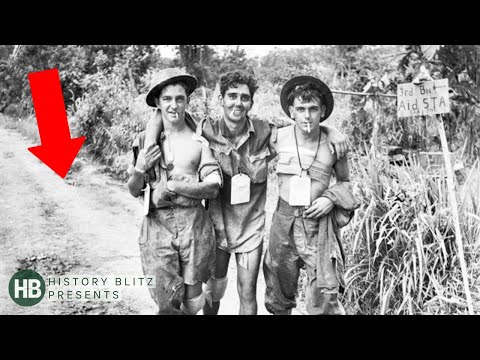
The campaign itself was a turning point in the Pacific War. After the fall of Singapore and the bombing of Darwin, Australia faced a real threat of invasion. Japan’s plan to capture Port Moresby was thwarted first at the Battle of the Coral Sea, forcing them into a grueling overland assault through the Owen Stanley Range. The 39th and 53rd Infantry Battalions, young and inexperienced, were thrust into the jungle to defend the path. They were soon reinforced by veterans of the Middle East, but the terrain was a nightmare for both sides: steep ridges, raging rivers, and dense jungle that swallowed men whole. Tropical diseases like malaria weakened the troops, and supplies had to be carried on foot. Yet the Australians held on, their fierce resistance culminating in the Japanese retreat by November 1942.
Amid the chaos of war, the path had no official name. Before the conflict, it was simply a ‘road’ in colonial records. But as Australians arrived, the term ‘track’ took hold—a word familiar to them from the bush and Outback. American military officers and war correspondents, however, used ‘trail’ in their reports, influenced by American English. This linguistic divide would outlast the guns.
After the war, the Australian Battles Nomenclature Committee was tasked with officially naming the campaign. In 1947, a provisional list suggested ‘Battle of the Owen Stanley Range,’ but by June 1948, it was revised to ‘Kokoda Trail.’ A decade later, the committee’s final report cemented ‘Kokoda Trail’ as the Commonwealth battle honor. Yet the veterans—the men who had walked that path—continued to call it the Track. For them, ‘trail’ felt foreign, detached from the reality they had endured. In their diaries and letters home, they wrote of the Track, and that word became etched into the collective memory of a grateful nation.
Today, the dual usage persists. Official documents and education systems often use ‘Trail,’ while public monuments, oral histories, and the majority of Australians instinctively say ‘Track.’ Papua New Guinea officially gazetted the route as the Kokoda Trail in 1972, yet the Kokoda Track Authority acknowledges both. The debate isn’t just about language—it’s about whose story gets told. Does the official name honor the campaign, or does the veterans’ term carry more weight?
As the sun sets over the Owen Stanley Range, the path remains, silent and enduring. The men who fought there are fading, but the question lingers: Track or Trail? The answer, perhaps, lies not in choosing one, but in understanding why both matter. For in the end, the name is a testament to the courage and sacrifice that defined a nation—and the enduring power of words to shape how we remember.
But the story of how ‘Trail’ became the official name is more tangled than most Australians realize. When the Nomenclature Committee convened in the late 1940s, its members were not veterans of the Kokoda campaign. They were bureaucrats and military historians working from documents—many of which had been written or influenced by American officers. The committee’s final report in 1958 listed ‘Kokoda Trail’ as the official battle honor, and once that word entered the official record, it proved almost impossible to dislodge. From there it spread into school textbooks, government memorials, and eventually the map of Papua New Guinea itself.
Yet the veterans never accepted it quietly. In the 1960s and 70s, as Kokoda began to re-emerge in public consciousness, surviving Diggers gave interviews and wrote memoirs. Again and again, they corrected journalists. ‘It was the Track,’ one veteran of the 39th Battalion recalled. ‘We never called it a trail. A trail is something you follow—like an animal path. We cut our way through that country. It was a track, and it was ours.’ Historians who have studied the letters and diaries confirm the pattern: ‘track’ appears overwhelmingly in soldiers’ own words, while ‘trail’ clusters in reports filed by American war correspondents and in later official summaries.
The linguistic divide even shaped how the campaign was remembered abroad. In American newspapers of 1942, readers followed the ‘Kokoda Trail’ as Japanese forces pushed south. In Australian papers, the same fighting was reported from the ‘Kokoda Track.’ Two allies, two words, one brutal path. Some historians argue the divergence was never really about geography at all—it was about ownership of the story.
That question of ownership resurfaced dramatically in 2005, when the Australian government announced plans to nominate the Kokoda Track for World Heritage listing. The nomination documents used ‘Track’ throughout, prompting a sharp response from Papua New Guinea officials, who pointed out that their own gazetted name was ‘Trail.’ The dispute made international headlines—a diplomatic wrinkle over a single syllable. The listing never proceeded, but the episode revealed how much weight the word still carried on both sides of the Torres Strait.
Meanwhile, the men who had actually been there were disappearing. By the early 2000s, only a handful of Kokoda veterans remained alive, and their funerals became quiet battlegrounds of their own. Families and RSL branches often insisted on ‘Track’ in the eulogies, while official military tributes used ‘Trail.’ At one memorial service, a veteran’s daughter reportedly asked the presiding officer to change the word in his speech. He refused. She walked out.
For younger Australians, the distinction can feel academic—many grew up hearing both and never questioned it. But trekking companies, tour guides, and the villages along the route have learned to navigate the divide carefully. Some operators advertise ‘Kokoda Track treks’ to appeal to Australian nostalgia, while their permits and signage read ‘Kokoda Trail’ to satisfy PNG authorities. One veteran guide described it as ‘walking with a foot in each country.’
And still the question echoes, from the halls of the Australian War Memorial to the muddy steps of Isurava. Each year, on Anzac Day, pilgrims climb the same ridges the Diggers defended, and the argument follows them up the mountain.
The deeper one digs into the archives, the stranger the story becomes. In the Australian War Memorial’s own collection, the word ‘trail’ appears in official unit war diaries as early as August 1942—but almost always in the hand of a staff officer far from the front, writing up reports days after the fighting. The men actually on the ridges, the ones who knew the mud by its smell, wrote ‘track.’ Every time. It was as if the path had two names because it had two lives: one lived by soldiers, the other manufactured by clerks.
Consider the Papuan carriers—the ‘fuzzy wuzzy angels’ whose labor kept the Australian advance alive. Their languages had no word for either ‘track’ or ‘trail.’ To them it was simply the way through the mountains, a route their people had walked for generations before any Australian or Japanese soldier set foot on it. The debate over Track versus Trail, some historians note with discomfort, is an argument conducted entirely by outsiders about a path that was never theirs to name. That awkward truth rarely makes it into the commemorative speeches.
By the 1980s, the word ‘Trail’ had acquired a commercial sheen. Tourism to Papua New Guinea grew, and trekking companies—many Australian-owned—found that ‘Trail’ sounded more adventurous to international customers. ‘Track’ sounded like something you’d find behind a farm shed. So the brochures said Trail, even as the guides said Track, and the trekkers went home confused, carrying both words in their mouths like a souvenir.
Then came the 2010s and a new front in the war: the internet. Online forums lit up with Australians arguing fiercely over a distinction most of them had never noticed as children. Wikipedia edit wars erupted over the article’s title. One editor was banned after changing ‘Track’ to ‘Trail’ more than forty times in a single week. The page now carries a carefully worded note acknowledging both names—a diplomatic truce in text.
Yet something quieter was happening at the same time. Schools along the route in Papua New Guinea began teaching students both terms, explaining the Australian and the official usage side by side. A teacher in Kokoda village told a visiting journalist that her students found the whole argument amusing. ‘To us,’ she said, ‘it is one path. The name changes with the mouth that says it.’ It was, perhaps, the most sensible thing anyone had said about the matter in eighty years.
But the veterans’ voices, already fading, grew fainter still. The last surviving member of the 39th Battalion died in 2019, and with him went the living memory of what the men had called that terrible, beautiful path. His final interview, recorded only months before his death, ended with a gentle correction to the young historian across the table.
‘You keep saying trail,’ the old man said, smiling. ‘I’ll say it one more time for you. Track. It was always the Track.’
The historian nodded, wrote it down—and then, in the published paper, used the official name anyway. Old habits, like old wars, die hard.
So where does that leave us? The official records say Trail. The veterans said Track. Papua New Guinea’s government says Trail. The Australian public, almost instinctively, says Track. Both words are correct, and both words are incomplete—each carries a different truth about the same 96 kilometers of mud and memory.
Perhaps the real answer is that the debate itself is the legacy. Every time an Australian argues about it, they are remembering the campaign. Every time a trekker asks a guide which word to use, they are honoring the men who walked it. The path was never just a path—it was a nation’s crucible, and the words we fight over are simply the sound of us refusing to forget.
So walk it if you can. Say Track if your heart tells you to. Say Trail if the map tells you to. But say something—because silence is the only name that would truly dishonor Kokoda.
Now it’s your turn: when you stand at Isurava or look up at the Owen Stanleys, which word comes out of your mouth first—and why?
Report this article
Select a reason for reporting:






