Carol Hennessey had been fishing Lake Tohopekaliga, near Kissimmee, Florida, for 19 years when she noticed a shift on a June morning. She launched her bass boat before sunrise and worked the shallow vegetation mats along the south shoreline as usual. By 8 a.m., she had a productive morning, something she had not experienced on that lake in over a decade. Largemouth bass were in her live well, and native bluegill were in the shallows. The water itself had a clarity she could not remember seeing recently.
At the boat ramp, she told a man nearby that the south end was fishing differently than it had in years. When he asked what she meant, she paused before answering. She said something had gone out of the water that had always been in the way. She was referring to tilapia, though she did not yet know what had reduced their numbers.
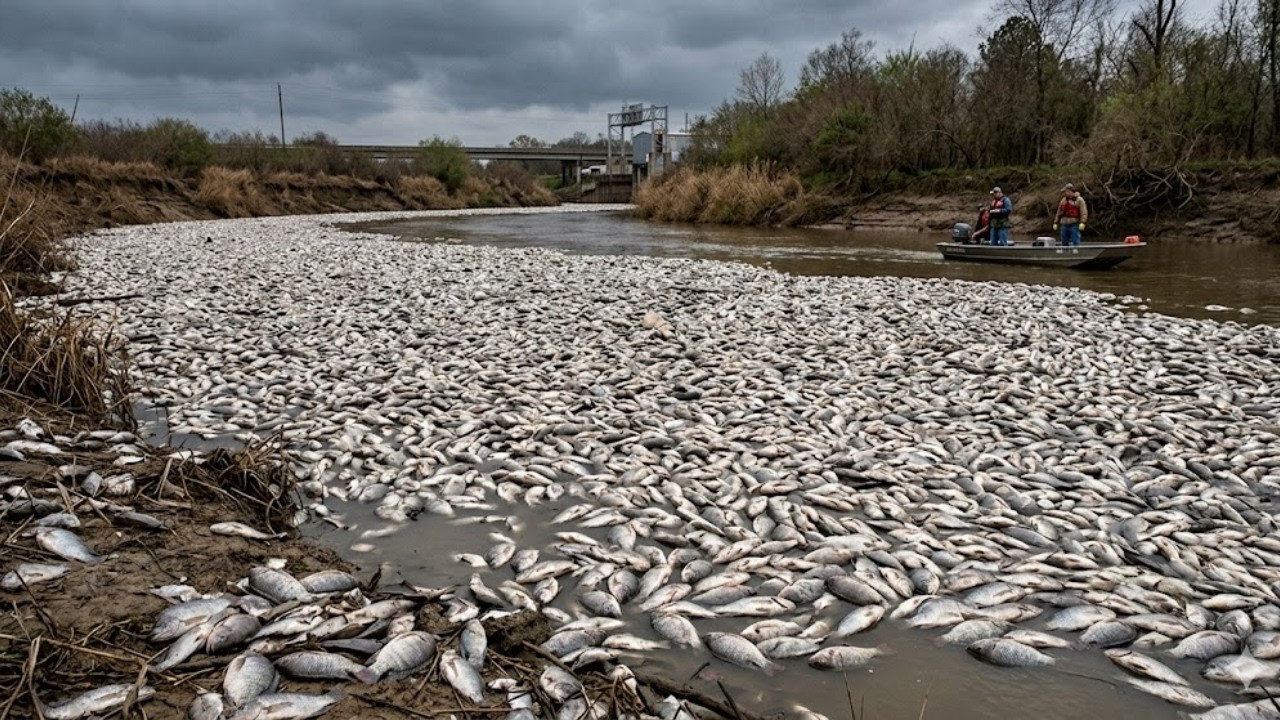
The explanation was not a removal program or a water management decision. It was a native predator returning to the ecosystem after decades of absence. The tilapia had first arrived in Florida in the early 1960s, when Mozambique tilapia were brought into aquaculture facilities to evaluate their commercial potential. The fish grew quickly and tolerated warm, shallow water. When pond walls broke and drainage channels connected to natural waterways, the fish escaped into Florida’s lake networks.
The tilapia found an environment with almost nothing capable of stopping them. A single breeding pair spawns every four to six weeks, producing between 300 and 1,000 eggs per spawn. The female broods the eggs in her mouth and guards the juveniles until they can survive independently. This reproductive rate overwhelmed native fish communities. By the 1990s, the Florida Fish and Wildlife Conservation Commission documented tilapia as the dominant or codominant species in more than 300 Florida water bodies.
Ray Molina, a fishing guide on Lake Tohopekaliga for 23 years, watched the tilapia damage the fishery over a decade he described as the worst professional years of his life. Dense tilapia populations stripped emergent vegetation from the lake margins, removing the habitat that largemouth bass need for spawning. Their constant bottom rooting stirred sediment into suspension, blocking sunlight that aquatic plants require. Clients who had booked trips for years stopped returning.
State management responded with drawdown events that exposed tilapia to conditions intended to reduce their numbers, but these were not effective at a meaningful scale. Electro-fishing operations removed significant numbers in single events, but the tilapia recovered within one reproductive cycle. No one was addressing the problem from the predator side.
Dr. Linda Morales, who had monitored fish populations across Central Florida lakes and canal corridors for ten years, ran electro-fish sampling data through three analytical approaches before calling her supervisor. Her data showed tilapia biomass declining across four consecutive sampling periods at three stations on Lake Tohopekaliga and two connected corridor sites. This had not happened in any previous monitoring window. She looked for a removal operation to explain it and found none.
She then checked records from a raptor monitoring program that ran parallel to her own. The data showed osprey nesting pairs had been increasing steadily across the most recent four seasons. When she placed the two data sets on the same map, the spatial correspondence was clear. Every station showing sustained tilapia decline had documented osprey nesting activity directly above the highest-density tilapia surface water habitat.
The osprey is a highly specialized fish predator. It locates prey from heights of 30 to 100 feet, then dives and enters the water feet first with extended talons. Its outer toe is reversible, allowing it to grip with two talons forward and two backward, making captured fish difficult to release. Short spines on its toe pads add grip.
Tilapia are particularly vulnerable to osprey. They gather in dense schools near the lake surface, move slowly relative to native game fish, and spend extended periods in the top meter of the water column. For an osprey hunting from above, tilapia at peak density are an abundant food source.
The question of whether ospreys would take tilapia was not the issue. The issue was whether enough ospreys were present to meaningfully reduce the tilapia population. From the late 1940s through the early 1970s, DDT and related pesticides were applied extensively across Florida agriculture. The chemicals moved through the food chain into fish tissue, then into fish-eating birds, causing eggshell thinning that collapsed reproductive success across whole populations. Osprey nesting pairs declined to levels described as functionally absent across large sections of Florida’s lake systems.
This was the same period when tilapia were establishing their first populations in those water bodies. The DDT ban of 1972 began reversing the contamination. Osprey nesting pairs recovered through the late 1970s and accelerated through the 1990s as pesticide levels in fish tissue declined. By the 2010s, osprey nesting density had been climbing for three decades.
The osprey recovery was not the only predator rebuilding its presence. Bald eagle nesting territories also expanded as the species recovered from its DDT-era collapse. Florida now supports the largest bald eagle nesting population in the lower 48 states. A bald eagle can weigh up to 14 pounds with a wingspan reaching eight feet. It takes fish from the surface and sometimes forces ospreys to drop their catch, intercepting it before it hits the water.
The Florida gar added a third layer of predation. This native freshwater predator has an armored body and elongated tooth jaw built for ambush in shallow water near vegetated margins, where tilapia aggregate most densely. Gar populations had declined for decades because anglers considered them trash fish that competed with largemouth bass. Management perspectives changed in the 2000s, allowing the gar to begin recovering.
Dr. Morales returned to each of her anomalous sampling stations four times in the following survey season. On her third visit, she anchored the boat at first light and watched the water before starting her equipment. An osprey worked the shallow vegetation margin on two passes. On the second pass, it hit the surface about 40 meters from the boat and came up with a tilapia that she estimated at close to two pounds.
Florida has more than 7,000 named lakes and thousands of miles of canal systems. Tilapia are established across most of them at densities that no state removal program has the resources to address on the scale required. The recoveries of osprey, bald eagles, and Florida gar are ongoing across this same landscape.
Carol Hennessey returned to the south end of Lake Toho three more times before the summer ended. Each time, the water was doing what it had been doing that June morning. Bass were where they should be, and vegetation along the shallow margin was returning in sections where she had not seen it for years. She cannot explain it in technical terms. She simply has 19 years of experience on that lake and the sense that the water was recovering something it had lost.
The osprey did not return to Central Florida’s lakes specifically to reduce tilapia. It returned because enough decisions were made over enough years to remove the chemical that had been collapsing its reproductive success before tilapia even arrived. The eagle recovered on a similar timeline. The gar recovered because managers stopped treating it as a problem.
These separate conservation efforts ran in parallel for five decades. The tilapia filled a vacancy that human decisions had created. The question now is whether the recovery of native predators can expand across enough of Florida’s 7,000 lakes to sustain tilapia suppression on a population level.






