Geophysical surveys around Stonehenge have identified a substantial underground complex of pits, ritual structures, and buried monuments surrounding the famous stone circle on Salisbury Plain. The scans, conducted as part of the Stonehenge Hidden Landscapes Project, have revealed a far larger ceremonial landscape than previously known, much of which remains unexcavated.
The project began in 2010 as a collaboration between the University of Birmingham and Austria’s Ludwig Boltzmann Institute. Over four years, researchers used magnetometers, ground-penetrating radar, and electromagnetic sensors to map nearly 12 square kilometers of terrain around the monument, generating about 40 to 50 gigabytes of raw data per day.
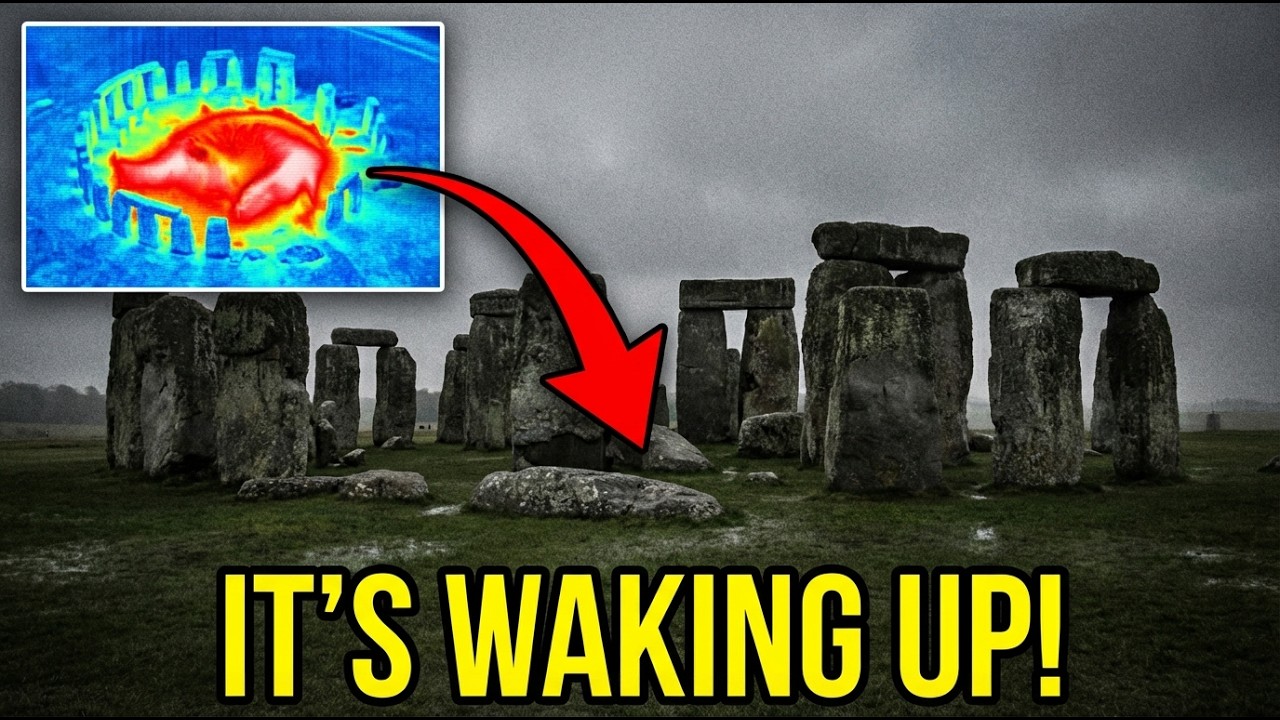
The survey detected 17 previously unknown ritual monuments, dozens of burial mounds, and evidence of timber buildings. At nearby Durrington Walls, often called Superhenge, the data suggested that up to 60 large posts or stones once flanked the monument and were later deliberately toppled and covered with earth.
In 2020, researchers from the University of Bradford reported that a series of large pits near Durrington Walls, previously assumed to be natural sinkholes or cattle ponds, were in fact engineered structures. At least 20 pits, each about 20 meters across and five meters deep, were arranged in a near-perfect circle around the central henge. The precision of their spacing indicates the builders used a deliberate counting or measurement system. The combined circumference of the pit circle spans more than three square kilometers.
Professor Vince Gaffney of the University of Birmingham, who led the Hidden Landscapes Project, said the findings mark a fundamental step forward in understanding the site. He noted that many earlier assumptions about Stonehenge were based on incomplete knowledge of what lay beneath the surface.
Evidence from earlier excavations, including the Stonehenge Riverside Project between 2003 and 2009, suggests that Durrington Walls was not only a ceremonial site but also a settlement. Remains of timber houses and a roadway linking the settlement to the River Avon were found, along with animal bones and pottery indicating large communal feasts.
A separate line of research has raised questions about the origins of the central Altar Stone. In August 2024, a team led by Anthony Clark of Curtin University in Australia published a paper in Nature showing that the six-ton sandstone slab did not come from Wales as long assumed. Analysis of mineral grains indicated the stone originated in the Orcadian Basin in northeast Scotland, roughly 750 kilometers away. Dr. Robert Ixer of University College London described the result as a “genuinely shocking result.” The researchers believe the stone was likely transported by sea, making it the longest known journey for any stone used in a Neolithic monument.
The Welsh bluestones that form the inner circle were also deliberately selected from multiple different outcrops in the Preseli Hills rather than taken from the nearest convenient source. A 2017 study from the Royal College of Art suggested some of these stones produce resonant sounds when struck, which may have been considered significant.
Acoustic research has also tested how the complete stone circle would have affected sound. In 2020, researchers at the University of Salford built a 1:12 scale model of Stonehenge as it would have appeared around 2200 BCE and tested it in an anechoic chamber. They found that the structure trapped and amplified sound at mid-frequencies, with voices boosted by about four decibels, while exterior sound did not project outward. Professor Trevor Cox, who led the research, said the sound remained contained. This suggests ceremonies inside the circle would have been experienced by a limited group rather than a large external audience.
Ongoing research is examining whether the monument aligns with a major lunar standstill, a phenomenon that occurs roughly every 18.6 years when the moon rises and sets at its most extreme positions. This alignment peaked in January 2025. Researchers from English Heritage, Oxford, Leicester, and Bournemouth universities, along with the Royal Astronomical Society, have observed the monument during this period.
Cremated human remains, representing at least 63 individuals and possibly more than 150, have been found in the Aubrey Holes, a ring of 56 chalk pits dating to around 3000 BCE. Strontium isotope analysis in 2018 indicated that at least 10 of the 25 individuals tested were not local. Their chemical signatures pointed to origins in western Wales. Most of the cremated remains belonged to adult males aged 25 to 40, suggesting burial at the site was reserved for a select group.
Stonehenge also appears to have attracted people from far beyond Britain. The Amesbury Archer, discovered in 2002 about three miles from the monument and dated to between 2400 and 2200 BCE, was buried with rich grave goods, including gold ornaments and metalworking tools. Tooth enamel analysis showed he grew up in the Alps region of central Europe. A nearby burial, the Boscombe Bowmen, contained individuals who also came from continental Europe.
Professor Michael Parker Pearson of University College London argued in 2025 that Stonehenge should be understood as a political statement rather than primarily a temple or observatory. He suggests the monument was built using stones from Scotland, Wales, and southern England to create a shared identity during a period when farming communities faced the arrival of newcomers from continental Europe. The Beaker people, as these newcomers are called, later continued to bury their important dead near Stonehenge for centuries.
Skeptics have raised several objections to the broader interpretations. Some researchers argue that the Durrington Walls pits may be natural solution hollows in the chalk, only later modified by humans. Others note that any circular arrangement of large stones creates some acoustic effects, and intentional acoustic engineering has not been proven. The mechanism for transporting the Scottish Altar Stone remains speculative. Professor Bradley Schaefer of Louisiana State University has argued that with many potential sightlines at any ancient site, some will point toward lunar standstill directions by chance.
The ground beneath and around Stonehenge remains largely unexplored. Only about 5% of the site has been excavated by archaeologists. Of the 56 Aubrey Holes, only 35 have been examined. Two rings of pits, known as the Y and Z holes, dated to between 1800 and 1500 BCE, remain unexplained. Their purpose is unknown.
The earliest known activity at the site dates to the Mesolithic period, between 8,500 and 7,000 BCE, when hunter-gatherers erected large pine posts. Those post holes predate the stone circle by more than 4,000 years.
Changes in research methods are expected to improve understanding. Higher-resolution scanners are being developed, and AI pattern recognition is being applied to existing data sets. A proposal for a road tunnel beneath the site was canceled by the British government in July 2024, ending plans that archaeologists had warned would damage undiscovered features.
Nearby sites have shown that Neolithic people sometimes deliberately buried their most important structures. The Ness of Brodgar in Orkney, in the region where the Altar Stone originated, featured a large temple complex that was intentionally covered with earth around 2300 BCE.
The continuing discoveries have not yet been fully explained, and much of what lies beneath Stonehenge remains unexamined.






