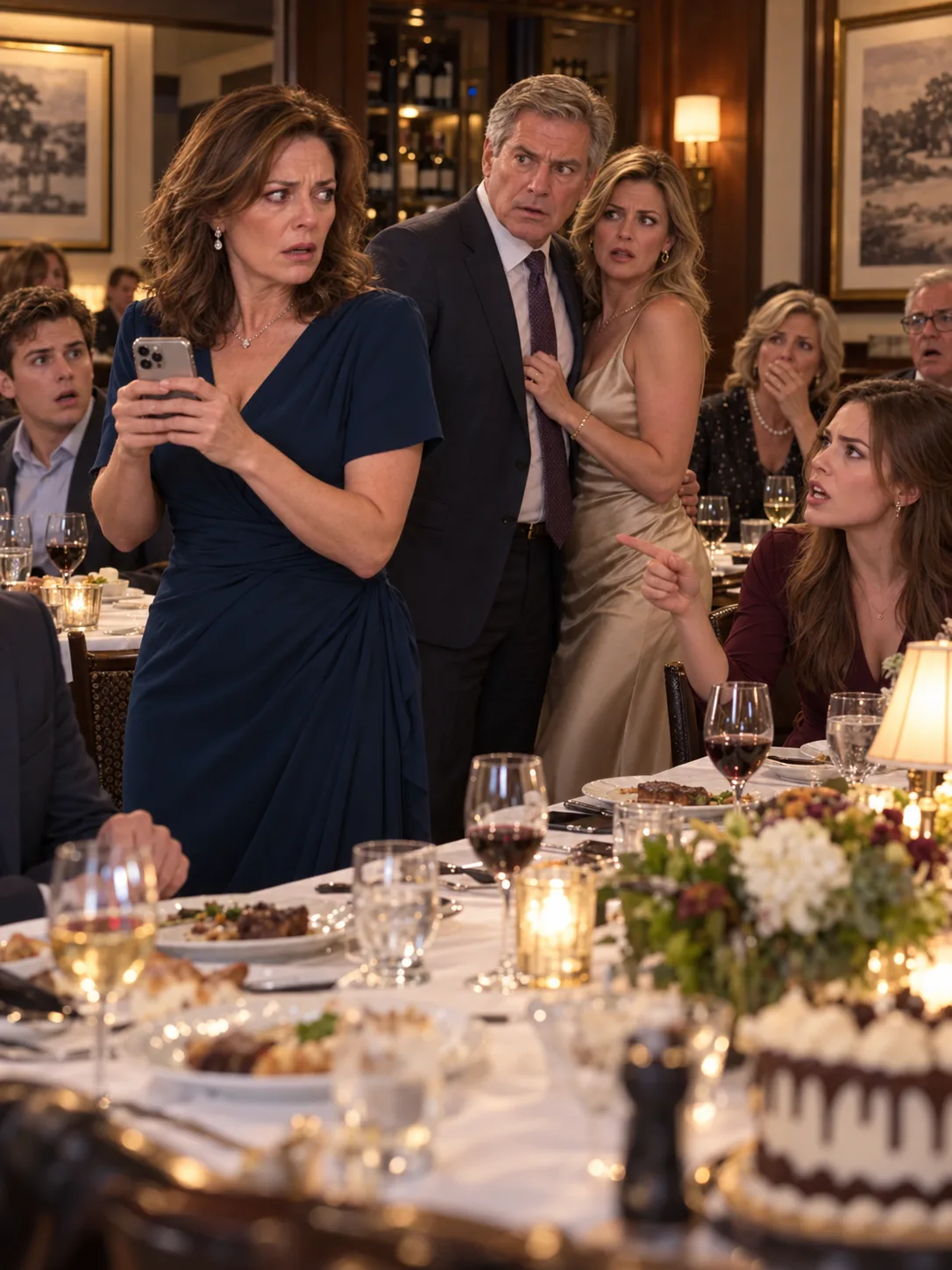
Chapter 2 – THE LIE A CHILD BELIEVED
“No.”
The word came out of June before Roman could speak.
She moved toward Oliver so quickly that the chair behind her scraped the floor.
“No, sweetheart. No one who loved Rebecca could ever believe that.”
Oliver stood very still.
“But she was tired all the time.”
June knelt awkwardly, one hand braced against the table.
“Your mother was sick, darling. That’s why she was tired.”
“I know.”
He twisted the cuff of his sweater.
“But I kept asking her to do stuff.”
June’s face crumpled.
“What kind of stuff?”
“Read to me. Come downstairs. Watch my Lego things.”
He looked embarrassed.
“Sometimes she said she needed to sleep, and I got mad.”
I felt something painful settle in my chest.
Rebecca had died after seventeen months of cancer treatment. Oliver had been six.
He remembered her illness through the small, ordinary disappointments of childhood.
Bedtime stories she couldn’t finish.
Afternoons when she couldn’t get out of bed.
A little boy wondering whether wanting his mother had somehow hurt her.
June took both his hands.
“Oliver, listen to me. Your mother wanted to spend time with you more than anything.”
“But I made her tired.”
“You didn’t make her sick.”
“Celeste said—”
“Oliver.”
Celeste’s voice was sharp enough to make him stop.
She immediately softened it.
“We’ve discussed how important it is not to repeat private conversations without understanding them.”
Roman turned toward her.
“He’s ten.”
“I know how old he is.”
“Then stop speaking to him like he’s a witness you’re trying to discredit.”
Celeste flinched.
That surprised me.
For almost a year, I’d watched her handle Roman’s temper without blinking.
But this wasn’t anger she was accustomed to.
It was disappointment.
She looked at Oliver.
“I never said you caused Rebecca’s illness.”
Oliver stared at his socks.
“You said she had nothing left to give.”
June closed her eyes.
Celeste exhaled.
“I was explaining that your mother had been very ill. I didn’t realize you would interpret it that way.”
The boy didn’t answer.
Roman pulled out a chair.
“Sit with Grandma for a minute.”
Oliver obeyed.
But he kept looking toward Celeste.
I wondered how many times she’d been the person who comforted him after frightening him in the first place.
Roman turned to June.
“Last Christmas. Tell me what happened.”
June hesitated.
“Are you sure you want to do this now?”
“Yes.”
She folded her hands.
“I came for the Christmas Eve dinner. Oliver was upstairs. Celeste told me he’d had a difficult week.”
“He had,” Celeste said.
June nodded.
“I believed her. She said he’d become upset after I mentioned Rebecca during my last visit.”
“Because he had,” Celeste insisted.
June looked at her.
“I said his mother loved the same Christmas cookies he was decorating. He asked me whether Rebecca used to eat the broken ones.”
Oliver looked up.
“She did?”
June managed a smile.
“Every single time.”
“Why?”
“She said broken cookies tasted just as good, and somebody had to make sure they weren’t lonely.”
Oliver gave the smallest laugh.
Then he seemed to remember the argument and fell quiet.
June continued.
“Celeste told me that afterward Oliver cried for almost an hour.”
“He did,” Celeste answered.
“I didn’t know that,” June said. “I would never intentionally upset him.”
Roman looked at his son.
“Do you remember crying that day?”
Oliver nodded.
“Because Grandma went home before I got to give her the cookie I saved.”
The room went silent.
Celeste stared at him.
“You told me it was because you were sad about your mother.”
“I was sad about Mom too.”
Oliver shrugged helplessly.
“Both things can happen.”
June lowered her head.
I looked away to give her some privacy.
Roman rubbed a hand across his face.
“Celeste, what did you do after that?”
“I suggested June give Oliver some space.”
“For how long?”
“I didn’t specify.”
“Did you tell June he didn’t want to see her?”
Celeste hesitated.
“I told her we needed to respect his emotional boundaries.”
June reached into her coat pocket.
“Then this came.”
She removed a small cream-colored card.
I recognized the stationery immediately. Celeste used it for household instructions and handwritten invitations.
June passed it to Roman.
He read it silently.
Then his eyes narrowed.
“What is this?”
“A note Celeste said you’d written.”
Roman turned it over.
I saw several lines of black ink and his signature at the bottom.
June’s voice shook.
“It said the letters were making Oliver worse. It asked me not to contact him directly until the family felt ready.”
Roman read the card again.
“June, when did you receive this?”
“January.”
He stared at the signature.
“That’s my handwriting.”
Celeste lifted her chin.
“Because you wrote it.”
Roman looked at her.
“I remember writing something about his correspondence.”
“You told me to handle it.”
“After he had that nightmare.”
“Exactly.”
Oliver was watching his father.
“What nightmare?” he asked.
Roman hesitated.
Celeste seized the opening.
“This is what I’ve been trying to prevent. Every time we bring up Rebecca, Oliver has to relive something painful.”
June looked at her grandson.
“Sweetheart, would you rather we stopped talking about your mother?”
Oliver thought for a moment.
“No.”
“It’s all right if you do.”
He shook his head.
“I just don’t like it when people get upset because I remember her.”
Roman’s eyes moved toward the little green sweater.
I could see him thinking about the months he’d believed June was staying away by choice.
Then Celeste said something that changed the direction of the conversation.
“Roman, you can’t pretend you weren’t part of these decisions.”
He looked at her.
“Explain.”
“You told me Oliver needed a fresh start. You said you couldn’t keep watching him suffer every time someone mentioned Rebecca.”
Roman said nothing.
Celeste reached toward the note.
“And when I suggested we limit outside correspondence, you agreed.”
He pulled the paper away.
“Not indefinitely.”
“You didn’t give me an expiration date.”
“I said two weeks.”
Celeste’s expression shifted.
Roman placed the note on the table.
“Two weeks, Celeste. Until after his appointment with the grief counselor.”
June stared at him.
“You knew my letters were being stopped?”
“For two weeks,” he said quietly.
She looked down.
“And afterward?”
Roman couldn’t answer.
Because he hadn’t checked.
For the first time, I saw June look at him with something other than sadness.
She looked betrayed.
Oliver slid off his chair.
“Dad?”
Roman turned.
“Yes, son?”
“Is that why Celeste said I had to practice the wedding words?”
Celeste’s face changed instantly.
“Oliver, not now.”
But Roman was already watching his son.
“What wedding words?”
Oliver looked toward the table.
“The ones that make everybody stop being sad.”
He hesitated.
“Celeste said if I learned them properly, Grandma could come to the wedding.”
Roman stood slowly.
“Celeste,” he said, “what exactly have you promised my son he has to say?”
Share