In the sweltering heat of the Papuan swamp, a general who had never set foot on the front lines branded them cowards. The men of the Australian 7th Division, fresh from the hell of the Kokoda Track, were sick, starved, and battle-weary. They had just achieved what no other Allied force had managed: stopping the Japanese army in its tracks. Yet, General Douglas MacArthur, safe in his headquarters 150 kilometers away, declared them unfit to fight.
The accusation was absurd. Just weeks earlier, Australian troops had crushed a Japanese landing at Milne Bay, handing the enemy their first clear defeat on land. But MacArthur, desperate for a victory to save his career, needed a scapegoat. He found one in the Australian soldier.
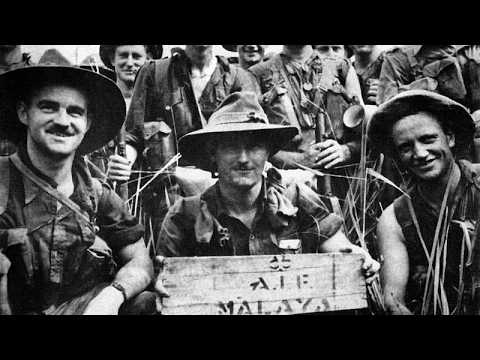
MacArthur didn’t stop at slander. He sacked three Australian commanders in a single month, each blamed for the slow advance. The pressure was mounting from Washington, and MacArthur feared another failure like the Philippines. In a secret conversation with Prime Minister John Curtin, he warned that New Guinea could become another Singapore. His solution: send in a fresh American division, the 32nd, to show the Australians how it was done.
On November 19, 1942, the 32nd Division attacked Buna, confident the Japanese were beaten. They were wrong. The enemy had used the delay to fortify the beachhead with coconut-log bunkers that artillery couldn’t crack. The Americans, green and unprepared for jungle warfare, were slaughtered.
Within two weeks, the division had lost much of its fighting strength for almost no gain. The swamp swallowed them, disease ravaged their ranks, and morale collapsed. Reports of cowardice reached MacArthur’s ears—the same charge he had leveled at the Australians. Now it was his own men who were breaking.
MacArthur’s response was to change commanders, not conditions. He ordered Lieutenant General Robert Eichelberger to take Buna or not come back alive. Eichelberger arrived to find a broken army: hollow-eyed men, rotting uniforms, filthy rifles. He pulled them back, reorganized, and started over.
But while the Americans struggled, the Australians were closing in on Gona, the first of the three beachheads. The men who had fought the long withdrawal down Kokoda now had to storm the coast they had been driven across. Among them was Lieutenant Colonel Ralph Honner, who spotted a covered approach through the swamp. After one more costly frontal assault, he convinced his commander to let him use it.
Under their own falling artillery, Honner’s men moved through the swamp and seized a foothold. By dawn, the 39th Battalion was inside the position. On December 9, Gona fell—the first Japanese beachhead to be taken. The men MacArthur had branded cowards had done it.
The cost was horrific. The 39th Battalion, which had crossed to New Guinea with around 1,000 men, could muster only 32 on parade. But they had won. Meanwhile, MacArthur’s fresh division was still stuck at Buna.
As Gona fell, the Americans at Buna remained pinned down. Eichelberger’s reforms had steadied the line, but the bunkers held. The press at home called it the most desperate fighting of the war. Then, on December 18, the Australian 18th Brigade arrived with tanks—the first on the north coast. These were veterans of Tobruk and Milne Bay, men who knew how to beat the Japanese.
But even with tanks, the fighting was savage. The 2/10 Battalion attacked repeatedly along the old airstrip, taking heavy losses. It wasn’t until January 1 that a coordinated tank-infantry assault broke the Japanese positions. Buna fell on January 2, 1943, with Australians and Americans fighting side by side.
The victory came at a staggering cost. At Buna alone, the Allies suffered around 2,800 casualties, nearly 60% Australian. The Japanese lost roughly 3,000 men, with only 250 taken prisoner. The 32nd Division, MacArthur’s showcase, was gutted: 707 killed, 1,680 wounded, and over 8,000 hospitalized with disease. It would take nearly a year to recover.
Yet MacArthur claimed the campaign as his own triumph. His communiques gave little credit to the Australians, and the official history would later credit the 32nd Division with taking Buna alone, ignoring the Australian 18th Brigade and its tanks. MacArthur even awarded the Distinguished Service Cross to 12 officers, some of whom had never been near the front.
The Australian generals he had sacked—Rowell, Allen, and Potts—were later vindicated. Rowell rose to Chief of the General Staff. The verdict on the Australian soldier had come from a man who never fought there. The men who took Gona and Buna knew the truth, even if the record would remember it differently.
Private Jack Simmons of the 2/10 Battalion had been a bank clerk in Wagga Wagga before the war. Now he sat in a captured Japanese bunker, his hands shaking as he tried to light a cigarette. The bunker smelled of cordite and blood, and the coconut logs above his head were splintered from shellfire. He had killed a man that morning—a Japanese soldier who had come at him with a bayonet—and he couldn’t stop seeing the man’s face. “They said we were cowards,” he muttered to the soldier beside him. “Cowards don’t do this.”
The soldier beside him, a grizzled corporal named Tom Brady, didn’t answer. Brady had been at Milne Bay, and he had watched the Japanese charge into the Australian guns there. He had seen them break and run. He knew what the official reports would never say.
Back in Port Moresby, MacArthur’s headquarters was already drafting the next communique. The general wanted the story of Buna told as a triumph of American arms, with the Australians relegated to a footnote. His staff officers, men who had spent the campaign in air-conditioned offices, dutifully complied.
But the men in the swamp knew a different story. They had seen the 39th Battalion, reduced to 32 men, march out of Gona with their heads held high. They had seen the tanks of the 2/6 Armored Regiment, the first armor on the north coast, roll into Buna and break the bunkers that had held the Americans for six weeks. They had seen Australian and American soldiers die side by side in the same mud.
On January 22, 1943, the last Japanese pocket at Sanananda was finally cleared. The beachheads were gone. The campaign that MacArthur had promised would take days had taken months and cost thousands of lives. The men who fought it were exhausted, sick, and hollow-eyed.
Among them was Lieutenant Colonel Ralph Honner, the man who had found the covered approach at Gona. He had watched his battalion, the 39th, dwindle from 1,000 men to a handful. He had seen his soldiers die in the swamp, cut down by machine guns and ravaged by malaria. He had heard the rumors that MacArthur had called them cowards.
“Cowards,” Honner said to his adjutant one evening, his voice flat. “They call us cowards. We took Gona. We took Buna. We beat the Japanese at Milne Bay. And they call us cowards.”
His adjutant, a young lieutenant who had joined the battalion in Port Moresby, didn’t know what to say. He had seen the men fight. He had seen them die. He knew the truth.
The truth was that the Papuan campaign had been won by the men MacArthur had written off. The Australians had stopped the Japanese on the Kokoda Track, taken Gona, and helped take Buna. The American 32nd Division, sent to replace them, had been gutted by disease and shattered by the bunkers. The victory belonged to both armies, but the credit went to one man.
MacArthur’s communiques were read in Washington and London. They spoke of American heroism and American sacrifice. They mentioned the Australians only in passing, as if they had been a minor supporting force. The official history, written years later, would credit the 32nd Division with taking Buna alone.
But the men who were there knew. They knew that the 39th Battalion had taken Gona with 32 men standing. They knew that the 18th Brigade had brought the tanks that broke Buna. They knew that the Australians had carried the larger share of the casualties, and that the official record would never say so.
In the years after the war, the survivors would tell their stories. They would write letters and give interviews, and slowly the truth would emerge. But by then, the men who had been slandered were old, and many of them were dead.
MacArthur went on to become a hero, a legend, a man who had never lost a battle. The men who had won his battles for him were forgotten.
But on the beachheads of Papua, in the swamps and the kunai grass, the truth had been written in blood. The men who fought there knew who the cowards were, and who the heroes were. And they knew that the verdict of history was not always the verdict of the men who were there.
In the years that followed, the survivors of the 39th Battalion would gather at reunions in small halls across Australia. They were old men by then, their hair white and their hands gnarled by arthritis. But when they spoke of Gona, their voices still carried the weight of that swamp.
“We were called cowards,” one of them said at a reunion in 1965. “But we took the first beachhead. And we did it with 32 men standing.” The room fell silent. No one argued.
Private Jack Simmons, who had survived Buna and gone home to Wagga Wagga, never spoke of the war to his children. But he kept a photograph in his desk drawer: a group of young men in slouch hats, grinning at the camera. On the back, in faded pencil, he had written: “The cowards. Gona, December 1942.”
Tom Brady, the grizzled corporal, lived to be 92. In his final interview, he was asked about MacArthur. He thought for a long moment, then said: “He was a great general. But he was wrong about us. And he never said so.”
The official histories were written and rewritten. The 32nd Division’s role at Buna was celebrated; the Australian 18th Brigade’s tanks were forgotten. The 39th Battalion, which had taken Gona with 32 men, was disbanded and its survivors scattered.
But on the beachheads of Papua, the truth had been written in blood and mud and coconut logs. The men who fought there knew who had held the line at Kokoda, who had taken Gona, who had brought the tanks to Buna. They knew.
And when the last of them finally passed, the truth went with them—except for the letters, the diaries, the photographs, and the stories they told their children.
MacArthur’s communiques are in the archives. The official histories are on the shelves. But the men who were there are gone now, and the swamp has swallowed the bunkers and the kunai grass has grown over the airstrip.
Only the question remains: When history is written by the victors, who speaks for the men who won the battles they were told they couldn’t fight? What do you think—does the record ever truly capture the truth, or does it only capture the version that serves the powerful?
Report this article
Select a reason for reporting:






