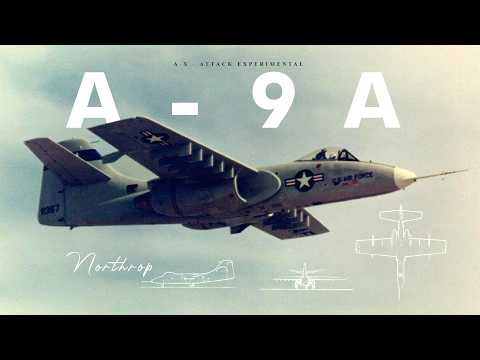
In the sweltering heat of the Vietnam War, a lesson was learned that would reshape American air power: slow, rugged aircraft could save lives in ways that fast jets couldn’t. The A-1 Skyraider, a propeller-driven relic, and the jet-powered A-37 Super Tweet proved that loitering over a firefight, with eyes on the ground and ordnance ready, was worth more than raw speed. But these were stopgaps—hastily adapted designs that hinted at a deeper need. By 1966, the Air Force knew it needed something new, something built from the ground up for the brutal business of close air support.
Thus began the AX program, a quest for an aircraft that could fly low and slow, absorb punishment, and unleash devastating firepower on enemy troops and tanks. The requirements were daunting: short takeoff and landing, heavy armor, a massive cannon, and the agility to dodge ground fire. Contractors rushed to submit designs, but the path to the final choice was anything but straightforward. As the 1960s waned, the threat evolved. The Six-Day War showed the world the power of modern armor, and the Soviets responded with tougher tanks and better tactics. The AX would need to be a tank-buster, too.
By 1970, the specifications had crystallized: a twin-turbofan aircraft with a 30mm cannon, capable of carrying a hefty payload and surviving hits from heavy machine guns. Northrop and Fairchild Republic emerged as finalists, each with a radically different approach. Northrop’s YA-9 was sleek, fast, and maneuverable—a pilot’s plane. Fairchild’s YA-10 was slower, tougher, and built like a flying tank. Both flew, both impressed, but only one could win. The fly-off in 1972 would decide the fate of the Warthog’s rival.
“The YA-9 was not a bad aircraft. In many ways, it came close to meeting the original AX requirements.” Yet, as the tests would reveal, the Air Force valued maintainability and survivability as much as speed. The YA-10’s rugged simplicity and proven engines gave it an edge. But the story of the YA-9 is more than a footnote—it’s a tale of innovation, competition, and the difficult choices that shape military history.
So how did Northrop’s design, which looked so promising on paper, end up losing to the A-10? And what can its legacy tell us about the nature of close air support? The answer lies in the details of the fly-off, where every bolt and every sortie counted.
The fly-off began on October 10th, 1972, with both prototypes taking to the skies over Edwards Air Force Base. Over the next two months, more than 120 flights would be logged on each airframe, covering everything from low-speed handling to weapons delivery. Pilots rotated between the two types, and their notes were candid. “The A-9 feels like a fighter,” one test pilot wrote. “The A-10 feels like a truck—but a truck that will get you home.”
That distinction mattered more than raw performance. The YA-9 was faster, no question. Its 450-knot top speed and fighter-like agility made it a joy to fly. But the AX mission wasn’t about dogfighting. It was about diving into a hail of ground fire, putting steel on target, and surviving to do it again. Here, the A-10’s slower approach and tank-like construction began to shine.
The maintenance crews noticed it first. “On the A-9, you need a ladder and a prayer to reach the engines,” one crew chief recalled. The underwing nacelles, while aerodynamically clean, sat low and tucked against the fuselage. Replacing a engine meant wrestling with cramped access panels. On the YA-10, the engines were mounted high and far apart—easy to reach, easy to swap. A full engine change took under an hour on the A-10; on the A-9, it was a half-day affair.
Rearming told a similar story. The A-10’s low wing put the hardpoints at chest height. Crews could load bombs and Mavericks without ladders or awkward stretches. The A-9’s high wing forced ground crews to reach overhead, slowing every sortie. In a war of attrition, those minutes added up.
Then came the survivability trials. Both aircraft had redundant hydraulics and armored cockpits, but the A-10 went further. Its twin vertical stabilizers meant that even if one was shredded, the other kept the nose straight. Its engines, mounted high and isolated, were less likely to ingest debris or catch fire from ground hits. The YA-9’s engines, nestled against the fuselage, were more vulnerable to concentrated fire.
“We shot the A-10 with everything we had,” a range officer later said. “It kept flying. The A-9 would have been on the ground.” That wasn’t quite fair—the A-9 was tough, too—but the A-10 was tougher. Its titanium bathtub could shrug off 23mm hits, while the A-9’s aluminum shielding was only rated for smaller rounds.
By December 9th, the testing was done. The data went to the selection board, and the doors closed. For a month, rumors swirled. Northrop’s team, led by Walt Fellers, held out hope. Their aircraft had met every requirement. It was faster, more agile, and cheaper to build. But the Air Force had seen something else in the A-10—something harder to quantify.
On January 10th, 1973, the announcement came. The A-10 was the winner. The reasons were simple: easier maintenance, better survivability, proven engines, and a design that mirrored components left-to-right to simplify logistics. The YA-9, for all its promise, was handed over to NASA and eventually grounded. Northrop moved on to other projects, and the Warthog went into production.
But the story didn’t end there. In 1975, the Soviets unveiled their own close air support jet—the Su-25 Rook. It looked strikingly similar to the YA-9: straight wings, twin engines, a rugged build. Many observers noted the resemblance, and some wondered what might have been. The Su-25 would prove itself in Afghanistan and Ukraine, flying fast and low into contested airspace, hitting targets with rockets and guns.
The comparison was inevitable. “The A-9 would have been closer to the Su-25,” one analyst noted. “Faster, lighter, more suited to a rapidly moving front.” But the A-10 was built for a different war—a war of loitering over friendlies, of slow, deliberate passes, of surviving hits that would down other aircraft. Both approaches had merit, and both would be tested in the decades to come.
Yet the fly-off data told a more nuanced story than the final verdict suggested. On paper, the YA-9 had matched or exceeded the A-10 in several key metrics. Its rate of climb was superior, its turn radius tighter, and its acceleration notably brisker. In a dash to a target, the Northrop jet would arrive first. But the AX mission rarely called for dashing. It called for orbiting overhead, waiting for a call from a beleaguered squad, then rolling in for a precise, deliberate pass.
That loiter profile favored the A-10’s greater fuel efficiency and lower stall speed. Test pilots found the Warthog could hold a tighter orbit at slower speeds without buffet, giving the pilot more time to spot targets and line up a gun run. The A-9, for all its fighter-like grace, demanded more attention to keep stable at the bottom of the envelope. “The A-9 wants to fly fast,” one evaluator wrote. “The A-10 is happy to go slow. In this mission, happy is better.”
Then there was the gun. Both aircraft carried the M61 Vulcan as a placeholder, but the real prize was the GAU-8 Avenger—a 30mm rotary cannon so massive it practically dictated the airframe around it. Fairchild had designed the YA-10 from the start with the Avenger in mind, building a cavernous bay beneath the cockpit and offsetting the nose gear to accommodate the gun’s bulk. Northrop’s installation was more of an adaptation than a marriage.
When the first GAU-8 test articles arrived at Edwards, engineers discovered that the A-10’s layout swallowed the cannon with room to spare. Recoil forces were absorbed cleanly, and the gun’s spent casings—thousands of them per burst—were funneled out without fouling the fuselage. On the A-9, the fit was tighter, and ground crews worried about vibration and heat buildup during sustained fire. The Avenger would define the Warthog’s silhouette and its legend, and the A-10 was simply the better host.
There was also the matter of production risk. Northrop was a large, established contractor with many irons in the fire, while Fairchild Republic was small and hungry. The Air Force judged that the smaller firm would pour its heart into the AX program, and the YA-10’s design reflected that focus. Components were mirrored left-to-right wherever possible—the wings, the tail, even the landing gear shared parts across both sides. “We built it so a crew could cannibalize one side to fix the other,” a Fairchild engineer recalled. “In a war, that’s worth more than ten knots.”
Northrop’s team took the loss hard. Walt Fellers had poured two years into the YA-9, and the aircraft had flown beautifully. But the selection board’s report was blunt: the A-10 offered a lower life-cycle cost, a more mature engine, and a survivability package that better matched the brutal realities of the close air support mission. The YA-9’s speed advantage, while real, mattered less than the ability to come home with half its tail shot away.
As the two prototypes were prepared for their final flights, one Northrop test pilot summed up the mood. “We built a racehorse,” he said. “They wanted a plow horse that could kick.” It was a fair assessment—and a reminder that in military procurement, the best aircraft doesn’t always win. The one that fits the doctrine, the budget, and the maintenance tent does.
The YA-9’s story might have ended quietly in the California desert, but its shadow would stretch across the Pacific. When Soviet designers sat down to sketch the Su-25, they faced a similar problem: how to build a tough, slow, heavily armed jet for troops in contact. Their solution bore an uncanny resemblance to Northrop’s loser—straight wings, twin engines, a rugged fuselage. The Rook would fly in a different doctrine, but its shape whispered of the road not taken.
In the decades that followed, the A-10 Warthog became a legend—its titanium bathtub and thundering Avenger cannon etched into the minds of friend and foe alike. It proved itself in the deserts of Iraq and the mountains of Afghanistan, loitering for hours, answering calls for help with devastating precision. “The sound of that gun is the best morale boost a soldier can hear,” one infantryman recalled.
But the YA-9’s ghost never fully faded. Northrop’s engineers took the lessons of the AX competition into the F-18 program, where side-force control and rugged simplicity found new life. And when the Air Force finally retired the last A-10 in the 2030s, some veterans wondered aloud if the faster, cheaper YA-9 might have been the better long-term bet. “We chose the plow horse,” a retired general admitted. “But that racehorse could have run for fifty years.”
In the end, the AX story is a reminder that military procurement is never just about performance. It’s about doctrine, logistics, and the unglamorous work of keeping aircraft flying under fire. The A-10 won because it was built for the mechanics and the mud, not just the pilots and the parade. The YA-9 lost because it was, in the words of one historian, “too good at the wrong kind of war.”
So what do you think—did the Air Force make the right call, or did politics and conservatism rob us of a better Warthog? Let us know in the comments below.
Report this article
Select a reason for reporting:






