April 1945. The Third Reich is collapsing. Soviet tanks rumble through the streets of Berlin, and deep beneath the chancellery, Joseph Goebbels—Hitler’s minister of propaganda—huddles with his family in a bunker. The Führer is dead by his own hand, and Goebbels has just been named Chancellor. The man who once commanded the airwaves with fiery speeches now faces the end. But he is not done fighting. In a final, desperate move, he writes a letter that could alter the course of history—or seal his family’s doom.
“I implore you to continue fighting for your city,” he had proclaimed just days earlier, urging Germans to resist the Allied advance. But the tide is unstoppable. The Battle of Berlin is lost, and Goebbels knows it. Yet he clings to a sliver of hope: a ceasefire offer to the Soviets. If accepted, Nazism might survive; if not, he and his family are doomed.
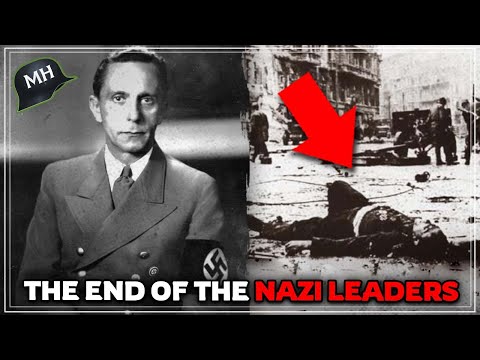
To understand this final gamble, we must trace the path of the man who orchestrated the Nazi propaganda machine. Born in 1897 to a poor family, Goebbels was haunted by a clubfoot that barred him from military service in World War I—a humiliation that fueled his fanaticism. Brilliant and bitter, he earned a doctorate in literature and history, but his anti-Semitism and resentment festered. Hitler’s charismatic speeches captivated him. “A mind as brilliant as yours can lead me,” he wrote in his diary. “I love you because you are both great and simple.” That devotion would define his life—and his death.
Goebbels rose swiftly in the Nazi ranks, becoming the party’s chief in Berlin. His virulent speeches demonized Jews, foreigners, and dissenters, whipping up fear and loyalty. In 1930, he married Magda Ritschel, a party volunteer, with Hitler as godfather to their six children. As propaganda minister, Goebbels controlled every aspect of German culture: radio, newspapers, films, and art. He crafted Hitler’s image as a savior, using torchlight parades, pamphlets, and subliminal messages. “He loves no one and is loved by no one,” Life magazine observed in 1938, “but controls the most efficient Ministry of Nazism.”
When war broke out, Goebbels seized the radio as his primary weapon, countering Allied propaganda and keeping morale high. In 1943, he delivered a two-hour speech demanding “total war”—closing non-essential factories, conscripting women, and drafting previously rejected men. The crowd cheered, but Hitler hesitated. The tide turned anyway. By 1945, the Allies were at Berlin’s gates, and Hitler retreated to the bunker, appointing Goebbels Minister for Total War. Too late. Germany lay in ruins.
As the end neared, Goebbels suggested negotiating surrender, but Hitler refused. Loyal to the last, Goebbels stayed. Magda suffered a nervous breakdown, her face partially paralyzed. On April 23, Goebbels issued his futile call to arms. After Hitler’s suicide on April 30, Goebbels became Chancellor. “The captain must never leave the ship,” he declared when urged to escape. “I will stay here with my children. With a leg like mine, it is impossible to run away.”
But before that final act, he made one last attempt to save the Reich. He wrote to Soviet General Vasily Chuikov, proposing a ceasefire to negotiate Germany’s surrender on favorable terms. The letter was a long shot—a desperate bid to buy time. If it worked, Nazism might rise again. If not, death awaited.
Chuikov’s response? A flat refusal. The Soviet juggernaut rolled on. Goebbels, his wife, and their six children faced the abyss. In the bunker, morphine and cyanide were prepared. The children were put to sleep, then killed—a horrific act justified as mercy. “Better than being captured by the Allies,” they believed. Then Goebbels and Magda walked into the chancellery garden and bit down on cyanide capsules. Soldiers were ordered to shoot them if the poison failed. Thus ended the life of one of the Third Reich’s most perverse men.
But what drove Goebbels to such extremes? How did a brilliant scholar become the architect of lies and death? And what was in that letter to Chuikov that could have changed everything? The story of Joseph Goebbels is a chilling descent into fanaticism—and the final days in the bunker are just the beginning.
The letter itself was short, almost terse. Goebbels had dictated it in the dim light of the bunker, his hands trembling—not from fear, but from exhaustion. It proposed a temporary halt to hostilities, a window for negotiations. “The German people deserve a future,” he wrote, though he knew the words rang hollow. Chuikov never even read it. The Soviet general dismissed the envoy with a wave of his hand, reportedly saying, “We do not negotiate with corpses.”
That refusal sealed everything. There would be no ceasefire, no favorable terms, no rebirth of the Reich. Goebbels returned to the bunker and told Magda the news. She nodded slowly, her paralyzed face expressionless. The children were playing in the corridor, oblivious. Six young lives—Helga, Hilde, Helmut, Holde, Hedda, Heide—ranging from four to twelve years old. They had known nothing but war and bunker walls.
What happened next has been recounted by aides and guards who witnessed fragments of that final evening. Magda sat the children down and combed their hair. She spoke softly, telling them they would soon be leaving for a better place. A doctor was summoned. Morphine was administered first—small doses to make them sleep. Then, as they lay unconscious, cyanide capsules were crushed between their teeth.
One witness, a bunker mechanic named Johannes Hentschel, later described hearing Magda’s muffled sobs through the door. He did not enter. No one did. When it was over, Goebbels emerged, his face pale and drawn. He said nothing to the assembled officers. He simply walked past them, toward the garden stairs.
The garden was a wasteland of rubble and craters, lit by the orange glow of fires still burning across Berlin. Goebbels and Magda stood side by side. They bit into their cyanide capsules simultaneously. According to SS guards who watched from a distance, both collapsed almost instantly. But the order had been given: if the poison failed, shoot. A guard named Günther Schwägermann fired two shots into Goebbels’ body—some accounts say one, others say two—to ensure the job was done.
Their bodies were doused in petrol and burned, though the cremation was hasty and incomplete. Soviet troops found the charred remains the next day. The Reich that was supposed to last a thousand years had ended in a shallow grave outside a bunker.
But the story does not end there. The question that haunted investigators for decades was not how Goebbels died, but how he lived—how a man of such intelligence could embrace such evil. His diaries, recovered from the ruins, offered clues. Thousands of pages of meticulous self-justification, paranoid rantings, and chilling detachment. In one entry from 1943, he wrote: “The Jews are the natural enemies of the German people. We must exterminate them wherever we find them.” It was not a momentary lapse. It was a lifelong conviction.
His propaganda genius had a dark twin: a capacity for self-deception. Goebbels believed his own lies. He believed that if Germans fought hard enough, if they showed enough will, victory would be snatched from the jaws of defeat. Even as Soviet shells fell on Berlin, he was composing memos about post-war reconstruction. Even as his children lay dead, he was drafting the final press release of the Reich.
One of the last documents he signed was an order to distribute medals to Hitler Youth members who had defended the city. The order was never carried out. There was no one left to receive them.
The bunker itself was looted within hours. Soviet soldiers took watches, uniforms, and documents as souvenirs. Goebbels’ personal effects were scattered across Europe. His diary pages ended up in Moscow archives, unpublished for decades. Only in the 1990s did historians begin to piece together the full picture of his final days—and the letter to Chuikov emerged as a central mystery.
Why would a man so committed to total war suddenly seek a ceasefire? Some historians argue it was a tactical move, a way to split the Allies. Others say it was pure delusion. But a third interpretation has gained ground: Goebbels knew the war was lost and wanted to save his own skin. The ceasefire was not for Germany—it was for him. If Chuikov had agreed, Goebbels might have tried to escape, to slip into the chaos of post-war Europe and reinvent himself. The children, the wife, the ideology—all of it was secondary to survival.
That theory is supported by a little-known detail. In the letter, Goebbels requested safe passage for “certain individuals”—a phrase that Soviet translators later noted as suspiciously vague. He did not name himself, but the implication was clear. Chuikov’s refusal ended that fantasy. The captain would go down with the ship, but only because the lifeboats had been burned.
There is another angle to consider. Goebbels was not the only Nazi leader seeking a separate peace with the Soviets. Himmler had already tried, through intermediaries in Sweden. Göring had attempted to seize power from Hitler. The Reich was fracturing from within. Goebbels, the loyalist, the true believer, was also a pragmatist. If the Führer was dead, why should the Reich die with him? The letter was his way of testing the waters—and the waters were freezing.
After the war, Magda’s relatives gave interviews. Her sister-in-law, who survived, described Magda as “a woman who loved her husband more than her children.” That brutal assessment echoed in the testimonies of bunker survivors. Magda had multiple chances to send the children out of Berlin. She refused. She wanted them to die with her, to be part of the final act. Whether that was loyalty or madness, no one could say.
Goebbels’ own childhood might offer a clue. Born with a clubfoot, he was mocked and pitied. His family was poor, his prospects bleak. He clawed his way up through sheer intellect and rage. When Hitler offered him a cause, he embraced it with the fervor of a man who had finally found meaning. The Nazi Party gave him power, purpose, and a sense of superiority. To lose that—to see it all crumble—was worse than death.
In the end, the letter to Chuikov was never answered. It was filed away, forgotten, then rediscovered by a Soviet archivist in 1967. By then, the bunker was a parking lot. The garden was paved over. The children’s names were footnotes in history books. But the question remains: what if Chuikov had said yes?
What if the ceasefire had been granted? Would Goebbels have escaped? Would he have been tried at Nuremberg, or would he have vanished into the shadows like so many others? Would Nazism have found a way to survive, not as a state but as an underground movement? These are counterfactuals, impossible to answer. But they remind us that history is not inevitable. It is shaped by choices—and by letters that go unanswered.
The bunker is gone now. So is the chancellery. But the story of Joseph Goebbels remains, a warning etched in ash and bone. He was a man who believed in nothing but power, and in the end, power consumed him. His wife and children died for his vanity. His Reich lasted twelve years, not a thousand. And his final letter, the one that could have changed everything, was tossed aside by a Soviet general who had seen too much death to care about the pleas of a propagandist.
Yet the story does not end in that garden. It continues in the archives, in the diaries, in the memories of those who survived. It continues in the questions we ask: how does a man become a monster? How does a nation follow him? And how do we ensure it never happens again?
The captured diaries offered no final redemption, only the same icy self-assurance. In one last entry, scrawled just hours before the morphine was prepared, Goebbels insisted that history would vindicate him. It did not. Instead, his name became a synonym for the lie that devours its own children.
“We do not negotiate with corpses,” Chuikov’s words echoed long after the rubble was cleared. They were brutal, but they were true. The Reich was already a corpse, and Goebbels was its embalmer, dressing a rotting ideology in one final, futile speech.
Today, the bunker site is a quiet parking lot. Tourists pass without knowing. But the question he never answered still lingers in the ash: when the lies finally fall silent, what remains of the man who spoke them?
What do you think—was Goebbels a true believer to the end, or a terrified man who simply ran out of exits?
Report this article
Select a reason for reporting:






