The morning sun was already baking the rocky outcrop when Major Dering’s voice cut through the stillness. “Salute me, Sergeant.” The words hung in the air, sharp and expectant. Sergeant Libby didn’t move. His finger kept tapping the magazine of his SR-25, a habit the patrol knew meant he was thinking. Across the valley, the grape-drying huts stared back like empty eye sockets. Two days of silence, and now this.
Dering stood tall, his new uniform crisp, his oak leaf rank gleaming. The Australians lay flat, their beards dusted with grime. “Not here, mate,” Libby said, his voice low. No salute. No explanation. The Major’s face flushed. He demanded a reason, and Libby gave it: on this ridge, a salute was a death sentence. A sniper across the valley was looking for the man everyone respected. “That makes you a target, sir. Take it off and get down.” Dering refused. He was a field-grade officer in an ally’s position, and he would wear his rank where regulations demanded. He stayed standing.
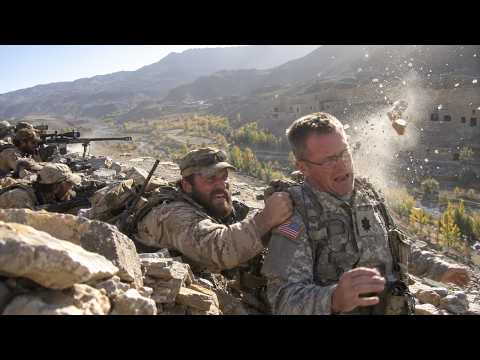
The interpreter’s scanner crackled to life. Two voices, clear Pashto, floated across the valley. “They all look the same. No, leader,” the translator whispered. The sniper was searching. Libby pointed at the scanner, then at the far slope, then at Dering. The enemy was watching, looking for exactly what the Major had been asked to hide. Dering heard the words but interpreted them his way: two days, no shots. A quiet valley, not a hungry hunter.
Then the shot came. Libby shouted “Get down!” but the bullet was faster. It shattered a slab of rock inches from Dering’s head. Libby grabbed the Major’s belt and yanked him behind the wall, his left hand slicing open on a sharp edge. The medic crawled over, wrapping the wound. Libby’s fingers wouldn’t close properly. He pushed the hand aside and returned to his scope.
Dering lay on his side, glasses scratched, knee jumping. He didn’t speak. The sniper had fired once and gone silent. Libby knew the game. “This is my fault, sir,” he said, and for the first time, the word ‘sir’ had no edge. Dering looked at the bloody bandage, then at the scar on the rock above him. He pulled out his green notebook, the one with the charge of insubordination written in capital letters. He read it, then closed it and put it away.
But the mission wasn’t over. The sniper was still out there, and the patrol was stuck. Libby had a plan. He had the Major’s rank, a foam mat, and a helmet. “Let’s make him one,” he said. They built a decoy. Dering handed over his helmet, then peeled off his rank patch. The velcro ripped loudly in the silence. The medic taped it to the dummy. Sig raised his hand in a perfect salute. Four seconds later, the dummy’s head exploded. The sniper had taken the bait. And now they knew exactly where he was.
But the sniper wasn’t done. He moved to a higher hut, with thicker walls and a better angle. The patrol was pinned. The only way to end it was to go down there. Libby chose his men. “The rifle is yours, sir,” he told Dering. “Watch the back door.” Dering didn’t argue. He took the SR-25 and lay down behind it. The Major was now following a Sergeant’s orders.
The descent was treacherous. Libby’s hand couldn’t grip, and he fell into the stream, soaking his bandage. They reached the hut and stacked up. “Fast and quiet, boys,” Libby whispered. The first shot came from inside, and Libby fired back. They breached the door. The sniper lay dead, his Dragonov still half-loaded. Libby searched him and found a card—an American training card, with the oak leaf rank circled twice. On the back, handwritten: “Major equals oak leaf. Don’t shoot the one who shouts. Shoot the one who doesn’t get down.” The sniper had learned from the Americans. Libby pocketed the card.
Back on the ridge, the patrol packed up. The wounded were carried down. No one mentioned the salute again. The card in Libby’s pocket said enough. Weeks later, a new Major arrived, and he lay down without being asked. The ridge was quiet again. But the story of the salute, the decoy, and the card would be told for years.
But the story did not end with the card in Libby’s pocket. There was still the matter of the green notebook, and the page Dering had torn from it on the ridge. The Major had folded it once, then twice, and buttoned it into his chest pocket before crawling behind the SR-25. In the weeks that followed, that page traveled with him from Tarin Kowt to Kandahar and finally to a desk in a headquarters building where the fluorescent lights hummed and the coffee was always cold.
Dering did not file the charge. He did not destroy it either. He kept it in the drawer with his range scores and his commissioning certificate, and on quiet afternoons he would take it out and read the words he had written in the dust of that ridge. Insubordination. Two lines underneath. The handwriting was his own, but the man who had written it seemed like a stranger now.
Six months later, a request crossed his desk from the Australian contingent. A recommendation for a decoration, routed through the usual channels, with the usual endorsements. The name on the citation was Sergeant Libby. The action described was the assault on the grape-drying hut, the elimination of a sniper who had already wounded two coalition soldiers and pinned a patrol for most of a morning.
Dering read the citation twice. Then he picked up his pen and wrote his endorsement in the same careful capitals he had used on the ridge. “Sergeant Libby’s actions on that ridge were in the highest traditions of the service. I was present. I saw everything.” He signed it, dated it, and sent it forward.
The medal came through in the spring. Libby heard about it from Sig, who had heard about it from a signals clerk, who had heard about it from someone in the awards office. “They’re giving you a gong, mate,” Sig said. “And you’ll never guess who signed the paperwork.”
Libby didn’t guess. He already knew. He had seen the endorsement copy in the file, and he had recognized the handwriting. The same block letters, the same steady pressure on the page. He folded the copy and put it in his wallet, next to the training card with the circled oak leaf.
The presentation was a small ceremony in a hangar in Tarin Kowt, with a general visiting from Kabul and a photographer from the public affairs office. Libby stood at attention in his best uniform, his left hand still stiff but no longer bandaged. The general read the citation. Libby didn’t listen to the words. He was watching the back of the room, where a tall officer with a sunburned neck stood quietly against the wall, his oak leaf rank back on his chest.
Afterward, there was coffee and sandwiches and the awkward small talk of soldiers who had shared something they couldn’t quite name. Dering approached Libby near the door. “Congratulations, Sergeant,” he said. His voice was the same flat, formal tone from the ridge, but something in his eyes had changed.
Libby looked at him for a long moment. Then he did something he had not done on the ridge, and had not done since. He brought his hand up to his brow in a slow, deliberate salute. Not the parade-ground snap of a recruit, but the measured gesture of a man who knew exactly what it cost and exactly what it meant.
Dering returned it. Neither man said anything. The photographer, sensing a moment, raised his camera, but Dering shook his head once, and the photographer lowered it. Some things did not need to be recorded.
They shook hands instead. Dering’s grip was firm. Libby’s left hand still couldn’t close all the way, so he used his right, and the two men stood there for a moment in the noise of the hangar, two soldiers from different armies who had learned the same lesson on the same ridge.
Later that night, Libby sat on his bunk and took out the training card. The pencil marks were fainter now, worn by handling. He turned it over and read the sniper’s notes one more time. Major equals oak leaf. Don’t shoot the one who shouts. Shoot the one who doesn’t get down.
He thought about the man who had written those words. A young man, probably, with a wife or a mother or a brother somewhere in the hills. A man who had learned to read the Americans’ own signals and use them against them. A man who had died in a mud hut with a rifle half-loaded and a card in his pocket that told him who to kill.
Libby put the card away and lay back on his bunk. The ceiling was corrugated metal, and the fan above it turned in slow circles. He closed his eyes and saw the ridge again, the dry stones, the white sky, the Major standing tall in his new uniform while every man on the position waited for him to die.
He had been wrong about Dering. Not entirely, but enough. The man had been a fool about the salute, and he had been right about the rules, and in the end he had done what good officers do: he had put his name on the line when it mattered. The page in his pocket was proof of that.
And Libby had been wrong about something else, too. He had thought the card was the end of the story, the final piece of evidence that explained everything. But the card was just a card. The story was still being written, in endorsements and salutes and handshakes in hangars, in the slow work of men learning to trust each other after they had every reason not to.
He fell asleep with his hand on his chest, the stiff fingers resting over the pocket where the card was kept. Outside, the desert wind picked up and rattled the tin roof, and somewhere in the hills a new patrol was settling into a new position, learning the same lessons over again.
Và đó là cách câu chuyện khép lại: không phải bằng một tiếng súng, mà bằng một cái bắt tay trong tiếng ồn của nhà chứa máy bay. Libby không bao giờ quên cái đêm anh nằm trên giường tầng, tấm thẻ trong túi và bàn tay cứng đờ trên ngực. Anh hiểu rằng mỗi vết sẹo, mỗi trang giấy, mỗi cái gật đầu đều là một phần của cùng một câu chuyện.
Nhiều năm sau, khi người phiên dịch kể lại chuyện tên bắn tỉa tự viết tên mình lên tường đêm trước khi chết, Libby chỉ gật đầu. Hắn muốn ai đó biết hắn là ai. Và cấp bậc duy nhất hắn từng kính trọng là cấp bậc hắn khoanh tròn trên tấm thẻ Mỹ. Chiến tranh không bao giờ đơn giản, và con người cũng vậy.
Trên sườn núi ấy, giờ chỉ còn gió và đá. Nhưng nếu bạn lắng nghe đủ kỹ, bạn vẫn nghe thấy tiếng thì thầm của một bài học cũ: đừng bao giờ đánh giá một người lính qua cấp bậc hay vết sẹo trên tay anh ta.
Còn bạn, bạn nghĩ bài học lớn nhất từ câu chuyện này là gì? Hãy để lại bình luận và cho tôi biết bạn muốn đọc về chiến dịch nào tiếp theo.
Report this article
Select a reason for reporting:






