In May 2000, a British special forces unit slipped into a remote village in Sierra Leone, expecting a brutal firefight. Instead, they found a platoon of Nigerian peacekeepers who had been forgotten by the UN—and had been holding the line for six months without resupply. What happened next would become one of the strangest battles in modern military history.
The village of Lungi Lol sat on the edge of enemy territory, directly between 600 rebel fighters and the airport. The Nigerians, led by Lieutenant Oronzo Obasanjo, had been deployed as part of the UN peacekeeping mission but had received no orders, no food, no ammunition, and no communication for half a year. Most had gone native, marrying local women and abandoning their uniforms. Only Obasanjo kept his uniform immaculate, clinging to the belief that the UN would eventually come.
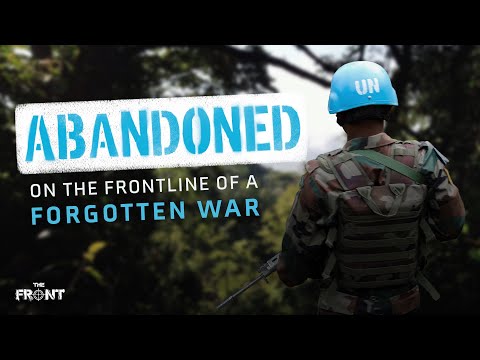
When the British Pathfinders arrived, they weren’t the relief force Obasanjo had hoped for—they were there to take the fight to the enemy. The West Side Boys, a splinter faction of the Revolutionary United Front (RUF) obsessed with American gangster rap, had been terrorizing the region. They saw the small British force as an easy target and planned Operation Kill British.
At 4:45 AM on May 17, the rebels launched their assault. Their vanguard approached the village, but their leader’s rifle jammed. That moment of hesitation was all the defenders needed. Three machine guns opened fire, cutting down the front line. The West Side Boys then resorted to a heavy bombardment, but the Pathfinders and Nigerians held their positions. For over an hour, they repelled wave after wave of attacks. The mortars fired illumination rounds and high explosives, keeping the battlefield lit and the enemy at bay.
By sunrise, the rebels retreated, leaving at least 25 bodies behind. The defenders suffered no fatalities. The victory at Lungi Lol had a cascading effect: the West Side Boys fractured, and morale across the RUF collapsed. Within months, infighting destroyed the rebel organization.
After 16 days, the Pathfinders left, reporting the Nigerians’ situation to the UN. The UN officers had no idea there were peacekeepers in the area and had stopped paying them months ago. But Lieutenant Obasanjo remained, still carrying out his order, still watching over the village of Lungi Lol.
What happened to Obasanjo and his men? Did the UN ever acknowledge their sacrifice? The answers lie in the untold chapters of this extraordinary story.
The Pathfinders’ report landed on the desk of a UN logistics officer in Freetown who, according to later accounts, stared at it for a long moment before asking a colleague whether Nigeria had any peacekeepers stationed in the eastern districts. The answer, after a flurry of radio calls and paperwork, was a sheepish no. Lieutenant Obasanjo’s platoon had been erased from the UN’s order of battle entirely, a clerical casualty of the chaotic early days of UNAMSIL deployment.
But the British were not content to let the matter die. Captain Harris, before departing, had made Obasanjo a promise: he would not leave the Nigerians to vanish into the jungle without a trace. Upon returning to Freetown, Harris escalated the matter up the chain of command, and within a week a British liaison officer was dispatched back to Lungi Lol with a simple mission—find the Nigerians, and bring them home.
The officer arrived by helicopter to find the village unchanged. Obasanjo was there to greet him, aviators gleaming, uniform still pressed. “I told you the relief would come,” he reportedly said to his men, though whether he believed it himself is another matter. The liaison officer offered transport to Freetown, back pay, and a formal reinstatement into the UN mission.
What happened next surprised everyone. Obasanjo accepted the offer—but not for himself. He requested that his men, many of whom had built lives in Lungi Lol, be allowed to choose. Some returned to Nigeria. Others stayed, their discharges processed quietly, their service records amended to reflect the months of forgotten duty. Not a single man was disciplined for going native, a decision that UN officials later described as an act of institutional embarrassment avoidance.
Obasanjo himself returned to Nigeria, where he was promoted and, by all accounts, served with distinction for another decade. He rarely spoke of Lungi Lol publicly, but those who knew him said he kept a photograph of the village on his desk—and a pair of aviators in his drawer.
The West Side Boys, meanwhile, never recovered. Their defeat at the hands of a handful of British paratroopers and a forgotten Nigerian platoon became a legend among the rebel factions, a story whispered in jungle camps as a warning. “Even the ghosts fight for that village,” one captured fighter reportedly told his interrogators.
But the story did not end with the battle. In the months that followed, as the British withdrawal loomed and the UN scrambled to stabilize the region, a new question emerged: what would happen to Lungi Lol itself? The village had become a symbol—of resistance, of forgotten duty, of the strange alliances war creates.
And in the shadows of the jungle, a new faction was already forming, one that had watched the battle from a distance and learned from the West Side Boys’ mistakes.
The new faction called itself the Jungle Scorpions, a name as theatrical as it was ominous. Unlike the West Side Boys, they had no interest in gangster rap or gold chains—their commander was a former Sierra Leonean army captain named Momoh Bangura, a man who had studied counterinsurgency tactics and understood that frontal assaults against prepared positions were suicide.
Bangura had watched the Lungi Lol battle from a ridge two kilometers away, counting the muzzle flashes and timing the mortar intervals. “The British fought like they were reading from a manual,” he later told a captured aid worker. “Predictable. But the Nigerian—he was the one who held the flanks together. That man understood patience.”
Within weeks of the Pathfinders’ departure, Bangura’s scouts began probing the village’s perimeter at night, testing the remaining defenses. The UN had promised to send a replacement garrison, but the paperwork moved slower than the jungle vines grew. For a tense fortnight, Lungi Lol was defended by nothing more than a handful of village militiamen and the fading memory of British firepower.
Then, without fanfare, a convoy of Nigerian army trucks rolled into the village. The new platoon was young, nervous, and freshly equipped—and at its head stood a familiar figure in a pressed green uniform, aviators catching the afternoon sun. Lieutenant Obasanjo had requested the posting himself.
“You came back,” said the village elder, an old man who had fed the forgotten platoon for six months. Obasanjo adjusted his beret and smiled thinly. “I never left,” he replied. “I only went to collect my relief.”
But the Jungle Scorpions were not the West Side Boys. Bangura’s men avoided the cleared kill zones and instead began cutting footpaths through the jungle, bypassing the village’s prepared defenses entirely. The first sign of trouble came when a patrol of the new Nigerian platoon failed to report back—their radios silent, their tracks vanishing into the undergrowth.
Obasanjo ordered the village’s outer trenches abandoned and pulled his men into a tight perimeter around the central huts. It was a gamble that would have horrified his British mentors, but he knew something they didn’t: the villagers themselves had become the eyes of the defense, and every footpath through the jungle passed within sight of someone loyal to Lungi Lol.
For three nights, the Scorpions crept closer, and for three nights, the villagers slipped information to Obasanjo through a network of whispers and hand signals. On the fourth night, Bangura’s men attacked—and found every approach covered by rifle fire from positions that shouldn’t have existed.
The battle lasted four hours. When it was over, Bangura’s second-in-command lay dead, and the Scorpions melted back into the jungle, their commander’s reputation badly dented. But Obasanjo knew the war was far from over. He had bought Lungi Lol another season of peace—and he had a feeling the UN would once again forget to send the paperwork.
The months that followed were quieter, but never truly peaceful. Obasanjo drilled his young platoon relentlessly, teaching them the lessons the British had taught him—how to read the jungle, how to hold a trench, how to make every bullet count. The villagers, who had once fed forgotten men out of pity, now fed them out of pride.
Then, in a twist no one expected, a letter arrived from Freetown. The UN had finally, belatedly, decided to formally recognize the defense of Lungi Lol. Lieutenant Obasanjo was to be decorated for “exceptional leadership under conditions of extreme deprivation.” The ceremony was scheduled for a Thursday.
Obasanjo read the letter twice, folded it carefully, and placed it in his breast pocket. When the village elder asked if he would attend, he shook his head slowly. “A medal does not feed a village,” he said. “And I have a feeling this ceremony is for their conscience, not for my men.”
He sent two of his youngest soldiers to accept the award in his stead—and to ask, politely, when the UN intended to deliver the ammunition and rations they had promised six months prior. The officials at the ceremony smiled, nodded, and promised to look into it.
The supplies arrived three weeks later, along with a new rotation order. Obasanjo’s platoon was to be relieved at last. As the trucks idled at the village edge, the men said their goodbyes—some to wives, some to children, all to a place that had become more home than barracks.
Obasanjo was the last to board. He stood at the village gate, aviators reflecting the setting sun, and saluted the elder one final time. “The ghosts fought well,” the old man said. Obasanjo smiled. “They always do,” he replied.
What became of the Jungle Scorpions, and whether the UN ever truly learned to remember its forgotten soldiers—do you think Obasanjo’s story should have ended with a medal, or with a village that never forgot him? Let us know in the comments below.
Report this article
Select a reason for reporting:






