The roar of a Merlin engine at full throttle was the sound of salvation. In the skies over Europe, a young American pilot banked his P-51 Mustang into a dive, the supercharged V-12 screaming as he lined up a German fighter in his sights. This wasn’t just a dogfight—it was the culmination of decades of engineering, a marriage of American airframe and British power that turned the tide of World War II.
But that iconic pairing almost never happened. National pride, bureaucratic stubbornness, and a German fighter called the Focke-Wulf 190 nearly kept the Mustang from becoming the war-winning weapon it was destined to be.
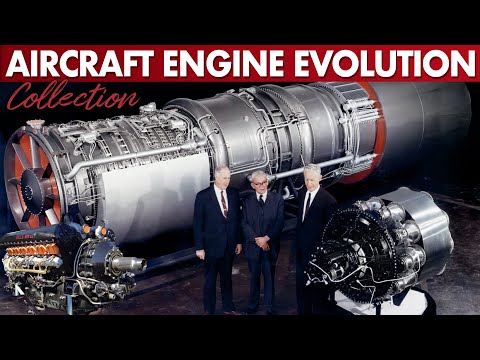
In the early days of aviation, the Wright brothers’ 12-horsepower engine was a marvel of lightweight design, its aluminum crankcase a stroke of genius. Every pound saved meant the difference between flight and failure. As war loomed, the need for more power drove engineers to create rotary engines, their spinning cylinders offering a deadly advantage in maneuverability—but at a terrifying cost. The gyroscopic effect could kill an unwary pilot in a low, tight turn, and the castor oil fumes left men sick and blinded.
By the 1930s, the radial engine had become the workhorse of American aviation, powering everything from Charles Lindbergh’s Spirit of St. Louis to the first airliners. Reliable, air-cooled, and compact, radials seemed the obvious choice for the U.S. Army Air Corps. But in Europe, a different philosophy took hold: speed above all. Sleek inline V-12s, like the Rolls-Royce Merlin and Daimler-Benz 605, gave fighters like the Spitfire and Bf 109 their razor-sharp profiles and blistering performance.
When war erupted, the U.S. found itself at a disadvantage. Its only modern inline engine, the Allison V-1710, lacked a crucial feature: a turbocharger that could maintain power at high altitude. American fighters like the P-39 Airacobra and P-40 Warhawk were forced to fight at lower altitudes, where they were outclassed by their German counterparts.
The British, desperate for aircraft, turned to North American Aviation to build P-40s under license. But company president Dutch Kindelberger had a bolder idea: “Give us 120 days, and we’ll build you a better fighter with the same engine.” The result was the P-51 Mustang—a sleek, aerodynamic marvel that impressed everyone who flew it. Yet its Allison engine still limited it to low-altitude roles.
Then came a stroke of genius. Ronald Harker, a Rolls-Royce test pilot, suggested fitting the Mustang with the new two-stage supercharged Merlin 61. The transformation was staggering. The Mustang could now fly faster than any American fighter and even outperform the latest Spitfires. The marriage of American airframe and British engine was a match made in heaven—but it almost didn’t happen.
Meanwhile, in Germany, a young engineer named Hans von Ohain had been inspired by the same idea that obsessed a British RAF officer named Frank Whittle: a revolutionary engine that used a compressor, combustion chamber, and turbine to create thrust without a propeller. Whittle had patented his design in 1930, but the British government, blinded by skepticism, let the patent lapse. Germany, eager for advantage, seized the concept.
By 1939, the world’s first jet aircraft, the Heinkel He 178, had flown—powered by von Ohain’s engine. Britain was falling behind in the race for the jet age. Whittle, battling bureaucratic indifference and financial ruin, finally saw his engine fly in the Gloster E.28/39 in 1941. But it was too late to change the course of the war.
Yet the Mustang, with its Merlin heart, was already carving a path to Berlin. As P-51s escorted American bombers deep into German territory, the Luftwaffe’s fighters found themselves outmatched. The tide had turned. And in the Pacific, the twin Mustang F-82 was being developed for ultra-long-range missions, though the war ended before it could see combat.
After the war, the jet age arrived in earnest. The de Havilland Comet, the world’s first jet airliner, promised a new era of speed and comfort. But tragedy struck: metal fatigue, exacerbated by square windows, tore the Comet apart in mid-air. The dream of jet travel was nearly shattered.
Yet from the ashes rose new champions: the Boeing 707, the Vickers Viscount with its Rolls-Royce Dart turboprops, and the supersonic Concorde. Each represented a leap forward, a testament to the relentless human quest for speed and efficiency. But the Concorde, for all its glory, was a financial disaster—a beautiful, impractical dream that only the wealthy could afford.
And through it all, the legacy of Frank Whittle, the man who invented the jet engine and nearly lost everything, reminds us that progress is never linear. It is a story of genius, perseverance, and the occasional stroke of luck—a story that continues to unfold with every new engine that roars to life.
Whittle’s story might have ended in bitterness, but history had other plans. In the decades that followed, the jet engine he had dreamed of in a cramped Cambridge dormitory would transform the world beyond anything he could have imagined. The man who was once told his idea would never work became the father of the age of jet travel.
Yet the path from his first patent to the modern airliner was anything but smooth. The same pattern that had haunted Whittle—brilliant vision undermined by institutional caution—would repeat itself again and again. The Comet’s square windows, the Concorde’s economic folly, the Apollo’s underpowered turbines: each was a lesson in how hard it is to turn a revolutionary idea into a practical one.
Consider the turboprop, which Whittle himself had patented in 1936. He saw clearly that a pure jet was wasteful at low speeds, and that a propeller driven by a turbine could be far more efficient. But the British government, in its infinite wisdom, cancelled the project. It was left to others to perfect the concept—and by then, the Americans had seized the lead.
The Boeing 707, powered by Pratt & Whitney JT3D turbofans, didn’t just carry passengers across the Atlantic in comfort. It killed the ocean liner, shrank the globe, and made mass tourism possible for the first time in human history. And it was built on principles Whittle had articulated when he was still a junior officer with no engineering degree.
Meanwhile, the Vickers Viscount, with its Rolls-Royce Dart engines, became the most successful British airliner of its era. Its smooth, vibration-free ride won over passengers and airlines alike, proving that the turboprop was not a dead end but a bridge to the future. Yet even as the Viscount sold hundreds of units, the British industry was already losing ground to American giants.
The Armstrong Whitworth Apollo, designed to compete in the same market, was a cautionary tale. Its Mamba engines promised efficiency and elegance, but they delivered neither. The aircraft was underpowered, its airframe flawed, and after just two prototypes, the project was quietly buried. The Mamba, however, would live on in a different form—as the Viper, which powered trainers and business jets for decades.
This pattern of failure and redemption was nowhere more evident than in the story of the jet engine itself. Whittle’s original design used a centrifugal compressor, simple but inefficient. The Germans, led by Anselm Franz at Junkers, pioneered the axial compressor, which could move far more air through a smaller engine. After the war, American engineers studied both and combined the best of each.
The result was the General Electric J47, which powered the F-86 Sabre in Korea and later the B-47 Stratojet. Its axial compressor gave it a thrust-to-weight ratio that Whittle’s early engines could only dream of. But it was also temperamental, prone to compressor stalls and flameouts if the pilot moved the throttle too quickly.
This was the lesson that every jet engine designer would learn: the marriage of power and reliability is a delicate thing, and it is won or lost in the details. The fuel control system, the turbine blade cooling, the exhaust nozzle—each component had to work in perfect harmony, or the whole machine would fail.
By the 1950s, the jet engine had become the defining technology of the Cold War. The Boeing B-52 Stratofortress, with its eight Pratt & Whitney J57 turbojets, could carry nuclear weapons to the edge of the Soviet Union and back. The Convair B-58 Hustler, the first supersonic bomber, pushed the limits of what was possible—and often paid the price in crashes.
And in the commercial world, the race was on to build the first truly efficient jet airliner. The de Havilland Comet had been first, but its crashes shattered public confidence. The Boeing 707, with its swept wings and podded engines, restored it. The Douglas DC-8 followed, and the two American giants dominated the skies for a decade.
But the Europeans were not standing still. The Sud Aviation Caravelle, with its engines mounted at the rear, offered a quieter, more comfortable ride. And in Britain, the Hawker Siddeley Trident pioneered the autoland system, allowing aircraft to land in fog so thick the pilots could barely see the runway.
Each of these aircraft carried the DNA of Whittle’s original vision. They were all, in a sense, his children—proof that a single idea, pursued against all odds, could reshape the world. And as the jet age matured, the engines grew more powerful, more efficient, and more reliable.
By the 1960s, the turbofan had arrived. By adding a large fan to the front of the engine, designers could move vast quantities of air at low speed, producing thrust with far greater efficiency than a pure turbojet. The Pratt & Whitney JT9D, which powered the Boeing 747, was a marvel of engineering—a 43,000-pound-thrust monster that could lift a 400-ton aircraft into the sky.
Yet even as the technology advanced, the fundamental challenge remained the same: how to extract more power from less fuel, without sacrificing safety. The answer, as always, lay in the details—in the precise shaping of turbine blades, the careful control of fuel flow, the relentless testing of every component.
And through it all, the ghost of Frank Whittle hovered over the industry he had created. He had been pushed aside, forgotten by the country he had served, but his ideas had won. The jet engine had become the backbone of global travel, connecting continents and cultures in ways he could only have imagined.
But the story was far from over. As the twenty-first century dawned, a new generation of engineers faced a new challenge: how to make aviation sustainable. The jet engine, for all its wonders, was a voracious consumer of fossil fuels and a significant contributor to climate change.
The answer, some believed, lay in electric propulsion, or hydrogen fuel, or radically new engine architectures. But whatever the solution, it would be built on the foundation Whittle had laid—the simple, elegant principle of using a compressor, a combustor, and a turbine to create thrust.
And so the story continues, as it always has, with dreamers and doers, with visionaries and bureaucrats, with triumph and failure. The jet engine, like the airplanes it powers, is a testament to human ingenuity—a reminder that the impossible is only impossible until someone proves otherwise.
Whittle’s funeral was a quiet affair, but the sky itself seemed to mourn. A lone Meteor, its engines painted in the colors of Power Jets, dipped low over Cranwell’s chapel before climbing into the grey English sky. He had finally gone flying, alone, as he had always wished.
The jet engine he had willed into existence would go on to power a billion journeys a year, shrinking the planet to a village. Yet the man who made it all possible died believing Britain had squandered its greatest lead. And perhaps it had.
But as the sun set over the churchyard, a new generation of engineers gathered around his grave. They spoke of hydrogen fuels, of electric thrusters, of a future where flight might be clean. The dream, it seemed, had not died with him—it had merely passed to other hands.
So the question remains, as it always does: when the next Whittle appears with an idea that seems impossible, will we listen this time—or will we let pride and caution ground the future before it ever leaves the runway? What would you have done?
Report this article
Select a reason for reporting:






