The five men controlling the north gate of the most heavily guarded airport in Afghanistan were firing rifles that still carried the yellow tags from the military police cage. Sergeant Aldridge saw the tags from behind the concrete barrier, his helmet pressed against the barrier and his glasses askew on his face. Above the Hesco barrier, Sergeant Mumbles fired two quick shots toward the fields, and a yellow tag swung under his barrel, tied with a plastic strap. The spotlight revealed his beard, dark on one side and gray on the other, as if someone had stopped dyeing half his face. An orange tracer round arced over the fence.
Aldridge knew those tags well. He had written each one in his own broad handwriting. An hour ago, he had stood in the same corridor and told that Australian with the half-gray beard: “Hand over your rifle.” He had watched the rifle being placed inside a mesh cage locked with a single brass padlock. The key to that lock dangled from a short cord on his belt. He could feel it touching his hip at this very moment. No one had asked him for that key. No one had come close enough to hear his voice. Yet his fence was under the control of men firing weapons he had taken into custody.
This is the story of the American military policeman who disarmed an Australian Special Forces patrol an hour before the attack—and was right about almost everything that night. How those rifles got back to his fence is another matter.
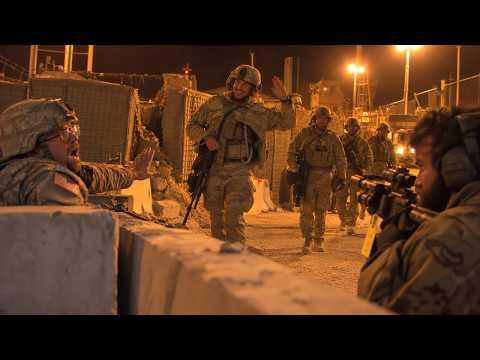
It began at the same gate, under the same floodlights, at two in the morning. The patrol arrived in a contractor’s truck at the front of a supply convoy. Five men, one equipment bag, and reserved seats on a morning flight out of Bagram. Behind them, the convoy lined up waiting its turn, a queue of American drivers with open windows and engines still running.
Mumbles stepped down from the truck first, his rifle slung over his shoulder, and walked toward the wooden MP hut beside the corridor. “Good evening, mate,” Mumbles said, so quietly that the MP at the barrier had to lean in to hear him. Aldridge did not lean in. “Hand over your rifle. All of them.”
He was in his late thirties, his uniform pressed at two in the morning, and his clipboard pressed against his chest. His glasses were pushed up on his helmet. Two keys dangled from a cord on his belt next to an M9 pistol, and an M4 rifle leaned against the hut wall within reach. The north observation point was under his command. Every vehicle, every badge, every weapon that passed through was first recorded on his board. The rules were laminated and abbreviated. Loaded weapons were prohibited from passing through the gate. No visiting weapons were allowed through without a Bagram weapon card, and the five transiting Australians did not have that card.
Mumbles did what he always did with such a rule. He asked to read it. Aldridge turned the clipboard toward him. Mumbles read the page slowly, then asked who had signed it, then asked if it applied to allied Special Forces in transit. Each question took a full minute. Behind him, the driver of the first truck honked, and the honks spread down the queue like dominoes.
Aldridge let the horns blare. He pointed the clipboard at things, one by one. The guard tower above the north fence with its spotlight and thermal camera watching the fields all night. The cameras mounted on poles along the fence. The rocket alarm, the concrete bunker beside the transient tents. A quick reaction force in armored trucks, two minutes from this gate. Everything on his list ran on generators, contracts, and budget lines. The Australians’ idea of defense depended on what each man carried on his chest. To Aldridge, a weary visitor with a loaded rifle inside the fence was not defense. It was an accident waiting for its time and place.
“Sergeant, this base has more eyes than you have ammunition,” Aldridge said. The horns were still rising. The whole convoy was now watching. Mumbles weighed the queue, the clipboard, and the flight in five hours. Then he unslung his HK416, removed the magazine, pulled the bolt back, and pointed the muzzle into the sand-filled clearing barrel. He handed the rifle across.
Aldridge wrote a yellow tag, tied it to the trigger guard with a plastic strap, and hung the rifle on a hook inside the cage.
The younger soldier came next. Nugget, his nose sunburned, his haircut fresh, carried the patrol’s equipment bag on his shoulder. During the trip, he had looked after the SR-25 for its owner, so he handed it over first, then his own rifle. Long, the sniper, handed over his HK416 with the face of a man surrendering a dog to an animal shelter. Spark, the signaller, and Doc, the medic, followed. Five HK416s and one SR-25 hung in an orderly row behind the metal fence, each with its yellow tag spinning slowly under the lights.
Aldridge was not finished. He ordered Nugget to place the equipment bag on the plywood table in the hut and open it. Helmets, night vision goggles, body armor, a patrol radio, and on top of it all, a pair of bolt cutters with red handles, long enough to break a shipping container lock. Aldridge looked at them, then ran his finger down his checklist. “Tools are not weapons,” he read aloud, and zipped the bag shut. Mumbles signed the receipt using Aldridge’s pen. One page with six serial numbers and a carbon copy beneath it. Aldridge tore off the copy and handed it to him. Mumbles took it, looked at it, folded it, and put it in his sleeve pocket.
“Do I get a raffle ticket with this, mate?” Mumbles muttered. No one laughed at the barrier. But in the trucks, some drivers did.
The barrier rose, and the five Australian Special Forces soldiers began walking toward Bagram, carrying nothing but a canvas bag and a carbon paper. They had taken twelve steps when Aldridge called them back.
“The magazines.” The rifle was one item on the list, ammunition another. Under the rule written on the clipboard, weapons and ammunition were stored separately so that no one could load a rifle in a hurry, in anger, or half asleep. He placed an oily steel ammunition box on the table. The box had its own lock, and the key to that lock hung on the same cord as the cage key. The Australians emptied their pouches. The magazines went into the box one after another, with a heavy metallic sound that echoed down the truck queue.
Nugget was bent over the equipment bag, his back half turned. He took out his helmet and placed a full magazine flat under the canvas cover, taping it over the bulge. It took him four seconds. Mumbles saw it. He said nothing. He shifted half a step to his left so that his shoulder blocked the camera on the tower, and kept his eyes on Aldridge’s hands as they closed the box. Aldridge locked it, checked the lid, and let the two keys dangle from his belt again. He pointed his clipboard south, behind the hut, toward the rows of transient tents 300 meters away and the low gray concrete block beside them.
“When you hear the alarm, you go into that bunker and stay there until all-clear,” Aldridge said.
The patrol walked south. The convoy moved behind them, truck after truck, the drivers giving the Australians a long last look as they went. In the cage, the yellow tags hung motionless. Aldridge noted the time in his log and turned back to the corridor. To the northwest, beyond the wire and the dark fields, there was a mud-walled compound at the edge of a village. On its roof, a man lay slowly holding binoculars. He wore an American camouflage jacket two sizes too big, its sleeves rolled to his elbows, its shoulders drooping on him like a borrowed coat. He had watched this gate on other nights. He knew when the convoys came, how long a truck stopped in the corridor, and where the guards looked while they stood there. He had deduced something about the floodlights. The sodium lamps above the entry corridor were bright enough to read a badge. That meant the MP in the tower sat in a pool of orange light looking out into the dark. The man in the light sees almost nothing beyond its edge. The man in the dark looking in sees everything.
The corridor was crowded tonight, and the guards’ eyes were on the trucks. So the section of fence next to the gate was the most illuminated and least watched along the north line. There was a section of Hesco barriers with a torn mesh where a vehicle had hit it and no one had repaired it. He lowered the binoculars. He had chosen that section of fence beside the gate and chosen this night. About twenty fighters waited in the compound below. He divided them into three small groups and sent them across the fields one by one toward the wire.
In the transient tent, the generator hummed through the canvas. Rows of empty beds stretched in the gloom, and the air smelled of dust and diesel. Mumbles lay on his back with his boots on. His night vision goggles rested on his chest, and his hands had nothing to do. For eleven years, those hands had always slept near a rifle. Now they opened and closed on the nylon strap of the goggles. Doc was snoring. Spark had the radio beside his head. Long stared at the ceiling. Nugget sat on the next bed, his helmet in his lap, fiddling with the tape over the hidden magazine.
“If they cross the wire, Mumbles, do we wave the receipt at them?” Nugget asked. Mumbles did not answer. He reached out, pulled the carbon copy from his sleeve pocket, read the six serial numbers once by the light of his watch, and put it back. The cord with the two keys was 300 meters north on the belt of a man who had not sat down all night.
At 2:58, the alarm sounded. The first rocket landed somewhere toward the flight line before the siren finished its first rise. Mumbles felt it through the bed frame, a faint jolt that reached his spine before the sound did. The second came closer. Then the low-frequency speakers began. A calm recorded voice repeating one word over and over across the rows of tents. Everything Aldridge had pointed to with his clipboard was now working. The siren rose and fell. Somewhere across the airfield, the tower spotlight turned toward the impact sites, and engines started in the vehicle yard. Bagram was doing exactly what it had been built and paid for.
At the end of the row, a radio on the duty corporal’s table hissed. Aldridge’s voice came through, steady and unhurried. “All transients proceed to the bunker. No one moves until all-clear.” Men in PT uniforms were already lining up outside their tents, holding their boots, heads down toward the concrete. Mumbles sat up and listened north. Under the siren was a lighter sound. Single shots at first, then a long burst, then the heavier, slower thud of an AK returning fire. Rockets come from kilometers away and leave no target to shoot at. Rifles mean men have come close enough to walk toward the wire.
From this side of the gate tonight, the only loaded weapons were those carried by Aldridge and the four MPs in the corridor, and the one in the tower. The cooks, the clerks, and the drivers inside the fence on that side carried empty holsters or nothing at all. Long was already on his feet. Spark had the radio in his hand. Doc had stopped snoring and was tying his boot.
“Those aren’t rockets, mate. Those are people,” Mumbles said. The bunker entrance was twenty steps to their right. The cage was the other way, across open ground toward the gate. Mumbles did not debate it. He nodded north and ran out through the tent flap. Four men followed, passing the bunker door without changing pace. Nugget grabbed the equipment bag as he ran and put his helmet on as its strap flew. Between the tents and the gate there was nothing but crushed gravel and road. No cover higher than a curb. The gravel was loud under their boots, and the gate lights threw their five long shadows ahead of them. A man shouted something from the bunker entrance behind them. No one turned.
Halfway there, the second burst came behind them. It walked across the rows of tents they had just left. Three explosions erupted in a line, each closer to the gravel than the last. The third blast threw bits of canvas and wood splinters into the air. Nugget fell mid-stride as if someone had kicked his legs out from under him. The equipment bag slid ahead of him. Long and Spark caught him by the shirt before he stopped sliding. They dragged him twelve meters to a low concrete wall near a fuel point and laid him flat behind it. Doc was on his knees beside him in the same instant. Shrapnel had torn the back of Nugget’s right calf, a long dark wound, and the blood looked black in the orange glow.
Doc placed a tourniquet above the knee and turned the windlass hard. Nugget swore through his teeth and pounded his heel on the gravel. Mumbles looked back toward the compound. No one inside was bleeding. Aldridge had sent everyone to that concrete for exactly this barrage, and Aldridge had been right.
“My call. My mistake,” Mumbles said, very quietly, so that only Doc heard. Doc did not look up. His hands were busy with the tourniquet and would stay that way. The patrol now included one man who could not walk and one who could not leave him. Mumbles bent, pulled Nugget’s arms over his shoulders, and stood with the soldier on his back. Spark took the equipment bag. The four moved toward the gate, slower now, with Doc running beside them holding Nugget’s legs out straight.
Aldridge lay behind a concrete barrier at the base of the guard tower. Rounds from the fields were chewing the Hesco barrier above him and throwing sand inside his collar. His M4 was up and firing toward muzzle flashes he could barely see. Below in the corridor, his four MPs were doing the same from behind the concertina wire. The MP in the tower above him was shouting grid coordinates into the radio. The cameras were recording all of it.
Forty meters below, under the same lights, stood the plywood hut and the cage beside it. Aldridge saw shapes move around the back of the hut. One was carrying another man on his back. Even at that distance, he knew the uneven beard. He also knew what they had come for. Both keys were on his belt, and the cage was still under his control. “No one touches that cage,” Aldridge shouted.
Behind the hut, Mumbles set Nugget down against the plywood wall and looked across the corridor toward the tower. Forty meters of concrete, every meter lit like a stage. Tracers from the fields crossed at knee level, then at head level, then dropped again. Aldridge was at the far end with the keys, and he had no intention of throwing them. Mumbles had already crossed one stretch of open ground tonight. Doc’s hands were still stained with blood. He did not run this time.
Spark was opening the equipment bag on the gravel. He moved the helmets and plate carriers aside and pulled out the bolt cutters. The ones Aldridge had inspected, checked against his list, and zipped back into the bag. The red handles were scratched from a year of cutting fence wire and container seals in Uruzgan. Spark put the cutters into Mumbles’s palm. Mumbles reached through the chain and fitted the jaws around the brass padlock shackle. He set his feet, pulled the long handles into his chest, and leaned his weight. The lock broke with a single sound that was louder than the gunfire for half a second. The two halves of the shackle separated, and the lock fell in the dirt.
Mumbles opened the door. Five HK416s and one SR-25 hung on their hooks exactly where Aldridge had left them. The yellow tags still swung from the trigger guards. No one stopped to cut them. Long took down the SR-25 and his own rifle and slung one on his back. Spark handed him the rest one by one. Within a minute, every Australian in the hut had a rifle in his hands. Every rifle was empty.
The oily ammunition box sat on the table where Aldridge had locked it. Spark tried the cutters on it. The box lock was different. A short, solid lock with a steel collar around the shackle, and the jaws found nothing to grip. He angled the tips and strained. The red handles bent, the jaws slipped off the collar, and his knuckles banged the table. He tried again from the other side with the same result. Somewhere inside that box were all the magazines the patrol owned, and the only way in hung on Aldridge’s belt.
Nugget was already working on his helmet. He set it in his lap, stretched his leg out in front of him, and picked at the tape with his thumbnail. The tape tore and came away. He held the magazine up to Mumbles without a word. Thirty rounds of 5.56 for five men. Mumbles seated the magazine in his HK416, slapped the base, and pushed the bolt forward. The yellow tag on its plastic strap jumped when the breech closed. He had a loaded rifle. Long, Spark, and Doc each held a rifle that was, for now, three and a half kilograms of nothing.
Nugget sat against the plywood as his blood seeped into the dirt. From the tower, Aldridge saw the cage door open and the lock lying in the dirt. His hand went to the radio on his chest. Unauthorized entry to the weapons cage was an incident with its own form and its own reporting chain, and he knew that chain by heart. He pressed the radio button. He opened his mouth to say the first word. Through the glow, he saw the collapsed soldier in front of his hut, a tourniquet on his thigh, and the medic bent over him. He could see an Australian soldier kneeling at the corner of the plywood, his rifle up, facing the fields. His four MPs were consuming ammunition in the corridor. Every round in the box on that table was a round no one at the wire could fire. He released the transmit button. The radio returned to his chest without sending anything.
At the hut, Mumbles pressed his face to the night vision goggles he had taken from his chest as he ran out. Through the green view, the fields beyond the wire looked chaotic. Every spotlight in the corridor glowed in the lens and smeared the darkness behind it. Without the goggles, it was worse. The sodium lamps lit the gate, the hut, the barriers, and every man near them. The ground the fire came from stayed black. Anyone out there could pick any target in the corridor and shoot from a fortified position. The defenders had only muzzle flashes to aim at and nothing else.
Mumbles turned toward the tower. For the first time all night, he raised his voice. “Turn off the lights, mate. You’re lit up and they’re not,” Mumbles shouted. Aldridge heard him. He looked at the lamp heads on their poles and the camera housings beside them. Every one of those cameras was set for the light. The tower MP’s thermal camera swept the fields, but his eyes, his spotlight, and the long-angle camera all worked because the corridor was lit. Turning off the lights meant the base lost its view of its own gate. Operations would be watching black screens in the middle of an attack. The lights would stay on. That was how the tower saw it.
“That’s how the tower sees it,” Aldridge called back. The lamps stayed on. They blazed over the serpentine barriers, the hut, and the open cage with the same bright light as at two in the morning. The fields beyond the wire stayed as black as they had always been.
Mumbles knelt again at the corner of the hut with thirty rounds, three empty rifles beside him, and Nugget breathing behind his back. Two hundred meters beyond the wire, the man in the borrowed jacket lay behind a crumbling field wall watching the tower. When the first rockets hit the flight line, the tower did what he had gambled it would do. The spotlight swung south toward the fires and settled there. The tower crew’s attention went to the flames. Beside the gate, the torn section of Hesco fence was now in the lit zone, away from the spotlights and the guards’ eyes. He touched the shoulder of the man beside him and pointed at the torn mesh.
Seven fighters slid over the wall and moved along the drainage ditch below the fence. Four others stayed with him. Their uniforms were American style, clean and dust-free at the knees. He had deliberately kept them out of the ditch. Their work would come later, and it required clean clothes.
Beside the hut, Mumbles lowered his night vision and looked away from the lights toward the strip of fence where the glow faded. The lens flared and then settled, revealing the Hesco line to him in pleasing green. Below the torn mesh, the edge of the ditch moved. “Get ready for me, mate,” Mumbles whispered to Long.
A head and shoulders rose at the mesh. A rifle appeared beside them. A quick flash, the crack of an AK, and splinters flew from the plywood a hand’s width from Mumbles’s cheek. He fired two rounds at the shape, moved his muzzle, and fired two more at the second shape behind it. The shapes dropped back out of sight. A third tried the mesh farther down. Mumbles gave him two rounds, then two more into the dirt where he fell. He did not fire longer bursts. Bursts would empty Nugget’s magazine in three seconds and tell everyone in the ditch exactly what they had left. Long knelt at his shoulder holding an empty HK416 and counted quietly. Spark and Doc knelt behind them with empty rifles too. There was nothing they could do but watch the mesh and listen to the numbers. Long reached twenty-two and stopped. Eight rounds left.
Silence fell in the ditch, but no one behind the hut believed it was empty. Out in the corridor, Aldridge’s MPs were doing the opposite. Their M4s fired long bursts from behind the concrete barriers, sweeping the darkness beyond the wire without hitting anything specific. Brass casings bounced on the concrete under the lights. One soldier was already digging into his last pouch of ammunition.
A man in the ditch saw the source of the noise. He stood with a launcher on his shoulder. The rocket struck the hut. The explosion tore the corner of the hut and threw the plywood table inside in one piece. Splinters and papers showered over Nugget, who covered his face with his arm. The logbook and Aldridge’s clipboard flew somewhere into the dark under the debris.
In the corridor, the nearest MP turned, dropped his rifle, and sat down hard behind the barrier, holding his left hand. Blood ran between his fingers onto his sleeve. He was swearing loudly. Loud meant he was still alive. Aldridge saw it all from below the tower. He saw his man tending his wounded hand. He saw the other three changing magazines as their pouches ran low. He saw one Australian rifle doing the work of his entire corridor, and four men with empty rifles. The base rule in his head was clear. Ammunition stays locked until it is drawn through official channels. That official channel was a staff sergeant trapped at the base of the tower. That was him.
He unclipped the key cord from his belt. Then he did what he had told every transient on the base not to do. He crossed the open corridor in an attack. He ran bent from barrier to barrier. A round ricocheted off the concrete as he passed the third barrier. Another cut the air above his helmet and knocked his prescription glasses away. There was no time to retrieve them. He slid behind the wreckage of the hut. He did not hand the key cord to anyone. He threw it on the ground. The two keys fell in the dirt beside Mumbles’s boot. Then he pulled two magazines from his own pouch and threw them on top.
“You’re late, mate,” Mumbles said without taking his eyes off the ditch. Aldridge said nothing. He looked at the pile of wreckage where his desk had been, where the board was buried. He left it there.
Spark already had the box key in his hand. The short lock that had defeated the bolt cutters twice opened in a quarter turn. He slid the lid back. The magazines were stacked inside, exactly as the team had left them an hour ago. Nugget could not stand, so he did not try. He rolled onto his side, hooked the box with his arm, and pulled it toward his chest. Lying on the ground, he pulled out magazines and pushed them sliding across the gravel, one for each pair of hands. Doc took his share at last, after checking the tourniquet with his other hand and confirming it was still tight. The sound of parts seating in four rifles was the best sound of the night.
Mumbles replaced Nugget’s half-empty magazine with a full one. He handed the old one back to its owner without a word. Nugget tucked it under his helmet strap. Long slung the SR-25 on his back and climbed the ladder at the base of the tower. From the second rung, he jumped to the top of the Hesco wall. He lay flat on the barrier with his rifle over the parapet, the yellow tag dangling inside the wall. From there, he could see the entire ditch, from the torn wire to where it curved away toward the fields. Above, the tower MP stopped shouting grid coordinates to stare for seconds at the bearded stranger lying on his wall.
Tasks distributed themselves without orders. The Australians took positions on the fence line on both sides of the torn opening. Spark and Doc lay flat behind the barriers. Mumbles took the corner of the hut, and Long stayed up top. The MPs held the corridor and the barriers where they had trained to fight. Their wounded man loaded magazines for his rifle with his good hand. Aldridge knelt behind a barrier at the road junction, his M4 on his shoulder and both hands on it. For the first time that night, he carried only his rifle.
In the field, their commander heard the change in the sounds coming from the gate. The long panicked bursts became short pairs, then single shots, aimed and spaced. His first group was still in the ditch. Two of his men had stopped moving, and the rest did not dare raise their heads. He did not call them back. He sent the second group through the same ditch. They came from farther away where the curve provided almost full cover to the gate. With them he sent the one man he could not afford to lose.
Long saw them first. A row of heads moving along the bottom of the ditch, low and fast, much closer to the gate than the first group had been. The rifles below opened fire, and the heads dropped. All but one. A single man broke from the near side and ran straight toward the barriers at the corridor entrance. He was broad-chested in a way the others were not. His arms moved away from his body because something under his shirt was in the way. “Suicide vest,” Long said into the radio, very quietly. Thirty meters. A strong man could throw a grenade that far, and this man carried much more than a grenade.
Behind the barrier he was running toward, the wounded MP sat with his back to the concrete, loading his weapon one-handed. He had no idea anyone was coming. Long’s first round hit the running man high in the chest. He stumbled but stayed on his feet. The second round landed an inch from the first, and his legs twisted under him. He fell at the edge of the ditch before the barrier, one hand still feeling at his shirt. The vest detonated in the dirt where he fell. The blast traveled through the ground before it traveled through the air. It slammed under Mumbles’s knees at the corner of the hut. A wave of gravel and sand washed over the parapet and clattered against helmets and concrete. Above the corridor, two sodium lamps flickered and came back on.
The wounded MP was flat on his face with his arms over his head. When the dust cleared, he raised his head, still holding his half-full magazine. Mumbles took his eye from the goggles and looked at the fence. Beside the gate, where the mesh had been torn, the Hesco barrier was now ripped wide open. The explosion had torn two defensive walls. Their wire baskets hung shredded, and the sand and rubble inside them collapsed into the ditch in a long, low slope. Where there had been a wall, there was now a gap the width of a man’s shoulders and the height of his head. On the far side, the ditch led straight into the dark. On the near side, the gap opened onto the lit corridor.
Behind the field wall, the dust of the shattered barriers drifted over the ditch like smoke from a fire in the grass. The man in the oversized jacket raised his head above the mud brick and looked at the gate. He had sacrificed his runner and most of his men for one rifle over the wall. In return, there was now a hole in the fence, and the lights over the corridor were still on. Inside that light, the defenders waited for help. He had seen help come here before, and he knew what they wore. The four men beside him wore it too. He reached over and zipped one man’s jacket to the neck so that it lay flat over what was strapped underneath. Then he gave them simple instructions. “Walk. Don’t run. A running man draws bullets. A man walking calmly toward the light draws only questions.” Keep your rifles slung low, the way he had seen American soldiers carry them inside a secure base, and slide into the ditch toward the gap.
Mumbles saw them come out of the dust. They crossed the broken Hesco barrier in a spaced line and turned toward the corridor and the barrier. Multicam uniforms, clean, helmets, rifles hanging muzzle-down. No one hurried. The man in front raised his arm and called out in English: “Quick reaction force, friendlies coming in.”
Mumbles took his finger off the trigger. The shapes in the ditch were one thing. Four men wearing American uniforms in an American base at the gate where he had been disarmed an hour ago were another. To a visitor, there was no worse mistake. A patrol that shoots its hosts does not go home to a medal, and the sergeant who gave the order goes home to a court-martial. All night, his hands had moved before his brain. Now they stayed still. He kept his rifle aimed at the buckle of the lead man’s belt and waited for someone with the authority to decide.
Aldridge had that authority, and he had a rule he applied. The quick reaction force came in armored trucks from inside the fence. These men came on foot through a gap from outside it. But suspicion is not a formal action. Under the procedures, everyone who reached his barrier had to show an ID badge, including the quick reaction force, with no exceptions for a good uniform. “Stop at the barrier. Raise your badges where I can see them,” Aldridge shouted.
The lead man stopped at the concrete barrier, close enough to touch. He smiled. His right hand did not go to the badge pocket on his sleeve. It went under the zipper of his jacket and stayed there. It took three seconds. If the man had kept walking, the gate could never have stopped them. The jacket parted. Aldridge saw cloth bags around the man’s ribs and a twisted wire running to his fist. He threw himself sideways behind the concrete barrier. Behind the smiling man, two rifles rose and white muzzle flashes cracked under the lights. Mumbles fired two rounds at the second man. From the wall at the tower, Long’s rifle cracked twice, and the third man fell in the corridor as if his legs had been cut from under him. Both stayed where they fell. Rounds slammed into the barrier where Aldridge’s head had been moments before. The fourth man was already running back toward the gap. The man in the jacket followed him, bent over, his hands still trapped inside his jacket. Alone, with a rifle chasing him from behind, he did nothing with that hand at the barrier. Mumbles turned behind them but lost them. At the edge of the corridor, the bright light simply ended. The two shadows ran out into a black wall, and the night vision on his chest would not help. In light like that, the lenses would fill with nothing but white.
Aldridge shifted to a kneeling position and dropped the empty magazine. His hand went to his pouches and found only one full magazine. The other two were in the Australians’ rifles. Mumbles left the corner of the hut and ran toward him, bent low. Twenty steps across concrete he would not have dared cross ten minutes earlier. He slid behind the same barrier, shoulder to shoulder, and spoke the way he had at two in the morning, so quietly that Aldridge had to turn his head to catch the words. “Turn off the lights, mate. Now,” Mumbles said.
Aldridge looked at the gap where two men in at least one vest had disappeared. He raised his eyes to the camera housings on the poles. He knew the price. Operations would lose its view of the gate. The tower would lose its spotlight. His MPs would be left without a single pair of night vision goggles. An hour ago, that price had been too high. Now there were two men lying in his corridor wearing his army’s uniform. A gray steel electrical cutoff box was bolted to the leg of the tower, a meter from his shoulder. He reached out, opened the cover, and pulled the main lever down. The lamps did not go out at once. They dimmed from orange to dull red, like coals left in a fire, and then faded completely. The hum that had run all night under the sound of gunfire stopped. In the sudden quiet, Aldridge heard the MP in the tower swearing over the radio about his screens.
“MPs, hold your fire. Anything moving out there is Australian,” Aldridge called down the corridor. His men lowered their rifles. Without vision, they could only make things worse, and Aldridge had decided not to allow that. Four sets of goggles came down. Spark had taken the spare goggles from the equipment bag at the staging point, and now he and Doc fitted them over their helmets. With the lamps off, the glow tubes stopped flaring, and the ground beyond the wire began to appear in grainy green-gray. Mumbles could now see the field wall, every brick of it. He could see the ditch and the low slope of spilled sand through the gap. He could see heads moving in the ditch. For the men outside, the night had turned upside down. They had spent it looking into a bright corridor and choosing targets inside it. Now they stared at a gate that had gone completely black. Their eyes were still full of light. Only the tower’s thermal camera and four Australian helmets could see across that ground.
Behind the barrier, Nugget was loading the last magazines from the box by touch. He counted them quietly under his breath because he could no longer see his hands. In the field, their commander watched the lights go out and understood what it meant. The gate had become as dark as a closing eye. But the dark hid men too. And the gap in the fence was still there. He still had the remnants of three groups. That runner had come back with the last launcher. He could send them back to the compound without accomplishing much tonight. Or he could go through that gap. He rolled his sleeves above his elbows, stood behind the wall, and waved them forward. This time, he went down into the ditch himself, in front.
Long saw the movement first and reported it over the radio. Mumbles climbed the tower ladder to join him. His thighs trembled on the rungs. The weight of carrying Nugget across that open gravel was still in his legs, and every step reminded him of the cost. He rolled from the top onto the Hesco wall beside Long and lay flat. Below him, the gap was a black furrow in the wall, and the ditch ran straight into it. “Keep their heads down, mate. I’ll take the gap myself,” Mumbles muttered. Long went to work on the ditch. He fired single rounds at the edge whenever a head appeared. Then he waited. Then he fired again. Slowly. Each round came from a different part of the wall. The heads stopped appearing. Spark and Doc took the near side of the gap from behind the barricades. Their rifles fired only when a shape left the ditch. And they did it only in pairs.
Mumbles watched the sand slope. A man came up on his hands and knees, halfway through the gap when Mumbles stopped him. A second tried behind him. He got no farther than the first. Their commander lay in the ditch thirty meters from the gap, his face in the cold mud. Above him, the gate was dark. Before, he had seen every soldier in that corridor. Now he saw no one. Fire poured from a wall he could not identify, and it was not panicked bursts into the dark. It was single, aimed shots, and each one hit a man. He raised his head a few centimeters. Nothing showed against the sky. No helmet. No rifle barrel. Nothing to shoot at. A round hit the mud by his elbow, and he put his head down again. He had chosen this gate because it was lit, and the light was gone. He tapped the boot of the man behind him, then the next, and the order passed down the ditch the same way. Then he turned and crawled back the way he had come, his oversized coat dragging in the water. The bomber crawled behind him, and the rest followed. At the bend, they rose to a crouch and ran for the field wall. Then they were over it, across the dark fields toward the mud walls of the villages.
From the wall, Mumbles watched them go in grainy green, growing smaller until the field wall hid them. He did not fire. He had a few rounds left, a breached fence, and a bleeding soldier behind the barrier, and the night was not over. The sound of engines came first. The armored trucks came up the perimeter road with lights off, their turrets turned toward the fence. Behind them, a deeper sound rolled across the airfield. The heavy thump of helicopter blades. An Apache crossed the north fence at rooftop height and banked hard over the fields. Its nose turret swung left and right, hunting for heat. Mumbles lay on the Hesco barriers watching the gunship work. Out in the fields, the men his goggles had lost glowed white in the gunner’s thermal sight. The cannon spoke in short, torn bursts. Near the first village, a running shape stopped while another fell flat beside a mud wall and did not get up. The Apache circled wider toward the orchards. Two minutes, he estimated. “Two long minutes, mate,” Mumbles muttered. Long did not answer. He kept his SR-25 aimed at the bend in the ditch where the last of them had disappeared. Nothing moved there now.
The lead quick reaction force truck did not stop at the barrier. Its driver saw the sand piled through the gap and drove straight at it. The armored nose plunged into the broken barriers, and the wire baskets folded under the wheels like cardboard. The truck rocked through the ditch, clawed up the far side, and headed out toward the fields behind the helicopter. A second truck followed through the same gap. Behind them, the gap one man had crept through an hour ago was now a breach wide enough for a road.
At the base of the tower, Aldridge left the cutoff lever where he had pulled it. The gate stayed dark. Instead, he walked the corridor from barrier to barrier. He stopped at each MP and put his hand on top of each helmet. Like a man counting sheep through a gate. The man with the wounded hand raised it, wrapped in a field dressing stained brown, like a schoolboy answering roll call. Above them, the tower MP leaned over his rail and waved his whole arm. One hand injury. Everyone breathing. Aldridge reached the last barrier, turned, and counted them again from the beginning.
The Australians came down off the wall one by one. Long handed the SR-25 down before climbing after it. On every rifle, the ID tags still hung from their plastic straps. They were dirty now, crumpled and stained with sand. The tag on Mumbles’s HK416 had a burned brown edge from the grenade that had torn the hut. By the time the sky over the eastern hills turned gray, the fields had gone quiet. The Apache made one last slow pass over the villages and turned toward the airfield. The gray light revealed what the night had cost.
Nugget lay on a folding stretcher lowered from the back of a quick reaction force truck. His face was the color of concrete. The medic had written the tourniquet time on his forehead in black pen, and the numbers were smeared where Nugget kept wiping sweat with his sleeve. The shrapnel had opened his leg to the muscle. He would not have a seat on the morning flight, only a stretcher strapped into the back of a plane. The medic moved to Mumbles. He made him turn and ran both hands over his back from shoulder blades to belt, searching for any hole. The shirt was stiff with blood and stuck to his skin. The medic found nothing. Every drop of it had come out of Nugget’s leg during the long carry across the gravel.
“Sorry about the shirt, Sergeant,” Nugget said from the stretcher. Mumbles looked at him for a long moment, then knelt and checked the tourniquet himself. It was still tight. He stood slowly. His legs had not forgiven him either.
Behind the wire, a quick reaction force sergeant came back across the fields on foot behind the second truck. He carried a bundle of cloth under his arm. At the barrier, he shook it out and held it up. It was an American camouflage jacket, far too big for any man at the gate. The sleeves were still rolled from wear, and one elbow was black with ditch mud. They had found it at the bend, thrown in the water. Its owner had simply taken it off. Without it, he was just another man in a shirt walking into the village with the first light. Aldridge stared at it for a long time. An hour ago, four men had walked into his corridor in that same pattern, and he had almost let them pass on the strength of it. He said nothing. The quick reaction force sergeant folded the jacket under his arm again and walked away.
Aldridge returned to what was left of his hut. The table was smashed into splinters where the grenade had blown it inward. He knelt and began digging through the debris with both hands, through plywood and papers and broken pens until he found the clipboard. Its corner was cracked, and the laminated rules were still clipped to the front. He was not wearing his glasses now, so he held the board at arm’s length and tried to focus with narrowed eyes. The sky was barely light enough. The cut lock still lay in the dirt in front of the cage. The door was part open, and the hooks inside were empty. Aldridge flipped through the pages until he found the receipt. Six serial numbers in his handwriting and an Australian signature at the bottom. He took the top edge and tore the page cleanly. He did not fold it or file it. He walked to the clearing barrel and pushed the paper into the sand with two fingers until the barrel swallowed it. Then he closed the board on what was left inside and put it under his arm.
Doc and Spark lifted the stretcher to carry it toward the truck. As they passed the cage, Nugget turned his head and held something over the edge of the stretcher. It was the magazine that had been on his helmet. A piece of tape still stuck to one side, and the spring was flat and empty. He had thumbed the last rounds into his pouch before Doc could stop him. “A souvenir, mate. There’s no ID tag on this one,” Nugget said. Aldridge took it. He turned it once in his hand and ran his thumb over the tape. Then he put it in an empty magazine pouch on his vest, one of the two he had emptied into the Australians’ rifles in the dark. The stretcher moved away.
The sun came up behind the hills a little after five. It cast a flat, stretched light across the airfield, the broken fence, and the black burn marks on the concrete. Two men in American uniforms lay in the corridor under rain covers. No one had moved them yet. A truck waited behind the barrier to take the patrol to the flight line. The patrol came through the corridor together, rifles slung on their shoulders, muzzles down. The ID tags swung and banged against their thighs with every step. Long walked in front carrying the SR-25. Behind him, Mumbles had taken the front handles of the stretcher from Spark. His thighs trembled, but he refused to give the handles back. Spark walked beside him with the equipment bag on one shoulder. The red handles of the bolt cutters stuck out of the half-open zipper. Doc carried the rear of the stretcher and kept one eye on the tag numbers on Nugget’s forehead.
The convoy drivers from the night before had gone. In their place, half the north gate personnel had come out to watch. Cooks, clerks, and a few drivers still in PT trousers stood around the barrier in the sun. None of them had held a weapon all night. Aldridge stood at the barrier, in the same spot where he had stood at two that morning. His uniform was no longer pressed. There was sand in his collar, a long tear on one knee, and a fresh scratch on his cheekbone. His M4 hung across his chest, and his hands rested on it. The key cord was gone from his belt. The keys were still lying somewhere in the dirt behind the hut.
The patrol reached the barrier. Every rule on the cracked clipboard under his arm told him what to do next. Visiting weapons stop here, to be recorded on his list and placed in his cage. Six rifles passed in front of him with his yellow tags still on their trigger guards. Aldridge did not reach out. Instead, he reached over and raised the barrier arm himself, and held it up while the stretcher passed beneath it. Mumbles stopped beside him. The stretcher handles were still in his fists, and Nugget lay between them with his eyes half closed against the sun. The gray side of the sergeant’s beard had turned rusty brown where Nugget’s blood had dried on it. He tilted his head toward the American, and Aldridge bent down without being asked.
“Next batch through, mate. Let them keep the bolt cutters,” Mumbles muttered. “If you stick around till the end, there are three links on your screen now. The next story in this series, the full playlist of Australian Special Forces stories, and another one I think you’ll enjoy. Hit the like button if the story earned it. Tell me in the comments which operation you want next, and I’ll see you in the next story.”
Aldridge straightened and looked at the clipboard under his arm, then at the six rifles with his yellow tags still swinging from their trigger guards. He tore the top page from the board, the one with the six serial numbers, and held it out to Mumbles without a word.
“Keep the tags too, mate. They’re the only paperwork that matches the story,” Mumbles said, taking the page and folding it into his sleeve pocket beside the carbon copy.
The barrier stayed up. The truck pulled away toward the flight line, and Aldridge stood alone in the corridor as the sun climbed over the broken fence. Behind him, in the dirt, two keys caught the light.
What would you have done at that barrier, with the rules in one hand and the keys in the other?
Report this article
Select a reason for reporting:






