Can fame erase a death, or does a famous face make the public look away? Tonight, we are opening the files Hollywood would rather leave buried. Some names on this list were convicted. Others caused fatal accidents and were never charged. A few insisted it was self-defense or a terrible mistake. Keep watching because the final cases destroy the image these celebrities sold to the world.
Before we open the first file, subscribe and turn on notifications because this channel follows the stories fame cannot hide from public view.
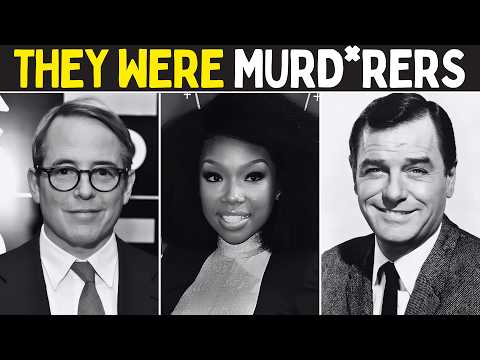
Number 35, Matthew Broderick. A quiet holiday in Northern Ireland became the darkest chapter of a movie star’s life. In August 1987, Broderick was driving near Tempo with actress Jennifer Grey when his rented car crossed into the opposite lane and collided with a vehicle. The crash killed Anna Gallagher and her mother, Margaret Doherty. Broderick suffered injuries and later said he remembered little about the collision. Prosecutors considered a more serious charge, but he ultimately pleaded guilty to careless driving and received a fine.
That outcome angered relatives of the victims who believed two deaths had been answered with a punishment that felt small. It is important, however, not to rewrite the legal record. He was not convicted of murder and the case was treated as a fatal traffic accident. The uncomfortable part is the contrast. Audiences saw him as the charming face of comedy, while one family remembered a road, two empty seats, and a famous driver whose career continued.
Number 34, Caitlyn Jenner. Traffic on the Pacific Coast Highway turned deadly in February 2015. Jenner was driving an SUV when a chain reaction collision sent a vehicle into oncoming traffic where driver Kim Howe was killed. Investigators examined speed, braking, video, and the movements of the cars before deciding that criminal charges could not be proven. Prosecutors said the evidence did not support a case for vehicular manslaughter, and Jenner was not charged. Civil claims followed, but the criminal question ended differently from headlines.
This distinction matters because causing or contributing to a fatal crash is not automatically the same as committing a crime. Still, legal closure could not undo the human result. A woman died during a drive, and one of the world’s most recognizable public figures became connected to that moment. Fame did not create the tragedy, but it guaranteed that every frame, estimate, and public statement would be studied as though the collision were a courtroom drama playing forever.
If these first two cases surprised you, subscribe now because the stories ahead move from tragic accidents toward proven deliberate crimes. Stay with us and comment which famous name shocked you most when this disturbing countdown reaches its end tonight.
Number 33, Brandy Norwood. Rush hour traffic in Los Angeles became a nightmare just before the end of 2006. Singer and actress Brandy Norwood was driving on the 405 freeway when her vehicle struck the car ahead, setting off a multi-car collision. The other driver, Awat Aboudihaj, later died from her injuries. The California Highway Patrol recommended a misdemeanor vehicular manslaughter charge, but prosecutors declined, saying there was insufficient evidence to prove the case beyond a reasonable doubt. Brandy was therefore never criminally convicted over the death.
Civil lawsuits were later resolved, while the singer spoke publicly about carrying the emotional weight of what happened. This entry belongs on the list because a celebrity’s actions were tied to a fatal result, not because a court branded her a murderer. That difference is essential. Behind the legal language was a family that lost someone. A performer whose public image changed overnight and a freeway moment that could never be replayed or repaired for the victims.
Number 32, Tony Stewart. Under the lights of a track, anger and confusion collided in seconds. During a sprint car race in New York in 2014, driver Kevin Ward Jr. crashed after contact with Tony Stewart’s car. Ward climbed from his vehicle and walked onto the track while cars were still circling under caution. Stewart’s car struck him, causing fatal injuries. Video of the incident spread, and viewers argued over whether Stewart had tried to frighten Ward or could not avoid him. A grand jury reviewed evidence and declined to indict Stewart.
The district attorney said the evidence did not establish criminal wrongdoing and toxicology findings also became part of the presentation. None of that made the footage less disturbing. The case remains a warning about how quickly competitive emotion can become irreversible danger. It also shows why online certainty is not legal proof. Millions watched a few seconds, but investigators had to decide whether those seconds demonstrated intent, recklessness, or a racing accident.
Number 31, Keith Moon. Chaos followed the Who’s drummer almost everywhere, but one night ended with a death he could never turn into a joke. In January 1970, Keith Moon left a crowded pub as a confrontation formed around his Bentley. His driver and friend, Neil Boland, got out of the car. Moon moved into the driver’s seat and tried to escape the crowd, but the vehicle struck Boland, who died.
A coroner later ruled the death accidental, and Moon received an absolute discharge after pleading guilty to driving without proper documents. He was not convicted of intentionally killing anyone. Friends nevertheless said the incident haunted him, adding another shadow to a life already defined by destructive behavior. The tragedy is often reduced to rock and roll mythology. Yet, Boland was not a footnote. He was a person caught beneath the confusion surrounding a celebrity. The fame, the expensive car, and the wild reputation made the story legendary, but the legal finding remained an accident.
Number 30, Gig Young. Only weeks after a new marriage, a Manhattan apartment became the final scene in Gig Young’s troubled life. In October 1978, police found the Oscar-winning actor and his wife, Kim Schmidt, dead inside their home. Investigators concluded that Young had shot Schmidt and then himself. There was no trial because the suspected gunman was also dead, but the police finding left little uncertainty about the sequence they believed occurred.
The news stunned Hollywood. Young had built a career playing polished, witty men. Yet, his private life included alcoholism, broken marriages, and professional decline. None of those struggles excused the death of a woman. They only explain why the smiling screen image had concealed a far more unstable reality. This case also exposes a recurring problem in celebrity storytelling. The famous person often receives the longest biography while the victim becomes a single line. Kim Schmidt deserves to be remembered as more than the last chapter of Gig Young’s career.
Number 29, Spade Cooley. Behind the cowboy costumes and television fame was a home ruled by fear. Band leader and actor Spade Cooley became known as the self-styled king of western swing, but in 1961, he was convicted of murdering his wife, Ella Mae. Prosecutors presented evidence of a prolonged and violent attack witnessed in part by their daughter. A jury found him guilty, and he received a life sentence.
Unlike the accident cases earlier in this countdown, there was a murder trial, a verdict, and a prison term. Cooley continued to attract loyal supporters and years later he was allowed to perform outside prison during a temporary leave. He died shortly after that appearance before a planned parole could restore his freedom. The disturbing contrast is hard to miss. Applause still waited for him even after a court had established what happened inside his home. Celebrity nostalgia can soften almost any image, but it should never erase Ella Mae from the story.
Number 28, Dany Heatley. A late night drive through an Atlanta neighborhood ended an emerging hockey partnership forever. In September 2003, NHL star Dany Heatley lost control of his Ferrari and crashed. His passenger and Atlanta Thrashers teammate Dan Snyder suffered severe injuries and died days later. Heatley later pleaded guilty to charges including vehicular homicide and received probation, community service, and a requirement to speak publicly about the dangers of speeding.
Snyder’s family supported a sentence that did not send Heatley to prison, emphasizing forgiveness rather than revenge. That mercy became a central part of the story, but it did not make the loss smaller. Two young athletes entered the car and only one survived. Heatley returned to professional hockey, carrying both a legal record and the knowledge that his choices had cost a friend his life. The case is painful because there was no enemy, no planned attack, and no simple villain. Only speed, confidence, and one irreversible mistake on that road.
Number 27, Craig MacTavish. Years before coaching in the NHL, Craig MacTavish faced a courtroom instead of a cheering arena. In 1984, while playing for the Boston Bruins, he drove after drinking and collided with another car. The other driver, Kim Bradley, died. MacTavish pleaded guilty to vehicular homicide and served a year in jail.
After his release, the Bruins allowed him to rebuild his career elsewhere, and he won Stanley Cups as a player. That comeback is often presented as a story of redemption, but redemption cannot be discussed honestly without naming the life that ended. Bradley’s death was not a sports setback. It was the permanent consequence of a preventable decision. MacTavish later spoke about responsibility and the burden of the crash. Yet, the public came to know him for championships and coaching. The case asks a question: when a famous person rebuilds a life, how do we acknowledge growth without allowing success to push the victim out of the frame?
Number 26, Donté Stallworth. Before sunrise on a Miami road in 2009, one decision produced a death and a sentence that shocked the public. NFL receiver Donté Stallworth struck and killed pedestrian Mario Reyes while driving after drinking. Stallworth stopped, called authorities, cooperated, and later pleaded guilty to DUI manslaughter. Under a plea agreement supported by the victim’s family, he received 30 days in jail, followed by house arrest, probation, community service, and driving restrictions.
Critics argued that a wealthy athlete had received extraordinary leniency. Others pointed to his cooperation, remorse, and the family’s wishes. The legal result was real, but so was the uncomfortable appearance of unequal justice. A professional career paused and later resumed. Reyes never returned to his family. This was not an intentional killing, and the conviction was for manslaughter, not murder. Even so, the case became a lasting example of how celebrity, money, negotiation, and mercy can combine to produce a punishment many ordinary defendants could only imagine.
Number 25, Leonard Little. A birthday celebration in St. Louis ended with an innocent motorist losing her life. In 1998, NFL defensive player Leonard Little drove after drinking, ran a red light, and struck the vehicle driven by Susan Gutweiler. She died from the collision. Little later pleaded guilty to involuntary manslaughter and received jail time, probation, community service, and an NFL suspension. The sentence drew anger because his professional future remained possible while the victim’s future had disappeared completely.
Several years later, police again arrested him on a driving under the influence charge. He was acquitted of that count, but convicted of a lesser speeding violation, reopening public outrage over whether the first tragedy had truly changed him. Legally, the original case was manslaughter rather than murder. Morally, the central fact was simpler. A decision to drive after drinking had ended another person’s life. Football broadcasts eventually returned to sacks, statistics, and playoff hopes, allowing the story to fade into the background. Gutweiler’s family did not have that luxury. Their loss followed every season, every comeback story, and every discussion of whether punishment should focus on revenge, rehabilitation, or public safety.
The case remains one of professional football’s starkest examples of how a celebrity can complete a sentence, return to work, and still carry a consequence no scoreboard can measure. Public reaction also reflected a broader suspicion that elite athletes receive opportunities unavailable to ordinary defendants. Little’s return to the NFL did not violate his sentence, but it made the difference between legal punishment and social forgiveness impossible to ignore. Supporters could argue that employment and accountability are compatible. Critics could answer that televised success made the consequence look temporary. Both positions circle the same unresolved point. The justice system can set an end date for custody, but grief has no scheduled release. Whenever the case is summarized only as adversity he overcame, the language quietly turns the person responsible into the hero. Gutweiler remains central whenever people discuss this case.
Number 24, Dwayne Goodrich. On a Dallas freeway in January 2003, several people stopped to help at the scene of a burning car. That act of courage placed them directly in the path of Dwayne Goodrich’s speeding vehicle. The former Dallas Cowboys cornerback struck three rescuers, killing two of them, then left the scene. Prosecutors argued that he had been driving recklessly and failed to stop after the collision. A jury convicted him of criminally negligent homicide and he received a prison sentence that was later increased.
The case was not remembered because of a confusing split-second contact during a game. It was remembered because two people died while trying to help someone else and the driver continued down the road. Goodrich eventually acknowledged responsibility and expressed remorse, but the courtroom could not restore the lives lost beside the highway. His football identity made the case national news. Yet, his career had already been uncertain before the crash. That detail matters because fame did not protect a thriving superstar so much as freeze a struggling athlete’s name beside an irreversible event.
The victims had stopped because they saw danger and chose compassion. Their final moments exposed the best of human instinct while the driver’s departure exposed the fear and self-preservation that can follow a catastrophic mistake. The conviction ensured this was more than a celebrity accident story. It became a criminal case about reckless choices, abandoned responsibility, and two families left without the people who had tried to do the right thing. The hit-and-run element intensified the anger because stopping might not have changed the medical outcome. Yet, it would have shown immediate recognition of the people on the pavement, leaving forced investigators to search for the driver while families received devastating news. Goodrich’s later statements about remorse belong in the record, but remorse arrived after flight. That sequence matters. The rescuers’ courage, not the celebrity driver’s later remorse, should remain the final image whenever this case is remembered.
Number 23, Lane Garrison. A television actor enjoying sudden fame made a choice that placed three teenagers inside his vehicle after a party. In December 2006, Lane Garrison lost control of an SUV in Beverly Hills and struck a tree. 17-year-old passenger Vahagn Setian was killed while two girls were injured. Tests showed that Garrison had been drinking and authorities also found cocaine in his system. He later pleaded guilty to vehicular manslaughter without gross negligence, driving under the influence, and providing alcohol to a minor. A judge sentenced him to 3 years and 4 months in prison.
The facts carried an especially bitter irony because Garrison was best known for playing an inmate on the television series Prison Break. Headlines quickly turned that coincidence into a punchline, but there was nothing amusing about the reason he entered a real prison. A teenager had died after trusting an adult celebrity to drive. Garrison apologized to the family and accepted responsibility and Setian’s relatives described the depth of their loss in court. The legal system treated the death as a preventable crime rather than an unavoidable accident.
Years later, the actor returned to work, which raised the familiar question of whether a completed sentence should permit a public comeback. That debate can continue, but it should begin with the correct center of the story. The defining person was not the actor rebuilding his career. It was Vahagn Setian, whose life stopped before adulthood because a night of excitement ended in one reckless drive. Setian’s age made the case especially difficult to dismiss as adults accepting equal risks. Garrison was older, famous, and responsible for the vehicle. The teenagers may have been excited by proximity to an actor, but admiration did not transfer responsibility away from the driver. Prison eventually ended and public attention moved elsewhere as it almost always does. The family’s calendar continued without Vahagn. Birthdays, graduations, and ordinary milestones became reminders of what should have happened next.
Number 22, Rebecca Gayheart. A child chasing a soccer ball turned an ordinary Los Angeles street into a place of permanent grief. In June 2010, actress Rebecca Gayheart struck 9-year-old Jorge Cruz Jr. with her car. He died the following day. Witnesses and investigators examined how traffic had stopped and how Gayheart moved around other vehicles before the impact. She later pleaded no contest to misdemeanor vehicular manslaughter and received probation, a license suspension, community service, and a fine.
The case did not involve an accusation that she intended to hurt anyone. It involved the legal conclusion that her driving contributed criminally to a child’s death. Gayheart later spoke about the emotional collapse that followed, describing years of guilt and difficulty functioning. Those admissions showed that a light sentence does not always mean a light burden, but personal suffering cannot be placed above the family’s loss. Jorge had a name, a childhood, and relatives who entered a courtroom because he never came home.
The actress’s beauty campaigns and television roles had sold an image of polished control. The crash shattered that image in one afternoon. Public discussion often swings between two extremes, either condemning a celebrity forever, or treating remorse as complete redemption. This story resists both easy answers. The conviction was for a misdemeanor, not murder, and the event was unplanned. Yet, the consequence was absolute. A moment of impatient driving became the fact that followed Gayheart more closely than any role, while a family carried the far heavier reality of a missing child.
The accident also demonstrates why drivers must treat stopped traffic as a warning rather than an obstacle. Moving around cars can hide pedestrians, children, animals, or hazards that the first driver has already seen. A few seconds saved can become decades of regret. Gayheart’s later honesty about guilt may help audiences understand the emotional aftermath. Yet, it should not invite them to comfort the celebrity before acknowledging the child. Jorge’s life must remain central.
Number 21, Amy Locane. A summer drive in New Jersey began with speeding and ended inside another family’s car. In June 2010, actress Amy Locane crashed into a vehicle turning into a driveway, killing passenger Helene Seeman and seriously injuring Seeman’s husband, Fred. Prosecutors said Locane had been drinking and was traveling far above the speed limit. A jury convicted her of vehicular homicide and assault by auto.
What followed was an unusually long battle over punishment. Her first sentence was criticized as too lenient, leading to appeals, re-sentencing hearings, and years of legal argument over how much prison time the law required. Locane became known not for her work in Melrose Place or films, but for a case that seemed to return to court again and again. The repeated proceedings created the impression that the justice system itself could not decide what one life was worth. Defense lawyers emphasized rehabilitation, motherhood, and time already served. Prosecutors and the victim’s family emphasized intoxication, speed, and the permanent absence of Helene Seeman.
The legal label was vehicular homicide, not intentional murder. Yet, the conviction recognized that reckless conduct can become criminal when it produces a foreseeable death. Each new hearing reopened grief for the family and uncertainty for the defendant. The story is suspenseful, not because the facts changed, but because the sentence did. Beneath every appeal remained the same unchangeable event. One woman died, another driver survived, and no later ruling could place both families back where they had been before the crash.
The re-sentencing battle also exposed tension between finality and correction. Defendants are entitled to challenge unlawful punishment, but victims’ families are repeatedly pulled back into court when a sentence changes. Each hearing asks them to describe the same absence to a new judge. Locane’s case therefore became larger than one celebrity. It raised questions about judicial discretion, equal treatment, and whether sympathy for a recognizable defendant can unconsciously shape punishment. Helene Seeman must remain central here.
Number 20, Vince Neil. At the height of a rising rock career, a night of drinking placed two musicians in a sports car and only one of them came home. In December 1984, Mötley Crüe singer Vince Neil drove with Hanoi Rocks drummer Nicholas ‘Razzle’ Dingley as his passenger. Neil lost control in California and collided with another vehicle. Dingley was killed and two people in the other car suffered serious injuries. Neil pleaded guilty to vehicular manslaughter and driving under the influence. He received 30 days in jail, probation, community service, and financial penalties.
The brief jail term became one of the most controversial details in the story. To critics, it looked like a famous singer had purchased a softer landing. Neil later said he lived with guilt, while Dingley’s bandmates described how the death helped destroy their momentum and changed their lives. The tragedy also became part of rock culture’s uncomfortable mythology, where dangerous behavior was marketed as rebellion until the consequences became impossible to glamorize.
This was not a planned killing, and the conviction did not say otherwise. It was a preventable death created by intoxication and speed. Neil returned to stages filled with lights, noise, and celebration. But every performance carried a history that could not be edited from the record. The most haunting contrast is between the length of the punishment and the length of the loss. One month in custody for the driver, and a lifetime without Razzle for everyone who loved him.
Rock journalism often recounts the episode beside stories of hotel destruction and backstage excess, as though all belong to one outrageous adventure. That framing is dangerous. Broken furniture can become folklore. A dead passenger cannot. Dingley’s nickname, Razzle, and his colorful stage presence make him easy to romanticize, but his family and bandmates experienced a real absence rather than a legend. Neil’s later career proves that audiences can separate entertainment from conduct when they choose. Razzle’s lost future matters most.
Number 19, Jayson Williams. A tour of a former basketball star’s New Jersey estate ended with a limousine driver dead inside the house. In February 2002, Jayson Williams was handling a shotgun when it discharged and struck Costas Christofi. Williams insisted the shooting was accidental. What happened afterward transformed a tragic incident into a deeper criminal scandal. Prosecutors said Williams and others tried to make the scene look as though Christofi had caused his own death, while witnesses were pressured to support the story. A jury later acquitted Williams of aggravated manslaughter, but convicted him on charges connected to the cover-up. Years afterward, he pleaded guilty to aggravated assault and received a prison sentence.
The legal outcome is complicated, which is exactly why the case is often distorted. Williams was not convicted of murder, yet he admitted criminal responsibility for the reckless handling that led to Christofi’s death. The attempted concealment made public sympathy harder to sustain. A genuine accident demands immediate truth. A staged explanation suggests that reputation was protected before the victim was honored. Christofi had arrived to do his job and entered a world of wealth, weapons, and celebrity entertainment. He never left alive.
Williams’ NBA success once made the mansion a symbol of achievement. But the shooting turned it into evidence. Years of trials, delayed proceedings, and changing pleas could not hide the essential moral failure. The moment after the gun fired offered a choice between accountability and image management, and prosecutors argued that the famous man chose the image. The long delay before the final plea also changed the emotional shape of the case. Years passed while lawyers argued, memories aged, and Williams’ health and personal problems entered public discussion. Delay may be part of due process, but it can feel like another injury to a victim’s relatives. Christofi’s family pursued civil accountability while the criminal proceedings continued. Their persistence prevented the case from disappearing beneath basketball nostalgia. Costas Christofi must remain the center.
Number 18, Claudine Longet. Snowy Aspen appeared far removed from Hollywood scandal until a gunshot ended the life of champion skier Vladimir ‘Spider’ Sabich. In March 1976, singer and actress Claudine Longet was inside Sabich’s home when a pistol fired and killed him. Longet said the weapon discharged accidentally while Sabich was showing her how it worked. Prosecutors challenged parts of her account, but crucial evidence created legal controversy, including a blood sample and diary material that the court excluded because authorities had obtained them improperly. A jury convicted her only of criminally negligent homicide. She served 30 days in jail, paid a fine, and received probation.
The sentence produced outrage, especially because Longet had celebrity connections, wealth, and a carefully managed public image. Some observers believed the verdict reflected the evidence. Others believed privilege had softened the entire process. What can be stated without speculation is that the court did not convict her of intentional murder. It found criminal negligence in a death she maintained was accidental. Sabich had been an elite athlete with fame of his own. Yet the case often recast him as a supporting character in Longet’s scandal. That imbalance grew when she later married her defense attorney, adding another sensational twist for tabloids.
The courtroom drama, however, should not obscure the morning’s final fact. A 31-year-old champion died in his home, and the only surviving witness left with a story that many people accepted legally, but never fully believed emotionally. Longet’s relationship with singer Andy Williams added another layer of celebrity protection in the public imagination. Williams supported her through the case and photographers captured a defendant surrounded by famous allies. To some viewers, that looked like compassion. To others, it looked like a private shield ordinary people would never possess. The excluded evidence also fed decades of speculation. But excluded material is not the same as proven fact. A fair account must respect the verdict while admitting why suspicion survived it even today.
Number 17, Oscar Pistorius. The sound of shots inside a guarded Pretoria home shattered one of sport’s most inspiring public stories. In the early hours of Valentine’s Day 2013, Oscar Pistorius fired through a locked bathroom door, killing his girlfriend, model and law graduate Reeva Steenkamp. Pistorius said he believed an intruder was hiding behind the door. Prosecutors argued that his actions showed unlawful intent and that his account could not excuse firing at an unseen person in a small enclosed space. The first judge convicted him of culpable homicide, a result that triggered fierce criticism. South Africa’s Supreme Court of Appeal later replaced that verdict with murder, explaining that the law focused on his intention to kill whoever was behind the door, even if he claimed he did not know it was Steenkamp. His sentence was ultimately increased to more than 13 years.
The case became a global spectacle because Pistorius had been celebrated as the Blade Runner, an athlete who overcame disability to compete at the highest level. That heroic narrative collapsed in court. Steenkamp’s life was frequently reduced to photographs beside the accused, even though she had a career, ambitions, and a public voice of her own. The trial’s central argument was never whether Pistorius fired the shots. He admitted that. The question was what he intended when he fired. After years of appeals, the murder conviction supplied the legal answer, leaving the world to confront how quickly an inspirational symbol could become a convicted killer.
The appeals mattered because they clarified a principle beyond celebrity. A person who intentionally fires at someone behind a door cannot escape a murder finding merely by claiming mistaken identity. The appellate court’s reasoning did not require proof that Pistorius knew Steenkamp was there. It focused on the lethal act and the foreseeable person behind the barrier. That legal explanation cut through years of televised emotion. Pistorius cried, demonstrated, and defended his fear. Steenkamp could not answer. Steenkamp remains central.
Number 16, Aaron Hernandez. A set of keys, security footage, phone records, and a piece of chewing gum helped prosecutors build a case against one of football’s fastest rising stars. In June 2013, the body of Odin Lloyd was found near an industrial park close to Aaron Hernandez’s Massachusetts home. Lloyd had been dating the sister of Hernandez’s fiancée and had spent time with the former New England Patriots player. Investigators traced the men’s movements, recovered evidence, and argued that Hernandez had orchestrated the killing. In 2015, a jury convicted him of first-degree murder, automatically sending him to prison for life without parole. He was later acquitted in a separate double murder case, an important distinction that prevents the record from becoming more sensational than the verdicts.
Two years after the Lloyd conviction, Hernandez died by suicide in prison. His death generated debates about brain injury, sexuality, fame, and motive, but none of those discussions changed the jury’s finding in Odin Lloyd’s case. The Patriots removed Hernandez’s merchandise, erased many public references, and moved forward, while Lloyd’s family continued fighting to keep the victim at the center of the story. The fall seemed impossible. A young athlete with a major contract, a fiancée, a child, and a championship organization behind him, traded everything for secrecy and violence. Unlike many names earlier in this countdown, Hernandez was not linked to an accident or convicted of negligence. A jury found him guilty of deliberate murder, turning an NFL dream into one of American sports’ darkest criminal histories.
Hernandez’s conviction also revealed how much evidence modern fame generates. Home cameras, rental records, messages, and phone data turned a carefully guarded lifestyle into a trail investigators could reconstruct. Wealth created privacy, yet technology created witnesses. The motive remained less clear than the movements, allowing speculation to multiply after the verdict. That uncertainty does not weaken the conviction. Juries can find guilt without receiving a satisfying psychological explanation. Odin Lloyd’s life must remain the center.
Number 15, Michael Jace. For years, viewers watched Michael Jace play a police officer on The Shield. In May 2014, real officers arrived at his Los Angeles home after he called emergency services and said he had shot his wife, April Jace. Their two young sons were inside the house. Prosecutors said the marriage had been collapsing and that jealousy and control fueled the confrontation. At trial, Jace’s defense acknowledged the shooting, but argued that he had acted without planning and had intended only to injure her. Jurors rejected the attempt to reduce his responsibility and convicted him of second-degree murder. A judge sentenced him to 40 years to life.
The case carried a disturbing collision between fiction and reality. His television uniform had represented law and order, while his private actions brought the law to his own door. April Jace was a financial aid counselor and a mother. Yet, the famous surname often caused coverage to frame her mainly as the actor’s wife. That language steals identity from victims and places the celebrity back at the center. The sons lost their mother and in another sense their father as well.
Jace’s career troubles and financial problems became part of the courtroom narrative, but hardship did not excuse the choice to use a weapon during a domestic conflict. This was not a disputed accident. The call, the evidence, and the verdict formed a direct line from admission to conviction, ending with a sentence designed to keep him imprisoned for decades. Domestic violence cases often become distorted by attention to what the offender was feeling: humiliation, financial stress, jealousy, or fear of separation. Those emotions may explain escalation, but they do not transfer responsibility to the person trying to leave. April’s plans and choices belong to her. The verdict affirmed that her husband had no right to answer conflict with lethal force. The presence of the children made the crime reach even wider. April and her children remain the story’s center.
Number 14, Christian Brando. A family meeting inside Marlon Brando’s hilltop home turned into a killing that pulled one of Hollywood’s most famous dynasties into court. In May 1990, Christian Brando confronted Dag Drollet, the boyfriend of his pregnant half-sister, Cheyenne. Christian said he believed Cheyenne had been abused and wanted to frighten Drollet. During the confrontation, a gun fired and Drollet died. The prosecution initially pursued murder while Christian insisted the weapon discharged during a struggle. He eventually pleaded guilty to voluntary manslaughter and received a 10-year prison sentence. His father took the witness stand at sentencing and delivered an emotional statement, but even Marlon Brando’s influence could not prevent incarceration.
The case grew more tragic when Cheyenne, already struggling deeply, later died by suicide. Tabloids treated the Brando family as a cursed empire, turning private devastation into entertainment. Beneath that spectacle was a simpler chain of choices. Christian entered the room armed, expecting confrontation, and a young man was killed. The plea avoided a murder trial, so no jury made a final determination about competing versions of the shot. Legally, voluntary manslaughter became the settled outcome. The famous father’s reputation overshadowed nearly everyone involved. Yet, Dag Drollet’s family lost a son, Cheyenne lost her partner, and a child was born into the aftermath.
Christian Brando eventually left prison, but his name never escaped the night when an attempt to play protector became a fatal act. Christian’s claim that he was defending his sister gave the confrontation a heroic surface, but bringing a firearm into an emotionally charged room made a fatal result more likely. Protection became control, and concern became a decision made on Cheyenne’s behalf. The plea agreement recognized that the state might face uncertainty proving murder while still holding him responsible for an unlawful killing. That is what voluntary manslaughter meant in this case. Marlon Brando’s courtroom grief attracted cameras. Yet, Drollet’s relatives carried grief without a world-famous microphone. Dag Drollet must remain the center.
Number 13, Charles S. Dutton. Long before television awards and acclaimed stage performances, a street fight sent Charles S. Dutton into the criminal justice system. As a teenager in Baltimore, Dutton became involved in a confrontation in which another man died. He later pleaded guilty to manslaughter and served years in prison. After being released, he returned to custody for possessing a weapon, extending a cycle that appeared likely to define his entire life. The turning point came behind bars when he encountered a book of plays and persuaded prison officials to allow a drama group. Theater gave him discipline, language, and a direction that had been absent outside. After release, he studied acting and eventually built a respected career on stage and screen.
This entry differs sharply from the calculated crimes near the top of the countdown. The death occurred during Dutton’s youth. The conviction was manslaughter, and his later life became a widely cited example of rehabilitation. None of that erases the person who died, whose identity is often missing from profiles focused on the actor’s transformation. Redemption stories can become unfair when they use a victim only as the dramatic first act of someone else’s success. Still, Dutton’s history raises a question the justice system must answer: can a person who caused a death change in a meaningful way? His career suggests that growth is possible, but honest growth begins with the full record.
The applause, awards, and inspiring speeches make sense only when the prison years and the lost life are not edited away. Dutton has not hidden the prison years, and his willingness to discuss them distinguishes his story from celebrities who minimize responsibility. He has used the experience to advocate discipline, education, and opportunity. Even so, the inspirational version can become too neat. Real transformation is rarely a straight line from violence to art. His second imprisonment showed that change required time and repeated choices. The case demonstrates why punishment alone does not create purpose.
Number 12, Felicia Pearson. Before Felicia Pearson played the feared character Snoop on The Wire, she had already lived through a case more serious than television fiction. At 14, growing up amid poverty and instability in Baltimore, Pearson shot and killed a girl named Okia Toomer. She was convicted of second-degree murder and served roughly 8 years in prison. After her release, actor Michael K. Williams met her and helped bring her into the orbit of the HBO series. Her natural presence impressed the producers, and the role transformed her into one of the show’s most memorable figures. Audiences praised the realism without always realizing that the performer’s childhood included an actual homicide conviction.
That fact should not be used as a marketing trick. Both girls were minors, shaped by an environment where danger had become ordinary, and only one received the chance to grow older. Pearson has described prison, trauma, and the difficulty of rebuilding a life after release. Her acting success offered a path away from the street, but later legal trouble showed how fragile that transition could be. The case sits at the uncomfortable border between accountability and context. A 14-year-old made a fatal choice and was punished as a serious offender. At the same time, her age and surroundings matter when judging the adult she became. Okia Toomer must remain more than a detail in Pearson’s biography.
The most responsible version of the story recognizes two truths together. Pearson caused a death and a child who committed a grave crime was still capable of becoming something beyond her worst act. The Wire blurred the boundary even further by casting people with direct experience of Baltimore streets. Pearson’s performance felt authentic because she understood the posture, danger, and survival instincts the series portrayed. Authenticity, however, should not become exploitation. The entertainment industry profited from a history that included another girl’s death. Okia Toomer must remain central whenever Pearson’s second chance is celebrated by the entertainment industry publicly.
Number 11, G. Dep. Guilt survived fame, record deals, addiction, and nearly two decades of silence. In 2010, rapper G. Dep, whose real name is Trevell Coleman, walked into a New York police station and confessed to shooting a man during an attempted robbery in 1993. Coleman said he had long believed the victim survived. Detectives matched his account to the unsolved death of John Henkel, who had been shot outside an East Harlem apartment complex. The confession reopened a case that might otherwise have remained buried. A jury convicted Coleman of second-degree murder and he received a sentence of 15 years to life.
The decision to surrender made the story unusual. He was not cornered by new forensic evidence or exposed by a witness. He brought the crime back to authorities because, according to his lawyer, it had haunted him. Supporters saw moral courage in that choice, while Henkel’s family argued that a late confession did not reduce the original loss. After Coleman served 13 years, New York’s governor commuted his sentence, allowing earlier parole consideration. The prosecutor and sentencing judge supported clemency, citing his education and rehabilitation in prison, while the victim’s brother opposed it.
This case forces a difficult question about confession. Telling the truth can demonstrate remorse, but it cannot turn back the moment before the trigger was pulled. G. Dep’s music once promised a future in hip hop. His most consequential act, however, was walking into a precinct and admitting that the past had never stopped following him. Coleman’s surrender also presents a rare reversal of the usual celebrity pattern. Instead of using money and influence to avoid an old accusation, he supplied police with the information needed to prosecute him. That does not make the shooting noble. It makes the later act of truth-telling significant. The clemency debate showed how differently remorse can be interpreted. Officials saw education and service. The victim’s brother saw a sentence being shortened. Both reactions are entirely understandable.
Number 10, Big Lurch. A promising West Coast rap career collapsed into a case so disturbing that the stage name Big Lurch became inseparable from one night in Los Angeles. Born Antron Singleton, the rapper was arrested after the death of 21-year-old Tynisha Ysais in April 2002. Prosecutors argued that Singleton killed her while under the influence of PCP. A jury convicted him of murder and aggravated mayhem, and he received life in prison without the possibility of parole. The trial’s sensational details quickly overwhelmed discussion of the evidence, the victim, and the effects of drug intoxication.
Singleton later maintained that he was innocent and that others were involved, while supporters questioned aspects of the investigation and his defense. The conviction, however, has remained the controlling legal judgment. This is an important distinction. Controversy surrounding a case does not erase a verdict, just as a verdict should not prevent serious examination of credible legal concerns. Ysais is too often remembered only through the most shocking claims repeated about her death. She was a young mother and a person whose life mattered beyond the crime scene story.
Big Lurch’s music had built a frightening fictional persona, and prosecutors found that image easy to place beside the accusation. The danger is that entertainment and evidence can blend in the public mind. Jurors convicted the man, not the character, but the character shaped how the world consumed the case. No comeback followed, only decades of appeals, disputed narratives, and a life sentence attached to a brief recording career. The absence of parole made the punishment final in a way few celebrity cases are. Singleton’s supporters have continued to seek attention for alternative theories, but public campaigns cannot substitute for evidence tested in court. At the same time, a life sentence should not make scrutiny improper. Reliable justice must withstand questions. The factual conclusion is simple. A jury convicted Singleton. The verdict stands, and Ysais’s family continues living with the loss and public controversy today.
Number 9, C-Murder. A crowded Louisiana nightclub, a teenage victim, and witnesses who later changed their stories created one of hip hop’s most disputed murder cases. Rapper C-Murder, born Corey Miller, was accused of killing 16-year-old Steve Thomas during a fight at the Platinum Club in Harvey in 2002. His first conviction was overturned, but a second jury convicted him of second-degree murder in 2009, resulting in a mandatory life sentence. Years later, key witnesses recanted or questioned their testimony, fueling campaigns for a new trial and attracting support from celebrities and criminal justice advocates. Miller has continued to maintain his innocence. A judge who reviewed the later claims denied relief, concluding that the recantations were not credible enough to overturn the conviction.
That legal position matters even as the controversy remains. The responsible way to tell this story is not to declare guilt beyond the verdict or innocence beyond the evidence. It is to acknowledge that a jury convicted Miller and that serious public doubts have persisted. Steve Thomas is often lost inside arguments about famous supporters, documentary projects, and procedural battles. He was a teenager whose death began the entire case.
The stage name C-Murder made headlines almost right themselves, but a provocative name is not proof. At the same time, celebrity advocacy is not exoneration. The case endures because neither side has persuaded the other. One group sees a convicted killer trying to escape responsibility. Another sees a flawed prosecution resisting correction. Between those positions stands a family that has waited years for the legal system’s answer to feel final.
Miller’s case also reveals why recantations are difficult. Witnesses may originally lie because of fear, then later lie because of pressure, guilt, loyalty, or publicity. Courts therefore examine more than the fact that a story changed. They ask which version fits the remaining evidence. Supporters may find that cautious approach frustrating, but automatic acceptance would make verdicts vulnerable to influence outside court. Steve Thomas must remain central.
Number 8, Cool C. A planned bank robbery in Philadelphia ended the life of a police officer and destroyed the careers of two rappers. In January 1996, Christopher Roney, known as Cool C, entered a bank with accomplices while another member of the group waited as the getaway driver. Officer Lauretha Vaird responded to the silent alarm. Prosecutors said Roney shot her as she entered, making Vaird the first female Philadelphia police officer killed in the line of duty. A jury convicted him of first-degree murder and related charges, and he received a death sentence. His former music partner, Steady B, also received life imprisonment for his role in the robbery.
Unlike cases built around accidents, uncertain intent, or later recantations, the Cool C prosecution produced a direct first-degree murder verdict tied to an armed crime. Appeals and postponed execution dates extended the legal story, but they did not erase the conviction. Vaird was a mother and an officer who walked toward danger because someone had called for help. The robbery crew entered expecting money and an escape. Her arrival transformed their plan into a fatal confrontation.
Cool C had once attracted attention through battle records in Philadelphia’s growing rap scene. After the verdict, his catalog became a strange artifact from a life that had moved from performance to prison. The case also challenges the habit of describing offenders as stars while victims are reduced to uniforms. Lauretha Vaird was not merely the officer in a rapper’s biography. She was the central life taken, and the first-degree murder conviction belongs in her story before it belongs in his legend.
The sentence also became part of Pennsylvania’s long conflict over capital punishment, with execution dates delayed while appeals continued. Those delays changed procedure, not the jury’s conclusion. Roney’s music occasionally resurfaced online where younger listeners discovered the songs before learning the history. Lauretha Vaird’s life, service, and courage must remain central whenever this case returns to public attention or online discussion.
Number 7, Michael Alig. New York nightlife in the 1990s sold fantasy, shock, and the promise that ordinary rules disappeared after midnight. Michael Alig stood near the center of that world as a leader of the club kids, organizing outrageous parties and turning himself into a downtown celebrity. In 1996, Alig and Robert Riggs killed fellow club figure Andre ‘Angel’ Melendez during a dispute involving money and drugs. The pair concealed the death and disposed of the body while rumors circulated through clubs for months. Alig even joked about the disappearance, benefiting from a culture in which extreme stories were often dismissed as performance.
Once the body was found and evidence closed in, both men pleaded guilty to first-degree manslaughter. Alig received a sentence of 10 to 20 years and served about 17. The case became the basis for books, documentaries, and a feature film, extending the party mythology long after Melendez’s death. That attention sometimes made the killer seem like the most fascinating person in the room. Alig encouraged that focus, giving interviews and returning to nightlife after prison. Yet, the real horror was not his clothing, drugs, or theatrical personality. It was the belief that charm and spectacle could turn another person’s death into content.
The manslaughter plea avoided a murder trial, but it established criminal responsibility. Melendez had been part of the same scene and trusted people within it. His death exposed the emptiness behind the glitter. A community that claimed to celebrate outsiders protected its favorite celebrity until the evidence became too large to ignore. After release, Alig sometimes described himself with the same mischievous tone that had once made him famous, creating anger among people who believed remorse should look quieter. Public remorse has no perfect performance, but turning infamy into a brand can deepen harm. Melendez’s brother and friends did not receive royalties from the mythology built around the crime. Andre Melendez must remain central whenever club kids mythology is repeated or celebrated.
Number 6, Johnny Lewis. The final hours of actor Johnny Lewis produced two deaths, multiple confrontations, and no courtroom capable of delivering a verdict. In September 2012, police arrived at a Los Feliz property and found 81-year-old Katherine Davis dead inside her home. Lewis, who had rented a room from her, was found dead in the driveway after falling from part of the building. Investigators identified him as the sole suspect in Davis’s killing and in the death of her cat. Witnesses also described fights with people nearby shortly before his fall. Because Lewis died at the scene, he was never charged, tried, or convicted. That legal fact must remain clear whenever the story is told.
Early reports speculated that a synthetic drug had caused his behavior, but toxicology tests found no drugs or alcohol in his system. Attention then shifted toward his documented mental health problems, recent arrests, and the failure of different institutions to contain a growing risk. Those factors may help explain the path to the incident, but they do not justify reducing Davis to the final victim in an actor’s breakdown. She owned the home, supported artists, and had reportedly tried to help Lewis with housing. The celebrity connection turned the event into a mystery about what had happened to a once-promising performer. The more urgent question was: what happened to the woman who offered him shelter?
Police never had the opportunity to test their case before a jury. So, the accurate description is suspected killing, not conviction. Even without a trial, the evidence left a haunting final picture. A public career ended in the same place as a private act of violence. Lewis’s career had included roles in Sons of Anarchy and other productions, giving reporters an easy before-and-after narrative about wasted talent. That emphasis can feel cruelly backward. Davis’s lost future mattered more than the roles Lewis might have played. Katherine Davis must remain central, while Lewis’s untested guilt is described accurately and carefully today.
Number 5, Jim Gordon. Few musicians had a resume as extraordinary as drummer Jim Gordon. He played with Eric Clapton, George Harrison, the Beach Boys, and countless studio legends, and he shared songwriting credit on the rock classic Layla. Behind the precision of his performances, however, Gordon was experiencing severe psychiatric symptoms that remained poorly treated. In June 1983, he killed his mother, Osa Marie Gordon, at her home in California. He was arrested and later convicted of second-degree murder, receiving a sentence of 16 years to life. Doctors diagnosed him with schizophrenia, and accounts of his illness described voices that he believed were controlling or tormenting him. California’s legal rules at the time prevented the defense from using mental illness in the way his lawyers wanted. So, the jury’s task centered on whether the required criminal intent had been proven. Gordon spent the rest of his life in custody and died in 2023.
This case demands careful language. Schizophrenia does not make most people violent and millions of people with mental illness never harm anyone. Gordon’s untreated condition was a central feature of his individual history, not a label that should be projected onto others. His musical achievements also cannot serve as an excuse. A mother died at the hands of her son and a gifted artist became a convicted killer. The tragedy includes both responsibility and systemic failure: warning signs, inadequate treatment, frightened relatives, and a legal system that could punish the act but could not repair the mind behind it. Every opening note of Layla now carries a shadow listeners may never hear the same way again.
Gordon’s case also exposes the false choice between compassion and accountability. Compassion can recognize a devastating illness, failed treatment, and the suffering inside his mind. Accountability can recognize that Osa Marie Gordon lost her life and that public safety required confinement. Both can be true. Osa Marie Gordon’s life must remain central in accounts of her son’s tragedy.
Number 4, William S. Burroughs. A drunken party in Mexico City became the moment William S. Burroughs later claimed forced him to become a writer. In September 1951, his common-law wife Joan Vollmer balanced a glass on her head while Burroughs aimed a pistol in a reckless version of William Tell. The shot struck Vollmer instead and she died at 28. Burroughs changed parts of his account after the shooting, at one point describing an accidental discharge rather than the game witnesses remembered. He was jailed briefly, released on bail, and eventually left Mexico. A court convicted him in absentia of manslaughter and imposed a suspended 2-year sentence. He never served that sentence.
Burroughs went on to become one of the Beat Generation’s most influential writers, celebrated for Naked Lunch and for an outlaw image built around drugs, weapons, and rebellion. Vollmer’s death was repeatedly folded into that artistic mythology. Burroughs himself wrote that without Joan’s death, he might never have become a writer, a statement that can sound less like remorse than an attempt to turn her loss into his origin story. Later accounts describe him as haunted by what happened, but private suffering did not equal legal punishment. The essential facts remained brutally simple without graphic detail. He pointed a loaded weapon toward a person he loved, fired, and left the country before the case could fully hold him.
Fame transformed him into a literary icon. The suspended sentence allowed his life to continue almost uninterrupted. Joan Vollmer, an important presence in the early Beat circle, became known mainly as the woman whose death launched a man’s legend. The mythology became even more troubling because Vollmer herself was intelligent, influential, and central to the conversations that formed the Beat movement. History granted Burroughs bookshelves, lectures, films, and academic praise while granting her a recurring role as his fatal muse. Calling the shooting a prank gone wrong may describe the setting, but it risks shrinking the recklessness involved.
Number 3, Don King. Before the electric hair, championship promotions, and television interviews, Don King had already been involved in two fatal encounters. In 1954, he shot a man who was reportedly trying to rob one of his illegal gambling operations. Authorities ruled that death justifiable homicide. So, King was not criminally punished. More than a decade later, he attacked an employee, Sam Garrett, during a dispute over money. Garrett died from his injuries. King was convicted of second-degree murder, but the conviction was later reduced to voluntary manslaughter. He served 3 years and 11 months in prison before his release. Ohio’s governor later pardoned him.
King then built one of the most powerful and controversial careers in boxing, promoting major fights involving Muhammad Ali, Mike Tyson, and other champions. His story became a version of American reinvention: prison to global celebrity, street hustler to tuxedoed businessman. Yet, the reinvention often pushed Garrett’s death into a footnote. The legal distinction between King’s two cases is crucial. The first was ruled justified. The second produced a homicide conviction, and years behind bars. Combining them without explanation creates sensationalism, while ignoring the second sanitizes history.
King’s public personality was so loud that almost any fact could be absorbed into the show. He sold conflict for a living and understood how to control attention. The most unsettling part is how completely sports fame replaced the image of a convicted man. Viewers saw flags, slogans, and title belts. Behind that performance remained a prison record and a dead employee whose name rarely appeared in the bright lights King created. The pardon added another layer to his transformation, removing part of the formal burden while leaving the event unchanged. Supporters could point to the years he served and the lawful power behind the pardon. Critics could point to the money, political connections, and public influence surrounding his later life. Either way, Garrett did not share in the reinvention. Sam Garrett must remain the story’s center.
Number 2, Chris Benoit. For one evening, professional wrestling treated Chris Benoit as a fallen hero. Then, investigators revealed why his wife, his son, and the wrestler himself were dead inside their Georgia home. Authorities concluded that over a weekend in June 2007, Benoit killed Nancy Benoit and their seven-year-old son, Daniel, before taking his own life. There was no criminal trial because the perpetrator was dead, but police said they were not searching for another suspect. WWE had initially replaced a live program with a tribute to Benoit, believing all three family members had died in an unexplained tragedy. Once the facts emerged, the company rapidly distanced itself from him and removed much of the tribute material. The reversal remains one of live television’s most chilling examples of a public image collapsing in real time.
Later debate focused on brain damage, steroid use, mental health, and the physical punishment of wrestling. Scientific examination reportedly found severe damage in Benoit’s brain, but explanations are not acquittal, and no medical theory can speak with certainty about a dead person’s precise motive. Nancy was a respected wrestling performer in her own right, and Daniel was a child. They should not be remembered merely as pieces of the wrestler’s final storyline. Fans who had cheered Benoit faced a painful conflict between memories of his athletic work and the reality of what authorities said he did. The industry could erase matches from promotional packages, but it could not erase the family.
This was not an accident, a disputed driving case, or a plea to negligence. It was a double killing followed by suicide determined by investigators after the applause had stopped. The case also produced an uncomfortable lesson about instant memorials. Television celebrated Benoit before authorities had finished identifying what occurred, demonstrating how quickly admiration can outrun facts. The later erasure was understandable, but it risked making Nancy and Daniel disappear alongside him. Remembering them requires far more than refusing to celebrate the wrestler.
Number 1, Phil Spector. The mansion door closed behind actress Lana Clarkson. And by morning, one of music’s most celebrated producers was at the center of a murder investigation. In February 2003, Clarkson was found dead in Phil Spector’s California home. Spector claimed that she had taken her own life, while prosecutors argued that he had shot her after a night of drinking. The first trial ended with a deadlocked jury, giving the producer a temporary escape from conviction. A second jury heard testimony about the scene and accounts from women who said Spector had threatened them with guns in earlier incidents. In 2009, he was convicted of second-degree murder and later sentenced to 19 years to life.
Spector had revolutionized pop recording with his dense Wall of Sound, producing records that shaped generations. That achievement gave him wealth, influence, and defenders willing to separate genius from conduct. The courtroom refused to make that separation absolute. Clarkson had acted in films and worked at the House of Blues, where she met Spector on the night she died. Coverage frequently described her through the defense’s attacks or through the producer’s fame, forcing her family to fight for a fuller picture of her life. Spector died in prison in 2021, still associated with both musical innovation and a murder verdict.
The final entry stands above the others because the case contained nearly every element of celebrity power: a castle-like home, expensive lawyers, a mistrial, a carefully protected legend, and a victim placed under public examination. In the end, the second jury looked past the myth and returned two words that no production technique could soften: guilty of murder. Clarkson’s family endured not only the loss, but also years of argument suggesting that she had caused it herself. The second verdict rejected that defense. Spector’s musical importance remains part of cultural history. Yet, admiration for records does not require uncertainty about the court record. Lana Clarkson must remain the story’s center.
35 famous names, 35 deaths, and one uncomfortable truth. Celebrity does not cancel consequence. Some cases ended with convictions, others with accidents, disputed accounts, or no charges at all. But every story left a family facing permanent loss. Which entry changed the way you see a star forever? Share your answer below. Like the video and subscribe for carefully researched stories from the hidden side of fame. Until next time, always remember this clearly: headlines fade, but facts remain forever.
Report this article
Select a reason for reporting:






