For over a century, Russia’s history has been inseparable from the story of its security services—a shadowy apparatus built to crush dissent, silence opposition, and project power at home and abroad. Millions have suffered at its hands, yet today, that same network is arguably stronger than ever. The reason? The rise of a lowly lieutenant colonel to the presidency of the vast country he once swore to protect.
In a Moscow comedy club, young people laugh at jokes that once had to be whispered in private, a stark reminder of how humor was often the last refuge under an authoritarian regime. But the laughter fades when you open the archives—millions of documents in Kiev, recently unsealed, record the fates of hundreds of thousands sent to the gulags, and tens of thousands more sentenced to death. These are the stories of the KGB, told by its veterans and its victims.
On a December night, they came. They pushed guns through the cell windows and opened fire. Prisoners called the fingerprinting process ‘playing the piano.’ For most Soviet citizens, life was no laughing matter. Yet even the KGB’s own officers believed in their mission. **”We truly believed that we were protecting our country,”** recalls one veteran, reflecting on the paradox of serving a state that demanded absolute loyalty and sacrifice.
Russia, the largest country on Earth, has long been misunderstood and feared. Invaded repeatedly over the centuries, its leaders adopted a siege mentality, encouraging citizens to view foreigners as the enemy. **”I want to be a citizen of the world,”** a dissident voice pleads, **”but they tell me that this is an enemy and that is an enemy. Why? Maybe I just want to love him.”** This preoccupation with enemies—real and imagined—has driven the KGB’s relentless surveillance, assassinations, and espionage for generations.
The story began in 1917, when Lenin founded a secret police force as a temporary measure. The Cheka, as it was first known, quickly became the instrument of the Bolshevik Revolution’s darkest impulses. Its first head, Felix Dzerzhinsky—Iron Felix—was a man of strict Catholic upbringing who had once dreamed of becoming a priest. Instead, he orchestrated mass murder. **”We stand for organized terror,”** he declared. **”Terror is an absolute necessity during times of revolution.”** Between 1918 and 1920, over 100,000 people were executed in what became known as the Red Terror.
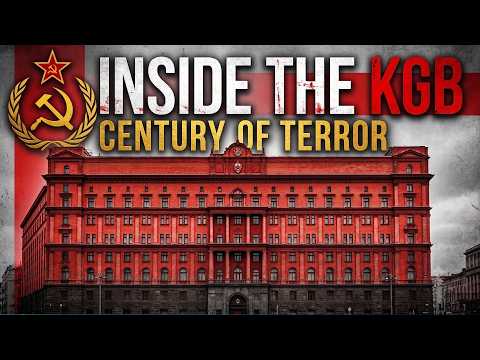
From the Lubyanka headquarters, the Cheka exercised limitless authority. Only the best, cleverest, and most reliable were selected. State-sponsored movies and novels glamorized the service, creating heroes like Nikolai Kuznetsov—a real-life James Bond whose exploits inspired a young Vladimir Putin. **”I wanted to catch spies,”** Putin recalled. **”I wanted to work in counterintelligence. All that romantic stuff that excites young people.”**
When Stalin took power, the security services expanded dramatically. The gulags became an economic engine, built on the backs of millions of forced laborers. **”The role of the KGB in modernization is colossal,”** notes one historian. But the cost was human suffering on an unimaginable scale. Vera Golubeva, a schoolteacher, was arrested for telling a joke: **”The whole world is arming itself, and we’re planting flowers.”** Eight months pregnant, she gave birth in custody and lost her baby. She spent eight years in the gulag.
Even as the Soviet Union industrialized, Stalin’s paranoia demanded scapegoats. The Great Terror of 1936-1938 saw nearly 700,000 executions and over a million sent to the camps. **”Better that 10 innocents suffer than one spy gets away,”** declared KGB chief Nikolai Yezhov, who was later executed himself. His successor, Lavrentiy Beria, a man of paradoxical brilliance and brutality, would oversee the next chapter—including the secret espionage that gave the Soviets the atomic bomb and triggered the Cold War.
But even as Beria’s spies infiltrated the West, the KGB’s grip on power was not absolute. The death of Stalin in 1953 set off a power struggle that would see Beria outmaneuvered by Nikita Khrushchev—a moment that would reshape the security services and set the stage for the rise of a new kind of leader, one who would come from within the KGB’s own ranks.
Khrushchev’s first act was to rein in the monster Beria had built. In a single stroke, he cut 64,000 workers from the security apparatus, ridiculed them as “Beria’s dogs,” and reduced the KGB’s power to suppress dissent. For loyal officers, it felt like betrayal. **”My conscience, my inner core, and experience as a KGB officer won’t allow it,”** one veteran spat, unable to forgive the humiliation. Yet for ordinary citizens, there was a brief, intoxicating taste of freedom.
But the KGB was not so easily tamed. It simply found new, quieter methods. In the so-called “soft cells” of Soviet prisons, guards would seize prisoners by the arms and legs and hurl them against the walls—leaving no visible marks, only shattered internal organs. **”They invented another way of torturing people,”** recalls one survivor. The state no longer needed to kill openly. It could simply break a man from the inside.
Then came the Cuban Missile Crisis. In October 1962, the world stood on the edge of annihilation. Khrushchev knew from his spies that America had deployed nuclear missiles in Europe, pointed directly at Soviet cities. He countered by placing Soviet missiles in Cuba—and the two superpowers squared up for a fight. **”For the first time in my life, I thought maybe tomorrow we will all die,”** admitted a KGB officer stationed in Washington.
At the height of the crisis, a chance encounter in New York saved the world. A young KGB agent named Oleg Kalugin bumped into a woman at a party. She mentioned her lover—a US Air Force reconnaissance pilot who was flying missions over Cuba. **”Could you give me his schedule?”** Kalugin asked casually. She did. That simple piece of intelligence, passed to Moscow Center, confirmed that the Americans were onto the Soviet deployment.
But it was another KGB man, Alexander Feklisov, who became the secret channel between the White House and the Kremlin. Through a trusted American journalist, Kennedy offered a compromise: the Soviets would remove their missiles from Cuba, and America would guarantee not to invade the island—and secretly withdraw its missiles from Turkey. Feklisov raced to the basement of the Soviet Embassy in Washington to transmit the offer. **”Moscow accepted Kennedy’s terms,”** he later recalled. **”Nuclear war was narrowly averted.”**
Few who pass Feklisov’s grave in a Moscow cemetery know that he helped save the world. But the KGB’s role in the crisis cemented its reputation as an indispensable instrument of Soviet power—and its agents abroad as the eyes and ears of the state. The Cambridge Five had already proven the value of well-placed moles. Kim Philby, the most notorious of them all, had risen to the top of British intelligence while secretly serving Moscow. **”He was one of us,”** said a British colleague, still baffled decades later. **”That was key to his hiding in plain sight.”**
When Philby finally fled to Moscow in 1963, he found not a hero’s welcome but a lonely, mundane existence. **”First time I met Philby, he was drunk,”** recalled KGB Colonel Mikhail Lyubimov. **”He had nothing else to do but drink and reminisce about the old days.”** To keep their most illustrious spy from falling apart, the KGB arranged soirees—and introduced him to young Russian women. **”Some of the ladies would be instructed to get in touch with him,”** Lyubimov admitted with a wry smile. **”That really brought him back to life again.”**
By the late 1960s, a new man was rising through the KGB’s ranks—Yuri Andropov. Cold, calculating, and utterly convinced of the service’s rightful place at the heart of Soviet power, Andropov would transform the KGB from a blunt instrument of terror into a sophisticated machine of control. And he had a plan for the future—one that would outlast the Soviet Union itself.
Andropov understood that fear alone was not enough. The KGB needed prestige, and he set about manufacturing it. He commissioned films and novels featuring daring agents infiltrating Nazi High Command, all for the glory of Mother Russia. **”He restored the prestige of the security forces and recruited intelligent personnel,”** notes one historian. The Lubyanka, once a byword for dread, was rebranded as the guardian of the nation.
But the velvet glove concealed an iron fist. Andropov believed that any element of dissent—no matter how small—could metastasize into something far larger. In 1968, when Czechoslovakia’s Prague Spring threatened to drift from Soviet-style communism, Andropov’s agents planted arms caches and manufactured evidence of a Western-backed conspiracy. **”Tomorrow the troops of the Warsaw Pact will enter Czechoslovakia,”** read the cable that reached Oleg Kalugin in Washington. The Soviet ambassador’s reaction was blunt: **”Idiots.”**
When the tanks rolled in, the hopes of a generation were crushed. But the crackdown revealed something deeper: the KGB was no longer merely defending the state from its enemies—it was defining who those enemies were. Andropov’s service had become the ideological gatekeeper of the entire Soviet system.
Then came Helsinki. In 1975, the Soviet Union signed the Helsinki Accords, formally committing itself to respect human rights. It was a diplomatic gesture, but for dissidents, it was a weapon. The Helsinki Group was founded to monitor Soviet compliance—and to report every violation to the West. Miroslav Marinovich, one of its founders, knew the cost. **”As soon as I came out from the house, the car that was standing nearby switched on the light,”** he recalled. **”I immediately understood the message: you are under control already.”**
When intimidation failed, the KGB turned to a more insidious tool: psychiatry. At the Serbsky Institute in Moscow, dissidents were diagnosed with an invented condition called sluggish schizophrenia. **”If someone didn’t believe in Soviet values, then they must be mad,”** explains one psychiatrist. The practice was a public relations masterstroke—the state could claim it had no political prisoners, only the mentally ill who failed to appreciate the greatness of the party. Semyon Gluzman, himself a psychiatrist, was sent to the Perm-36 gulag for denouncing the practice. In Siberia, he wrote an exposé on psychiatric abuse, smuggled out one chapter at a time, concealed in the anal cavities of fellow inmates.
By the late 1970s, the Soviet state was rotting from within. The economy stagnated, the war in Afghanistan bled the treasury, and the number of dissidents grew daily. **”The Soviet Union was falling behind the West at an astonishing rate,”** notes one analyst. The last thing the Politburo needed was a leader who believed the system could be reformed. But in 1985, that is exactly what they got.
Mikhail Gorbachev introduced perestroika—and the KGB, surprisingly, was among its earliest supporters. **”It’s thought to have been the KGB who were the leading voices in perestroika,”** says a historian, **”because they understood exactly how far behind the Soviet Union was.”** But reform brought unintended consequences. In April 1986, the Chernobyl nuclear reactor exploded, releasing lethal radiation across Europe. The KGB had warned Moscow about the plant’s shoddy construction years earlier. **”Basic building regulations were ignored,”** one officer recalled. **”Sadly, no one took any notice.”**
As radiation drifted over Kiev, the authorities ordered the May Day parade to proceed as planned. Families stood in the streets with their children, inhaling poison. **”We members of the KGB were expressly forbidden to evacuate our children,”** one officer admitted. **”Discipline was absolute. No one even considered refusing.”** It took eighteen days for Gorbachev to publicly acknowledge the disaster.
Chernobyl exposed the lie at the heart of the Soviet system: the party would sacrifice its own people to preserve the illusion of control. But even as the union crumbled, the KGB was preparing its greatest recruitment coup—a mole buried so deep in the CIA that he would betray nearly every American asset in the Soviet Union.
Aldrich Ames was no ideological convert like Philby. He was driven by money and ego—what the KGB called MICE: money, ideology, compromise, ego. “All of a sudden, Rick is wearing Armani suits to work,” an FBI investigator recalled. “It just doesn’t fit within a GS-13 salary.” Investigators dug through his trash and found shredded operational notes. In 1994, nine years after his first contact, Ames was arrested. Unlike the men he betrayed, he kept his life—a life sentence, no parole.
But the KGB’s greatest triumph was still to come. In August 1991, hardliners ordered a quarter of a million handcuffs and 300,000 arrest warrants. Tanks rolled into Moscow. “We saw preparations for repression,” one officer recalled. “I resigned.” Boris Yeltsin climbed onto a tank, and the coup collapsed. The Soviet Union followed.
Yeltsin split the KGB into pieces, believing he had tamed the monster. He was wrong. A lowly lieutenant colonel from St. Petersburg—Vladimir Putin—was waiting in the shadows. “With Putin in charge, the KGB took over,” one veteran observed. The security service no longer served the state. The state served the security service.
Over a century has passed since Lenin founded the Cheka as a temporary measure. Today, Russia is no longer a state with a security service. The security service has a state.
And so the question remains: can a nation ever truly escape the shadow of its own secret police—or does the shadow, in the end, become the nation itself? Share your thoughts below.
Report this article
Select a reason for reporting:






