They were called the ‘silent wolves’—the German U-boats that prowled the Atlantic, striking fear into the hearts of Allied sailors. But inside those steel tubes, a different kind of terror lurked. For the young men who crewed them, life was a claustrophobic nightmare of oil, sweat, and the constant specter of death. Of the 40,000 men who served in the U-boat force, more than 28,000 never returned. That’s a mortality rate of over 70%, higher than almost any other branch of the military during World War II. Yet they volunteered, driven by a mix of patriotism, camaraderie, and the promise of glory.
This is the story of those men—the ones who lived beneath the waves, breathing recycled air, sharing bunks that never cooled, and facing a foe that could appear at any moment. It’s a tale of technological innovation and human endurance, of triumph and tragedy, and of a legacy that still haunts the depths of the ocean today.
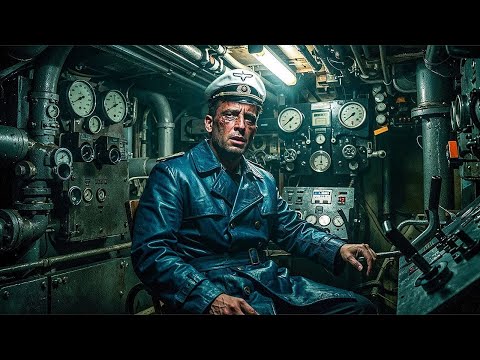
The U-boat was Germany’s secret weapon in the Battle of the Atlantic. Admiral Karl Dönitz, the mastermind behind the U-boat fleet, envisioned a war of attrition—sinking merchant ships faster than the Allies could build them. And for a while, it worked. In the early years of the war, U-boats wreaked havoc on Allied convoys, sending millions of tons of supplies to the bottom of the sea. The ‘Happy Times,’ as the Germans called it, saw U-boat crews celebrated as heroes, their exploits splashed across propaganda posters.
But life aboard a U-boat was anything but glamorous. The Type VII, the workhorse of the fleet, was only 67 meters long and carried a crew of 45 men. Space was so tight that food supplies filled every available corner, even the toilets. The men slept in shifts, sharing ‘hot bunks’ that were still warm from the previous occupant. Fresh water was rationed, and showers were nonexistent. The air grew thick with the stench of diesel, sweat, and rotting food.
Yet the physical hardships were only part of the story. The psychological strain was immense. Depth charges exploding nearby sounded like a hammer on a steel drum, and the crew could do nothing but wait and pray. Many suffered from what was then called ‘submarine psychosis’—a combination of claustrophobia, anxiety, and sheer terror. The constant threat of detection meant that every mission was a game of cat and mouse, with the hunters often becoming the hunted.
Training was brutal, designed to weed out the weak. Recruits underwent rigorous physical and mental tests, including hours in dark, confined spaces to simulate the conditions aboard. They were taught to operate as a single organism, where silence was often the difference between life and death. By the end of the war, as casualties mounted, training was shortened, and many young sailors found themselves thrust into combat with barely three months of preparation.
But the U-boat war was not just a German story. The Allies fought back with increasing ferocity, developing new technologies like radar and sonar, and breaking the German codes. The tide turned in 1943, and the U-boats went from hunters to hunted. By the end of the war, over 780 U-boats had been destroyed, and the Atlantic was littered with their wrecks.
This is the beginning of that story—a journey into the depths, where courage and fear coexisted, and where the line between heroism and horror blurred. It’s a story of men who lived and died in the silent world beneath the waves, and of the machines that carried them to their fate.
But the story of the U-boat war is not just one of battles and casualties. It’s also a story of extraordinary technological innovation, born from desperation. As the Allies tightened their grip on the Atlantic, German engineers raced to develop submarines that could stay submerged for longer, move faster, and strike from the shadows. The result was the Type XXI, the world’s first truly modern submarine. With its streamlined hull, powerful batteries, and ability to run silently underwater for days, it was a generation ahead of anything the Allies had.
Yet the Type XXI arrived too late to change the outcome of the war. Only a handful ever saw combat, and most were scuttled by their own crews or captured in port. But their design would go on to shape the submarines of the Cold War, influencing both American and Soviet engineers. The legacy of the U-boat, in a strange twist, lived on in the navies of its former enemies.
After the guns fell silent in May 1945, the fate of the surviving U-boats became a grim coda to the war. Operation Deadlight, as it was called, saw more than 150 U-boats towed out to sea and sunk deliberately. Some were used for target practice, riddled with gunfire or blown apart by explosives. Others simply foundered in the rough Atlantic weather, sinking in unplanned locations. Today, their rusting hulls litter the seabed off the coasts of Scotland and Ireland, a silent underwater graveyard.
But not all U-boats met such an inglorious end. A select few were preserved for study, their technology pored over by Allied engineers. U-505, captured in 1944, is now a museum piece in Chicago—the only original U-boat on display in the Western Hemisphere. Others, like U-995 in Germany and U-534 in England, were restored and opened to the public, allowing visitors to step inside the cramped, claustrophobic world that once terrified and fascinated the world.
And then there are the ones that were never found. More than 50 U-boats simply vanished, their fate unknown to this day. Some were likely victims of mines or mechanical failure, sinking without a trace. Others may have been lost to navigational errors, their wrecks lying undiscovered in the vast, uncharted depths of the ocean. For the families of the men aboard, these missing submarines represent a wound that never fully healed—a absence without closure, a grief without a grave.
The discovery of U-869 off the coast of New Jersey in 1991 was one such story. For nearly half a century, the submarine had been listed as lost near Gibraltar. But when a group of recreational divers stumbled upon its wreck, the truth emerged: U-869 had been sunk far from its supposed patrol area, a victim of confused orders and the chaos of the war’s final months. The divers found tools, machine parts, and even a valve marked with the submarine’s number—proof positive of its identity. The site was declared a war grave, and the families of the crew finally had a place to mourn.
Today, the U-boats are more than just relics of a bygone era. They are reminders of the human cost of war, of the young men who lived and died in the silent, suffocating world beneath the waves. Their story is one of courage and futility, of technological brilliance and moral darkness. And as the last survivors of the U-boat force pass away, the responsibility falls to historians, archaeologists, and ordinary people to remember what happened in the depths of the Atlantic—and to ensure that the silent wolves are never forgotten.
The human cost of the U-boat war is etched into the numbers, but behind every statistic lies a personal story. Many of the men who died were barely out of their teens, some as young as seventeen. They had volunteered for the submarine service, lured by promises of adventure and glory, only to find themselves trapped in a steel coffin, thousands of meters of water pressing in from all sides.
Letters home, often the only link to the world above, reveal a mix of bravado and quiet despair. One young sailor wrote to his mother: ‘Don’t worry, we are invincible.’ He was killed three weeks later when his U-boat was depth-charged in the North Atlantic. Another wrote of the ‘endless dark’ and the ‘constant hum of the engines’ that haunted his dreams. These letters, preserved in archives and family collections, offer a poignant glimpse into the minds of men who knew the odds were against them.
The psychological toll was immense. Survivors often suffered from what we now call post-traumatic stress disorder, though at the time it was little understood. Many returned home unable to speak of their experiences, haunted by the screams of drowning comrades and the terror of depth charge attacks. Some turned to alcohol, others withdrew into silence. The stigma of defeat only added to their burden; in postwar Germany, the U-boat men were often seen as remnants of a shameful past, their sacrifices overshadowed by the crimes of the regime they had served.
Yet even in defeat, the U-boat force left an indelible mark on naval history. The Type XXI, with its revolutionary design, became the blueprint for the modern submarine. After the war, both the United States and the Soviet Union rushed to acquire German engineers and technology, recognizing that the future of naval warfare lay beneath the waves. Men like Hellmuth Walter, whose experiments with hydrogen peroxide propulsion had pushed the boundaries of submarine speed, were quietly recruited by the Allies, their knowledge helping to shape the nuclear submarines of the Cold War.
The British, too, learned from their former enemy. HMS Venturer, the submarine that sank U-864, was later used to test German sonar and torpedo designs. The Royal Navy’s postwar submarine fleet incorporated many features from the Type XXI, including its streamlined hull and improved battery systems. In a strange twist of fate, the weapons of the Third Reich helped to arm the very nations that had defeated it.
But the legacy of the U-boats is not just technological. The Battle of the Atlantic, the longest continuous military campaign of World War II, demonstrated the strategic importance of sea control. It showed that a relatively small force of submarines could tie down vast enemy resources, forcing the Allies to divert ships, aircraft, and men to protect their supply lines. This lesson was not lost on postwar planners, and it shaped the naval strategies of the Cold War and beyond.
Today, the U-boats that survive are more than museum pieces. They are tangible links to a past that is slipping away with each passing year. The men who served on them are now in their nineties, their numbers dwindling. Soon, the U-boat war will pass from living memory into history, and the responsibility will fall to us to remember.
As we walk through the cramped corridors of U-995 or U-505, we can almost hear the whispers of the past—the clang of the hatch, the roar of the diesel engines, the muffled explosions of depth charges. These boats are not just relics; they are tombs for the thousands who never returned. They remind us that war is not just about strategy and technology, but about human beings caught in the grip of forces beyond their control.
The story of the U-boats is a story of extremes: of courage and fear, of duty and despair, of innovation and destruction. It is a story that deserves to be told, not to glorify war, but to honor the memory of those who lived and died beneath the waves. And as the silent wolves fade into history, their howl still echoes across the depths.
Today, the U-boat war is a chapter of history that still fascinates and horrifies in equal measure. Museums from Chicago to Kiel preserve these iron coffins, allowing visitors to step inside and feel the claustrophobia that once defined daily life. The rusting wrecks scattered across the ocean floor serve as silent memorials to the thousands who never returned.
For historians, the U-boats offer lessons in technology, strategy, and the human cost of war. For the families of the lost, they remain a source of both grief and closure. As the last veterans pass away, the responsibility to remember falls to new generations.
What do you think: should these submarines be preserved as museums, or left as war graves on the seabed? Share your thoughts in the comments below.
Report this article
Select a reason for reporting:






