On January 22, 1879, the British Empire suffered one of its most humiliating defeats at the Battle of Isandlwana, where a Zulu army annihilated a modern British force. Just hours later, a tiny garrison of 139 men at Rorke’s Drift stood firm against over 4,000 Zulu warriors. Among them was Lieutenant Gonville Bromhead, a man history would remember as a hero—but whose life after the battle was anything but heroic.
Bromhead, portrayed by Michael Caine in the 1964 film Zulu, was a real historical figure, awarded the Victoria Cross for his actions. Yet, the man behind the medal was far more complex and flawed than the silver screen suggests. He was a reluctant hero, a soldier who never sought glory, and whose post-war years were marked by obscurity and personal struggle.
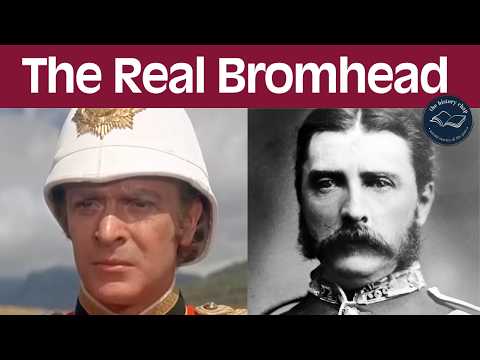
Born into a distinguished military family, Bromhead was the youngest of ten children. His father had fought at Waterloo, and his grandfather had served in the American Revolutionary War. Despite this pedigree, Gonville was never seen as particularly ambitious or talented. His commanding officer once described him as “hopeless,” and he remained a lieutenant for twelve years before Rorke’s Drift.
Yet, on that fateful day, Bromhead proved his mettle. As the Zulu attacks intensified, he led the defense of a crucial gap in the barricades, fighting alongside his men with a bravery that belied his unremarkable career. For his actions, he was awarded the Victoria Cross, one of eleven given that day—the most ever for a single engagement.
But what happened to Bromhead after the battle? The hero’s welcome in England was fleeting. He returned to a life of quiet obscurity, serving in various colonial postings. He never achieved the rank of colonel, contrary to the film’s implication, and retired as a major. He died of typhoid fever in India at just 45, far from the fame and glory that the battle had briefly bestowed upon him.
His story is one of a man who rose to the occasion when it mattered most, only to fade into the background afterward. Bromhead’s life after Rorke’s Drift is a poignant reminder that heroism doesn’t always lead to a happy ending—and that the real men behind the legends are often more fascinating than the myths.
Bromhead returned to England to a hero’s welcome, but the adulation was short-lived. He was invited to dine with Queen Victoria at Balmoral but missed the invitation because he was fishing in Ireland—and was never invited again. Unlike his comrade John Chard, who enjoyed royal favor, Bromhead slipped into obscurity.
He continued his military career in quiet postings: Gibraltar, India, and Burma. Promoted to major, he never reached the rank of colonel, contrary to the film’s implication. He was described by some as a “stupid old man, quite deaf,” yet he was deeply loved by his men.
In 1891, while stationed in India, Bromhead contracted typhoid fever and died at 45. He was buried in a military cemetery in Allahabad, far from the Lincolnshire estate where he was born. His grave, like his story, was largely forgotten.
So what do you think? Was Gonville Bromhead a true hero, or just a man who happened to be in the right place at the right time? Share your thoughts below.
Report this article
Select a reason for reporting:






