Seven words on a tactical radio frequency brought an entire American signals intelligence operation to a halt for 43 minutes. The transmission came from an Australian SASR patrol operating 12 km northeast of Tarin Kowt. And when the American cryptanalyst flagged it for review, three separate analysts spent the better part of an hour trying to determine if the frequency had been compromised by enemy forces. The phrase that triggered the alert was simple enough: “She’ll be apples heading for the servo.” In the lexicon of Australian tactical communication, this meant the patrol was proceeding to the refueling point without incident. To the American signals team monitoring coalition frequencies that night in October 2007, it sounded like nothing they had ever encountered in 14 months of operations in Uruzgan province.
Staff Sergeant Marcus Pruitt had spent 11 years in the United States Army. The last four with the 161st Special Operations Aviation Regiment, coordinating communication support for Tier 1 units across southern Afghanistan. He had monitored Delta Force operations, worked alongside CIA ground branch teams, and supported more than 200 combat missions in terrain that killed radios and satellite links with equal indifference. He understood tactical communication the way a surgeon understands anatomy. Every abbreviation, every brevity code, every encrypted shorthand that kept American operators alive in valleys where cell phone signals could trigger improvised explosive devices.
What he did not understand, and what nobody in his signals operations center could explain that October night, was why the Australian element had transmitted what appeared to be either a coded message outside any known protocol or enemy disinformation designed to create exactly the confusion now spreading through his operations center.
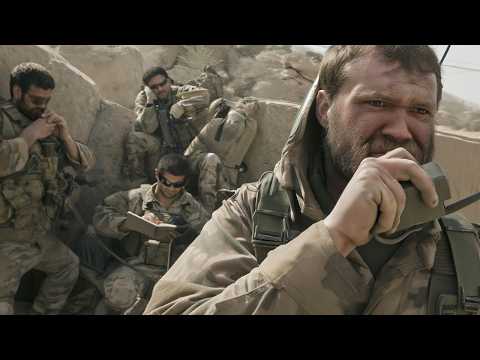
The incident report Pruitt filed the following morning ran to four pages. It documented not just the transmission itself, but 17 separate instances over the preceding 6 weeks where Australian SASR communications had generated confusion, delays, or outright alerts within the American signals architecture. In one case, a patrol had reported being “flat out like a lizard drinking,” which Pruitt’s team interpreted as potential contact with enemy forces. When the Australians were simply indicating they were moving at maximum sustainable speed. In another, the phrase “no worries, just fossicking about” had triggered a 15-minute analysis of whether fossicking was a code word for a specific reconnaissance protocol. It was not. The Australian operators were simply describing their methodology in terms that would have been immediately understood by anyone who had grown up in Brisbane or Perth, but which sounded to American ears trained on years of standardized NATO terminology like transmissions from another war entirely.
But the language itself was only the beginning of what Pruitt could not explain. The deeper he examined Australian tactical communications, the more he encountered patterns that violated everything he understood about modern special operations radio discipline.
The American approach to tactical communication had evolved through decades of technological investment. Every operator in a Delta Force assault element carried equipment that cost, on average, between $15,000 encrypted radio systems with satellite backup, Blue Force trackers that provided real-time positioning to command elements, and redundant communication pathways that ensured no single point of failure could sever the link between operators on the ground and the substantial intelligence infrastructure supporting them from the air and from forward operating bases. This architecture required strict adherence to standardized protocols. Every call sign followed prescribed formats. Every situation report used identical structures across every unit in every theater. The system was magnificent in its scope, comprehensive in its coverage, and absolutely dependent on every operator speaking the same linguistic and procedural language.
The Australians operated on different assumptions entirely. Their Harris RF-7800 radios cost approximately 3,000 Australian dollars less than the American equivalent systems. And their communication protocols reflected a philosophy that Pruitt found simultaneously maddening and fascinating. Where American doctrine emphasized standardization to ensure interoperability across a global force structure, Australian SASR doctrine emphasized what one reclassified training document described as communicative ambiguity as operational security. The theory, as Pruitt would eventually learn from an Australian signals officer willing to explain it over terrible coffee at Tarin Kowt, was elegant in its simplicity. If your own allies cannot immediately understand your transmissions, neither can the enemy monitoring the same frequencies. This was not carelessness. This was deliberate methodology refined through decades of operating in environments where Australian forces were perpetually outnumbered, perpetually operating beyond the range of reliable support, and perpetually dependent on confusion as a tactical asset.
The specific incident that transformed Pruitt’s confusion into genuine professional curiosity occurred 3 weeks after his initial report. An Australian patrol of five operators had been inserted into a valley system approximately 40 km from the nearest coalition base tasked with surveillance of a compound suspected of housing a Taliban logistics coordinator. American signals intelligence assets were monitoring the operation both to provide early warning of enemy counter surveillance and to maintain awareness of coalition positioning in an area where multiple operations sometimes overlapped in ways that created fratricide risks.
For the first 18 hours, the patrol maintained radio silence. This itself was not unusual. American units routinely observed extended communication blackouts during sensitive phases of reconnaissance operations. What happened at hour 19, however, created ripples that reached all the way to the Joint Operations Center in Kandahar.
The Australian patrol commander broke radio silence with a transmission that lasted approximately 4 seconds. The content, recorded and transcribed by American signals personnel, read: “Chook’s gone walkabout. Mosie situation. Dunny run complete.” Three separate American officers spent the next 22 minutes attempting to decode this transmission using every reference document available. The prevailing theory, developed by an intelligence analyst who had once spent a semester in Sydney, and therefore considered himself an authority on Australian linguistic patterns, was that chook referred to a chicken, potentially indicating the target had departed the compound. While mosie situation might reference mosquito-borne disease risk, and dunny run was possibly a corruption of some technical term he could not identify.
The analyst was partly correct. He was also missing the operational significance entirely. What the transmission actually meant, as Pruitt later learned, was that the patrol’s surveillance was complete. The target had been positively identified and his movement pattern established. Disease vector concerns in the area were negligible for the planned duration of continued observation, and the patrol had successfully completed a particularly challenging approach that had required them to move through terrain that offered no cover during a period of reduced enemy activity. The Australian commander had compressed what would have been a standardized American situation report of approximately 90 seconds into 4 seconds of transmission time. In an environment where enemy signals intelligence capabilities were sophisticated enough to locate transmitting radios within minutes, those 86 seconds of reduced exposure represented a meaningful tactical advantage.
But Pruitt’s initial reaction was not appreciation. His initial reaction was that these people were going to get themselves killed through inability to communicate in language that anyone else could understand. The Australian patrol remained in position for another 53 hours. During that time, they transmitted twice more. Each transmission was under 5 seconds. Each transmission generated confusion among the American signals personnel monitoring the operation. And when the patrol was finally extracted, having provided targeting coordinates that resulted in a successful strike that removed the logistics coordinator from the Taliban network, Pruitt requested a meeting with the Australian element commander to discuss communication interoperability concerns.
The meeting did not go as Pruitt expected. He had prepared a carefully documented presentation outlining the communication incidents, the delays they had caused, and his recommendations for Australian adoption of standardized coalition terminology. The Australian major who sat across from him listened politely for approximately 15 minutes, nodding at appropriate intervals, before asking a single question that Pruitt would remember for years afterward.
“Mate,” the major said, leaning back in a plastic chair that had seen better decades, “how many of your transmissions in the last month have been intercepted and exploited by enemy signals intelligence?”
Pruitt did not know. The question had never been framed to him in those terms. American communication security was handled at levels above his access, and the assumption embedded in every protocol he followed was that encryption made the content of transmissions secure regardless of their length or frequency.
The Australian major smiled, and it was not an unkind smile, but it carried weight that Pruitt felt immediately. “We lost four blokes in East Timor because someone talked too long on a radio that was supposedly secure. The encryption was fine, the direction finding wasn’t. They triangulated the position in under 3 minutes and dropped mortars on it for the next hour. Since then, we’ve operated on one principle. Every second of transmission is a second the enemy is looking for you. If they can’t understand what you’re saying even when they hear it, that’s not a bug. That’s the point.”
He pulled out a laminated card from his cargo pocket, worn at the edges, clearly carried through multiple deployments. It contained what he called the bush telegraph, a list of approximately 40 phrases in Australian slang with their tactical equivalents. “Every bloke in the regiment learns this before he deploys. Every patrol leader carries one. And every American signals officer I’ve met in the last 2 years has given me the same speech you just gave me about interoperability.”
Pruitt looked at the card. Flat chat meant maximum operational tempo. Gone walkabout indicated target departure from observation zone. She’s apples confirmed mission proceeding as planned. Furphy warned of suspected disinformation. Yakka time signaled imminent action phase.
“You’ve deliberately created a parallel communication protocol,” Pruitt said, and it was not quite a question.
“We’ve deliberately created a language that does three things simultaneously,” the major replied. “It shortens transmission time. It confuses anyone who intercepts it. And it builds unit cohesion because every operator knows that when the bloke next to him says no dramas, he’s not just being casual. He’s confirming that the situation matches our training and our plan. It’s a shibboleth. If you don’t know what it means, you’re not one of us.”
What Pruitt encountered next would shift his understanding not just of communications, but of how small units could operate in ways that larger forces with superior resources could not replicate. The Australian major had agreed to allow him embedded observation of a training exercise, a rare invitation extended partly because Pruitt’s questions had been professional rather than dismissive, and partly because the Australians operated with a confidence that suggested they had nothing to hide.
The exercise was a 72-hour patrol through terrain that replicated the operational environment of northeastern Uruzgan. 12 Australian operators divided into three patrols, each tasked with separate objectives that would require coordination despite geographic separation of up to 8 km. American equivalent exercises typically relied on constant communication, updates every 30 minutes, position confirmations every hour, and a command network that maintained awareness of every element’s location and status continuously.
The Australians transmitted 17 times in 72 hours. Total airtime, 63 seconds. Pruitt found himself returning to that number repeatedly over the following weeks. 63 seconds. His own teams transmitted an average of 412 times during comparable operations. The mathematics suggested something he was not yet prepared to accept.
The real test came during the third week of September, when coalition intelligence identified a high-value target moving through the Kora Valley. The individual, designated objective Falcon, had been responsible for coordinating improvised explosive device networks across three provinces. Previous attempts to interdict him had failed spectacularly. A Delta Force element had compromised their position 47 hours into a surveillance mission when their helicopter resupply was spotted by local shepherds. A subsequent drone strike had destroyed an empty compound 6 hours after the target departed. The total cost of these failed operations exceeded $3.4 million.
Pruitt received authorization to coordinate a joint approach. The Australian patrol, the same 12 operators who had completed the earlier surveillance exercise, would establish observation positions in the valley. American assets would provide quick reaction capability and aerial support.
The operation seemed straightforward on paper. Pruitt had conducted dozens of similar missions. He understood the rhythm. Insert, observe, confirm, strike, extract, clean, efficient, American. What he did not understand was that the Kora Valley in September presented conditions his training had never addressed.
The temperature differential between day and night exceeded 31° C. Daytime peaks reached 47° in exposed positions. Nighttime lows dropped to 16°. This swing created thermal currents that rendered standard night vision equipment unreliable for the first 90 minutes after sunset. The valley floor consisted of fine particulate dust that coated optical systems within hours of exposure. And the population pattern, farmers moving between fields, children herding goats, women collecting water, meant that any position within observation range of likely target routes would experience foot traffic within 50 m at unpredictable intervals.
The Australian patrol commander, referred to only by his call sign, November 6, requested a planning session before insertion. Pruitt agreed expecting the usual coordination, frequencies, code words, extraction points, fire support protocols. Instead, November 6 produced a hand-drawn map showing 17 potential hide sites, each annotated with estimated compromise probability based on agricultural patterns his team had observed during previous rotations. Pruitt’s teams used satellite imagery and signals intelligence to select positions. The Australians apparently used knowledge of when local farmers took their lunch breaks.
The insertion occurred on the night of September 19th. American helicopters delivered both elements to landing zones 8 km apart. Pruitt monitored the operation from a command post at Forward Operating Base Anaconda, where multiple screens displayed drone feeds, communications logs, and real-time position tracking for the American Quick Reaction Force standing by.
The Australian team’s transponders went dark within 4 minutes of landing. This was intentional. November 6 had explained that electronic emissions created detectable signatures that sophisticated adversaries could exploit. Pruitt’s protocols required continuous position awareness of all friendly elements. The Australians operated under different assumptions.
For the first 18 hours, Pruitt received exactly two transmissions from the Australian element. The first, sent at 03:17 on September 20th, consisted of four words: “Position established, continuing mission.” The second, 12 hours later, confirmed observation of vehicle movement consistent with target pattern. Both transmissions lasted under 5 seconds. Both were encrypted using a system that Pruitt’s analysts noted was two generations older than current American standard.
The American Quick Reaction Force, meanwhile, conducted three rehearsals of their assault plan. Each rehearsal required coordination flights that consumed fuel and generated electronic signatures. Each rehearsal maintained the edge that American doctrine considered essential for immediate response. The force was ready. Pruitt was confident.
But the valley had other intentions.
On the morning of September 21st, a local malik, a village elder, arrived at a checkpoint near the valley’s eastern entrance and reported unusual activity. His information, filtered through interpreters and intelligence channels, reached Pruitt’s desk at approximately 09:45. The malik claimed that strangers had been asking questions about American patrol patterns. He suggested that someone was aware of coalition interest in the area.
This information should have triggered an immediate reassessment. Under Pruitt’s protocols, any indication of compromise required mission abort and element extraction. The risk matrix was clear. If the adversary suspected surveillance, any target appearing in the observation zone might be a deliberate lure designed to draw coalition forces into an ambush.
Pruitt ordered the American Quick Reaction Force to stand down pending analysis. He attempted to contact the Australian element to relay the warning. The transmission went unanswered.
For the next 6 hours, Pruitt experienced what he later described to colleagues as controlled panic. He had no position data for the Australian team. His drone assets could not locate them. Their concealment discipline exceeded the resolution of available sensors. His communications attempts produced no response. Standard procedure dictated that uncontactable elements be presumed compromised and recovery operations initiated immediately. He did not initiate recovery operations. He could not explain why, even to himself.
At approximately 1500 hours local time, a convoy of three vehicles entered the Kora Valley from the western approach. Drone surveillance identified the lead vehicle as matching the pattern associated with objective Falcon’s previous movements. Pruitt watched the convoy proceed toward the center of the valley, passing within what his screens indicated was 400 m of the Australian team’s last reported general area.
The vehicle stopped. Men emerged. They appeared to be conducting a security sweep, moving in patterns that suggested professional training. They checked buildings, examined terrain features, questioned locals who appeared at their approach. The sweep continued for 47 minutes. During this time, the Australian patrol remained invisible. Not merely undetected, invisible. Pruitt’s drone operators, searching specifically for friendly signatures, could not locate them. His thermal sensors showed nothing. His signals intelligence detected no emissions. 12 human beings occupied positions somewhere in that valley, and every surveillance system available to the most advanced military in human history could not find them.
The sweep concluded. The target security element apparently satisfied itself that the area was clear. The convoy resumed movement toward a compound that intelligence had identified as a probable meeting location. Pruitt’s screens showed the vehicles approaching the compound. His quick reaction force remained on standby, awaiting orders. His communications team continued attempting contact with the Australians. The situation had degraded from controlled to chaotic in the space of 6 hours.
And then his radio crackled.
The transmission lasted 11 seconds. November 6’s voice, calm and unhurried, delivered a situation report that made Pruitt’s previous 6 hours of uncertainty suddenly irrelevant. The Australian team had observed the security sweep from three separate positions. They had identified five additional fighters who had arrived on foot through routes the drone coverage had missed. They had mapped the compound’s entry points, guard positions, and vehicle placement. And they had done all of this while remaining undetected by a professional counter-surveillance team operating specifically to find people like them.
The information November 6 provided in 11 seconds exceeded what Pruitt’s entire intelligence apparatus had developed in 3 weeks of preparation. But the truly destabilizing moment came next. November 6 reported that during the security sweep, one of the target’s fighters had approached within 7 m of an Australian position. The operator in that hide site, later identified in reports only as the forward observer, had remained motionless for 31 minutes while the fighter conducted his search. The fighter had actually sat down to rest on a rock formation that concealed the observation post’s western approach. He had smoked a cigarette. He had urinated against the rocks. He had departed without any indication that he suspected human presence within arm’s reach.
Pruitt had trained countless operators in concealment. He had seen the best American soldiers could achieve under controlled conditions. He had never heard of anything approaching what that transmission described.
The operation concluded successfully. American forces executed the assault based on Australian provided intelligence. Objective Falcon was captured along with four associates and substantial documentary evidence. The post-operation analysis attributed success to superior intelligence preparation of the battle space, a phrase that Pruitt found darkly amusing, given that his own intelligence preparation had nearly caused him to abort the mission.
In his after-action notes, Pruitt documented a realization that had crystallized during those 6 hours of uncertainty. His protocols, the constant communication, the continuous position tracking, the real-time oversight that American doctrine considered essential, would have killed the Australian team. If November 6 had responded to his warning transmission, the radio signature might have compromised their positions during the security sweep. If their transponders had remained active, the electronic emissions might have been detected. If they had maintained contact according to American standards, they would have generated the very signatures that the target security element was searching for.
The Australians survived precisely because they violated every principle Pruitt had been trained to enforce. He wrote in his personal journal that night a phrase that would later appear in briefings across three commands. We trained them to stay connected. They trained themselves to stay alive. These are not the same objective.
But the Kora Valley operation revealed only the surface of a deeper methodology. What Pruitt witnessed in the following weeks suggested that the Australian approach extended far beyond tactical patience and communications discipline. The cost of what Pruitt witnessed would not become clear until years later, when the clinical reports began surfacing from Canberra and the veteran support network started publishing numbers that no operational briefing had ever mentioned.
By 2014, Australian SASR operators had completed an average of 10.3 rotations through Afghanistan. Some patrol commanders had deployed 15 times. The American average across all special operations units was 4.7 rotations. Delta Force operators, the most experienced American counterparts, averaged 6.1. The gap represented not just additional combat exposure, but a fundamentally different relationship with sustained violence.
Pruitt first noticed it during a joint planning session in Tarin Kowt in late 2010. An Australian patrol commander sat across from him, methodically working through ingress routes with a red pencil. The man’s eyes never stopped moving, scanning exits, tracking personnel entering the room, cataloging threat vectors in a space that had been swept three times by military police. When Pruitt asked about the behavior later, a liaison officer explained it simply. “He’s been doing this for 9 years. His brain doesn’t turn off anymore.”
The Australian Defense Force’s own internal assessments, portions of which were declassified in 2019, documented what medical officers termed adaptive hypervigilance syndrome. Operators who had mastered the art of remaining motionless for 40 hours developed neurological patterns that persisted long after deployment. Sleep studies conducted at Royal Brisbane Hospital showed that returned SASR personnel experienced REM interruption rates 340% higher than baseline infantry veterans. Their brains had been trained to wake at the slightest anomaly, and the training did not reverse.
What Pruitt called the thousand-yard stare wasn’t new to warfare, but its manifestation in Australian operators carried a different quality. These weren’t men who had been broken by a single catastrophic event. They were men who had been methodically shaped by years of operating in spaces where human cognition was pushed to its biological limits. The patrol that lay motionless for 26 hours in Kora Valley had done so because each operator could suppress autonomous responses that most humans cannot consciously control. The price was a permanent alteration in how the nervous systems process threat.
A military psychologist attached to Special Operations Command Australia, interviewed for Chris Masters’ 2017 documentary, but whose segment was ultimately cut, described the phenomenon in clinical terms that haunted Pruitt when he read the transcript years later. “We created perfect predators. Too sharp,” she said. “The selection process identified men whose stress responses could be trained below conscious threshold. Then we spent years proving they were right. What we didn’t adequately model was what happens when you return that nervous system to civilian stimulus patterns.”
The gray zone extended beyond individual psychology into operational territory that generated inquiries, investigations, and in some cases criminal proceedings. Between 2005 and 2016, Australian Defense Force personnel were involved in 39 incidents that triggered formal review under the law of armed conflict. 19 involved SASR operators specifically. The Brereton report, released in 2020, documented credible evidence of unlawful killings and recommended criminal referrals for multiple personnel.
Pruitt learned of the initial allegations in 2012 through intelligence community channels that predated public disclosure. His reaction, recorded in an email to his commanding officer that was later obtained through congressional oversight requests, captured the paradox that would define the legacy of everything he had witnessed. “These are the same men who showed us what was possible. I don’t know how to reconcile what they achieved with what they may have done.”
The operational effectiveness remained undeniable. Between 2002 and 2014, Australian SASR operations in Uruzgan province achieved a documented jackpot rate of 79% against high-value targets. American special operations units conducting parallel missions in the same theater averaged 51%. The compromise rate, instances where operators were detected before engaging their objective, sat at 11% for Australian patrols versus 37% for American teams using satellite- and drone-dependent infiltration methods.
But the numbers told only part of the story. Taliban commanders captured during Operation Slipper consistently identified Australian patrols as their primary concern. Not the air assets that could level entire compounds. Not the American units with their overwhelming firepower. But the small groups of men who appeared without warning and seemed to know everything.
A former Taliban sub-commander interviewed by researchers from the Australian Strategic Policy Institute in 2018, speaking through an interpreter from a prison cell in Kabul, provided what Pruitt would later call the most honest assessment I ever received about what we built. The man had survived three encounters with Australian patrols between 2009 and 2011. His description was clinical. “The Americans came with helicopters. You could hear them 30 minutes before they arrived. When they left, they left. The Australians” He paused, according to the transcript. “The Australians were already there before you knew to look. And sometimes they stayed after you thought they were gone.”
Did they lose their humanity to preserve ours? The question appeared in a 2021 academic paper analyzing psychological outcomes among Australian special operations veterans. Written by a researcher who had herself served as a military chaplain during Operation Slipper. She didn’t answer it directly. Instead, she presented data. Veteran suicide rates among SASR personnel were 220% higher than among conventional infantry veterans who had deployed to the same theater. Relationship dissolution rates exceeded 80% within 5 years of final rotation. Substance dependency diagnoses occurred at four times the national veteran average.
What Pruitt witnessed in Uruzgan province had transformed American understanding of what small unit operations could achieve. Elements of Australian methodology, extended patrol durations, reduced technological dependency, communication discipline, appeared in revised training curricula at Fort Bragg by 2013. The Joint Special Operations Command established an exchange program specifically modeled on the integration Pruitt had experienced. But the deeper lessons proved harder to import. American institutional culture continued to prioritize technological solutions over human endurance. The drone programs expanded. The satellite dependency increased. And in theaters where those advantages could be neutralized, where adversaries learned to avoid electronic signatures and operate below detection thresholds, the gap between what was achieved and what was possible remained.
The final statistic Pruitt cited in his classified end of tour assessment never appeared in any public document. He had calculated it himself using data from Australian liaison offices and American intelligence archives. Across 12 years of operations in Afghanistan, Australian SASR patrols operating with reduced electronic signatures experienced zero instances of compromise due to communications intercept. Zero in approximately 470 distinct operations. The American figure for comparable missions was 43. 43 operations where the enemy knew they were coming. 43 instances where technological superiority became liability. 43 data points that suggested everything Pruitt believed about modern warfare required fundamental revision.
Chris Masters, the Australian journalist who spent eight years documenting SASR operations, closed his definitive account with a passage that Pruitt would quote in briefings for the remainder of his career. The words weren’t analysis. They weren’t tactical assessment. They were something closer to epitaph. They made themselves into something the enemy could not predict, could not locate, could not survive. The cost of that transformation was born entirely by them.
But there was one detail that Pruitt discovered only after his retirement. When he gained access to declassified interrogation transcripts through a Freedom of Information request filed in 2019, it concerned the Taliban sub-commander who had described Australian patrols as his primary fear. During his final interrogation session, the man was asked a standard question about coalition forces. Which units did insurgent commanders warn their fighters about most urgently? The answer required no translation. He used a single term spoken in English. A word that had migrated from Australian briefings into Taliban radio traffic. And eventually into the nightmares of men who had never seen the soldiers it described.
The bearded ones. Not the Americans with their satellites. Not the aircraft that turned night into day. The men who grew beards to blend with local populations. Who appeared from terrain that provided no concealment. Who communicated in a language that sounded like static, even when you intercepted it clearly.
Pruitt’s final report contained one recommendation that was never implemented. He proposed mandatory integration of linguistic confusion protocols into American special operations communication training. Specifically, the adoption of regional dialect terms from low population English speaking regions. The request was denied, on grounds of operational complexity.
12 years later, the Taliban controls Afghanistan again. The satellites still orbit. The drones still fly. And somewhere in Western Australia in a facility that appears on no public maps, a new generation of operators is learning to survive in spaces where technology cannot reach. The slang hasn’t changed. Neither has the silence that follows when they disappear into the night.
But Pruitt, now retired and teaching a seminar on coalition interoperability at a staff college in Kansas, ends every semester with the same question to his students. He writes five words on the whiteboard, all that remains of a lesson the American military never fully learned: “What are you willing to lose?”
He never answers it for them. He simply packs his bag and walks out, leaving a room full of officers staring at a phrase they cannot decode. And perhaps that is the point. Perhaps the only real question is the one you cannot answer until you are already alone in the dark, listening for a voice that sounds like static, wondering whether the silence around you is safety or the sound of your own side having decided you were never worth the transmission.
So tell me — if the price of being unfindable is becoming someone your own country can no longer recognize, would you still choose to disappear?
Report this article
Select a reason for reporting:






