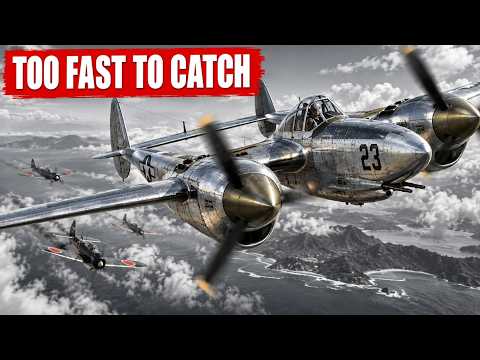
The afternoon sun baked the dirt floor of the Hollandia recreation hall as Lieutenant Colonel Charles MacDonald stared at the checkerboard, trying to ignore the squeak of the screen door. A man in a Navy officer’s uniform, stripped of all insignia, stood at the entrance, waiting patiently to be noticed. He said his name once, quietly. No one looked up. Then he said it again, and the room went silent. Charles Lindbergh, the most famous aviator alive, the man the President himself had barred from wearing an American military uniform, was standing in a dirt-floored rec room politely asking permission to talk about fighter planes. No one in that room yet realized what he was really offering. In six weeks, pilots trained to trust their instruments over their instincts would sit in a cockpit designed for seven hours and fly it for nine. Fuel gauges that had always hit empty at the worst possible moment over open ocean would start coming back to base reading full. The secret wasn’t a new engine, a new tank, or a new tactic from headquarters. It came from a 42-year-old civilian who had never flown a P-38 until three days earlier. He was calmly explaining a technique every Army Air Forces instructor had warned would destroy the engine.
Seventeen years earlier, Lindbergh had already answered the question that would define his life. On May 20–21, 1927, he flew solo from New York to Paris, covering 3,600 miles across open ocean in a single-engine plane called the Spirit of St. Louis. The fuel tanks were so large they completely blocked his forward view, forcing him to navigate by periscope and dead reckoning for 33 and a half hours. When he finally landed at Le Bourget, the crowd that swarmed his plane was focused on the miracle of the crossing. Lindbergh was focused on something else. He landed with 85 gallons of fuel still in his tanks—an efficiency margin that aviation experts of the era considered mathematically impossible for the Wright Whirlwind radial engine. That number, 85 gallons, would matter more to American air power than anyone in that cheering crowd could have imagined. For 33 hours, he had watched the fuel gauge with obsessive discipline, adjusting the mixture and throttle in tiny increments, treating every gallon as something to be earned rather than merely burned. Other pilots of his day flew by feel. Lindbergh flew by calculation—calculations that kept him alive over open water with no land in sight for most of a day and a night.
His obsession with fuel didn’t fade with fame. Throughout the 1930s, while flying exploratory routes across the Pacific and Atlantic for Pan American Airways, Lindbergh kept refining his understanding of engines that their own manufacturers didn’t fully grasp. He became convinced that published range figures weren’t limits. They were just averages set by pilots who hadn’t bothered to search for the narrow band where power, fuel consumption, and mechanical stress reached a perfect balance. Finding that band meant understanding the relationship between manifold pressure, propeller speed, fuel mixture settings, and airspeed in ways far beyond what was taught in ordinary cockpits. By the time World War II broke out again, Lindbergh had quietly become one of the world’s foremost experts in long-range aviation. But he simply had no place to prove it.
His relationship with the country that had once made him a hero was in ruins. During the late 1930s, Lindbergh had traveled to Nazi Germany, toured its aircraft factories, and returned home to argue forcefully against American intervention in the coming European war. He became the public face of the America First Committee, and his warnings against intervention turned, in many American ears, into something that sounded like sympathy for the enemy. President Franklin Roosevelt despised him. In late April 1941, Roosevelt publicly compared Lindbergh to a “Copperhead” of the Civil War era—a man remembered for undermining his government in wartime. Stung, Lindbergh resigned his colonel’s commission in the Army Air Corps within days. It was a gesture of pride that would cost him everything once the bombs actually began to fall.
When Pearl Harbor dragged America into the war that December, Lindbergh tried to rejoin. He wanted a uniform, a cockpit, and a chance to fight. Roosevelt personally and permanently ensured that Lindbergh would never again wear an American military uniform for the duration of the war. For a man whose identity was built entirely in the sky, that was a sentence close to exile. But expertise, it turned out, could always find a side door when the front door was locked. Barred from serving as an officer, Lindbergh reinvented himself as a civilian technical consultant—and manufacturers were desperate enough for his knowledge to overlook his politics.
In 1943, he joined United Aircraft, working closely with its Chance Vought division on the new and temperamental F4U Corsair. He spent weeks at Ford’s Willow Run plant untangling production bottlenecks that were crippling the B-24 Liberator assembly line. He made punishing high-altitude test flights in P-47 Thunderbolts to study engine performance at the extreme limits of airframe stress. He helped Corsair pilots refine dive-bombing techniques. His contributions were real and substantial. None of it was combat, and combat was what Lindbergh actually wanted.
In early 1944, a new opportunity appeared. United Aircraft wanted field data on the twin-engine fighter concept, and the only American aircraft in that class was the Lockheed P-38 Lightning. Lindbergh convinced the company to send him to the Pacific theater as a technical representative, his official mission to observe operations under real combat conditions. On April 3, he began preparing for deployment. He visited Brooks Brothers in New York and bought a Navy officer’s uniform stripped of all rank and insignia—a costume for a role with no official title. At Brentano’s bookstore, he selected a pocket-sized New Testament to carry with him, writing in his journal that day that since he could bring only one book, this was his choice—though it wouldn’t have been a decade earlier. He left San Diego on April 24, officially bound for Marine aviation bases scattered around Guadalcanal. The Navy Department had cleared the trip. The White House had not been informed. Neither President Roosevelt nor even the Secretary of the Navy knew that Charles Lindbergh was heading to a war zone.
What began as a quiet observation mission changed almost immediately. Marine pilots, indifferent to Washington’s grudges, invited Lindbergh to fly with them on actual combat missions. On May 21, 1944, Lindbergh flew his first combat sortie—a strafing run near the Japanese garrison at Rabaul with a Marine fighter squadron. Officially, it was called “observation.” But Lindbergh flew it with loaded guns and fired them. Working alongside Corsair pilots who were losing aircraft to overweight takeoff accidents, he analyzed power settings and weight distribution with the same obsessive precision he had once applied to a fuel tank over the Atlantic, and the accident rate fell while offensive capability rose. Word began to spread across the Pacific that the famous aviator wasn’t just watching the war. He was solving its problems.
By mid-June, Lindbergh was specifically interested in the Lightning. He had heard that the 475th Fighter Group, nicknamed “Satan’s Angels,” was among the most formidable P-38 squadrons in the Pacific. If he wanted to understand what the aircraft could truly do, that was the unit to go to. On June 15, he flew to Finchhaven, New Guinea, and introduced himself at Fifth Air Force headquarters, where he lunched with Colonel Marion Cooper. Three days later, he dined with General Ennis Whitehead to discuss developments in New Guinea and his hope to observe P-38 operations directly. The clearance for what happened next was informal at best. In the improvised, flexible command structure of the Southwest Pacific, a record of achievement opened doors that official papers alone could not.
On June 20, Lindbergh spent an hour and twenty minutes practicing in a P-38 with an unfamiliar squadron—his first time ever in the cockpit of that distinctive twin-boom fighter. Six days later, he walked into the Hollandia recreation hall and interrupted a checker game.
Charles MacDonald was twenty-nine years old, already had ten aerial victories, and commanded a group that had been formed in Australia the previous May and had since grown into one of the most successful Lightning units in the theater. His three squadrons flew the latest P-38J models, fitted with improved intercoolers and additional internal fuel capacity, making them the longest-legged fighters in the Pacific. Yet even they had limits. Pilots heading for distant targets often returned with tanks nearly dry, and more than one aircraft had been lost when weather forced a course change that drained what little fuel remained.
MacDonald looked up, heard the name, and simply returned to the checkerboard at first. Only when Lindbergh mentioned that a general at the Third Air Task Force had sent him specifically to discuss P-38 combat operations did MacDonald set the piece aside. After a brief conversation, he asked whether Lindbergh would like to fly a mission the next morning. Lindbergh agreed without hesitation. Rather than send him back to headquarters for the night, MacDonald offered him a spare cot in the squadron’s own camp. Word of the identity of the man sleeping among them spread before dark.
Reactions split immediately. Some pilots were thrilled at the chance to meet a living legend. Others were openly skeptical that a 42-year-old civilian, however famous, belonged in the cockpit of a modern fighter. Major Thomas McGuire, who already had fifteen confirmed victories and was destined to finish the war as America’s second-highest-scoring fighter pilot, made his position plain. He wanted to see what the old man could actually do.
The following morning, June 27, brought heavy rain that lasted until mid-morning. By 10:30 the weather had cleared enough to fly, and MacDonald led four aircraft toward Jeff Man Island and the airstrip near Sorong, familiar hunting grounds for the group. Lindbergh flew as “Blue Three,” directly behind McGuire’s wing, while Merrill Smith, who had eight victories, flew the fourth plane. MacDonald watched, expecting sloppy flying from a man who had trained on the aircraft less than a week earlier. Instead, Lindbergh took his position with a precision that looked rehearsed. Over Cape Kaipos Bay, the squadron found an enemy barge and dove to strafe it amid scattered flak, cannon and machine-gun fire tearing the target apart as Lindbergh weaved between the tracers. All four aircraft returned to base safely.
It wasn’t the strafing run that would raise eyebrows on that mission. It was what the ground crew found later, bent over Lindbergh’s plane with a fuel gauge in their hands, in a state of disbelief that spread rapidly through every tent in the squadron. The gauge read impossibly high after a mission of that length, and the crew chief checked it twice before saying a word, thinking at first the instrument was broken. It wasn’t broken. It was simply telling the truth about a pilot who had spent seventeen years learning how to make an engine lie about how much fuel it burned.
Two days after Lindbergh first walked through that screen door, MacDonald gathered the entire group. The recreation hall was the only building large enough to hold them, and it wasn’t even a proper building. Packed dirt floor, palm-frond roof, one tennis table, and a few decks of cards were all they had for comfort. Bare bulbs hung from the beams, casting hard shadows on rows of young faces. This time MacDonald introduced Lindbergh formally and asked him outright, in front of the assembled squadron, to explain exactly how his aircraft always came back with more fuel than anyone else’s.
Rows of young men sat on ammunition crates and upturned fruit boxes, cigarettes glowing in the darkness beyond the reach of the bulbs. Most were barely in their twenties. Several had already scored more kills than most fighter pilots would achieve in a lifetime. They had flown escort missions where they spent the last thirty minutes of the return trip doing mental arithmetic, watching the gauge and calculating whether the coast would appear before their tanks ran dry. They had lost friends to those calculations. Whatever this civilian was about to say, he had their full attention, if not yet their trust.
Lindbergh stood and began speaking in the same quiet, measured tone he had used at the screen door. Standard procedure for the Lightning called for cruising at 2,200 to 2,400 RPM, with fuel mixture set to Auto Rich. That was the setting every pilot in that room had learned in training, considered safe, considered correct, considered simply how the engine was meant to run. Lindbergh told them it was also wasting fuel. He explained that by dropping engine speed to 1,600 RPM, leaning the mixture to Auto Lean instead of Auto Rich, and increasing manifold pressure slightly to compensate, a pilot could cut fuel consumption dramatically without any noticeable loss of airspeed. The specific numbers he recommended were 1,600 RPM, 30 inches of manifold pressure, auto lean, and an indicated airspeed of 185 miles per hour. “Run it this way,” he said.
Fuel consumption dropped to roughly 70 gallons per hour—nearly 2.5 miles per gallon. He predicted the technique would extend the Lightning’s combat radius by nearly 400 miles, turning grueling seven-hour missions into nine-hour ones. The room went silent in a way that had nothing to do with respect. Nine hours was a number nobody in that hall wanted to hear, and several pilots exchanged glances the moment the word left his mouth. The cockpit of a P-38 was cramped enough for seven hours, pilots sitting on their parachutes with a life raft and paddle jammed beneath them, survival gear digging into their backs for the entire flight. Two more hours in that seat seemed less like an improvement and more like a sentence to hard labor.
But the real objection was mechanical, and it ran deeper than comfort. What Lindbergh was describing—low RPM with relatively high manifold pressure—was a condition pilots had been explicitly warned against since flight school. They called it “running over the square,” and every instructor who had ever stood in front of them had said the same thing. Let manifold pressure climb too far above RPM, and the engine would begin to detonate. Cylinder head temperatures would spike until catastrophic failure occurred at the worst possible moment. Often over water, where there was no place to land.
Now a civilian who had flown the plane for a week was telling them to do it deliberately, as routine procedure. Someone in the back said aloud that it sounded dangerous. No one argued loudly, but no one needed to. The word “detonation” carried a weight in that room that no civilian instructor from a manufacturer’s technical office could fully appreciate the way a combat pilot could. Detonation didn’t mean a minor annoyance. It meant a dead engine over water hundreds of miles from the nearest piece of land. A slow single-engine glide if you were lucky. Or a swim if you weren’t. And the sharks or the starvation would decide what was left of your fate. Every man in that hall had heard the stories, and many had lost friends to that exact outcome on fuel settings far more conservative than what was now being proposed.
Major Thomas McGuire watched the exchange with a cold, appraising stare, a man who had already decided he would trust results over lectures. His fifteen victories had taught him that survival in the Pacific depended on precision, not enthusiasm. And precision was exactly what this civilian claimed to be offering. He asked a direct question about detonation margins that made two of the younger pilots nod, visibly relieved that someone had said it out loud. Lindbergh answered without defensiveness, walking through the specific numbers again. Thirty inches of manifold pressure was nowhere near the threshold where fuel began to burn unevenly inside the cylinder. McGuire didn’t look convinced. But he didn’t look dismissive either. He was willing to learn the truth, but only in the air, not in a rec hall under a bare bulb, and he said so plainly before the meeting ended.
MacDonald made the decision that mattered. Rather than argue physics, he decided the group would simply test it. If Lindbergh was right, the 475th would gain an operational advantage no other unit in the theater possessed. If he was wrong, they would find out quickly and at limited cost. The first flights were deliberately short, kept close to base so any pilot who heard something wrong in his engine could return immediately. The pilots came back describing the sound as unsettling—the deep rumble of the Allison V-1710s dropping to an unfamiliar low pitch at 1,600 RPM, a noise closer to a truck struggling up a hill than a fighter in cruise.
More than one pilot later admitted his hand hovered near the throttle the entire flight, ready to shove it back to the familiar setting at the first sign of trouble. Every few minutes, eyes dropped to the cylinder head temperature gauge, expecting the needle to climb toward the red line that would confirm every warning they had ever received. It never climbed. Oil pressure held steady. Cylinder head temperature—the one gauge that would reveal dangerous detonation instantly—didn’t rise at all. It dropped, the engine running cooler than it ever had at the higher, “safer” RPM settings everyone had trusted for years.
The pilots landed, taxied in, and sat in their cockpits for a moment doing nothing but staring at the gauges that refused to confirm what they had been taught to fear. One by one, they climbed out and told their crew chiefs the same thing, sheepishly. It felt wrong. But the readings were right. Confidence spread the way it always does in fighter squadrons—slowly at first, then all at once. McGuire tested the settings himself before saying a word to anyone else, choosing a medium-range mission rather than a short hop, determined to test the technique for real rather than merely go through the motions. He came back with cylinder head temperatures matching what the other pilots reported, and a fuel reserve that made the standard settings look wasteful by comparison.
He didn’t make a speech about it. He simply told the next pilot who asked him that the numbers were right, and since they came from a man with fifteen victories and a reputation for blunt honesty, that carried more weight in the squadron than anything Lindbergh himself could have said. Pilots began using the settings on longer missions after that, and the fuel savings were impossible to argue with. Raids that had always required an immediate return to base now left room for extended patrols over the target. Flights that had demanded tense fuel-gauge watching now ended with comfortable reserves in the tanks.
The Lightning’s effective combat range, previously about 570 miles, stretched to 700, then 750 miles. Pilots discovered they could reach targets that had simply been considered out of the aircraft’s range, fight for a quarter of an hour once there, and still come home with an hour of fuel in reserve. On July 1, one pilot flew a six-and-a-half-hour armed reconnaissance along the western shore of Geelvink Bay and landed with 210 gallons in his tanks—a number that would have been unthinkable for the same squadron six weeks earlier. Two days later, while escorting sixteen B-25s to Jeff Man Island and then staying to hunt barges, two pilots using standard settings withdrew early with low fuel, while the aircraft using Lindbergh’s numbers stayed on station with ample reserves.
Lindbergh flew continuously during this period, leading missions himself to prove the technique held up under real combat conditions and not just on a gauge back at base. On flights he led, pilots used a simple radio call sign for him: “Mr. Lindbergh,” nothing more. No rank was attached because he held none. And somehow, the simplicity of it suited him better than any title. He explained the physics patiently to anyone who asked, sometimes sketching it on the back of a mission chart with a stub of pencil. “The engine produces power by burning fuel to push the pistons through a fixed number of cycles per minute,” he would say. If you raised RPM, the engine simply ran faster, burning fuel more frequently to produce the same total power, with much of it wasted in the process. Lower the RPM and raise manifold pressure to compensate, and you got the same power from fewer, more complete combustion cycles, each one using its fuel more efficiently.
The lean mixture completed the picture, eliminating the excess fuel that Auto Rich settings pumped into the cylinders purely for cooling at high power. Fuel that was never meant to be burned for thrust in the first place, only to protect the engine from overheating under a workload that normal cruise settings didn’t actually demand. The manifold pressure he recommended, thirty inches, was far below the sixty inches used at takeoff or full combat power. It wasn’t dangerous because it wasn’t, in any real sense, a high-power setting at all. It simply broke a general rule that generations of instructors had repeated without ever testing its actual limits.
There was another factor working quietly in Lindbergh’s favor, one that had nothing to do with mixture settings or manifold pressure. The Lightning carried two engines mounted in separate booms on either side of the pilot, a design most single-engine fighter pilots envied when flying long distances over water. If this technique somehow damaged one engine, the other could carry the pilot home across hundreds of miles of open ocean, while a single-engine fighter offered no such margin—only a slow glide and a life raft. Lindbergh understood that trade-off better than anyone else in the theater, having spent years flying single-engine aircraft across oceans where one failed cylinder meant swimming with no hope of rescue. The P-38 gave Lindbergh room to experiment that he had never had during his Atlantic crossing. Allison was also shipping spare V-1710 engines to the Pacific in plentiful numbers that summer, and any aircraft needing a new engine after the test settings could be re-engined in days rather than weeks.
The operational gain was worth the small calculated risk, and as the weeks passed, that risk simply never materialized. No engine in the group failed because of Lindbergh’s cruise settings, and maintenance records, when later compared with squadrons still using the old settings, showed no appreciable difference in engine wear at all. By late July, word had spread beyond the 475th. Ground crews talked to one another. Pilots rotating between units exchanged notes over meals and traded the specific numbers—1,600 RPM, thirty inches, auto lean, 185 miles per hour—like men sharing a secret too valuable to keep to themselves. Other Fifth Air Force units, having heard what “Satan’s Angels” were now capable of, wanted the same advantage, and commanders who had never met Lindbergh personally began asking him to repeat his briefing for pilots outside his adopted squadron.
He complied every time, patient with the same skeptical questions he had answered a dozen times before, aware that every squadron needed to hear the warning about detonation and watch the skepticism fade for themselves when they saw their own cylinder head gauges before they would truly believe it. The technique had one final test to pass, and it came on July 28 over El Paputi Bay on an escort mission to Sarum, flying with the 433rd Squadron. Lindbergh flew as “Blue Three” in a four-plane formation. Below them, two Mitsubishi Ki-51 reconnaissance and light attack aircraft—the type American pilots called “Sonia”—were returning from a search for a missing comrade. The two aircraft belonged to the 73rd Independent Squadron; one was flown by its commander, Captain Saburo Shimada, and the other by a sergeant named Yokoi.
Another formation of P-38s found the two Sonias first and was already engaged when MacDonald’s formation arrived. Yokoi’s aircraft ended quickly. Lieutenant Wade Lewis’s cannon fire hit the Sonia’s left wing, which began streaming fire, and as the damaged aircraft tried to adjust its course and escape, Lieutenant J. C. Haslip slid behind it and fired a long burst that sent it down in a fatal dive toward the sea, trailing smoke. Shimada refused to share that fate. He fought for thirty minutes in a running battle against multiple attacking Lightnings, refusing every chance to escape toward cloud cover, pushing his slower, more maneuverable aircraft through hard, violent turns, leaving vapor trails at his wingtips as he executed maneuvers the faster American fighters couldn’t match. This kind of fight was supposed to be over in minutes—a heavy reconnaissance aircraft against four modern fighters—and the fact that it wasn’t said something about the man behind the controls.
The P-38 pilots tried again and again to close enough to hit him but couldn’t settle their sights. Captain Daniel Forth Miller, MacDonald’s wingman, caught Shimada briefly in his gunsight before the Japanese pilot turned hard left and vanished from the scope, the pursuing bullets falling harmlessly eighty feet behind the fleeing tail. Miller swore softly and swung his aircraft around for another pass, only to find Shimada evading at the corner again. Then, without warning, Shimada turned straight toward Lindbergh. The two aircraft closed head-on at nearly 500 miles per hour. Whether Shimada intended a ramming attack or simply aimed to trade fire on a collision course was impossible to know from inside either cockpit. For a man who had spent thousands of hours in the air but had never faced another pilot seriously trying to kill him, that moment arrived with a strange, total clarity. There was no more time for calculations, no fuel-gauge watching, no precise engine adjustments. There was only the growing silhouette of the Sonia’s engine filling the windscreen, closer with every second, at a closing speed that left no room for hesitation in any direction.
Lindbergh aimed at the engine and held the trigger down. The Lightning’s nose-mounted guns—a 20mm cannon and four .50-caliber machine guns—fired continuously for six full seconds, punching through the airframe as the tracers converged on the oncoming aircraft. The Sonia’s propeller slowed noticeably. Smoke began pouring from the engine cowling, thickening with every second. And remarkably, Shimada held his course, either unable to control the aircraft or refusing to break off despite the damage. At the last possible instant, Lindbergh pulled up, passing over the damaged aircraft with only feet to spare—so close that the shape of the enemy cockpit was visible for a fraction of a second before it disappeared beneath him.
Other P-38s fired additional bursts as the crippled Sonia entered a steep, uncontrolled dive. It struck the ocean at high speed, throwing up a white fountain of spray that expanded in circles on the surface before the water closed over the wreckage as if nothing had happened. Captain Saburo Shimada and his observer did not survive the impact. Back at base, the pilots agreed quietly among themselves about who deserved the credit. Several of them had hit the Sonia during the long fight, including MacDonald and Miller, but Lindbergh’s direct burst was what slowed the propeller and began the fatal dive. The kill was never recorded in the group’s official log. Lindbergh was a civilian, and his presence in combat was an irregular arrangement no one wanted to scrutinize; recording an official victory would have brought exactly the kind of attention that might end his time with the squadron. Informally, among the men who saw what happened, there was no debate at all.
Word of the head-on attack spread through camp that evening the usual way, man to man over dinner. And for the pilots who had doubted him two weeks earlier in that dirt-floored rec hall, the story settled something no engine gauge could have settled. This civilian hadn’t just taught them how to fly farther. He had proven, in the middle of combat with another pilot trying to kill him, that he could fly as well as any of them. Three days later, on August 1, the balance nearly tipped the other way. The mission was a fighter sweep toward the Palau Islands, and the squadron ran into Japanese Zeros. Lindbergh found himself in a tight dogfight with a Zero pilot who came dangerously close to ending everything—the famous pilot, the fuel technique, all of it, in a few short seconds.
The Zero kept maneuvering around him repeatedly, the kind of fight the nimble Japanese fighter was designed to win against a heavier twin-engine aircraft, and for several long seconds Lindbergh couldn’t shake the enemy fighter off his tail no matter how hard he fought to maneuver his Lightning through the sky. It was MacDonald’s voice over the radio that saved him, sharp and immediate. “Break right, break right.” Lindbergh obeyed instantly, without asking why, trusting that voice more than his own assessment of the situation, and MacDonald pulled in and engaged the Zero himself, giving Lindbergh the room he needed to escape. It was a strange reversal of everything the previous six weeks had been about. The man who had spent a month teaching pilots half his age to trust mathematics over instinct owed his life, in the end, to a young squadron commander’s instinct arriving half a second before his own.
That close call did what six weeks of extraordinary flying had not. It convinced Fifth Air Force headquarters that the arrangement had served its purpose. Lindbergh had proven the technique beyond any doubt. He flew roughly fifty combat missions during his time in the Pacific, about twenty-five of them in P-38s with the 475th. He had shot down an enemy aircraft, even if no record officially said so, and he had nearly been killed—saved only by a young colonel’s reflex and a moment of luck. No official memorandum was circulated about it, and no formal order was issued removing him from combat duty. It simply became understood, quietly and without discussion, among the officers who had allowed an unarmed, uncompensated civilian to fly into Japanese fire for six straight weeks, that testing their luck further would benefit no one—especially the pilots who had come to depend on the lessons he had already given them. It was time to send him home before things ended in a way no one wanted to explain to Washington.
By October 1944, variations of Lindbergh’s cruise settings had become standard practice across P-38 units throughout the Pacific theater. The exact numbers changed slightly from squadron to squadron, adjusted for local conditions and individual aircraft, but the underlying principle held firm wherever it spread. Lower RPM, increased manifold pressure, less fuel, and an extended range that had once seemed like a civilian’s fantasy were now printed on the official flight control charts issued by the Army Air Forces. Pilot training materials were revised to include lean cruising as standard procedure rather than a dangerous exception. The operational consequences went far beyond fuel gauge readings.
Japanese airfields that had once been safe from American escort fighters were now within reach of Lightnings that could fight over the target and return to base with fuel to spare. Bomber missions that had been flown unescorted through contested skies, or not flown at all, became possible thanks to fighter protection that accompanied them the whole way. By the second half of 1944, P-38 groups operating from Dutch New Guinea were flying routine missions approaching a thousand miles, fighting for a quarter of an hour over the target, and returning safely to base. Six weeks earlier, missions of that length had simply been considered impossible for these aircraft.
The importance of that extended range became especially clear that autumn as General MacArthur’s forces advanced toward the Philippines. When American troops landed at Leyte in October, P-38s launched from bases in New Guinea and Morotai provided air cover across distances that had been unimaginable only months before. The difference between a fighter arriving over a beachhead with an empty tank and one arriving with an hour of fuel in reserve is the difference between a gesture and real air cover, and that difference traced directly back to a lesson first proven under a bare bulb in Hollandia months earlier. The strategic effect showed up on planning maps in headquarters more than in newspaper headlines, as officers gained options they hadn’t had in June. Islands and airstrips that had required a direct, costly assault to bring fighters within range of the next target could sometimes be bypassed entirely because the aircraft already on hand could reach farther than anyone had planned for when the campaign was mapped. Operations that had taken months of hopping from one airfield to the next shrank to weeks—not because new aircraft arrived or the enemy weakened, but because the fighters already in the field could suddenly do more with the same fuel tanks they had always carried.
There is a persistent misunderstanding worth correcting here, precisely because the story can easily drift toward it. Popular accounts often confuse the cruise-control techniques Lindbergh used with the mission that intercepted and killed Admiral Isoroku Yamamoto in April 1943, a flight that also pushed the Lightning’s range to its outer limits. The two events have nothing to do with each other. That mission was flown by the 339th Fighter Squadron from Guadalcanal more than a year before Lindbergh arrived in the Pacific. Lindbergh’s contribution came later and was different, and in some ways more important, precisely because it was less dramatic. He didn’t make a single extraordinary mission possible. He made missions of that difficulty routine.
The human cost of those six weeks deserves to be told on its own. Lindbergh was forty-two years old when he flew combat missions against pilots twenty years his junior, enduring the same physical strain of violent maneuvers, the same cramped hours inside a cockpit designed for men half his age, the same fear that comes with tracers passing close enough to hear them. He never asked for lighter duties or special treatment. He flew the same missions the young lieutenants and captains flew, followed the same procedures, accepted the same risks. His insistence on proving the technique’s worth through personal demonstration rather than lecturing from the safety of rear headquarters was what made the pilots trust it. Had he merely presented a chart and returned to his office, the 475th would have dismissed him as another theorist who had never faced what they faced—another expert with a slide rule who didn’t understand what a pilot felt in a cramped cockpit after six straight hours over open water. Instead, he earned their trust the only way fighter pilots truly grant it: by flying the same missions, enduring the same discomfort, facing the same fear, and coming back with the numbers to prove it every time.
The credibility he built extended beyond fuel management to something harder to measure. Major Richard Bong, who finished the war as America’s top fighter ace with forty confirmed victories, later told a news agency reporter that Lindbergh was as fine a pilot as anyone in the theater, adding that he would have scored his own victories daily if his commanders had allowed it. Coming from a man with every reason to regard a famous civilian with suspicion, and who had seen enough modest pilots claim more than they deserved, that assessment carried a weight no political rehabilitation in Washington could have matched. In the Pacific, far from the newspapers and the President who had barred him from wearing their uniform, Lindbergh was judged on his flying skill and his courage alone—and he passed the test.
He left Hollandia on August 12, 1944, and the pilots of the 475th gathered to see him off—not as a celebrity passing through, but as a man who had become, in six short weeks, one of them. He returned to the United States and continued working, evaluating captured Japanese aircraft and participating in a joint conference on fighter performance that October. He kept consulting for manufacturers still fighting their own battles against inefficiency and mechanical failure. The war continued without him in the cockpit, but the technique he had proven kept flying on every mission that followed.
The numbers, once the technique was fully absorbed into practice, told their own story. Standard cruise settings in the P-38J burned fuel at a rate that gave the aircraft an effective combat radius of about 570 miles. Lindbergh’s settings raised that to roughly 750 miles under the same combat and reserve requirements—an improvement of nearly a third, extracted entirely through technique, without a single new part or an extra gallon of fuel. For maximum-range missions, the combination of his cruise settings and external drop tanks produced flights approaching nine hours and covering more than a thousand miles, figures that had been entirely outside the aircraft’s accepted envelope before that June. The 475th Fighter Group finished the war as one of the most successful P-38 units in the Pacific, its pilots credited with hundreds of aerial victories over the course of the conflict. Thomas McGuire—the skeptic who had insisted on testing the numbers himself before believing a word of Lindbergh’s lecture—finished the war with thirty-eight confirmed victories, second only to Bong among American pilots. Decades later, Colonel Warren Lewis, who commanded one of the group’s squadrons, could still recite Lindbergh’s fuel-saving settings from memory when interviewers asked him about that summer. The exact numbers changed slightly depending on who remembered them and under what conditions they had flown. But the underlying principle never wavered in anyone’s memory—and neither did their gratitude.
Thirty years passed between that summer over New Guinea and the quiet end of Lindbergh’s life. Charles Lindbergh died on August 26, 1974, at age seventy-two, of lymphoma at his home in Kipahulu on the island of Maui. He had left a New York hospital only days earlier, choosing to spend his final week in Hawaii rather than in a hospital bed—a final act of quiet independence from a man who had spent his whole life making his own calculations about risk and where he wanted to be when the time came to face it. He was buried at the small Palapala Ho‘omau Church in a simple wooden coffin under the shade of a tree, among a gathering small enough to count without effort—a striking contrast to the crowds that had swarmed his aircraft at Le Bourget nearly half a century before. His gravestone is modest, bearing his name and dates and a single line quoted from Psalm 139 about taking the wings of the morning and dwelling in the uttermost parts of the sea. Words that seem, for a man who spent his life crossing oceans by air, not like a randomly chosen text but an exact description of the way he lived.
What Lindbergh left behind in the Pacific wasn’t really about him at all. It was about a room full of skeptical young men who had been taught that specified limits were the truth, and who learned instead from a civilian barred from wearing their uniform that those limits were only a starting point no one had bothered to push past. He arrived in Hollandia as a stranger with a complicated past and a name that meant different things to different people—a man half the room admired and the other half silently doubted. He left six weeks later as a man they simply called by his name over the radio. Trusted at 500 miles per hour with another pilot coming head-on. Trusted enough that a squadron commander risked his own life in a turn to save his wingman. That trust, earned in a dirt-floored rec hall and proven at combat speed over the open Pacific, extended the reach of America’s fighters farther than any engineering specification sheet ever had. And it brought the pilots of “Satan’s Angels” home, mission after mission, with fuel to spare—long after the man who taught them how had climbed into a transport plane and flown back to a country that wasn’t entirely sure how to deal with him.
So here’s the question: if a single civilian with a notebook and a stubborn refusal to accept “that’s how it’s always been done” could reshape air power in six weeks, what “impossible” limit in your own field is just waiting for someone to actually test it?
Report this article
Select a reason for reporting:






