In the annals of World War II, few fighting forces struck as much fear into the hearts of enemy commanders as the soldiers from Down Under. The ANZACs—a name born in the bloody sands of Gallipoli—had already forged a reputation for unyielding courage and fierce independence during the First World War. But it was in the Second World War that these men from Australia and New Zealand would truly cement their legend, leaving a trail of frustrated Axis generals in their wake.
From the scorching deserts of North Africa to the dense jungles of the Pacific, the ANZACs fought with a ferocity that bewildered their foes. They didn’t just follow orders; they improvised, adapted, and often outsmarted their enemies with a unique brand of battlefield ingenuity. This is the story of how two small nations, separated by vast oceans, stood shoulder to shoulder with the Allies and made a disproportionate impact on the course of history.
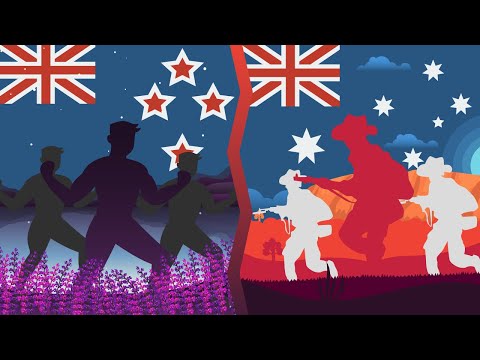
To understand the ANZAC spirit, one must first distinguish the ANZAC Corps from the broader Australian and New Zealand armies. The Corps was a combined unit, first formed in 1915 during the Gallipoli campaign, and briefly resurrected in World War II during the Battle of Greece. The term ‘ANZAC’ itself, however, evolved into something far more profound—a symbol of national identity and sacrifice. Every April 25th, Australians and New Zealanders pause to honor not only the fallen of Gallipoli but all their military personnel who have served in conflicts around the world.
When war erupted again in 1939, both nations didn’t hesitate. Australia, following Britain into the fray on September 3rd, mobilized its army, air force, and navy across multiple theaters. Some 13,000 Aussie pilots and aircrew served in the defense of Britain and over Western Europe, sustaining the highest casualty rates of any Australian military branch. Their bravery in the skies was matched only by their grit on the ground and sea.
In North Africa, the Australians made their mark in Operation Compass. At the Italian-held fortress of Bardia, the 6th Australian Infantry Division, bolstered by British forces, achieved a stunning victory. They captured 36,000 Italian prisoners, inflicted 4,500 casualties, and seized 800 vehicles and 400 artillery guns—all while suffering only 450 casualties themselves. It was a textbook example of ANZAC efficiency and daring.
But the war in the Pacific brought a different kind of horror. As Japanese forces advanced, Australians found themselves defending their own doorstep. The fall of Singapore saw 15,000 Aussies captured, and the subsequent New Guinea campaign became a brutal slog. The bombing of Darwin in February 1942—the first of over 100 Japanese air raids on Australian soil—steeled the nation’s resolve. From the jungles of New Guinea to the guerrilla warfare of Borneo, Australian soldiers fought with a tenacity that earned them respect and fear in equal measure.
Meanwhile, the New Zealanders—the Kiwis—were writing their own chapter of valor. Also declaring war on Germany on September 3rd, 1939, they fought alongside their Australian cousins in many theaters. New Zealand’s principal force, the 2nd New Zealand Expeditionary Force, and its airmen in the RAF, made outsized contributions. In the Battle of Britain, Kiwi pilots flew with distinction, while on the ground, the 2nd NZEF played a crucial role in the grueling Battle of Monte Cassino.
The Maori Battalion, a unit within the 2nd New Zealand Division, became legendary for its ferocity. At Monte Cassino in March 1944, they suffered devastating losses—128 out of 200 Maori soldiers became casualties, a staggering 64 percent of the unit. Yet their sacrifice paved the way for the Polish and British offensives that finally broke the German defenses. The battalion’s bayonet charges, often accompanied by the haunting haka, left an indelible mark on all who witnessed them.
Like the Australians, the New Zealanders feared a Japanese invasion of their homeland. While enemy naval vessels prowled their waters, no bombs fell on Kiwi soil. Instead, they took the fight to the Pacific, with pilots flying under RAF command and American-supplied aircraft. Proportionally, New Zealand suffered more casualties than any other Commonwealth nation—12,000 of its 1.6 million people perished in the conflict. A devastating price for a small nation, but one paid without hesitation.
Now, we must return to the ANZAC Corps itself—that brief but storied reunion in the cauldron of Greece. In March 1941, the Australian 1st Corps, with the New Zealand 2nd Division under its command, landed in Greece to repel the German invasion. It was here that the combined Aussie-Kiwi unit was officially renamed the ANZAC Corps once more. The title was short-lived, but the spirit it represented burned brighter than ever.
The German blitzkrieg proved too powerful. Unlike the failed Italian invasion before it, the Wehrmacht swept through Greece with terrifying speed. The ANZAC Corps, alongside Greek and British forces, was largely undone. Yet instead of fleeing entirely, some ANZAC remnants remained on the island of Crete, joining Cretan soldiers and civilians in a stubborn defense. Among them were the Australian 6th Division’s 19th Brigade and the indomitable Maori Battalion.
On Crete, the fighting descended into savage close-quarters combat. In more than one instance, the Maori Battalion carried out bayonet charges that stabbed and bludgeoned hundreds of German paratroopers to death. The Germans, who had expected a swift victory, found themselves locked in a nightmare of guerrilla warfare. Cretan civilians fought alongside the ANZACs, using farm tools and ancient rifles, while the Kiwis and Aussies held the line with grim determination.
Back in North Africa, the war raged on. Many Australian units had been recalled to the Pacific to face the Japanese, but some—like the Australian 1st and 9th Divisions—remained. These men endured the grueling siege of Tobruk, a Libyan port city surrounded by Axis forces and largely defended by Australian troops. For months, they held out against Rommel’s Afrika Korps, earning the nickname ‘the Rats of Tobruk’ for their refusal to surrender.
But the Kiwis were not done licking their wounds from Greece. On November 18th, 1941, they joined Operation Crusader, clashing with Rommel’s forces alongside other Allied nations. The New Zealand 2nd Division and the Australian 9th Division fought side by side in the first and second Battles of El Alamein, sustaining heavy casualties but ultimately sending the German general running. It was a turning point in the desert war, and the ANZACs were at its heart.
As the war dragged on, the contributions of Australia and New Zealand extended far beyond these famous engagements. From the skies over Europe to the jungles of the Pacific, from the deserts of Africa to the mountains of Italy, these two nations punched far above their weight. Their soldiers, sailors, and airmen became synonymous with courage, resilience, and a refusal to back down—no matter the odds.
Yet for all their shared glory, the ANZAC story is also one of profound sacrifice. The running joke that Australia and New Zealand don’t exist masks a deeper truth—these nations exist because of the men and women who fought and died for them. Their legacy is etched into the national psyche, commemorated every ANZAC Day with dawn services, moments of silence, and blood-red poppies.
But the story of the ANZACs in World War II is far from over. There were countless other battles, countless other acts of heroism, and countless other sacrifices that we have yet to explore. From the daring raids of Special Operations Australia to the forgotten campaigns of the Pacific islands, the full scope of their contribution is a tapestry of bravery that continues to inspire.
One such operation that deserves far more attention than it typically receives is the remarkable work of Special Operations Australia—known more commonly as SOA, or by its cover name, the Services Reconnaissance Department. These were not conventional soldiers but commandos, saboteurs, and coastwatchers who operated deep behind Japanese lines in the Southwest Pacific. Their missions were among the most dangerous of the entire war, and their stories read like something out of a thriller.
SOA operatives were trained in demolition, jungle survival, silent killing, and clandestine radio operation. They slipped onto enemy-held islands by submarine or parachute, often working alongside local resistance fighters and indigenous coastwatchers. Their intelligence reports on Japanese ship movements saved countless Allied lives and directly shaped the course of major campaigns. Many of these men vanished into the jungle and were never seen again.
Meanwhile, the Royal Australian Navy was carving its own legend in the waters of the Mediterranean and the Pacific. In 1940, the cruiser HMAS Sydney famously sank the Italian light cruiser Bartolomeo Colleoni in a blistering exchange off Crete. The Sydney’s crew fought with such precision that the Italian vessel was reduced to a burning wreck within minutes. It was a stunning demonstration of Australian naval gunnery.
But the Pacific would demand an even heavier toll. Australian warships fought in the desperate battles around Guadalcanal and the Solomons, often operating for weeks without resupply. The destroyer HMAS Armidale was sunk by Japanese aircraft in 1942 while attempting to evacuate troops and Dutch civilians from Timor. Survivors clung to wreckage for days, and many were never found. It was a grim reminder that the war at sea was just as merciless as the fighting on land.
For the New Zealanders, the Pacific war took a different but no less brutal shape. The 3rd New Zealand Division fought a grueling campaign in the Treasury Islands and on Bougainville, clearing Japanese positions from dense jungle terrain. Soldiers waded through swamps waist-deep, plagued by malaria and torrential rain, fighting an enemy who rarely surrendered. The Kiwis learned to match the Japanese in stealth and night fighting, often launching their own ambushes with lethal efficiency.
Back in Europe, the Royal New Zealand Air Force had grown from a modest force into a formidable striking arm. By 1944, Kiwi squadrons were flying heavy bombers over Germany itself, participating in the devastating raids on Hamburg and Berlin. New Zealand aircrew flew some of the most hazardous missions of the war, with casualty rates that rivaled those of the infantry. The night skies over Europe were unforgiving, and many young Kiwis never returned.
The ANZAC legacy, however, was not confined to the battlefield. Both nations underwent profound social and economic transformations as a result of the war. Australian women stepped into factories, farms, and military auxiliary units in unprecedented numbers, forever changing the nation’s workforce. Rationing, censorship, and the threat of invasion forged a new sense of national identity—one less tethered to Britain and more confident in its own strength.
New Zealand, too, emerged from the conflict with a heightened sense of independence. The country had lost a generation of young men in proportionally greater numbers than almost any other Allied nation, and that sacrifice would shape its foreign policy for decades. The ANZAC partnership, forged in fire, would endure long after the guns fell silent.
Yet even as the war in Europe drew to its bloody conclusion, the fighting in the Pacific raged on with terrifying intensity. The Australians were preparing for what many feared would be the bloodiest operation of the entire conflict: the invasion of the Japanese home islands. Little did they know that a weapon of unimaginable power was about to change the world forever—and bring the war to a sudden, horrifying end.
But before that final chapter could be written, there remained one last crucible of fire for the ANZACs—a campaign that would test their endurance to the absolute limit and leave scars that would never fully heal.
That crucible was the Borneo campaign of 1945. While the world’s attention turned toward the collapsing Reich and the looming invasion of Japan, Australian forces launched a series of amphibious assaults on the oil-rich island of Borneo. It was a campaign fought in some of the most inhospitable terrain imaginable—swamps, mangroves, and impenetrable jungle where the enemy lurked behind every vine.
The fighting was savage and often at point-blank range. The Japanese defenders, cut off from supply and driven by a fierce refusal to surrender, turned the campaign into a nightmare of ambushes and last stands. Australian soldiers learned to fight a war of whispers and shadows, where a single misstep could mean a bayonet in the dark.
And then, on the morning of August 6th, 1945, the world changed. The atomic bomb fell on Hiroshima. Three days later, Nagasaki. Emperor Hirohito’s voice crackled over the radio, announcing Japan’s surrender—and just like that, the deadliest war in human history was over.
The ANZACs who had fought from the deserts of Africa to the jungles of Borneo returned home to a changed world. They built lives, raised families, and rarely spoke of what they had seen. But every April 25th, they gathered at dawn, and the silence said everything.
So here’s our question for you: if you could ask one ANZAC veteran anything about their experience, what would you want to know? Let us know in the comments below—we’d love to hear from you.
Report this article
Select a reason for reporting:






