In the annals of 19th-century African warfare, the name Zulu often springs to mind. But there was another formidable African nation that proved to be more than a match for Queen Victoria’s armies. Unlike the Zulu, they were not a recent political entity but a 200-year-old empire that fought the British in a series of wars, not just one. Armed with rifles, they withstood the British onslaught. In fact, the skull of a British commander who failed to defeat them was turned into a ceremonial drinking cup in their royal palace. They were the Ashanti of modern-day Ghana. It took the brilliance of one of Britain’s greatest 19th-century generals to subdue them. This is the story of General Sir Garnet Wolseley and the Third Anglo-Ashanti War of 1873–1874.
The Ashanti Empire rose in the late 17th century. Its economic power initially came from gold, hence the European name for the region, the Gold Coast. But they soon developed a lucrative trade by supplying slaves to Europeans on the coast. With their wealth, they acquired European firearms, which they used to capture more slaves and to establish themselves as a powerful empire in West Africa. Today, the Ashanti number about 7 million and make up roughly half of Ghana’s population.
In the 1820s, the Ashanti raided the Fante tribe along the coast. The Fante, due to their proximity to European coastal forts, sought British protection. The British governor, Sir Charles McCarthy, set out to pursue the Ashanti army and found them. It was not good news for McCarthy, as his outnumbered forces were defeated, and his head was taken in triumph to the Ashanti capital, where his skull was said to have become a ceremonial drinking cup. That was followed by 40 years of peace, with the British paying little attention to the Ashanti Empire beyond their agreed border at the Pra River.
However, in the 1860s, the two sides clashed again after the Ashanti crossed the Pra River to pursue a fugitive. This Second Anglo-Ashanti War ended in a stalemate, with both sides losing more men to disease than in battle. So far, the Ashanti had fought two engagements with the British and proved themselves undefeated. It wasn’t that the British were interested in conquest. In fact, now that the slave trade was long gone, many in Britain questioned the value of their presence in West Africa at all. Economically, it was of little value to British manufacturers, and the climate made it an utterly unattractive place for colonization. Indeed, the few points where the British were stationed on the West African coast were known as ‘the white man’s grave.’
What kept them there was a jumble of barely connected fears. First, they felt a moral duty to end the slave trade. After Britain banned the slave trade in its empire in 1807, it became, like a smoker who had quit, on a mission to stamp out the slave trade among others too. Then there was pressure from traders to protect their commercial interests in the region. These two reasons, plus fear of European rivals, especially the French, who might fill the void, prevented complete withdrawal. As always in history, small decisions lead to more small decisions. Suddenly you find yourself somewhere, instead of having a grand colonial plan, you wonder why you are there in the first place. This largely sums up the Third Ashanti War of the 1870s.
After purchasing the Danish and then Dutch trading forts along the coast over the previous two decades, the British found themselves in control of the coastal strip of modern Ghana. They declared the coastal area, which included Fante territory, part of the Gold Coast Protectorate, but without a clear vision for the future. Meanwhile, in 1867, after an internal power struggle, the 30-year-old Kofi Karikari became King of the Ashanti. The young, proud, and impetuous king had no time for the British or their protectorate on the coast. For him, these were traditional vassal territories of the old Ashanti Empire. In 1873, he sent an army of 12,000 soldiers across the border to prove who was really in charge. They reached the walls of the former Dutch fort recently acquired by the British at Elmina, and only a determined stand by sailors and Royal Marines, along with men of the West India Regiment, prevented the fort’s capture.
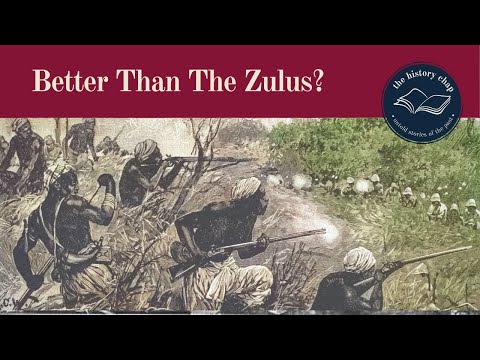
Despite their desire to minimize involvement in West Africa, the British government was forced to act. After all, the policy of establishing the protectorate was supposed to protect the people within it, which the British had clearly failed to do for the Fante, many of whom were now being taken as slaves by the Ashanti. The problem for the British was how to respond. First, apart from the armed force defending Elmina, they had no troops on the ground. Second, West Africa and Europeans were not a compatible mix. That coastal strip, with its tropical heat and array of diseases, had been known for centuries as the white man’s grave. The recent Second Ashanti War had proven that the climate could wipe out a British army long before it met the Ashanti in battle. And the Ashanti were known to be a fierce army. Unlike the Zulu, they were armed with rifles and were prepared to use them in battle with great effectiveness, as you will hear shortly.
Traditionally, the British relied on local tribes to provide any required military support, reinforced by men from the West India Regiment, who seemed more adaptable to the conditions than Europeans. The obvious solution, then, was to place these black soldiers under the command of a British officer to teach the Ashanti a lesson. But who? Voices in the press, especially The Times and the Daily News, clamored to send the darling of the British public, ‘Chinese Gordon.’ Charles Gordon had recently led a Chinese army during the Taiping Rebellion in China. He was a man who knew how to get the best out of local troops. But the Gold Coast and the Ashanti kingdom were not like China. Any advance towards the Ashanti capital, Kumasi, would require penetrating dense jungles via very primitive paths. Was there anyone else who could overcome this physical challenge? Well, yes, there was. Just three years earlier, the youngest general in Britain had successfully led an army across 600 miles of Canadian wilderness in the Red River Campaign. And so, this rising star was called upon to lead this African campaign: Major General Garnet Wolseley.
I have made a full video about the life and career of General Garnet Wolseley. I’ll put a link in the description below. Oh, and by the way, Charles ‘Chinese’ Gordon would later go on to defend Khartoum against the Mahdi in Sudan. That’s another video of mine, and again, I’ll put a link below. Anyway, back to our story. Wolseley, aged 40, was appointed administrator and commander-in-chief of the Gold Coast and set sail for West Africa in mid-September 1873. He was joined on the voyage by a carefully selected group of 35 officers. His legendary ‘Ashanti Ring.’ Unlike most slow ocean voyages to campaigns where officers spent their time relaxing and having fun, Wolseley used this period to plan his campaign in minute detail. Since the Crimean War, Wolseley had kept a little black book in which he collected the names of officers who impressed him. Now, he had to bring them together for a campaign that would make his name a household word at home. All these young, talented officers, like their chief, were under 40, and they became known as the ‘Ashanti Ring’ or ‘Wolseley’s Gang.’ Many of them would become prominent names in Britain’s wars during the second half of the 19th century. Men like Wolseley’s chief of staff on this campaign, John McNeill. Then there was Henry Brackenbury, John Maurice, Redvers Buller, William Butler, Evelyn Wood, and John Pomeroy Colley. All would become generals with varying degrees of success in the British Army. By any measure, that was a highly talented group of officers that Wolseley assembled for this Ashanti War. Maybe I should make a video about Wolseley’s ‘Ashanti Ring.’ What do you think? Send me your opinion in the comments section below.
The government hoped that Wolseley and his large staff of officers could lead an African army against the Ashanti. Based on the dismal performance of the Fante against their northern neighbors in the recent invasion, Wolseley had his doubts. To that end, he requested that two battalions of British regular troops be held in readiness in case he needed them. But he decided that any British force must arrive and leave again within the dry season. A narrow three-month window from December to February when environmental and health conditions were mildest for a European army. Upon arrival at Cape Coast Castle, his focus on the dry season was confirmed. Of his total local forces, including Africans and West Indians, nearly a quarter, 160 out of 800, were sick. Among the 130 Europeans, it was worse. Only 22 were fit for duty. His concerns about the enthusiasm of the local coastal tribes to face the powerful Ashanti were also confirmed. One tribal chief informed him that he could not meet because he had smallpox but would come the next day. Another told Wolseley to come and get him, and finally, the chief of the Ini simply cut off the head of Wolseley’s messenger.
As expected, Wolseley requested the regular British troops to join him in the dry season. Meanwhile, Captain Hall of the Royal Engineers set about building a road to the border. Over the next three months, Hall not only built a road through 70 miles of jungle but also established seven stations every 10 miles for the army. These forts, with cleared ground around them to prevent surprise attacks, included huts that could house 400 men each, stores, hospitals, and water purification facilities. Two of the stations had bakeries, and four had slaughterhouses. The last station at ‘Pra’ on the border also had a post office, a telegraph office, and an arsenal containing over a million rounds of ammunition. Wolseley’s meticulous plans for the campaign included providing every soldier with quinine to take daily during the march to Kumasi, face nets for insect protection, and even cholera belts. Local carriers were recruited to transport supplies, at a rate of one carrier for every three soldiers. Wolseley dispensed with the traditional red and green coats of British soldiers, replacing them with a uniform of light gray woven fabric, which was cooler and more practical in that environment. Hall and his Royal Engineers also built bridges over any river on the route, including a ready-made and impressive bridge brought from England and used to cross the 200-foot-wide Pra River at the border. In total, Hall’s team built 237 bridges during this campaign.
British regular soldiers began arriving in December. They were under the command of veterans of the Crimean War and the Indian Mutiny, Archie Baird and Alison. Alison had lost an arm at the Siege of Lucknow where he served under General Colin Campbell, whom some of you might remember from my video about the Battle of Balaclava in the Crimean War. The British brigade totaled about 2,500 soldiers from the 42nd Regiment, the Black Watch, the Welsh Rifle Battalion, and the Rifle Brigade. They were joined by the 1st and 2nd West India Regiments. The first was recruited mainly from Jamaica, plus about 250 Royal Marines and sailors, and a detachment of Royal Artillery. Finally, Evelyn Wood and Major Baker formed two regiments of local inhabitants, mostly from the Fante tribes. In total, Wolseley’s invading army numbered about 4,000 soldiers, smaller than the Ashanti army, who not only knew the land better but were fighting in defense of their homeland. The dense forests made spotting and countering their attacks more difficult than in the meadows of Zululand or the deserts of Sudan.
In January 1874, Wolseley began his march towards the Ashanti capital. Throughout the month, as they painstakingly hacked their way towards Kumasi, the Ashanti refused to give battle. Then on January 31, as the British advanced towards the village of Amarfoul, they clashed with the Ashanti army. The numbers remain uncertain, but given that they had entered the Gold Coast earlier with 12,000 men, it is not unreasonable to believe they mustered a similar-sized force to defend their capital. The Ashanti commander, Chief Amoatie, had deployed his troops in the traditional Ashanti horseshoe formation, using the terrain and vegetation to maximum advantage. In fact, his disposition of forces and subsequent leadership in the battle were praised by the British afterwards. With the Black Watch bearing the brunt of the Ashanti attack, Wolseley hastily formed his army into a large square and tried to direct operations from a village in the center. However, limited visibility due to the jungle meant he could not see what was happening, and different units could barely see their own forces, let alone the Ashanti. Colonel Evelyn Wood on the flank came under fire and believed it was from the 42nd Regiment, the Black Watch, firing on their own troops. He sent a young officer, Lieutenant Hare, into the bush to correct their situation. He returned quickly to report that they were not Highlanders but Ashanti snipers, and shortly after, Wood was hit by a slug from an Ashanti rifle just above his heart.
During the afternoon, the Ashanti penetrated the flanks and attacked Wolseley’s command center. A hasty defense was organized by a group of Royal Engineers, staff officers, and some journalists, including the special correspondent for the New York Herald, Henry Morton Stanley. Two years earlier, Stanley had gained worldwide fame for finding the explorer David Livingstone deep in the African continent. General Wolseley directed the defense while being carried on a stretcher, calmly smoking a cigar as Ashanti bullets flew through the air. The attack was repulsed. As the day wore on, the Ashanti could not break through. At one point, their talented commander, Chief Amoatie, was killed. Wolseley felt their morale declining and ordered the Black Watch to charge the village with bayonets. With bagpipes playing the tune ‘The Campbells Are Coming,’ the Highlanders surged forward and the Ashanti retreated, but in order towards Kumasi. On February 4, another brief skirmish occurred before the British entered the Ashanti capital that evening. It was deserted. The king and his army had abandoned it, taking as much of the golden treasures as they could.
Wolseley’s men were amazed by the city of Kumasi. Not only by its size but by the layout and splendor of many of its buildings. They were also impressed, or perhaps surprised, to find in King Kofi’s palace a library containing many European books. William Winwood Reade, the special correspondent for The Times, was astonished to find a copy of his newspaper dated October inside the library as well. More horrifyingly, they also found a grove with thousands of human remains that appeared to have been offered as sacrifices by Ashanti priests. After seizing anything of value, the British blew up the royal palace and set fire to the city. The Third Anglo-Ashanti War was over. For the first time, the British had invaded the Ashanti homeland, and for the first time, they had actually defeated the Ashanti in battle. By March, King Kofi had signed a treaty promising to pay 50,000 ounces of gold as reparations, plus guaranteeing freedom of trade from the British Gold Coast to his kingdom. King Kofi also renounced his claims to Elmina Castle and finally agreed to end the practice of human sacrifices. However, by then, Wolseley was already on his way home. He and his returning army received a hero’s welcome upon their return to Britain.
Wolseley’s victory in the Ashanti War cost only 18 men killed in battle, plus 55 others who died of disease. He had succeeded in executing a campaign through dense forests, moving his army in and out within the three-month dry season. He had proven that West Africa did not have to be ‘the white man’s grave,’ even when fighting a well-armed and skillfully led Ashanti army. After being knighted, given the freedom of the City of London, and honorary degrees from the Universities of Cambridge and Oxford, General Sir Garnet Wolseley was seen as the country’s foremost general, a man who was a modern thinker who realized that preparation, just like brute force, is the key to military success. Meanwhile, King Kofi would be deposed by his brother later that year. The Ashanti and the British remained at peace for another 20 years. Eventually, in another war, the once-great Ashanti Empire was annexed into the British Empire. But that war, brilliantly named the ‘War of the Golden Stool,’ is a story for another day. For now, Britain had a new military hero. The press celebrated Sir Garnet Wolseley as ‘our only general.’ While for Gilbert and Sullivan, he was perhaps the model for their ‘modern major-general.’ And more military successes awaited him in the future.
Wolseley’s triumph was not merely a military victory; it was a masterclass in logistics and preparation. The Ashanti, for all their bravery and skill, had been outmaneuvered by a general who treated war as a science. His meticulous planning—the roads, the bridges, the quinine, the timing—had turned the ‘white man’s grave’ into a highway to conquest.
Yet the story of the Ashanti did not end in the ashes of Kumasi. The empire would rise again, and the British would learn that a people’s spirit cannot be burned. The War of the Golden Stool would be their final, defiant stand.
For now, Wolseley returned home to fame and fortune, his name forever linked to one of the most remarkable campaigns of the Victorian age. But the question remains: was this a just war, or the beginning of an empire’s overreach?
What do you think—was Wolseley a hero or a conqueror? Share your thoughts below.
Report this article
Select a reason for reporting:






