History remembers glory, but it also remembers the screams. From the wine-soaked orgies of King Jie to the severed hands of Leopold’s Congo, the most ruthless emperors didn’t just rule—they terrorized. They turned thrones into instruments of absolute domination, leaving scars on humanity that time itself cannot erase. Who were these monsters, and what crimes turned their names into permanent stains?
In this video, we look back at 20 of the most brutal rulers ever to wield supreme authority. Some bragged about their atrocities, carving them into stone. Others hid behind the veneer of civilization. All of them left a trail of blood that still chills us today. Which tyrant will haunt you the most?
Consider King Jie of the Shang Dynasty. Around 1046 BC, he filled a pool with wine and hung meat from trees so his court could party naked underneath. But the fun didn’t stop there. He built bronze pillars heated over coals and forced prisoners to walk across until they dropped. Advisers who dared to speak up were ground into paste. When his army turned on him at the Battle of Muye, Jie retreated to his treasure tower, covered himself in jade, and set it ablaze. The dynasty he destroyed had lasted 500 years. Chinese philosophers spent the next three millennia asking: when heaven picks the wrong king, who fixes it?
Then there was Ashurnasirpal II of Assyria, who didn’t just commit atrocities—he bragged about them. Inscriptions at Nimrud describe prisoners skinned alive, bodies impaled on stakes, severed heads stacked into towers. He signed every panel. This wasn’t cruelty exposed; it was the brand. Entire cities surrendered before his army even arrived, some just hearing his name. He threw a ten-day feast for 70,000 guests to celebrate his new capital, and died in bed around 859 BC. No one touched him. His son took the throne. But Assyria was destroyed by 612 BC. Does fear have an expiration date?
In Sicily, around 554 BC, a tyrant named Phalaris built a bronze bull—hollow, with a door in the shoulder. Lock someone inside, light a fire, and the screams came out sounding like an animal. Tubes did that. The inventor, Perilaus, got the first ride. Nobody objected. Phalaris ruled Acragas this way for 16 years, executions as public theater. When the city finally overthrew him, they didn’t exile him or imprison him. They threw him into his own bull and lit the fire. They called it justice. He would have called it a demonstration.
China’s first emperor, Qin Shi Huang, unified a continent then made sure nobody could argue about it. Scholars who criticized him were buried alive—460 in one pit. Books that challenged his version of history burned. He forced hundreds of thousands to build the Great Wall; thousands never came home. His last obsession? Immortality. He drank mercury for years, convinced it would keep him alive. Dead at 49. The dynasty he named “10,000 generations” lasted three. Yet 8,000 clay soldiers still guard his tomb, protecting a dead man from nothing.
Caligula told the Senate he’d make his horse a consul. Nobody laughed—that’s how afraid they were. He slept with senators’ wives and described it to their husbands at dinner. Fed prisoners to arena beasts because livestock cost too much. Ordered executions from one bald head to the other, didn’t check names. Drained the treasury in four years on floating bridges, palaces, and spectacles. His Praetorian guard stabbed him over 30 times in a palace corridor. He was 29. They killed his wife and baby daughter the same day. He taught Rome that killing was easy. Rome learned.
Nero killed his mother by setting up a boat to collapse under her—she swam, so he sent the knives instead. Kicked his pregnant wife to death. Then came 64 AD. The great fire gutted Rome, and Nero found a use for it. Blamed Christians, burned them alive as garden torches. Built his golden palace on the ashes while the city still smoked. The Senate named him public enemy. He ran, couldn’t kill himself—a freedman pushed the blade. Last words: “What an artist dies in me.” Did he start the fire? Does it matter? He built the palace either way.
Domitian, Roman emperor from 81 to 96 AD, lined his palace walls with polished stone so he could see behind him. People really were trying to kill him. Executed senators on rumors, rewrote treason laws so wide that a wrong look became a crime. Hosted an all-black banquet once—black food on tombstones with guests’ names. Sent everyone home. Nobody slept. He slept fine. For 15 years he ran things this way. His wife helped plan the stabbing. Bedroom. 44. The Senate erased him from every stone before the body cooled. Didn’t matter. He saw it coming. That’s what the walls were for.
Attila the Hun made the Roman Empire pay him not to attack—twice. Tribute hit 2,100 pounds of gold a year, and he still invaded when he felt like it. His armies flattened cities so completely some never got rebuilt. Aquileia gone. Refugees reshaped borders for centuries. Romans called him the Scourge of God. He called himself a negotiator. Died on his wedding night, choked on his own blood from a nosebleed, drunk next to a teenage bride. He was 47. The empire he held together by fear vanished within a year. Turns out fear needs a face.
Irene of Athens blinded her own son to keep the throne. Byzantine empress mother—not a rival, not an enemy—her son had his eyes gouged out in the room where she had given birth to him. Constantine VI had ruled alone for five years. After that, Irene became the first woman to hold the Byzantine title in her own name. She restored icons, stabilized the economy, negotiated with Charlemagne. Competent—and a mother who put out her child’s eyes. A coup sent her to Lesbos, dead within a year, broke and alone. History calls her a saint. Her son called her mother.
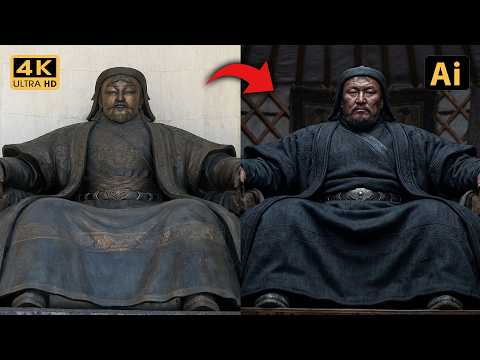
Genghis Khan killed roughly 40 million people, maybe more. His armies erased cities—not conquered, erased. Merv, Nishapur, Bukhara wiped out so completely the land took centuries to recover. He let survivors go on purpose, wanted them to carry the stories ahead so the next city would surrender without a fight. Terror as foreign policy. Started as an abandoned kid on the steppe, built the largest land empire in history. Died at 65 on a revenge campaign. His empire split among his sons and collapsed. Sixteen million men carry his DNA today. Do the math.
Pedro of Castile—half the sources call him “the Cruel,” the other half “the Just.” Castilian king, throned at 16, kingdom torn apart by nobles. Spent his reign killing them—skinned some, boiled others—but protected merchants and Jewish communities, the people nobles stepped on. His half-brother Henry wanted the crown, hired French mercenaries. Pedro ran to England for help, won a battle, lost the war. Henry lured him into a tent for “negotiations” and stabbed him in a wrestling match. Cruel or just? Depends on who you ask and who’s paying the historian.
Timur built skull towers—not a metaphor. Actual human heads stacked into pyramids outside city walls. Twenty-eight towers at Isfahan alone. Took Delhi in 1398 and killed 100,000 prisoners in a single day before the looting started. Went home to Samarkand, built mosques, kidnapped architects from every city he burned, made his capital so beautiful visitors called it the eighth wonder of the world. Died at 68 marching toward China. Never got there. Samarkand still stands. So do the places he flattened—just empty.
Vlad III is the reason Dracula exists. The real version was worse. Wallachian prince, three reigns, one method: impalement. Victims skewered on wooden stakes, hoisted upright, left to die in public. He impaled thieves, nobles, Ottoman prisoners, whole villages. Roads got safer. Nobody argued. Mehmed II marched into Wallachia in 1462—the man who’d taken Constantinople—found 20,000 bodies on stakes, a forest of the dead, and turned around. Vlad died around 1476. Body never confirmed. Bram Stoker made him immortal. The real Vlad didn’t need the help.
Shah Ismail I was 14 when he started conquering, took Iran by 17. Then came the real project: make the entire country Shia—not by persuasion. Burned Sunni mosques, executed clerics who wouldn’t convert, forced public cursing of Sunni saints as state policy. Whole communities killed for praying wrong. He believed God made him untouchable. Chaldiran in 1514, Ottoman cannons shattered his cavalry. Never fought again, spent his last 10 years drinking, dead at 37. Iran is still Shia. 500 years and counting. Ask a Sunni.
Mary I burned people alive for being Protestant. 283 of them—bishops, scholars, ordinary believers tied to stakes in public squares. She’d inherited a Protestant England from her brother and wanted it Catholic again, badly. Restored papal authority, married Philip II of Spain, then lit the fires. Three years of burnings didn’t work. The victims became martyrs. Her sister Elizabeth took the throne and reversed everything. No children, no Catholic heir, died at 42—possibly a tumor, possibly a broken heart. Philip had already left. Other kings killed more. Only hers became a drink order: Bloody Mary.
Ivan the Terrible built Russia’s first secret police—the Oprichniki. Black horses, black robes, dog heads on their saddles. Job? Find traitors. Everyone qualified. Sent them into Novgorod in 1570 on a rumor. Five weeks of killing. Families shoved under river ice. Thousands dead. Then he killed his own son—beat the heir to death. The argument nobody remembers. Left a dynasty that collapsed into civil war. Dropped dead at 53 in the middle of a chess game. They dug him up in 1963. Bones full of mercury. Russia’s had a secret police ever since. He wrote the first draft.
Murad IV banned coffee, tobacco, and alcohol in Istanbul. Penalty: death. He’d disguise himself, patrol streets at night, and kill violators on the spot. Left bodies where they fell, closed every coffee house, called them conspiracy dens. Strangled a grand vizier with his own hands. Killed at least one brother to clear the bloodline. Took Baghdad back from Persia. Effective. Terrifying. On his deathbed, ordered his last surviving brother killed. Servants refused. Dead at 27. Liver gave out. Cirrhosis. But the doctors said he killed people for drinking. The drinking killed him.
Nader Shah rose from tribal nobody to Shah, then kept going. Invaded India in 1739, beat the Mughal army, and walked into Delhi—richest city on earth. What happened next took hours: 30,000 civilians dead. Charnel chalk bodies for days. Walked out with the Koh-i-Noor diamond. On day one by day three, he had nothing left. More paranoid every year after. Blinded his own son, massacred villages on rumors. His officers cut him down in his tent. 59. The empire didn’t outlast the weak.
Ranavalona I of Madagascar kept the Europeans out for 33 years. Expelled missionaries, shut down foreign trade, built an army, then turned the island into a prison. Her justice system ran on poison—the Tangena ordeal. Accused? Drink. Survive, you’re innocent. Die, the gods have spoken. Tens of thousands went through it. She threw people off cliffs, boiled others alive, worked the rest to death building roads and palaces. Population dropped by half. Died in her bed at 83. Half her people didn’t.
Leopold II owned a country—not Belgium, he ruled that—the Congo was personal property, 76 times the size of Belgium. Called it a humanitarian project. It was a rubber plantation. Miss your quota, lose a hand. Soldiers brought back severed hands as proof they hadn’t wasted bullets. Hands became currency. Women held hostage until men brought enough sap. 10 million dead, give or take. Nobody was counting carefully. Never visited Congo, not once. Died rich in Brussels at 74. Never charged. The rubber paid for itself.
These are the faces of absolute power—the ones who turned thrones into instruments of terror. But their stories don’t end here. The question remains: what drives a person to such cruelty, and what does it say about the rest of us that we can’t look away?
Each of these rulers left the same warning: the throne is a mirror. Give it to someone who fears nothing, and it reflects only blood. Fear builds no monuments—it only leaves empty ground where cities used to stand.
Yet the crowds still watched. The prisoners still walked the heated pillars. The court still laughed at the horse consul. Tyranny doesn’t survive on one monster alone—it needs an audience that looks away.
That is the thread running through all twenty. The names changed, the centuries changed, the weapons changed. The silence stayed the same.
So before you scroll to the next video—ask yourself honestly: if history repeated itself tomorrow, would you be the one speaking up, or the one grinding the paste? Which tyrant from this list do you think would thrive in today’s world—and why? Tell us in the comments below.
Report this article
Select a reason for reporting:






