The war was over, but for the men of the Waffen SS, the nightmare was just beginning. Branded as criminals and hunted by the Allies, these once-proud soldiers faced a brutal reckoning. “Even in the last desperate days, the idea of surrendering our weapons was unthinkable,” recalled one SS soldier. But surrender they did, and what followed was a fate few could have imagined.
As the Third Reich crumbled, SS units fought fanatically to the bitter end. The average life expectancy of a Waffen SS soldier on the front line was a mere two months. By 1945, most German units were fighting not only to resist the Soviets but for simple survival. “We knew important things were happening, that amazing weapons would soon come into action and because of that the war would completely change,” said Eric Wallin, a Swede in the Nordland division. But no miracle weapon came.
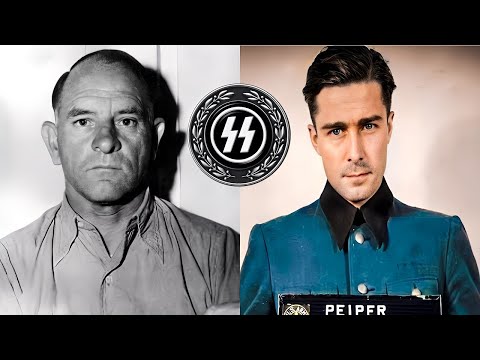
In the final days, the SS began to disintegrate. Some officers, including Himmler himself, sought separate peace with the Western Allies. But Hitler would have none of it. On April 29th, 1945, he ordered Himmler stripped of all ranks. The end was near.
After the fall of Berlin, SS soldiers faced an uncertain future. Many returned home on foot, crossing rivers by swimming because bridges had been bombed. “Many were shot without warning,” as the SS had a reputation for not taking prisoners. The Allies, especially the Canadians, were unforgiving. The Soviets often summarily executed those who surrendered.
For those captured by the Western Allies, the SS blood type tattoo—a small mark under the arm—became a death sentence. American soldiers made all German POWs march shirtless with arms raised, separating those with the tattoo. Some SS members cut their skin or used makeup to conceal it. “The Americans were provided with pamphlets on how German POWs would attempt to conceal these tattoos,” and those identified faced interrogation and imprisonment.
Low-ranking soldiers who joined late in the war had some hope, especially if their documents were destroyed. But high-ranking officers were treated harshly. The Schutzstaffel offices had destroyed evidence from 1944 onwards, but many were still identified. The Western Allies eventually treated the SS fairly, but the Soviets did not. Many SS personnel simply vanished into gulags, never to be heard from again.
As the trials began, the world demanded justice. The Nuremberg trials saw Ernst Kaltenbrunner, Heydrich’s successor, represent the SS and all its crimes. The SS and Gestapo were declared criminal organizations. But the vast majority of SS and police never accounted for their crimes. Some, like Joachim Peiper, would face a more personal reckoning.
The Malmedy massacre trial became the most notorious of the Dachau proceedings. In December 1944, Peiper’s men had captured 113 American soldiers, gathered them in a field, and machine-gunned them. Eighty-four POWs were murdered. “The prosecution argued that the murder of American POWs was premeditated, resulting from Hitler’s orders for a ruthless campaign to instill fear and terror,” while the defense insisted the killings happened in the chaos of battle.
On July 16th, 1946, the verdict came. Forty-six Waffen SS members, including Peiper and Sepp Dietrich, were sentenced to death by hanging. Another twenty-three received life sentences. But the story was far from over. The convicted men claimed American interrogators had used torture, and former chief defense counsel Colonel Willis Everett continued to fight on their behalf even after returning home.
By 1951, many had been released, and the remaining death sentences—including Peiper’s—were commuted. In 1956, Peiper walked out of Landsberg prison a free man. “Years after the conflict, former SS officers organized HIAG, a mutual aid association founded in 1951 with the primary aim of achieving the legal rehabilitation of the Waffen-SS,” and it grew to over 20,000 members.
HIAG wielded surprising political influence in West Germany. Kurt Meyer, released in 1954, became its most effective spokesperson, publishing his memoirs, Grenadier, as part of a campaign to glorify the SS’s wartime role. At their first major meeting in 1952, former paratrooper general Hermann Bernhard Ramcke condemned the Western Allies as the real war criminals and insisted the blacklist on which all former SS members were placed would soon become a list of honor.
When West Germany began rearming and formed the Bundeswehr in 1955, the question of admitting former Waffen SS members reached a critical point. “Initially, the intention was not to admit any former Waffen SS members, but this soon changed,” and by September 1956, 508 of 3,117 applicants had been accepted—including at least one former Buchenwald guard.
Meanwhile, Joachim Peiper led a discreet life. After his release, he found work at Porsche in Stuttgart, but was dismissed due to his wartime actions. HIAG helped him again, securing a job as a car salesman at Volkswagen. In 1964, he was brought to trial for the Boves massacre in Italy, but the court found no evidence of his individual responsibility. He was acquitted of all charges.
In a 1967 interview, Peiper expressed his National Socialist feelings and his discontent with contemporary Germany, mentioning his desire to move to France. “In 1972, Joachim Peiper and his wife Sigurd decided to move to Traves in Burgundy, France,” choosing a small house on the outskirts of the village. The French authorities knew who he was, yet granted him a temporary residence permit for five years.
He worked as a translator of military history books and seemed to lead a quiet life, rarely going out. But the past has long shadows. In 1974, a former French Resistance member named Paul Cacheux thought he recognized Peiper in a shop. Though unsure, he reported his possible presence to the French Communist Party. In 1976, Cacheux contacted historian Pierre Durand, who confirmed Peiper’s identity in the Stasi archives.
On June 21st, 1976, anti-Nazi activists distributed flyers in Traves informing residents that Peiper was a war criminal. The next day, an article in L’Humanité confirmed his presence, and a campaign calling for his expulsion began. On July 13th, Peiper advised his wife to return to Germany, hoping the situation would improve.
But the situation did not improve. In the early morning hours of July 14th, 1976, the police received frantic calls about a fire at Peiper’s house. When firefighters arrived, they found the small house engulfed in flames. Inside, they discovered a severely burned body, reduced to about sixty centimeters by the intense heat of the blaze. The man who had once commanded Hitler’s most feared battle group died as he had lived—surrounded by fire and controversy. The circumstances of his death remain disputed to this day; some claim he was murdered by French vigilantes, others that he set the fire himself in a final act of defiance, and a few even whisper that he escaped and lived out his days elsewhere.
The Peiper affair became a symbol of the unresolved reckoning with the Waffen SS. While some veterans like Günter Grass, who won the Nobel Prize in Literature in 1999, only admitted their SS past decades later in 2006, others such as actor Horst Tappert took their secrets to the grave. “Only five years after his death did it become public that Tappert had served in the 3rd SS Panzer Division Totenkopf since 1942,” a revelation that shocked a nation who had known him only as the kindly television inspector Derrick.
In East Germany, the story took a different turn. Painter Bernhard Heisig, who had volunteered for the SS in 1942, admitted his early past and joined the Communist Party after the war, becoming a celebrated artist in the socialist state. Journalist Franz Schönhuber worked for thirty-five years for Bavarian newspapers and state television before being fired for downplaying Nazi crimes in his autobiography—after which he turned to far-right politics with moderate success.
By the 1960s, HIAG had achieved most of its goals, and the organization shifted toward far-right politics. “The HIAG greatly exaggerated its influence and at no point represented more than eight percent of all Waffen SS veterans in West Germany,” yet its propaganda efforts contributed to reshaping the image of the Waffen SS in popular culture—a legacy that persists through amateur historical studies, memoirs, internet forums, and war games.
Professional historians have described HIAG’s publishing house, Munin Verlag, as a platform for revisionist apologetics. The organization tried to establish a distinction between the honorable Waffen SS and the evil Allgemeine SS, despite up to 60,000 Waffen SS men also serving in concentration and extermination camps. This myth of the “clean” Waffen SS—soldiers who fought honorably and knew nothing of the atrocities—became the central pillar of their rehabilitation campaign.
In the Federal Criminal Police Office, the same selection process applied to the Bundeswehr was not enforced. Thirty-three of fifty-seven senior officials were former SS members. The quiet integration of these men into the institutions of the new German state raised uncomfortable questions that would not be fully confronted for decades.
Meanwhile, the Soviet Union’s treatment of captured SS men remained brutal and largely undocumented. Some SS personnel are still missing to this day. They simply vanished into the gulag system, their fates recorded nowhere, their families left without closure. The asymmetry between Western justice and Soviet vengeance would shape the postwar narrative for generations.
The historical review of the impact of Waffen SS veterans on post-war German society is ongoing. In recent years, several books have been published on the subject, and the debate over how to remember these men—as criminals, as soldiers, or as both—continues to divide historians and the public alike. For the men of the Waffen SS, the war had ended, but the battle over their legacy had only just begun.
The story of the Waffen SS does not end with Peiper’s burning house or the faded banners of HIAG. It lives on in the uncomfortable silences of families, in the unmarked graves of Soviet gulags, and in the internet forums where old myths are polished anew. “The war had ended, but the battle over their legacy had only just begun,” and that battle shows no sign of concluding.
Today, the last veterans are dying off, yet the questions they leave behind remain sharp as ever. How should a nation remember men who fought with unmatched bravery for an unspeakably evil cause? Can a soldier be honorable while serving a criminal regime? Historians continue to debate, but the answer may never be settled.
What is certain is that the Waffen SS left a stain on history that no revisionist campaign can erase. Their story is a warning about loyalty without morality, and courage without conscience. “The myth of the clean Waffen SS became the central pillar of their rehabilitation campaign”—and it is a myth that refuses to die quietly.
Perhaps the most unsettling truth is this: the men who wore the death’s head were not monsters from another world. They were ordinary men who chose to serve extraordinary evil. And that is a lesson every generation must confront anew.
What do you think—should we remember the Waffen SS only as criminals, or can we acknowledge their soldierly qualities while condemning their cause? Share your thoughts in the comments below.
Report this article
Select a reason for reporting:






