The American observer stepped off the helicopter expecting the familiar rhythm of war—generators, radios, urgency. Instead, he found silence. At Nui Dat, two squadrons of Australian SAS operated with a fraction of the manpower and none of the noise. Their kill ratios were staggering. Their casualty rates, impossibly low. “Observe, report, do not interfere,” his orders read. But what he witnessed would shatter everything he believed about elite warfare.
He was a SEAL—trained for underwater demolition, close-quarters combat, aggressive patrolling. Speed was security. Violence solved problems. But the Australians rejected contact. If seen, the patrol failed. If heard, it failed. If forced to fire, it failed. In this jungle, a firefight was a clock that started the enemy’s ability to mass. Fire support was a delayed response to a lost position. “If a patrol needs artillery to survive,” they said, “it should never have been there.”
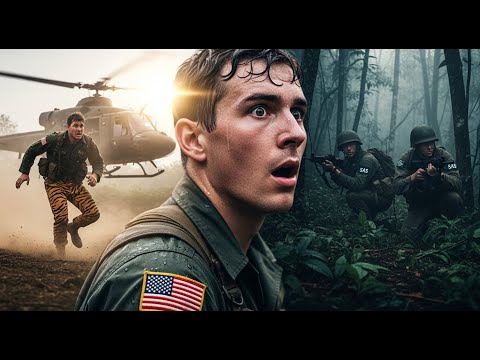
The first patrol began before dawn, slipping through scrub and plantation edge into a canopy that closed like a living roof. The pace slowed beyond reason. Each step was a negotiation. The lead man tested every surface, shifting weight only after certainty. Silence was not one skill—it was a stack. Silent movement. Silent breathing. The discipline of not shifting weight when muscles burned. The ability to become an object in the landscape rather than a figure within it.
Then came the first humiliation. An enemy patrol passed close enough to hear metal clink and casual Vietnamese speech. A firefight would have been easy. The Australians remained stone. “Firing would be the lapse,” they explained. The enemy patrol was not the objective—the network it supported was. Killing eight men might satisfy a report, but it would trigger reaction: increased security, rerouted supplies, a fog of uncertainty. Instead, they gained information. They remained unknown.
This was the spine of their kill ratio mystery: infrequent, overwhelmingly favorable engagements. They let dozens of opportunities pass to preserve the one that mattered. Violence was episodic and decisive. The American observer began to see that his own training was built for a different war—one where the enemy held ground and offered targets. Here, the enemy dissolved and reappeared. Firepower could destroy structures, but not networks. A patrol could win a firefight and still lose the mission.
The jungle itself became an archive. The Australians integrated indigenous tracking expertise—a landscape literacy measured in tens of thousands of years. Leaves curled differently when disturbed. Soil compressed with subtlety. Twigs broke at characteristic heights. The country remembered. The tracker read. By day two, they found supply caches an American unit would have destroyed. Instead, they mapped without touching. A blown cache could be replaced. A revealed route could be watched. A courier could be followed.
The key discovery came with stillness. A hidden structure, camouflaged so completely that knowing it existed did not make it easy to see. Occupied. Guards blending into shadow. A radio transmission at dusk—short, precise, timed. A senior figure emerged with the unconscious carriage of command. The patrol did not rush. They watched for hours. They counted. They mapped. They did not yet know his name, but they recognized the weight.
The instinct to call an airstrike rose in the American’s mind as a reflex. But the Australians saw the trap. Airstrikes traded certainty for convenience. They erased evidence. “A dead body in a bunker is not always a strategic outcome,” they said. “A dismantled command function is.” The observer was no longer thinking like a raider seeking a fight. He was thinking like a predator managing information. The jungle was no longer a hostile unknown—it was a readable environment, and the enemy was a system of roles that could be broken.
By the time the patrol had a full understanding of the command node, the transformation was layered. He had learned to move without leaving stories behind. To treat stillness as a physical skill with psychological requirements. To define missions not by body counts but by what the enemy could no longer do afterward. “The deadliest operator,” he realized, “is not the one who moves fastest or shoots straightest. It is the one who already decided how the enemy will die and is willing to wait as long as necessary to make it true.”
The night operation unfolded with the patience of a week compressed into hours. The patrol moved toward the command node at the hour observation had revealed as most vulnerable—guard rotations thinning, fatigue settling in, routine becoming predictable. The men moved like water through roots and shadow. Security elements were neutralized without a single gunshot. Entry was achieved without alarms.
The objective was never simply to kill. It was to remove the right people and extract the right materials, leaving behind confusion rather than clarity. Documents. Maps. Frequencies. Procedural details that would turn a hidden network into a readable one. “An enemy can be more useful dead than alive,” the Australians had said, “if his body yields what his mouth never would.”
They were gone before dawn. Kilometers away before the enemy understood what had happened. The jungle swallowed their tracks as if the operation had never occurred. The enemy woke to an absence that could not be explained. Command disrupted. Communications compromised. Key personnel vanished into the dark. No one heard the attack. No one saw the attackers. Fear spread through insurgent channels faster than any leaflet—not the terror of mass destruction, but the terror of uncertainty.
When the American observer returned to Nui Dat, the shock was not what he had seen, but what he could no longer unsee. The American method was built to be seen—visible operations, visible firepower, visible metrics. The Australian method was built to be invisible, and its results appeared only as enemy dysfunction. Body counts were easy to count. Network collapse was harder to quantify. Patience did not photograph well. Silence did not brief well.
Still, he acted. He sent a formal request up the chain—permission to modify standard patrol doctrine. The response was predictable: concern, suspicion, a visit from a senior officer. The denial was polite but absolute. “Institutions rarely authorize an admission that their foundational habits are mismatched.” But the senior officer also asked for everything. Full documentation. There was an unspoken concession in that request. Knowledge could seep into the system quietly, the same way the Australians operated.
The observer wrote a long report. It was filed, compartmented, buried. Yet ideas move like water. Elements of the methodology began appearing in training language—long-duration reconnaissance, tracking integration, infrastructure targeting, the primacy of intelligence over combat. Change in large systems is rarely dramatic. It is slow and partial. It happens when enough small lessons accumulate to become undeniable.
He returned to his unit changed. Some teammates respected the new restraint. Others saw it as lost aggression. But what he had lost was not aggression—it was the need to prove it. He had learned that the deadliest operator is not the one who moves fastest or shoots straightest in a firefight. It is the one who already decided how the enemy will die and is willing to wait as long as necessary to make it true.
Years later, when asked what he learned at Nui Dat, he would say only this: “I came thinking I was elite. I left knowing I had been trained for the wrong kind of war.” The jungle, he understood, does not reward speed or volume. It rewards the man who listens—and the man who waits.
What would you have done—fire on that enemy patrol, or let it pass to map the network?
Report this article
Select a reason for reporting:






