June 1941. The Soviet Union, reeling from the shock of Operation Barbarossa, faced a German blitzkrieg that had already crushed much of Europe. As Nazi Panzer formations rolled east toward Moscow, Soviet General Mikhail Kirponos launched a desperate counteroffensive against the advancing First Panzer Group near Kiev. What followed was a clash of raw numbers against meticulous strategy—a battle that would become the largest tank engagement of World War II.
The Soviets amassed over 2,600 tanks, including the formidable KV and T-34 models that outclassed anything in the German arsenal. Yet, the six Soviet corps were mired in disorganization, crippled by a severe shortage of trucks and tractors essential for logistics. They converged near the town of Brody for a brutally intense mechanized showdown, where their very existence hung in the balance. As historian David Glantz boldly declared, “This in fact is the biggest tank battle in World War II.”
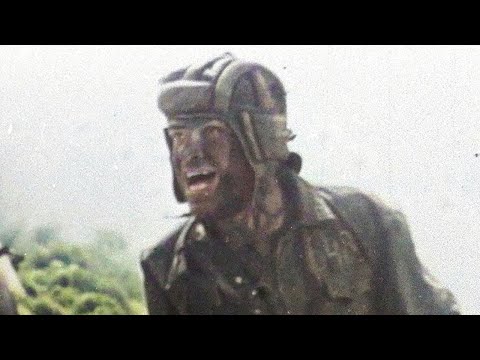
The moment Adolf Hitler and his high command had meticulously planned for months arrived at dawn on Sunday, June 22, 1941. Operation Barbarossa signaled the start of one of history’s most colossal military campaigns, encompassing about 80% of the Axis’s combat-ready forces—over 3.5 million troops surging across a 1,800-mile front from the Baltic to the Black Sea. Soviet leader Joseph Stalin, in a stunning miscalculation, dismissed multiple warnings of the impending attack. His trust in the German-Soviet non-aggression pact left the Red Army largely unprepared.
German soldier Gerhard Günzel vividly described the chaos: “Some of them even came out in their nightshirts and opened fire. They were taken completely by surprise.” German propaganda framed the invasion as a preemptive strike, but Hitler’s true motive was to annihilate a daunting adversary and seize Lebensraum—living space—for the German people, envisioning a Reich stretching from the Atlantic to the Ural Mountains.
The initial phase saw significant German victories, capturing key Soviet territories and inflicting heavy casualties. However, Hitler made a strategic decision to delay the attack on Moscow, focusing instead on Ukraine in the south. This diversion was influenced by the need to secure Ukraine’s resources and the belief that capturing Moscow alone would not collapse Soviet resistance. The delay allowed the Soviets to strengthen their defenses around Moscow and prepare for the harsh winter.
As German formations thrust into Ukraine, Soviet troops around Dubno, Lutsk, and Brody faced a ferocious onslaught. Despite their lack of preparation, they were determined to defend their homeland to the last man. The terrain—marked by forests, hills, small marshy rivers, and swamps—was ill-suited for tank warfare, with movement largely confined to narrow, poorly maintained roads. Yet, this triangular area would become the backdrop for the most catastrophic armored confrontation on the Eastern Front.
Panzer Group 1, the vanguard of Army Group South, pierced Soviet defenses near the border town of Vladimir-Volynsky on June 22, creating a 40-kilometer breach. The Soviet Fifth Army, under Major General Mikhail Potapov, struggled valiantly to stem the German advance. The Germans aimed for a swift push toward Kiev, intending to capture the Ukrainian capital and reach the Dnieper River, then veer south to ensnare the Soviet Southwestern and Southern Fronts. The seizure of Lutsk, a crucial junction, would allow German mobile units to break into open ground and advance along dual axes toward Kiev.
The German advance was relentless, and the Soviet High Command, still grappling with the reality of the invasion, failed to establish an effective defensive strategy. As the first day of warfare drew to a close, Lieutenant General Mikhail Kirponos, commanding the Southwestern Front, received daunting orders from the Soviet National Defense Committee: “Counterattack towards Vladimir-Volynsky immediately, annihilate the German forces operating from that region, and seize the city of Lublin by the end of June 24th.”
This command seemed preposterous—Lublin lay over 80 kilometers deep in German-occupied Poland. Kirponos questioned whether the High Command truly grasped the gravity of the situation or was simply attempting to mollify Stalin’s fury. Despite recognizing the mission’s futility, he had no choice but to comply. He faced a dual dilemma: the Soviet defensive line was already teetering, and the five mechanized corps designated for the counteroffensive were dispersed across northwestern Ukraine, in stark contrast to the Germans’ potent, concentrated spearhead.
Kirponos had a more significant yet fragmented and diminished force at his disposal. Assembling it would take up to three days, causing a critical delay in a rapidly evolving battlefield. Consequently, each of the five mechanized corps was thrust into battle piecemeal, with little to no coordination. This disjointed approach resulted directly from the rigid timeline, leaving Kirponos inadequate time to amass and properly strategize. Yet, the numerical strength of the Soviet forces could not be understated: an overwhelming mass of over 3,000 armored vehicles surged toward the German First Panzer Group, navigating the rugged Ukrainian landscape. However, despite facing only half the number of operational tanks, the Germans held a significant tactical advantage.
As the Soviet mechanized units began their advance toward the border, they were met with the fury of the German Luftwaffe. Air raids pummeled the Soviet armored columns, strung out vulnerably along narrow roads. Soviet drivers, in a frantic bid for cover, often found themselves mired in the challenging terrain, many forced to abandon or destroy their own vehicles fearing capture. The attrition rate of Soviet armored vehicles, already hampered by poor maintenance, escalated to alarming levels. The combination of losses from Luftwaffe strikes and mechanical failures meant that some Soviet tank formations entered the fray with less than half their operational strength.
On the afternoon of June 24, the beleaguered 19th Tank Division of the 22nd Mechanized Corps clashed with German forces west of Lutsk. A provisional regiment was formed with 45 T-26 tanks and a dozen armored cars. This makeshift unit was thrust into the fray. Following a brief preparatory artillery bombardment, the Soviet forces found themselves ensnared in a lethal trap—easy targets for the agile and heavily armed German aircraft. If the Luftwaffe strikes didn’t destroy the Soviet tanks, then a lack of maintenance, oil shortages, and mechanical defects surely would.
Yet amidst this turmoil, the Soviets persevered, manning their faltering tanks and engaging the enemy. The provisional Soviet regiment entered a brutal tug-of-war with elements of the German 14th Panzer Division. This intense battle lasting two hours saw the Soviet unit suffer heavy losses of its already diminished armored contingent. Ultimately overwhelmed and battered, the regiment was compelled to retreat, falling back nearly 15 kilometers west of Lutsk. The clash was a relentless and indiscriminate slaughter. Major General Semyon Kondrusev, commander of the 22nd Mechanized Corps, fell in action, and the commander of the 19th Tank Division sustained injuries. The toll was equally severe among the division’s regimental commanders, who either perished or were wounded.
Despite the devastating losses, the Soviets’ fierce resistance was not futile. They inflicted heavy casualties and, through sheer tenacity, stopped the 14th Panzer Division from capturing Lutsk. Throughout the night between June 24 and 25, the 22nd Mechanized Corps arrived with two divisions to reinforce the battered remnants of the 19th Tank Division. Faced with acute fuel shortages, Soviet officers resorted to makeshift solutions, siphoning fuel from disabled vehicles and redistributing it to those still operational.
Before the invasion, the USSR had an impressive fleet of nearly 20,000 tanks, predominantly light tanks. Additionally, the Red Army had a handful of modern tanks technically superior to their German counterparts. Among these was the T-34, a medium tank outfitted with a devastating 76.2mm gun and featuring 60-degree sloped armor that significantly enhanced its defensive capabilities. Another standout was the Klim Voroshilov KV-1 heavy tank, lauded for its robust armor and a top speed of 17 mph—remarkable for its size and class.
However, the bulk of the Soviet tank force was still composed of T-26 and BT-7 light tanks. While numerous, these bore a critical flaw: their frontal armor provided minimal defense against potent German anti-tank weaponry. Compounding this vulnerability was a design issue in Soviet ammunition—their shells tended to shatter upon impact, rendering them ineffective at penetrating enemy armor. This combination of shortcomings left the Soviet tanks perilously exposed.
The German forces leveraged the speed and agility of their armored units, augmented by air superiority, to encircle and systematically dismantle Soviet resistance. Their strategy was marked by cohesion and superior communication, crucial for synchronizing assaults and adapting swiftly to Soviet maneuvers. The Luftwaffe’s dominance not only disrupted Soviet troop movements but also proved devastating to massive Soviet armored formations. The Soviet Air Force was dealt a severe blow, with the majority of its aircraft damaged on the first day, struggling to provide any substantial support.
This German air superiority blinded Soviet reconnaissance, leaving commanders unaware of swiftly changing battlefield dynamics, and effectively severed ground forces from essential resupplies of fuel and ammunition. As aerial engagements grew fiercer, the Soviets sustained additional losses in aircraft and personnel. The Luftwaffe’s unceasing assault significantly undermined the Soviet counteroffensive.
This chaotic situation reached its peak with the failure of the Soviet counterattack to assemble at the intended rendezvous point in Dubno. The absence of coordination among different units derailed their efforts to thwart the German onslaught. Despite the overwhelming odds, the Soviets fiercely contested every inch of their territory.
In a notable encounter, the Germans, methodically overpowering the lighter T-26 and BT tanks, encountered a group of the fearsome KV-2 heavy tanks. German shells were largely ineffective against the KV-2’s massive boxy turret, which boasted thick armor that could deflect incoming fire. When the KV-2s employed their powerful 152mm howitzers, they momentarily stalled the German advance, showcasing their overwhelming firepower. However, the Germans soon realized that patience was their best tactic—they strategically waited for the Soviet tanks to deplete their ammunition and fuel reserves. In one instance, the crew of a KV-2, faced with a jammed turret ring, dwindling ammunition, and near-empty fuel tank, chose a dramatic exit by driving their tank off a steep embankment into a river, the driver escaping at the last second.
Primarily designed as self-propelled artillery, the KV-2s, despite their intimidating presence, were too few in number to significantly alter the overall course of the battle. Though momentarily disruptive, their impact was ultimately a minor local setback for the German Panzer divisions. The Germans, adept in the art of warfare, swiftly adapted their tactics to counter the threat posed by superior Soviet tanks. Their Panzers deftly avoided direct confrontations with T-34s and KV-2s, instead focusing on eliminating the more vulnerable BT-7s and T-26s. Benefiting from mobility, German field artillery played a crucial close-support role, absorbing the brunt of Soviet tank assaults. After dealing with the lighter tanks, the German Panzer kampfgruppen and Panzer IIIs and IVs would regroup to target the T-34s and KV-1s from their weaker sides and rear, effectively neutralizing the advantage of the Soviet tanks’ heavier frontal armor.
The inexperience of Soviet tank drivers often led them to choose the most straightforward paths, even when these routes made them more vulnerable to enemy fire. Navigating their tanks along the crests of ridges or hills was a common mistake, making them highly visible and accessible targets for German gunners.
As the day waned, the situation around Lutsk reached a critical juncture, illuminated by the flames engulfing the surrounding suburbs. The 13th Panzer Division, executing a successful flank maneuver, penetrated the city’s defenses. This breakthrough forced the Soviet units to abandon Lutsk. Despite their eventual retreat, the determined resistance of the 22nd Mechanized Corps was not in vain—their staunch defense delayed the progress of two German corps for over a day. The Soviet 9th Mechanized Corps seized this opportunity to reach and set up defenses in the Rivne area, some 65 kilometers east of Lutsk.
The plight of the Fifth Army was rapidly deteriorating into a calamity. Its units, dispersed and encircled, were engaged in desperate battles stretching from the border to Lutsk. In disarray, the remnants of the 22nd Mechanized Corps retreated along the highway towards Rivne, spreading panic in their wake. Only with the direct intervention of staff officers from the Fifth Army’s headquarters was some semblance of order restored.
On June 26, German forces launched vigorous assaults along the Lutsk-Rivne and Dubno-Rivne highways, attempting to break into the city. However, they were met with tenacious resistance from the Fifth Army, which stymied their advance. Consequently, the Germans redirected their efforts south, taking secondary roads via the town of Ostrog.
That day also witnessed a bold Soviet counteroffensive—the closest the Soviets came to encircling a significant portion of the German invasion force. This fierce assault disrupted several German support units and penetrated as much as 30 kilometers into German-held territory. The Soviet 43rd Tank Division, leading the charge, reached the eastern outskirts of Dubno. However, the division, primarily composed of light T-26 tanks, suffered severe losses due to effective German anti-tank artillery.
German commanders swiftly responded to the escalating threat. They executed a counterattack against the two Soviet tank divisions that had dangerously overextended themselves. These divisions were trapped, wedged between the relentless pressure of two German infantry divisions and the onslaught of two Panzer divisions. Major General Feklenko, leading the Soviet attack, recognized the perilous position of his forces. Faced with the German counterattack’s overwhelming might, he ordered his corps to retreat to their original positions near Rivne. This maneuver aimed to preserve the remaining strength of his units and avoid potential encirclement and destruction.
By June 28 and 29, the Soviet position in the Battle of Brody deteriorated rapidly. German tanks, advancing with unyielding efficiency, encircled and obliterated Soviet units, overwhelming many and isolating others. Despite their staunch defense, the Soviet forces were severely impeded by an acute shortage of fuel and ammunition, leading to a catastrophic failure of their left flank. By July 1, with the capture of Ostrog, the battle for the “Bloody Triangle” effectively ended. The battered Soviet units managed to maintain their position at the Horyn River until July 2 but were eventually compelled to retreat further.
By July 7, the five Soviet mechanized corps that had engaged in the battle could muster only 679 tanks from their pre-war strength of 3,400. Although the Soviet Fifth Army was heavily depleted, it was not entirely defeated. Despite suffering severe casualties, most of its combat units were not annihilated. Even though the Soviets inflicted considerable losses on the German forces and held numerical superiority, they were consistently outflanked and outmaneuvered. The Red Army lost at least 2,280 tanks—42% of its initial strength for the Southwestern Front.
The harsh winter that followed began to drastically affect the German forces. The Luftwaffe and other German equipment, including artillery and radios, faced operational challenges due to the lack of suitable oils and lubricants for the cold. Plummeting temperatures led to widespread frostbite among Nazi troops, hampering their combat capabilities. On the other side, the Red Army endured. Despite over 3 million casualties inflicted by the Germans, the Soviets, accustomed to severe Russian winters and supported by a vast reserve of manpower, remained resilient. They continually replenished their ranks, maintaining a solid presence on the Eastern Front.
Operation Barbarossa—Adolf Hitler’s grand scheme to invade the Soviet Union—ultimately stretched the German forces to their breaking point. By December 5, the unyielding resistance of the Soviets had morphed into a remarkable counteroffensive, forcing the Germans into a strategic withdrawal. After a grueling 5 months, 1 week, and 6 days, Hitler’s rigid command to hold every inch of ground at any cost culminated in a costly failure for the Axis powers. The Battle of Brody was a prelude to the brutal attrition that would define the Eastern Front, a testament to the courage and sacrifice of those who fought in the largest tank battle of World War II.
By July 7, the five Soviet mechanized corps could muster only 679 tanks from their pre-war strength of 3,400. The Red Army had lost at least 2,280 tanks—42% of its initial strength for the Southwestern Front. Yet the Fifth Army was not annihilated; most of its combat units survived to fight another day.
The harsh winter that followed crippled the German forces. Lacking suitable oils and lubricants, their artillery and radios failed in the plummeting temperatures, while frostbite ravaged the troops. The Red Army, accustomed to severe Russian winters and backed by vast manpower reserves, continually replenished its ranks.
Operation Barbarossa ultimately stretched the German forces to their breaking point. By December 5, the Soviets’ unyielding resistance had morphed into a remarkable counteroffensive, forcing the Germans into a strategic withdrawal. After a grueling 5 months, 1 week, and 6 days, Hitler’s rigid command to hold every inch of ground culminated in a costly failure for the Axis powers.
The Battle of Brody was a prelude to the brutal attrition that would define the Eastern Front—a testament to the courage and sacrifice of those who fought in the largest tank battle of World War II. Was this catastrophic clash the true turning point that sealed Hitler’s fate?
Report this article
Select a reason for reporting:






