You think you know the story of Vietnam? Think again. The most powerful military machine on Earth—armed with billions of dollars, endless napalm, and fleets of helicopters—was humbled by barefoot peasants in pajamas. Why? Because American generals made one fatal, arrogant mistake: they thought war was just math. But in the jungle, math doesn’t work. In the jungle, only the predator survives.
But there was another force out there, a force history kept in the shadows for decades. Ghosts. Phantoms. Men who knew how to vanish into thin air while the Americans stomped through the forest like elephants in a china shop. These guys crawled backwards. They lay in the mud for three days straight, letting ants eat them alive, just waiting for that one perfect kill. Who were they? Why did the Pentagon hate their methods yet secretly beg them to teach American soldiers how to survive? And what is the terrifying secret behind Operation Broken Wing, where the enemy was tricked into blowing themselves up?
Today, we crack open the archives that will make your hair stand on end. You are about to discover how a handful of men from the bottom of the world turned the rules of war upside down—and why their tactics are still whispered about in military academies today.
Are you ready to hear the truth that will send shivers down your spine? Sit down and buckle up. What you are about to hear will change everything you think you know about war. Let’s go.
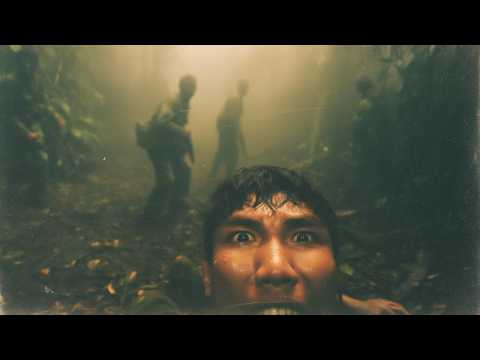
August 12th, 1966. Phuoc Tuy Province, South Vietnam. The air was so thick you could almost drink it—a suffocating soup of humidity and rotting vegetation that clung to the skin like a second layer of sweat. Staff Sergeant Thomas “Bulldog” Grady wiped a stinging stream of perspiration from his eyes, his knuckles white as he gripped his rifle. For six agonizing days, his platoon from the 1st Battalion had been smashing through this green hell, hunting for a phantom enemy that intelligence swore was right under their noses. They had found absolutely nothing—just empty villages, cold cooking fires, and the maddening buzz of mosquitoes.
But now, the point man froze. His hand went up, a whisper passed down the line like an electric shock. “Movement at 2:00.” Forty men stopped dead in their tracks. Forty M-16 rifles snapped up in unison, barrels searching the dense wall of jungle ahead. This was the moment they had been waiting for—the moment General Westmoreland’s grand doctrine demanded: search and destroy. Find the enemy, fix them in place, and obliterate them with the overwhelming might of American firepower. It seemed perfect. It seemed inevitable.
But 300 meters away, invisible inside a stand of bamboo, Captain Liam Sterling of the Australian Army Training Team lowered his binoculars and felt a cold knot of dread tighten in his stomach. He was watching a tragedy unfold in slow motion. What the Americans saw was a single enemy scout limping and panicked, carelessly exposing himself near the tree line. It looked like an easy target—a gift wrapped in black pajamas.
But Sterling knew better. He had seen this theater of death a dozen times before. That was not a panicked scout. That was bait. Beyond that tree line, hidden in spider holes and trench systems, at least twenty-five hardened guerrilla fighters were waiting, fingers resting on the triggers of their AK-47s. They were not fleeing. They were setting the table for a massacre.
The Americans were about to do exactly what they had been taught in boot camp. They were going to charge forward with aggression and noise, trusting in their superior guns to win the day. They were hunting the way a sledgehammer hunts a nail. But Sterling knew the terrifying truth of this war. In the jungle, the hunter who moves forward is often just a meal delivery service for the real predators—because the real predators moved backwards.
This was the brutal reality of 1966. When Australian military advisers first arrived in this war-torn land, they did not find a sophisticated allied force ready for counterinsurgency. They found an American military machine that was gearing up to fight World War II all over again. They brought tanks, they brought helicopters, and they brought an unshakable, almost religious belief in the god of firepower. But this blind confidence was about to lead them into a trap that no amount of napalm could burn their way out of.
To understand why the most powerful army on Earth was walking into disaster after disaster, you have to look into the mind of the giant. Major General William Westmoreland, the man holding the reins of the American war machine, was a believer in simple, cold mathematics. In a briefing to Pentagon officials in 1965, he radiated a terrifying confidence. He famously declared that the United States would simply “out-guerrilla the guerrilla.” His logic was seductive in its simplicity: We have more bullets, more bombs, and more money. If we kill them faster than they can be replaced, eventually they will quit.
It was a strategy of attrition—a grisly calculus of death that treated human beings like numbers on a spreadsheet. But the jungle does not care about your spreadsheets.
The American doctrine was built on “movement to contact.” This meant aggressive, loud patrolling designed to provoke a fight. Infantry units would move in long columns, deliberately trying to trigger an ambush just so the rest of the unit could maneuver and call in massive artillery strikes. Think about the insanity of that strategy for a moment. The plan was literally to use their own soldiers as human tripwires. It was a doctrine that had crushed the German army in the fields of France and stopped the Chinese human waves in Korea.
Lieutenant Colonel Marcus Vance, commanding the 2nd Battalion, summed it up with the prevailing arrogance of the time. He said they were going to go out there, find the enemy, and neutralize him because that is what infantrymen do. It sounded heroic. It sounded invincible. But there was a fatal flaw in this logic—one that would cost thousands of lives before anyone in Washington dared to admit it.
The enemy was not fighting to hold territory. They did not care about capturing that hill or defending this valley. They were fighting for time. They were fighting to survive just long enough for the American public to get tired of the nightly news. And they had spent twenty years perfecting the art of survival against the French, who had tried the exact same tactics with the exact same arrogance.
The initial American patrols in 1965 and 1966 followed a pattern so predictable it was almost suicidal. Companies would ride helicopters into landing zones at dawn, the rotors screaming like banshees announcing their arrival to every living thing within ten miles. They would sweep through squares on a map, stomp through the elephant grass, and then fly back to base before dinner. Specialist David Ross of the 1st Cavalry Division later recalled the futility of it all with bitter clarity. They would land, walk around all day in the scorching heat, find absolutely nothing, and leave. Meanwhile, the enemy was watching them the entire time, probably laughing as they noted every mistake.
The statistics told a comforting lie. American units were racking up impressive numbers, with kill ratios sometimes reaching ten to one. The Pentagon loved these numbers. They put them on colorful charts and told the politicians that victory was just around the corner. But the enemy kept coming. Villages that were declared pacified on Tuesday were back under enemy control by Friday. Jungle trails that were cleared with high explosives were booby-trapped again within forty-eight hours.
Something was fundamentally broken. The American military was like a blind boxer swinging wildly in the dark—strong, dangerous, but hopelessly outmaneuvered by an opponent who could see in the dark and held a knife.
But while the Pentagon obsessed over body counts, a small group of men from the bottom of the world knew the truth. They watched the Americans making noise and saw only future tragedies. The Australian approach to jungle warfare had not been invented in an air-conditioned office in Washington, but in the blood and mud of Malaya and Borneo. And they were about to teach their allies a lesson that would change everything. You do not hunt a tiger by banging a drum. You become the tiger.
In the choking green furnace of Malaya in the late 1940s, a neat Commonwealth patrol walked into an ambush that belonged to another century. Boots crashed through tangled undergrowth, metal canteens clattered, shouted orders echoed between tree trunks—every sound advertised old-style confidence in mass and firepower. Hidden only a few paces away, communist fighters lay flat in the wet soil, watching the column drift into a carefully prepared killing zone they had reconnoitered for days.
A short, savage burst of automatic fire shattered the formation, turning an orderly advance into a scene of flailing limbs, dropped weapons, and stunned survivors scrambling for cover. The jungle had delivered a cold message to the proud heirs of empire: the old textbook tactics were now a fast road to tragedy.
Those reports from Malaya began to look eerily alike as the months rolled by. The same phrases appeared again and again in operational summaries. Ambushed in dense vegetation. Enemy not seen. Contact lost. Pursuit impossible. Large sweeps went out with fanfare and came back with a few prisoners, a few bodies, and a grim list of casualties that nobody wanted to read aloud. The enemy chose the time, the place, and the range of every clash—and then evaporated into the trees before artillery or reinforcements could be brought to bear.
The heavily equipped units, so impressive on a parade ground, looked clumsy and half-blind against an opponent who seemed to move like smoke. Yet this was only the first warning shot. The real revolution in thinking was still ahead.
Faced with the slow erosion of credibility and lives, a small cadre of Australian and British officers began to pull apart their own doctrine with almost surgical ruthlessness. Heavy webbing, shiny buckles, loose metal, and noisy kit were stripped from patrol loads, because every clink could act as a beacon in the dark. Smoking on operations was banned—not for health reasons, but because a single cigarette could betray a position over hundreds of meters in still, humid air.
Spoken commands gave way to hand signals and light touches on the shoulder, turning groups of men into moving shapes. Marching speed dropped from regulation pace to a cautious creep in which each foot was placed as if the ground itself might explode. The objective flipped completely. The jungle was no longer an obstacle to be bullied into submission. It was a living environment that had to be fooled into forgetting that humans were present.
From this brutal apprenticeship emerged a new kind of soldier—one that veterans later described with a single word: ghosts.
Officers such as Australian Captain Barry Petersen captured the new creed in stark terms. In conventional war, the army chased a visible opponent across open fields and roads. In jungle war, the successful fighter became an almost invisible presence, allowing the enemy to blunder into a web of observation and fire already woven around him. Aggression did not disappear. It was delayed until the odds were overwhelming. The real test of courage moved from charging under fire to lying motionless while insects crawled over sweat-soaked skin and every nerve screamed to move.
But even this extreme standard of self-control was only the surface. Under it, a darker and more intricate technique was taking shape.
At the core of the Australian method sat what they called countertracking. On paper, it looked like ordinary trail following. In practice, it became a form of pattern analysis conducted under constant threat. Trained trackers read the ground the way detectives read a crime scene. The depth of a heel in soft mud hinted at the weight of the load on a man’s back. A faint smear on a rock placed a group at that spot within hours. A narrow jungle path stopped being a line on a map and turned into a moving biography of the people who used it.
The truly radical element was the purpose behind this close reading of the land. Instead of racing along a trail hoping to catch up and force a fight, Australian patrols often followed it for days at a controlled distance. They were not hunting individuals in the moment. They were hunting routine itself. Once those patterns were known, ambushes were laid in advance at bottlenecks where escape would be most difficult. Countertracking was not about running after footprints. It was about stepping into tomorrow before the enemy arrived there.
By the end of the Malayan Emergency in the early 1960s, the impact was measurable. Tiny patrols of four to six soldiers operated for a week or more in contested jungle with significantly fewer casualties than the large columns of the early years. Captured journals confirmed what the Australians had suspected. Insurgent leaders were starting to fear the quiet patrols more than the noisy columns. Yet Malaya was only a rehearsal. The main stage was waiting in South Vietnam.
When the Australian Army Training Team landed in 1962, it brought more than uniforms. The first wave—roughly thirty officers and warrant officers—quickly acquired the unofficial label the 30 Originals. They were not theorists arriving with untested ideas. They were practitioners of a nasty, patient craft honed in the jungles of Southeast Asia. Their official mandate was to advise and assist, but in reality, they had a sharper mission: to inject Malayan hard-won experience into a new conflict before the same old mistakes turned into another slow-motion disaster.
What they saw in province after province had a disturbing sense of déjà vu. American and South Vietnamese units were conducting large helicopter-borne sweeps based on grid squares and briefing slides. Rotor noise announced operations long before the first boot hit the ground. Artillery smashed holes in empty jungle, and guerrilla units stepped aside until the storm had passed. Within days, they were back on the same tracks, using the same base areas as if nothing had happened. For the Australians, it was like watching an old film with more helicopters and bigger budgets.
Within this loud, metrics-driven environment, the 30 Originals began quietly carving out pockets where their methods could be applied. They accompanied South Vietnamese Ranger companies on patrol and walked the real paths that villagers, traders, and couriers actually used—instead of the notional lines printed on headquarters maps. They pointed out how a genuine, frequently used trail differed from a decoy path laid by an experienced guide. They taught junior leaders where to place an observation post so that enemy patrols would pass within meters, oblivious to the eyes on them.
After a few months, the statistics from units that had absorbed these lessons started to diverge from the wider pattern. They reported fewer random clashes, but a larger share of contacts initiated on their own terms—from positions of surprise and advantage. At the same time, another element of the Australian approach clashed head-on with the prevailing American obsession with body counts.
In the eyes of many US commanders, success was a simple number. How many enemy fighters had been neutralized in a given week? How many tons of bombs had been dropped? The Australians, shaped by a decade of counterinsurgency, put different figures at the top of their list. A single live tax collector, a courier, or a local treasurer could in practice be more valuable than an entire platoon of eliminated riflemen. Malaya had taught them that underground movements survive on food, money, and fear. If the people who controlled those flows could be seized and persuaded to talk, invisible networks could be mapped and then attacked with far more precision.
That philosophy led directly to one of the most striking operations of the early Australian involvement: the phantom abduction in the village of Hoa Long in Phuoc Tuy Province.
By mid-1966, weeks of observation, informant tips, and trail analysis had convinced Australian advisers that a senior Viet Cong tax official was using Hoa Long as a discreet overnight stop on his collection routes. This was no frontline fighter, but a key financial node—responsible for channeling rice, livestock, and cash from terrified peasants into the wider guerrilla machine. Eliminating him in a bombardment would certainly cause disruption. Capturing him alive promised something far more valuable: names, places, and routines that could not be guessed from the air.
Where an American staff officer might have proposed cordon and search backed by artillery, the Australians put four names on a list and marked a single moonless night on the calendar.
Shortly after dusk on the chosen October evening in 1966, a four-man Special Air Service patrol slipped out from its forward base. Faces darkened, weapons wrapped to prevent any glint or rattle. Straps taped down until nothing moved except cloth and flesh. They moved towards Hoa Long—not along the road, but along irrigation ditches and flooded rice paddies. Mud and water swallowed the sound of each careful step.
The greatest danger on the outskirts of the village was not armed guards with rifles, but the rangy dogs that slept under houses and barked at anything unfamiliar. Using wind direction, light rain, and sheer patience, the team halted every time a dog lifted its head or shifted uneasily, advancing only when the animal settled again. To an observer from a distance, the paddies would have appeared empty. In reality, four armed men were crossing them meter by meter.
By midnight, the patrol had reached the low cluster of houses at the village center. They already knew from prior reconnaissance which hut the tax collector favored when he passed through. It was a simple wooden structure on short stilts, almost identical to its neighbors, with a single door and a small rear step leading down towards a pig pen.
Two members of the team positioned themselves at vantage points overlooking the narrow lanes, watching for any sign of movement. The remaining pair eased their way up the steps, testing each plank for noise. The door was unlatched, as expected in the heat. A steady, controlled pressure opened it just enough to admit a human body without setting off a squeal from old hinges.
Inside, the air was thick with the smell of sweat, oil, and cooked rice. On a raised wooden platform, beneath a slack mosquito net, lay the tax collector and his wife. The dim, ambient light that seeped through the gaps in the walls was enough for trained eyes to locate bodies and obstacles. Feet were placed between known creaking boards, every movement measured and pre-rehearsed.
A cloth went over the man’s mouth at the instant his eyes flickered open, smothering any attempt at a cry. His arms were pinned, his ankles immobilized with practiced speed. The woman froze, shocked into silence by the sudden, overwhelming presence of strangers in her most private space. In a matter of seconds, a powerful local functionary had been reduced to a gagged, bound figure removed from the network that had once depended on him.
Outside, the two covering soldiers scanned the lanes and doorways, alert for unexpected lights or figures. A lantern glowed briefly at the far edge of the settlement as someone tended animals, then winked out again. Every extra heartbeat spent in the village multiplied the risk that a child, a drunk laborer, or a restless guard might stumble into the scene.
With the prisoner secured, the team moved him out of the hut, keeping his body low, his outline broken by shadow and stilt posts. The route out of Hoa Long did not simply retrace their entry track. It cut along a different set of gaps between houses and then back into the same waterlogged fields, specifically to avoid any eyes that might now be pointing in new directions after a restless night.
Once back in the paddies, water and mud helped to swallow what little noise the forced march created. The prisoner’s attempts to struggle were weakened by shock and by the firm, practiced grip of the men carrying him. The point man scanned ahead. The rear guard checked for any sign of movement or light behind them. The team covered the distance to the tree line far faster than they had when approaching.
Within less than an hour of leaving the hut, they had inserted enough terrain and darkness between themselves and the village that even immediate discovery would no longer threaten the operation. By the time the first roosters began to crow in Hoa Long, the taxman was gone—heading to a distant compound where different kinds of questions awaited him.
At dawn, the absence of the official triggered confusion, then alarm, and finally a kind of hushed panic among those who understood his role. There were no craters in the main street, no burnt houses, no bodies laid out for counting. There was only a space where a feared and necessary figure had been lying the night before.
Local Viet Cong cadres arriving later to investigate found no shell fragments to photograph, no cartridge cases to collect, no obvious sign of a raid on the Western model. The only plausible conclusion was also the most disturbing: hostile forces had penetrated deep into what was supposed to be safe territory, entered a house at the heart of the village, and removed a key asset without waking the neighbors. For a movement that thrived on projecting total control in its base areas, this was a psychological shock that no propaganda leaflet could easily erase.
But it was only the first tremor from that single operation. In the secure facility where the captured tax collector was delivered, the true value of the phantom abduction quickly became clear. Under controlled questioning by experienced interrogators, he provided details that no reconnaissance flight or intercepted radio transmission could ever supply. He listed collection routes by village and date, described where rice and livestock were stored before onward movement, named safe houses and local agents who had previously appeared in reports only as code names.
Cross-checking the statements against existing field notes allowed analysts to draw, often for the first time, a coherent picture of how money and food flowed through that sector of Phuoc Tuy Province. Within days, follow-up ambushes and raids were planned not on guesswork, but on specific locations and timetables torn straight from the enemy’s own system. Those follow-up actions, carried out with the same preference for surprise, silence, and precision, struck at depots and couriers that had once seemed untouchable.
From the outside, they looked like a sudden surge in Allied effectiveness. Inside the Viet Cong structure, they felt like the work of an invisible hand reaching into strongholds at will. One missing tax collector became, in effect, a guided weapon pointed back at his own network.
For the Australian SAS, the Hoa Long operation confirmed what Malaya had suggested: ghost tactics could be exported and adapted to new terrain. For the Americans who heard about it in briefings and rumors, it was an uncomfortable demonstration that there was another, very different way to fight this war. And for the enemy, it was a chilling sign that somewhere in the jungle, unseen hunters were now moving along their tracks, learning their habits, and preparing to turn the entire conflict upside down.
By early 1967, the quiet Australian experiment in Vietnam was about to collide head-on with American doctrine—and the collision had a very concrete name: Captain Jonathan Hughes of a United States Infantry Battalion.
He had been in country for four months. His company had walked dozens of so-called search and destroy patrols, and yet the enemy in his area seemed to multiply like mosquitoes, no matter how many bodies staff officers logged in reports. On the morning of January 8th, near the brown waters of Suoi Da Creek in Phuoc Tuy Province, Hughes walked into a briefing expecting another lecture about body counts and radio procedures—and instead found an Australian Special Air Service officer calmly spreading photographs of bent grass and wet stones across a field table.
What followed would become a textbook case of how a loud, confident army was forced to admit it had been moving through the jungle half blind. The Australian, Captain Daniel Grantham, did not waste breath on theory. He laid out close-up images of snapped twigs at ankle height, discolored mud on leaves, and a series of boot marks that grew progressively deeper along a narrow track. To an untrained eye, it was background noise. To a counter-tracker, it was a confession written by an entire Viet Cong logistics unit.
The pattern showed men carrying progressively heavier loads, taking easier branches of a fork, avoiding tactical detours, and passing a particular point in the early, pre-dawn hours. Within hours of that briefing, Grantham led a mixed patrol back over ground Hughes’s company had stomped through only days before—advancing less than 300 meters in the first hour and stopping every ten minutes for silent observation.
By midday, they had followed a trail that American doctrine would have dismissed as stale to within 500 meters of a concealed cache area stocked with rice, ammunition, and medical supplies. Instead of charging straight at it, the Australians marked the location, studied the likely escape routes, and then pulled back to let artillery planners and another small unit set up a controlled strike. Two days later, coordinated fire and a short, sharp ground move shattered the depot in minutes—seizing tons of food and material with no friendly casualties and minimal collateral damage.
For Hughes, the shock was brutal. The enemy logistics column had been moving almost within earshot of his own earlier patrols, using the noise of American boots and helicopter engines as cover to slip past. His unit had been the hammer swinging in empty air. The Australians had shown how to watch the arm, not the impact point.
It was a revelation of failure dressed up as success. And among the officers who saw the after-action notes, the phrase “We have been walking past them” became a quiet admission that something fundamental had to change.
The transformation that followed in select American units was not glamorous. It was tedious, humiliating, and physically draining. Patrols that had prided themselves on covering four to six kilometers a day were ordered to cut their movement to one or two kilometers with enforced halts for listening and observation. Every piece of equipment was taped or tied down until a thirty-man unit could move through bamboo and elephant grass making less noise than a single careless soldier had made a few months earlier.
Canteens were half filled to stop sloshing. Metal buckles disappeared under layers of cloth. And standard operating procedures began to include instructions such as: “Assume you are always being tracked and plan to turn the table on the tracker.” For a military culture raised on speed and aggression, being told to think like prey so that they could become better predators was a bitter pill. But the units that swallowed it started to report fewer ambushes suffered and more ambushes sprung.
If the intellectual part of the shift was hard, the physical discipline required at the sharpest edge of the new tactics bordered on the inhuman. Deep in the hills of a border province, an Australian sniper detachment code-named the Gekkos demonstrated just how far this doctrine could go when the target justified the risk.
Intelligence from multiple sources indicated that a North Vietnamese Army General responsible for coordinating operations across an entire region periodically used a narrow jungle saddle as a shortcut between two secure areas. The window was vague—sometime within a three-day span, most likely in the early morning hours. A quick strike patrol would have had to guess and move fast, advertising its presence. The Gekkos chose a different route.
They moved onto a muddy ridge overlooking the saddle, camouflaged themselves as part of the slope, and then stopped moving almost entirely. For seventy-two hours, the three-man team lay pressed into the wet earth, their bodies blending into the contour of the hillside. Rain soaked their uniforms, mud crept into every fold of fabric, and biting insects swarmed in eyes, ears, and open collars.
When they needed to relieve themselves, they did it where they lay, accepting the filth as the price of remaining undetected. Ants and leeches crawled freely across exposed skin—including eyelids—but any attempt to brush them away risked a betraying twitch visible from the trail below. They slowed their breathing and their movements until even patrolling dogs brought along by NVA security as living sensors sniffed the air and moved on without reacting.
For three nights they watched stars drift through gaps in the canopy and saw nothing of their quarry. Yet the order held. No movement. No repositioning. No impatience.
Shortly after dawn on the third day, the target finally appeared—a small column winding along the saddle with a cluster of better-dressed officers in the middle under extra security. From their concealed position only twenty meters away, the Gekkos observed body language and spacing until they were confident which man was the general.
One carefully measured shot from a suppressed rifle ended his career in an instant. The second round sowed confusion among the escort, who threw themselves towards the perceived direction of danger, firing wildly into trees and rocks. By the time they thought to search higher up the slope, the snipers had already begun a rehearsed exfiltration down the blind side of the ridge—leaving behind nothing but disturbed mud and a group of stunned survivors trying to process how a hillside had seemingly come to life against them.
It was a pure distillation of the ghost doctrine. Unimaginable discomfort, absolute silence, and then one clinical act that sent shockwaves far beyond the few seconds of actual firing.
Operations like the Suoi Da Creek tracking demonstration and the Hoa Long abduction showed American officers that their loud, linear methods were not just inefficient—they were being actively exploited by an enemy who understood the jungle better. Missions like the Gekkos’ seventy-two-hour vigil pushed the logic of the Australian approach to its physical limits, proving that in this war the most devastating blows were often delivered not by mass formations, but by tiny teams willing to suffer in silence for as long as it took.
For every unit that embraced these ideas, there were others that clung to old habits. But the proof was now on paper. Where the ghosts went to work, casualty graphs bent sharply. And Viet Cong and North Vietnamese commanders began warning their own troops that some foreign soldiers now moved and watched the way they did. This was no longer a one-sided hunt in the dark. It was the beginning of a new, colder contest of patience and nerve.
At 04:15 in the black jungle hours of April 23rd, 1967, the waiting finally ended. For a day and a half, Lieutenant Michael Berkhof’s platoon had been lying in the dripping undergrowth along a narrow Viet Cong supply trail in Phuoc Tuy Province—sweating, cramping, shivering, and saying nothing. They had been ordered to forget everything they had learned about charging forward and making noise, and to become part of the scenery instead. Thirty-six hours of insects in their ears, leeches in their boots, and muscles screaming to move had boiled down to this one moment.
Out of the darkness came the quiet murmur of voices and the soft thud of bare feet on packed earth. Eleven figures emerged along the trail in loose file, silhouettes against the faint gray of pre-dawn, weapons slung casually, shoulders relaxed. These were not men expecting a fight. They were workers on a familiar route, cutting through terrain they believed they owned. American forces had swept the same area only four days earlier in a loud, textbook search and destroy operation and found nothing. So the sense of safety among the local guerrillas was almost routine.
The Viet Cong column drifted deeper into the unseen killing zone, passing within a few meters of rifle barrels and Claymore mines that blended into roots and vines. When the last man stepped past the final reference point, the silent patience of the previous thirty-six hours detonated in less than a minute.
A line of carefully chained Claymores erupted in a sheet of steel fragments that tore through the center of the formation. In the same heartbeat, automatic rifles opened up from three sides. The first burst cut down the lead and rear elements before they could even raise their weapons, trapping the survivors in a narrow pocket of confusion and noise.
Within forty-seven seconds it was over. Eleven enemy fighters lay sprawled on the trail and in the brush, including a company-level commander whose map case and papers were later collected intact. Not a single one of Berkhof’s soldiers had so much as a ripped sleeve.
For a platoon that had spent months stumbling through empty jungle and walking past invisible enemies, this was a cold, clinical act of revenge. The after-action paperwork was brutally simple. The trail they had ambushed was one they had marched along five separate times in the previous month—each time moving fast, talking, and trusting sheer presence to flush out contact. Every time, the Viet Cong had simply heard them coming and stepped aside into the foliage. This time the Americans had done what the Australians had preached: arrive first, shut up, and let the target walk into the trap.
It felt wrong to men trained on slogans about aggressiveness and initiative, but the numbers told a different story. Less than one minute of controlled violence had achieved more than weeks of noisy patrolling. And this, as impressive as it was, was only the first blow in a much larger shift.
As more units absorbed these ghost tactics, statistics in certain parts of South Vietnam began to change shape in ways that even skeptical staff officers could not ignore. Companies that had previously reported sporadic contact and regular casualties from ambushes started bringing back figures that sounded almost fictional. In the period from mid-1967 to early 1968, battalions that had trained closely with Australian advisers recorded average engagement ratios of around eighteen to one in their favor—more than triple their earlier performance. At the same time, their own casualty rates from surprise attacks and booby traps dropped by as much as seventy percent.
Patrols were going out less often, but when they did go, they were far more likely to see the enemy first and to control the opening move. Inside those transformed units, the change was felt not just in numbers, but in attitude. Soldiers who had spent their first months in country feeling like walking targets began to think of themselves as hunters with an edge.
Tracking teams—usually four to six men who had been pushed hard in the art of reading terrain—became prized assets rather than oddities. These teams would study sign for days, build up a picture of enemy movements, and then call in ambush elements to occupy ground ahead of predicted routes. A new phrase crept into field talk: walking backwards. It summed up the reversal perfectly. Instead of pushing into the unknown hoping to stumble across an opponent, they stepped back, let the opponent move, and met him at a place they had already chosen.
Noise discipline, often dismissed in the early years as a minor detail, turned into a near religion in these ghost-trained companies. Every buckle was taped, every metal edge covered, every piece of loose kit secured until a patrol of thirty men could move through bamboo and elephant grass sounding, as one veteran put it later, like a light breeze in the trees. Canteens were never filled to the brim. Boots were checked for telltale squeaks. Even habitual throat clearing or nervous whispers during halts were stamped out by sergeants who had seen what a single careless sound could cost.
It was austere, joyless work. But it paid off. The jungle that had once hidden only enemies started to hide them as well.
For the guerrillas on the receiving end of this change, the shock was real. A captured directive from October 1967 warned local commanders that certain American and allied units no longer moved in predictable straight lines or crashed noisily along main tracks. It described foreign soldiers who set ambushes on trails instead of charging through them, who appeared where they had never been seen before, and who left almost no sign of their passage. The directive urged Viet Cong units to avoid complacency in areas where Australian-trained Americans were operating, to reduce reliance on established paths, and to increase use of night movement and false trails. In short, the enemy was being forced to adapt to the fact that he was no longer the only phantom in the forest.
But the most unsettling blows to his confidence were still to come. By the end of that same year, the quiet war over supply lines had entered a new phase. After months of chasing rice caches, weapons dumps, and ammunition trails through swamp and highland, a joint American-Australian planning cell proposed a different approach. Instead of forever trying to find what the Viet Cong had hidden, why not give them something to find?
Operation Broken Wing was born out of that cold, almost cynical logic. Rather than hunting a needle in a haystack, the planners decided to hand the needle to the enemy—sharpened in such a way that it would cut his own hand when he tried to use it.
The concept was brutally elegant. Intelligence officers knew that guerrilla units were constantly on the lookout for abandoned or damaged vehicles that might still contain supplies and fuel drums, ration tins, small arms ammunition, even tools left behind after hurried withdrawal—all prime targets for scavenging parties. The idea behind Broken Wing was to stage one such opportunity in a controlled way.
A supply truck would be made to look like the victim of a minor roadside clash or mechanical failure, left apparently unattended in reach of Viet Cong watchers. Inside its cargo bed, crates would be stacked in believable disorder. Some would hold perfectly usable food and a few intact items of gear. Others would contain sabotaged ammunition and carefully hidden explosive devices designed to exact a price later, far from the scene of the accident.
The preparation took place behind closed doors at a rear logistics point. Armorers and explosive specialists altered selected cartridges—weakening casings and manipulating propellant so that a fraction of rounds would rupture catastrophically in the chamber when fired. Wooden rice crates were modified so that rough handling with a crowbar or a hard drop would trigger a small but vicious charge—enough to tear through the hands and faces clustered around them. The aim was not mass annihilation on the spot, but a series of sharp, apparently random tragedies that would poison trust in captured supplies.
When the truck was finally ready, with its mix of genuine and doctored cargo, it was driven under cover of night to a secondary road in an area where guerrilla presence was steady but not overwhelming. At first light, a small allied element staged a brief, noisy skirmish in the vicinity—expending a few rounds, setting off smoke, and then withdrawing in vehicles, leaving the crippled truck behind.
From a concealed observation post on a distant rise, a joint watching team monitored the scene through binoculars. For several hours, nothing happened. Local civilians moved cautiously along the road, giving the abandoned vehicle a wide berth. As evening approached, armed figures began to appear at the edge of the tree line, studying the truck, scanning for signs of an ambush. Only when they were satisfied that the area was clear did they move in, stripping the cargo bed with the practiced efficiency of men long used to living off the remains of other people’s logistics.
The observers noted the direction in which the crates were carried, the approximate number of the raiding party, and then withdrew. Their job was done. The real operation had barely started.
Over the next several days, fragmentary reports from different sources—intercepted enemy transmissions, local informants, and even prisoner interrogations—began to converge on a disturbing pattern. A guerrilla unit in the same province had experienced multiple catastrophic weapon failures during a contact with South Vietnamese militia, with rifles rupturing and injuring their own users. In another incident, a crate of rice had exploded in a hidden camp when prized open, scattering splinters and shrapnel through a group of supply handlers.
In both cases, survivors initially blamed sabotage by traitors or spies within their ranks. As more such incidents occurred, the story of the treacherous truck on the secondary road in Phuoc Tuy began to circulate in whispers. Fighters who had once rushed to strip abandoned vehicles now hesitated, suspicious of gifts that had come too easily. Commanders instructed their men to check captured ammunition more carefully—but in the field, under stress and with limited tools, such precautions were patchy at best.
Rumor did the rest. The image of a comrade screaming as his own rifle tore itself apart in his hands during a firefight was far more powerful than any leaflet or broadcast. Broken Wing had achieved its primary goal: it had injected corrosive doubt into the enemy’s supply culture.
For the planners behind the operation, the numbers involved were modest—a handful of injured guerrillas here, a wrecked cache there. But the psychological dividend was enormous. Every abandoned crate, every damaged vehicle, every dropped magazine now carried a shadow question for the Viet Cong: Was this a blessing or a trap? Time and manpower that might have gone into offensive planning had to be diverted into checking and rechecking supplies, or into arguments over whether to trust found material at all. It was a confidence tax paid day after day by an underground army that had once counted on improvisation and scavenging as part of its survival kit.
Broken Wing was not a miracle cure. No single deception could destroy an enemy that had spent years adapting to adversity. But combined with the growing reach of ghost-trained patrols and the new American units learning to walk backwards, it signaled that the balance of cunning in the jungle was no longer one-sided. The same environment that had once sheltered only the barefoot fighters in black pajamas was now also sheltering silent men in foreign uniforms who understood its rhythms and could bend them to their own advantage.
For every conventional battalion still marching through map squares in loud columns, there was now at least one platoon somewhere in the greenery lying motionless for a day and a half—or one fake truck waiting by a roadside to turn the enemy’s hunger for supplies into his own tragedy. And that, more than any optimistic briefing chart in Saigon, showed how deeply the Australians had begun to rewrite the rules of the hunt.
In the driving monsoon rain of August 18th, 1966, a small Australian company walked straight into what should have been a military catastrophe. Around 108 men of Delta Company, 6th Battalion, Royal Australian Regiment advanced through the rubber trees near a place called Long Tan in Phuoc Tuy Province, unaware that they were brushing against the forward screen of a vastly larger Viet Cong and North Vietnamese force.
Later estimates suggested that up to 2,500 enemy troops—including elements of the 275th Regiment and the local D445 Battalion—were massed in the area and ready for a set-piece battle. By the cold arithmetic of conventional war, the Australians were not just outnumbered. They were already written off. On any staff table that compared figures, Delta Company belonged in the column marked lost.
The first contacts seemed at a glance like typical skirmishes. Small groups of enemy soldiers appeared and melted away between the rubber trees, testing the reaction of the patrol. Then the fire intensified, the volume of movement on the flanks increased, and the rain—coming down in solid sheets—turned the entire plantation into a gray blur of trunks and shadows.
The Australians understood with terrible clarity that they were being encircled. Pulling back in panic across open ground would only feed the attackers a stream of isolated targets. The alternative was to stand fast, form a tight defensive perimeter in the plantation rows, and rely on training, discipline, and artillery to do what raw numbers said was impossible. It was a textbook last stand scenario played out in real time under mud, water, and incoming rounds.
They dug shallow positions among the trees and set up interlocking fields of fire, husbanding ammunition and refusing to waste rounds on shapes they could not clearly identify. Crucially, they stayed on the radio, talking to batteries of New Zealand and Australian guns several kilometers away that could barely see a thing but could still calculate where shells were needed.
As enemy formations tried to build up for assaults just beyond the visible line of trunks, the artillery officers dropped high-explosive barrages in tight rings around the company, walking the fire in and out by tens of meters as the situation shifted. Each time assault groups emerged from the gloom to push forward, they were met by a precise combination of small-arms fire and well-timed shell bursts that shredded their momentum.
The battle dragged on for roughly three to four hours—a lifetime for soaked, exhausted men knee-deep in mud and under near-continuous threat. Ammunition ran low. Casualty numbers inside the Australian perimeter climbed in painful singles and pairs, and visibility never really improved. Relief elements in armored personnel carriers fought their own way toward the sound of the guns along flooded tracks, knowing that a delay of even minutes could mean arriving to find only silence and bodies.
Inside the shrinking circle at Long Tan, soldiers shifted positions to fill gaps left by wounded comrades, continued to fire only when they could see targets, and resisted the very human urge to blaze away in panic. It was discipline in its purest and harshest form.
When the storm of fire finally eased and the enemy began to disengage, the scene around Delta Company looked like something from a nightmare. The Australians had suffered eighteen men lost and twenty-four wounded—the savage toll for such a small unit, but far short of the annihilation that had seemed so certain when the first waves hit. Around the plantation, formal counts and later assessments suggested at least 245 enemy personnel neutralized, with many more dragged away wounded or missing.
The exact figures would be argued over for years, but one fact was not seriously disputed: an isolated company, massively outnumbered, had survived and inflicted catastrophic damage on a force that expected an easy victory. The combination of ghost-school fieldcraft, fire discipline, and ruthless artillery coordination had turned a potential disaster into a grim, improbable success.
Yet even this epic stand was only one facet of a wider, quieter revolution taking place in the shadows of the war. While Long Tan became a symbol of what well-trained infantry could do under extreme pressure, Vietnamese documents captured in subsequent operations told a parallel story from the other side.
Internal directives and briefings began to single out Australian-style units as a unique threat. Local commanders warned that some foreign troops now moved slowly, avoided obvious tracks, and favored ambush tactics that mimicked guerrilla methods. Fighters were told not to assume that Americans would always be noisy or careless, and to treat certain operating areas as high-risk zones where a single misstep could trigger an invisible trap.
One former Viet Cong company leader, interviewed many years later, summed up the new fear in blunt terms. It took no more than fifteen minutes of initial contact to know if you were up against standard foreign troops or the dangerous ones. Against the usual loud, linear formations, his unit could choose when to engage and when to fade away. Against the ghost-trained companies, the choice seemed to belong to someone else.
This growing respect and anxiety among the enemy ranks was, in a narrow sense, a tribute to the Australians and to those Americans who adopted their methods. It meant the doctrine worked. It meant that the hours spent lying in mud, the obsessive taping of equipment, the endless exercises in reading twigs and footprints in disturbed earth had paid off.
But it also highlighted a bitter irony that would dominate the final years of the conflict. At the micro level—in rubber plantations, hamlets, and jungle tracks—the Western forces had discovered ways to turn the environment from an enemy into an ally. At the macro level—in capitals and ministries far from the front line—the political and strategic framework remained fatally confused.
By 1968, the contradiction was unavoidable. On one side of the ledger sat the hard numbers from the field. Units trained in counter-tracking and ghost movement reported kill ratios that would have been unthinkable earlier in the war—sometimes eighteen or even twenty to one in their favor. They recorded sharp drops in casualties from ambushes and booby traps. Reconnaissance teams using Australian-inspired techniques were operating deep in hostile territory, including across borders, and returning with casualty rates that looked almost unreal compared to conventional units.
They could point to specific operations—the Long Tan defense, the Hoa Long abduction, the Broken Wing deception, and the Berkhof ambush—as case studies in how intelligence-driven, patient tactics could destroy enemy formations with minimal friendly loss.
On the other side of the ledger sat the broader reality. The Tet Offensive of January 1968, though a tactical disaster for the Viet Cong with tens of thousands of fighters lost and no major objectives held for long, shattered public confidence in the United States that progress was being made. Television images of fighting in supposedly secure cities counted for more in living rooms than any classified graph showing favorable kill ratios in remote provinces.
The South Vietnamese government remained riddled with corruption and struggled to establish legitimacy outside key urban centers. Political debates in Washington increasingly revolved not around how to win, but around how and when to leave. Tactical excellence at the sharp end was being bought with blood and brilliance, but it was not being converted into strategic momentum.
Australian officers who had spent years in the theater could see this gap opening and widening, even as their own professional pride swelled at the performance of the units they trained. Some tried to push their methods further up the chain, contributing to training programs and doctrinal notes intended for wider American adoption. There were attempts, particularly under later commanders, to shift emphasis from pure search and destroy towards clear-and-hold strategies that valued control of population and intelligence over raw body counts. Special operations forces across the coalition began incorporating tracking and small-unit jungle tactics into their formal doctrine, seeding concepts that would later appear in Afghanistan and Iraq.
Yet, in Vietnam itself, time was running out.
Looking back, it is impossible to avoid a sense of strategic tragedy. The Australians had shown beyond much serious doubt that a patient, intelligence-driven approach in the jungle could turn previously helpless patrols into formidable hunters. They had demonstrated that tiny, well-trained teams could achieve outsized effects—from crushing ambushes to psychological blows like Broken Wing. American platoons and companies that embraced these methods became, by any professional standard, some of the most capable light infantry formations of their era. They perfected, as far as any army reasonably could, the brutal craft of fighting unseen enemies in dense terrain.
And still, the overall outcome did not change.
Wars are not decided solely in rubber plantations and along narrow trails. They are decided when the political objectives are clear, achievable, and supported for long enough to be reached. In Vietnam, the objectives shifted, blurred, and eventually dissolved. Domestic support in the United States ebbed away under the strain of casualties and televised chaos. Internationally, the conflict became entangled with broader Cold War calculations that treated the country as a proxy arena rather than a goal in itself. Within South Vietnam, internal divisions and systemic weaknesses limited the effectiveness of any military gains.
In that context, even the most brilliant tactical adaptation could do no more than slow the drift towards withdrawal.
The story circles back, inevitably, to that image from August 1966—of an American platoon frozen in the elephant grass, ready to charge what they thought was a fleeing enemy scout. Staff Sergeant Thomas Grady and his forty men, sweating in the heat, muscles tense to surge forward, had no idea that they were seconds away from walking into a carefully prepared kill zone.
Three hundred meters away, hidden in bamboo, an Australian captain with a pair of binoculars recognized the pattern instantly. Instead of watching a unit blunder into tragedy, he picked up his radio, warned the American company commander, and redirected the platoon to a different position where they could set up an ambush of their own.
Two days later, at a spot chosen with the quiet, methodical logic of the ghost doctrine, a combined American-Australian force caught the same Viet Cong unit in the open and tore it apart with overwhelming fire from cover. Seventeen enemy fighters did not return from that engagement, and there were no allied losses.
Thomas Grady lived. He completed his tour. And, like more than a few others, extended his time in country specifically to learn and pass on the new tracking and ambush techniques. Years later, he would say that the Australians had shown him that he had been doing it backwards—not wrong in courage or effort, but backwards in method.
That reversal—from charging into the jungle to making the jungle bring the enemy to you—stands as one of the sharpest tactical lessons of the entire war. It proves that even a vast, loud military machine can learn to move quietly when forced. It shows that doctrine written in blood in one theater, like Malaya, can save lives in another if someone is willing to listen. But it also underscores the limits of what tactics can achieve in the absence of a coherent, durable strategy.
Thomas Grady walked out of Vietnam alive because one Australian officer chose to act, and because a set of hard lessons from another conflict had been carried forward. The war itself, despite all the cunning, all the patience, and all the perfected ambushes, slipped away into the category history reserves for campaigns where the fighters were often brilliant and the direction from above was fatally blurred.
So now you know the truth they kept in the shadows. The ghosts who crawled backwards, who let ants eat them alive, who turned the enemy’s own supplies into a weapon. They didn’t lose the jungle war—they won every fight that mattered and were still ordered to walk away. What does that tell you about the difference between winning battles and winning wars? Drop your thoughts in the comments—I read every single one.
Report this article
Select a reason for reporting:






