The crowd roars, the lights blaze, and Hugh Jackman’s P.T. Barnum takes a bow—but the real Phineas Taylor Barnum was no stranger to the spotlight’s shadow. In the 2017 musical phenomenon The Greatest Showman, we cheered as Barnum transformed societal outcasts into celebrated stars, his museum a haven of wonder. But behind the curtain of Hollywood’s glittering fantasy lies a far more complicated truth—one where the line between hero and huckster blurs with every ticket sold.
Born in 1810, Barnum was a master of reinvention long before Zac Efron’s fictional protégé ever stepped on screen. The movie paints him as a down-on-his-luck dreamer, laid off from a desk job and desperate to provide for his wife Charity and their daughters. In reality, Barnum’s early years were a rollercoaster of entrepreneurial gambles—running a general store in Connecticut, dabbling in the lottery business, and even launching a variety troupe before the Panic of 1837 nearly wiped him out. He didn’t just stumble into showbiz; he clawed his way in, driven by an insatiable hunger for fortune and fame.
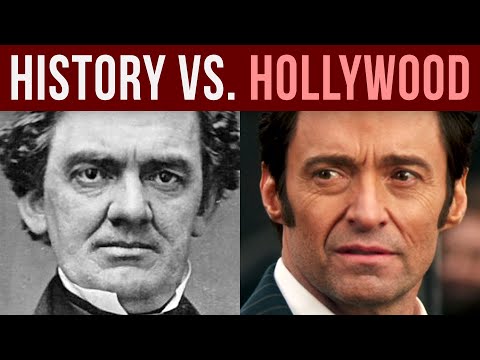
By 1841, Barnum had purchased Scudder’s American Museum in Manhattan, rebranding it as Barnum’s American Museum. It was here that the seeds of his legend took root—and where the film’s most heartwarming moments find their starkest counterpoint. The musical introduces us to a family of performers: the bearded lady, the tattooed man, the dog-faced boy. In the movie, Barnum is their savior, offering dignity and a stage. But history tells a thornier tale.
Take General Tom Thumb, the little person who became a global sensation. In the film, Barnum recruits Charles Stratton as a young adult, but in truth, Stratton was just four years old when Barnum—his distant cousin—signed him up. The real Tom Thumb was trained to sing, dance, and impersonate Napoleon, his childhood essentially traded for a paycheck. Similarly, Annie Jones, the bearded lady, was exhibited by Barnum when she was only nine months old. He paid her parents $150 a week to display their infant daughter’s unusual hair growth. The movie’s empowering narrative of self-acceptance glosses over the uncomfortable reality of children put on display for profit.
Then there’s the question of exploitation. The Greatest Showman frames Barnum as a champion of the marginalized, but his museum was a business, and his performers were attractions. He promoted hoaxes like the Fiji Mermaid—a grotesque stitching of a monkey’s head and a fish’s tail—and capitalized on public curiosity for the bizarre. Was he a liberator or a profiteer? The answer, like the man himself, resists a simple bow.
The film’s romantic subplot between Zac Efron’s Philip Carlyle and Zendaya’s Anne Wheeler—a fictional interracial couple facing violent prejudice—never happened. Both characters are entirely invented, their love story a narrative device to underscore themes of tolerance. Meanwhile, the real Barnum’s relationship with Swedish opera singer Jenny Lind is similarly dramatized. In the movie, Barnum becomes infatuated with Lind, and her unrequited advances lead to a scandal that nearly destroys his marriage. In reality, there is no evidence of any romantic involvement. Lind’s tour was purely a financial arrangement—she donated her entire $350,000 profit to charity—and she quit because Barnum’s relentless marketing exhausted her, not because he spurned her.
As the curtain falls on this first act, the question lingers: Was P.T. Barnum the visionary who gave the voiceless a voice, or the cunning showman who sold their differences to the highest bidder? The answer lies somewhere between the footlights and the shadows—a story as tangled as the bearded lady’s hair and as explosive as the fire that would one day consume his empire.
That fire arrived in 1865, and the movie turns it into a dramatic turning point—a mob of outraged citizens torching the museum because they couldn’t stomach Barnum’s celebration of the unusual. The truth is stranger and more political. The blaze was almost certainly arson, but the motive likely had nothing to do with the sideshow freaks. Barnum had filled his museum with pro-Unionist lectures, exhibits, and dramas, and a Confederate sympathizer had already tried to burn the place down the year before. The fire that finally destroyed it was a casualty of the Civil War, not a revolt against the bearded lady.
Barnum didn’t wallow. He reopened at a new location, and when that too burned in 1868, he pivoted once more—this time into the circus business. The film compresses this journey into a tidy arc, but the real timeline reveals something the musical never says aloud: Barnum didn’t launch his circus until he was sixty years old. The Greatest Showman on Earth spent four decades failing, scheming, and rebuilding before he ever sent a single clown into the ring.
And what of the man behind the curtain? The movie gives us a Barnum who learns humility, who chooses family over fame, who walks away from the spotlight to embrace the people who matter. History offers a messier portrait—a man who remarried barely a year after Charity’s death in 1873, who kept promoting hoaxes well into old age, who understood that the public’s hunger for wonder was the most reliable currency of all.
Yet here’s the twist the film can’t quite capture: the circus he built outlived him by 146 years. It carried his name—Ringling Bros. and Barnum & Bailey—until it finally closed in 2017, felled not by fire or scandal but by changing tastes and mounting criticism over animal abuse. Barnum’s greatest act wasn’t any single performer or hoax. It was the machine itself: a self-sustaining engine of spectacle that kept running long after the showman was gone.
So when Hugh Jackman belts out that this is the greatest show, remember—the real P.T. Barnum would have agreed. He’d have sold you the ticket, too, and probably a souvenir program to go with it. The man knew exactly what he was doing, and he never once pretended otherwise.
But the musical’s most enduring fiction isn’t the romance or the fire or the fictional protégé. It’s the idea that Barnum ever stopped performing. Even in his final years, he was writing autobiographies full of self-mythology, curating his own legend with the same care he once gave the Fiji Mermaid. The show, for Phineas Taylor Barnum, never ended—it just changed venues.
That relentless self-curation is precisely what makes Barnum such a slippery subject for any filmmaker. He wrote his own life story—multiple times, in fact—and each edition polished away the rough edges. The 1855 memoir, the 1869 revision, the 1888 swan song: each one a fresh coat of paint on the same irresistible facade. Barnum didn’t just sell tickets to the museum; he sold tickets to the man himself, and the public bought every one.
It’s worth pausing on how radical that was for the mid-1800s. Before Barnum, showmen lurked at the edges of respectable society, lumped in with pickpockets and snake-oil peddlers. He changed that by sheer force of personality—granting interviews, courting editors, turning his own name into a brand that rivaled any product on the market. When he toured Europe with Tom Thumb, he engineered audiences with Queen Victoria and the nobility, then made sure every newspaper on two continents knew about it. The man understood, a century before Madison Avenue, that perception was the product.
And yet, for all the cynicism, there was something genuine buried beneath the ballyhoo. Barnum’s museum was one of the first places in America where families of modest means could spend an afternoon surrounded by wonders—wax figures, live animals, mechanical curiosities, lectures, and theatrical performances, all for a quarter. He billed it as a place of “innocent amusement,” and by the standards of his era, it largely was. He gave the working class a cathedral of curiosity, and he charged them almost nothing to pray.
That tension—between the exploiter and the entertainer—is where The Greatest Showman stumbles most. The film needs a hero, so it strips away the huckster and leaves only the dreamer. But the real Barnum would have found that portrayal baffling. He was proud of his humbugs. He delighted in the Fiji Mermaid, in the “man-eating” Feejee specimens, in the elaborate hoaxes that kept the public guessing. He once said the public liked to be deceived, and he considered it his professional duty to oblige them.
Consider the famous Cardiff Giant affair of 1869. A ten-foot petrified “man” was unearthed in upstate New York, and Barnum, never one to miss a spectacle, tried to buy it. When the owners refused, he simply commissioned his own replica and exhibited it as the genuine article—drawing bigger crowds than the original. He didn’t just sell illusions; he sold better illusions than anyone else, and he never apologized for it.
This is the Barnum the musical leaves on the cutting-room floor: the gambler, the hoaxer, the man who once ran a lottery, bought a zoo, promoted a questionable “mermaid,” and spent a lifetime testing exactly how much the public would swallow. The answer, it turned out, was everything—provided the show was good enough.
Which brings us back to the performers themselves. The film gives them agency, community, a voice. History gives them contracts, salaries, and a manager who understood their value in dollars and cents. Both stories are true, and neither is complete without the other. The bearded lady, the tattooed man, the dog-faced boy—they were exploited, yes, but they were also paid, sometimes handsomely, in an age when few options existed for anyone who looked different.
The question, then, isn’t whether Barnum was a hero or a villain. It’s why we keep needing him to be one or the other. The musical’s answer is clear: we want to believe that wonder can be innocent, that spectacle can be generous, that the showman’s grin hides a heart of gold. Barnum’s answer, if he were here to give one, might be simpler still—he’d ask what we were willing to pay for the ticket.
And that, perhaps, is the final twist in the tale: the real P.T. Barnum would have loved The Greatest Showman—not because it got the facts right, but because it sold the myth so brilliantly. He would have recognized the musical for what it is: a humbug of the highest order, and he would have tipped his hat to it.
The film’s fictional romance between Barnum and Jenny Lind, its invented protégé, its noble fire—none of it would have bothered him. Barnum knew that memory is a showman’s final stage, and he curated his own legend with the same zeal he once gave the Fiji Mermaid. If Hollywood wanted to polish his story into something shinier, he’d have asked only for a cut of the box office.
So the next time you hum along to This Is Me or cheer as the bearded lady takes her bow, remember: you’re watching the ultimate Barnum production. The man who sold the public a mermaid now sells them a hero—and we buy it, every time, because the show is just that good.
After all, what’s more Barnum than a musical that makes us believe in the very illusion he spent a lifetime perfecting?
So here’s the question for you, dear reader: knowing the messy, exploitative, brilliant truth behind the spectacle—does it make you love the show more, or less? Would the real P.T. Barnum be proud of what Hollywood made of him, or would he simply ask where to buy a ticket?
Report this article
Select a reason for reporting:






