The sky darkened over Hanoi as the first SAM streaked upward, its fiery trail slicing through the night. Inside the cockpit of a B-52, the crew braced for impact. This was no training exercise—this was Operation Linebacker II, and the stakes could not have been higher.
For nearly half a century, one aircraft has dominated the skies—a symbol of American might, a harbinger of destruction, and a guardian of peace. The B-52 Stratofortress, with its distinctive swept wings and eight roaring engines, has dropped more conventional bombs than any other aircraft in history. It can fly at 650 miles per hour, reach targets over 8,000 miles away, and unleash 70,000 pounds of bombs, missiles, and precision-guided weapons.
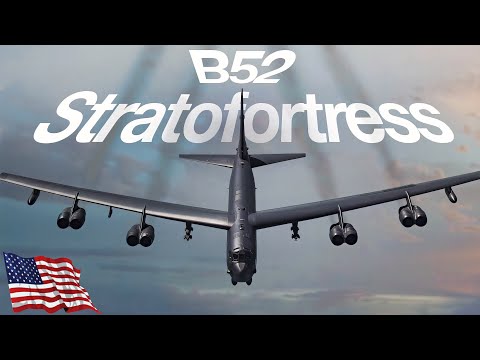
When the President of the United States wants to wield his big stick, he sends the B-52. When America wants to punish an enemy, we send the heavy bombers—and one of them is always the B-52. It has become more than just a bomber; it is a symbol of American resolve.
Using extraordinary archival footage and vivid reconstructions, we enter the world of the B-52 Stratofortress—a world of high alert, nuclear deterrence, and unimaginable pressure.
The story begins not in the jet age, but in the crucible of World War II. As aircraft grew larger, so did the bombs they could carry. With the outbreak of WWII, Adolf Hitler unleashed his bombers, shattering enemy territory ahead of his armies. But as the tide turned, it was the Allies who exploited the bomber to its full destructive potential. With raids of thousands of bombers at once, heavy bombers like the British Lancaster and the American B-29 became instruments of total war.
In early August 1945, two bombs were dropped that forever changed the face of warfare—and birthed one of the most terrifying tools of war: the nuclear weapon. For the first time in over six years, the world was at peace. But on the horizon, signs of another conflict loomed: the growing threat of war with the Soviet Union.
The United States began preparing for hostility with the Eastern Bloc. An organization known as SAC—Strategic Air Command—was established. “There was no office building, so we used offices in an old Martin bomber factory at this airfield,” recalls one veteran. “And we began seeing people we had fought with coming from all sides, mostly all types of B-29s.”
SAC wanted air combat units capable of flying long distances and employing the latest, most modern weapons. But America lacked an aircraft powerful enough to meet these demanding requirements. With that in mind, Boeing began working on various long-range bomber designs—including radical swept-back wings, jet-powered and conventional propeller-driven aircraft.
But it was not until October 21, 1948, that Colonel Henry “Pete” Warden of the Wright Air Development Center met with Boeing engineers. They arrived with a mountain of documents and designs, but Warden paid little attention to the paperwork. He asked for a prototype using jet engines—and he wanted the plans fast. Pete Warden gave them just two days.
It was a daunting request, but the team did not want to disappoint Warden. “We were the ones who had to do it, and we knew what we had to do,” one engineer recalled. “I had all my aircraft data on the B-55 because I had just reported on that aircraft to Pete Warden earlier that week. So we had all the data, but we had to move it to the size of a B-52.”
The genesis of the mighty B-52 took place in humble surroundings—in a hotel room at the Van Cleve in downtown Dayton, Ohio. It was a classic small city hotel. Boeing had a suite on the seventh floor, consisting of a living room with a large round table and a sofa.
“The first thing we did Saturday morning was figure out what we had to do,” the engineer continued. “We needed drawings. We needed a performance document. So Vaughn and I, being aircraft technicians, started by taking my B-55 data and transferring it to a larger aircraft. Meanwhile, Ed Wells and George Shire disappeared.”
They returned about two hours later with balsa wood. While they were out, they had decided they wanted a model—and they had to scour Dayton’s hobby shops for the largest piece of balsa and a scale model kit. Shire was the best aerodynamicist in the world, and the engineers were a bit annoyed that he sat in the corner carving a model while they had a massive document to assemble. But he did it anyway.
Over the next 24 hours, the aircraft began to take shape. It would be an eight-engine jet using podded pairs of Pratt & Whitney engines. It would have a maximum speed of 490 knots and the potential to deliver 10,000 pounds of bomb load over a distance of 5,320 miles. It featured a radically redesigned wing with a span of 185 feet.
By Sunday noon, they had things in pretty good shape. They called Boeing’s officer secretary, Mrs. Hines, and she typed up all the materials they had written—a document of several pages. On Monday morning, they presented their work to Colonel Warden. He was amazed by the jet-powered plans and asked Boeing engineers to continue the design. Approval of the aircraft did not come for another three months, but in January 1949, production began in Seattle.
Over the next two years, Boeing worked and tested its new aircraft in a feverish pitch. “Today they have what they call computational aerodynamics and can do it with a computer,” an engineer noted. “But back then, the wind tunnel was how we did it. That’s why it took about a year of wind tunnel testing—mainly figuring out how to place the engines on the wing. And today it turns out to be just fine.”
On April 15, 1951, the B-52 was rolled out. Named the YB-52, it was ready for its first flight at Boeing Field. “We knew we had a winner before we even flew it,” said one test pilot. “The first flight—I was really excited about it.”
It had taken seven years from the original U.S. Air Force request for a new bomber to get the B-52 to the runway. It didn’t look like any other aircraft, but the test pilot was deeply involved in wind tunnel testing and knew it should fly. When it finally took off—flaps down, swept wing—he was thrilled to see it disappear over the horizon, looking perfectly normal.
The test flight included checking the aircraft and its systems. “It turned out that the control forces were many times greater than they should have been,” the pilot recalled. “So it took both of us to turn the aircraft under certain conditions. Oh, it’s just upside down. That’s right.”
The flight lasted two hours and 51 minutes and ended with a perfect landing at Moses Lake. It was generally agreed that Boeing had won. Over the next three years, Boeing and the U.S. Air Force tested, developed, and refined the aircraft. Many improvements were made. One of the most notable, according to SAC commander General Curtis E. LeMay, was changing the crew seating configuration. The first aircraft did not have the right cockpit. General LeMay decided he wanted a side-by-side cockpit, and there was no time to modify the first aircraft. The first three or four aircraft off the line were B-52Ys with a tandem cockpit.
Finally, in 1955, the new B-52 was unveiled to the public and ready for active service. But the Soviet Union had already developed its own atomic and hydrogen bombs, and America desperately needed a heavy bomber that could strike back if necessary. Would the B-52 fit the role that Strategic Air Command so urgently needed?
During the mid-1950s, the Soviet bloc began building a fearsome arsenal of nuclear weapons. America was determined to provide a deterrent to prevent the Soviet Union from using their bombs. This era of the Cold War now needed a strategy. “We initiated, developed, planned, and wrote the first nuclear war plan,” said one planner. “It was a war plan, but it became the national war plan.”
It was an uncertain and highly charged environment in which the B-52 entered service with Strategic Air Command. The first B-52s had a six-man crew. On the upper flight deck were the pilot, co-pilot, and electronic warfare officer. On the lower deck were the radar navigator-bombardier and navigator. In the rear of the aircraft was the tail gunner. Fuel tanks were packed along the wings and fuselage, and massive bomb bays lined the belly of the fuselage.
For some of the elite crews that SAC selected, it was their first time seeing a B-52. “When I walked around the B-52, I thought, wow, this is really great,” one crew member remembered. “And then I looked at the skin on this B-52 and it was all wrinkled, kind of like mine, and I thought, this thing can’t fly. This won’t be good. You can’t be serious.”
But another recalled: “I was absolutely amazed by the sound, the noise, the movement of the aircraft. But it flew, and it flew very well. It took a lot of strength and a lot of fatigue.”
Imagine driving a big 18-wheel Mack truck down the highway—not just on the highway, but into a neighborhood and around corners, backing up. That’s what the B-52 is like compared to, say, an F-4 fighter, which is like driving a Lamborghini. “You push the throttle forward on all eight engines, the whole aircraft shakes, you have this noise, and it sits there at the end of the runway, everything vibrating,” a pilot described. “You know, it’s almost like a sprinter ready to start. And then you start moving, and it begins to slowly accelerate. It goes a little faster, a little faster, a little faster. And then you have about a 12,000-foot runway. And you finally take off and you’re climbing, nose down. Until you reach your altitude and go on. But the first time is a really exciting experience.”
The B-52 was not necessarily difficult to land and take off, except for the crosswind crab system, where you could set a crosswind crab to land the aircraft while it was pointed relatively into the wind but actually flying sideways. It was a very unusual and scary sequence.
As American military thinking evolved during the Cold War, the greatest fear was a sudden preemptive Soviet strike. So SAC ensured that 12 B-52s, fully armed with nuclear weapons, were airborne 24 hours a day, 365 days a year. The plan was known as Chrome Dome.
“The plan was to arm the bomber fleet with nuclear weapons and achieve a high state of readiness to meet our national policy, which was to surround the Soviet Union,” explained one SAC officer. Operation Chrome Dome had B-52s flying three main routes. The northern route crossed North America and Canada, over Newfoundland and Iceland, up around Greenland and the Arctic Circle, across Alaska, and back down the western side of the USA. The southern route crossed the Atlantic, circled the Mediterranean, and returned to the USA. “We were constantly on patrol over Greenland, 24 hours a day,” said a crew member. “Each patrol was designed to continuously monitor critical targets in the Soviet Union. From a patrolling B-52, no target was more than two hours away.”
But these missions, some lasting up to 26 hours, required incredible endurance from the crews. “You sat in an ejection seat and had a 40-pound parachute on your back,” one recalled. “You wore a helmet, fairly heavy, and thermal underwear. Maybe heavy boots. You had a winter or summer flight suit. Down below it was normally dark because you needed good visibility when watching the radar scope. It was mostly cold, minus 55 degrees. And of course, the aircraft skin wasn’t well insulated in some places. Add to that your high altitude, low ambient humidity, and you lose a lot of moisture. Many times I lost 5 to 10 pounds—ten pounds usually just in water from a long, stressful mission.”
It was very cramped. They had inflatable mattresses and could lie down and rest. Obviously one pilot would fly the aircraft, one navigator would navigate. Soon they had a small oven where they could cook what one crew member characterized as an early TV dinner. They had a hot cup to make coffee or heat soup, and boxed lunches.
Over the full range of more than 8,000 miles, Cold War B-52s had to refuel twice on every mission. But with these massive aircraft, each refueling was a maneuver full of danger. “You’re in very close proximity to the aircraft,” a pilot explained. “Imagine driving on a highway and you like to have two seconds between cars. Well, we’re talking maybe 20 feet between the aircraft above you and the bomber directly below you. And in a fraction of a second, if you hit an air pocket or some clear turbulence, there’s a chance his tail drops and your nose rises. And yes, that could ruin your whole day.”
The boom operator in the tanker—if it was a flying boom—you had to fly the B-52 into this envelope, this narrow airspace under the tanker, which the boom operator liked. “And some boom operators were so damn picky that if you weren’t on the spot where they wanted you, they wouldn’t plug the boom in,” a pilot recalled. “And I’d say, put the damn thing in, you idiot.”
Any time, day or night, when you were a pilot, you refueled in the air and took on at least 40,000 pounds of fuel. “When I finished, my body was wet, just completely soaked with perspiration,” one said.
From October 1, 1957, during normal periods of alert, 40% of SAC bombers were on continuous ground alert, ready to take off within 15 minutes. “When the horn went off, of course, you never knew for sure whether it was an exercise or the real thing,” a crew member remembered. “Grab your gear or whatever you need depending on where in the world you are, and then you run like crazy to the aircraft. And then your heart starts beating and the adrenaline kicks in because you don’t know what’s going to happen. And the next message might be the call to go to war.”
Despite the hardships and training, crew vigilance was so crucial that each B-52 was armed with up to four thermonuclear weapons. Each warhead was over 1,700 times more powerful than the bombs dropped on Japan. And if needed, only the President could order their use.
In the early 1960s, Strategic Air Command was the key deterrent against any attack from Russia. The spearhead of this force was the mighty B-52. “There was a story that was told,” one officer recalled. “There was a diary, and you would go to the Russian premier and the question was, ‘Is today the day we can take on the United States and come out ahead?’ The general would say, ‘Not today, sir.’ And our job is to ensure that is his answer every day.”
To maintain this state of high alert, Strategic Air Command required B-52 crews to undertake long and stressful tours of duty. The average tour for SAC combat crew members in the early 1960s: normally you would do two seven-day alert tours per month. So that’s 14 days out of roughly 30 or 31 days that you could expect to be on nuclear alert. And you were expected to be able to launch within 15 minutes and hit those targets if ordered. So in addition to ground alert, you could expect to fly maybe three, maybe four training missions a month. So your time was completely consumed by these duties.
Continuous crew training was tough and rigorous. Only the best. They also had to pass psychological tests. “You had a psychological profile, which is very important,” one crew member explained. “In other words, you’re talking about taking a nuclear weapon and dropping it on the ground, and a lot of people can’t handle that. Physiologically, are you able to handle long missions, more than 20-hour missions that are required? Do you have the endurance? And you got physical tests to find out if you had that endurance.”
Training required everyone to do their job—not just the crew, but maintenance workers and all the support people, even the people who prepared the meals. Everyone had to do their job to keep the fleet in the air when needed. The driving force behind this pursuit of excellence was General Curtis E. LeMay. “He was the big daddy,” one SAC veteran said. “He was the one who founded SAC. And of course, he conveyed the impression that there was no one tougher than Curtis E. LeMay. First, having a great man and the concept he had. And he knew what his mission was. There were times when he was a loving father. He had moments when he could show compassion, but outwardly he was probably just a rough, tough son of a bitch.”
But if an attack were launched against America, a series of defensive steps would be taken. Incoming missiles or bombers would be detected by radar tracking stations early warning. After verification, the warning that the USA was under attack would be passed to Strategic Air Command headquarters in Omaha, Nebraska. They would bring the entire B-52 fleet to alert and scramble the aircraft. SAC would then consult with the White House. The President was never more than a few feet from the war plan. If, and only if, it was necessary, the President gave the final order to go. Then the B-52s already airborne would receive their coded instructions, known as go codes, to fly to their targets.
“There was a coded message that you would receive, and it required you and another crew member, which they called positive control, to authenticate that message,” a crew member explained. “And it was there, there was a code. The code was a letter code. If you and another positive control, which was the radar navigator-bombardier, if you will, and if both your cards matched the message, then it meant it was an authentic message and authorized you to hit your target.”
Most B-52 crews had already made arrangements with their families about when and if they received orders to bomb their targets. “I took the opportunity, as did many other SAC crew members, to instruct my wife on what she must do in the event of a nuclear attack on the United States,” one recalled. “And that included assembling the things and materials she would need to take care of the children, packing the car, and being ready to leave the immediate target area. All our SAC bases were targeted and away from that.”
Every mission carried awesome responsibility. “It’s a bit of a scary thought,” a crew member admitted. “You know, I saw an A-bomb explode in a bikini. Many did not see them. And I knew how scary it was that we were carrying things much, much stronger. And of course, we were all well aware of the significance of the Cold War and the threat posed by the Soviet Union and the Warsaw Pact states. And we were committed to taking them out if necessary. We also knew that we had never committed to a first or preemptive strike. I was confident that every crew I was in would fly the assigned mission. We would go there and do what we could. If we were able to hit our targets, if not, if we were shot down from the sky, we were blown from the sky. Because, you know, if that happened, it meant our country had already been hit.”
Each B-52 bomber was then on its own, heading for its target. “They can’t pull you back,” a pilot said. “Once you have it, you’re committed to the target. You just orbit there and wait for one of two things to happen. Either you get the message telling you to proceed to the target, or if you don’t get it, you have to determine how long you can stay in that orbit before you have to turn back to make it back to base and land without running out of fuel.”
If enemy bombers or missiles penetrated and destroyed SAC headquarters, there was an alternative plan to guide the airborne B-52s to their targets. It was called Looking Glass. “We had Looking Glass on board, a SAC general officer with a full battle staff,” one officer explained. “It was an eight-and-a-half-hour mission. They flew three missions a day. And of course, this system was designed so that if Strategic Air Command headquarters were lost due to an attack, then this general officer would find himself leading the war and talking to the commander-in-chief, the President of the United States, and the Secretary of Defense.”
“During the ten years I was a SAC officer, I had the honor of flying 358 of these missions,” he added. This flying command center was a vital pillar in the doomsday scenario. But fortunately, it was never needed, because a single misdirected bomb would lead to nuclear catastrophe, and not a single living creature would remain alive on the planet.
But accidents with all these nuclear bombers did happen. And when a B-52 crashed with four 50-megaton bombs, the world held its breath.
During the Cold War, nuclear B-52s patrolled the skies 24 hours a day, 7 days a week, ready to deliver the most powerful bombs in the world. These bombs were never dropped in combat, but on more than one occasion they were nearly detonated by accident.
On January 17, 1966, a B-52 was refueling on a routine Mediterranean patrol at 30,500 feet off the coast of Spain. “Over Spain, we had a mid-air collision between a B-52 and a KC-135 jet tanker,” a crew member recalled. “The KC-135 crew was lost. Many of the B-52 crew survived. The weapons were deployed, if you will, and had to be pulled out of the sea, which caused quite a sensation. We were successful in recovering those weapons, and with the safety devices built into the weapons, there was never any concern about nuclear detonation.”
After another incident in Greenland, neutral governments began to object that B-52s armed with nuclear weapons were flying over their territory. The risk of catastrophe was too great. And the introduction of intercontinental ballistic missiles (ICBMs) and nuclear submarines provided the United States with an alternative retaliatory arsenal. These events caused such an uproar on the world stage that Strategic Air Command and the U.S. civilian leadership decided to stop and curtail this operation. In September 1968, Operation Chrome Dome was discontinued.
For the men who flew these missions, the B-52 had fulfilled its role as a world peacekeeper. “Looking back, I don’t regret the 17 years I spent in SAC,” one veteran said. “I think we did a lot for our country. I think one of the things we talk about is that most people think the Cold War just ended. It didn’t. We say SAC won the Cold War.”
For more than 10 years, the B-52 patrolled the skies, waiting for go codes that fortunately never came. But its days as a bomber were not over. It was about to undertake a new mission over Southeast Asia.
When Southeast Asia arose and there was a need to deliver a large volume of firepower—conventional munitions, iron bombs, as we call them—the Air Force looked around and the best delivery platform they had was actually the B-52.
In March 1965, in the escalating conflict in Vietnam, President Johnson authorized Operation Rolling Thunder. The B-52 was mobilized and again modified to carry out its mission. They modified the B-52D models with what they called the “Big Belly” modification, to the point where between the external and internal bomb racks they could carry 108 750-pound bombs. From 1965, the B-52D Big Belly versions carried the burden of the conflict alone, until B-52G versions joined them in the final phase of the conflict. Between 1965 and 1968, B-52s in Rolling Thunder flew more than 2,000 combat sorties and dropped over 630,000 tons of bombs.
It was the first time the B-52 entered a real war zone. “I had already told my crew that if we were hit, we would fly that aircraft until it exploded,” a pilot said. “I didn’t think they were taking any prisoners. When you flew there, it was a big, non-stealthy aircraft. When you put a radar scope on it, it stuck out due to its sides almost like a flashlight. You know, they were metal sides and they reflected radar energy. That’s why so many ECM aircraft, electronic countermeasures, and an electronic countermeasures officer flew on board. But even so, it was quite a sitting duck at high altitude.”
In addition to SAMs, surface-to-air missiles, B-52s had to face Russian-made MiG-21 fighters. “We really didn’t have a problem with MiGs trying to attack the B-52,” a crew member recalled. “We found that MiGs flew in formation with us and passed this information down to the artillery, to the SAM sites. So here’s the guy on the ground, he knows your heading, your altitude, and your airspeed, and that simplifies his process of shooting you down.”
In 1970, heavy bombing also spread outside Vietnam into Cambodia and Laos. Sortie rates rose to more than 3,000 per month. But the most famous demonstration of massive American air effort in Vietnam was yet to come. The B-52 would bring losses of aircraft and crews that it had never faced before.
In 1972, the conflict in Vietnam was raging, and peace negotiations had reached a stalemate. So a major escalation of B-52 bombing was ordered: Operation Linebacker II. It was to be a systematic bombing of key targets in North Vietnam.
“On December 15, we received a warning order for Linebacker II, and for security, no one was allowed to leave the base or telephone off base,” a crew member remembered. “And so we were told to prepare for a three-day maximum effort mission with the possibility of extension indefinitely. And at that time we were told the target would be Hanoi. Normally when you were briefed, you had a cell, three B-52s, 18 people, and usually they talked among themselves and the briefer tried to brief and nobody paid attention because it was the same briefing every day. And we go into this room, the room is full of crew members, and this briefer could speak without a microphone in a whisper and everyone in the room would hear every word he said. There was such silence in that place. I remember looking around and thinking, you know, some of us probably won’t be alive. Some of us will die in four or five hours. We won’t be back.”
Three days into the operation, on the evening of December 20, John Mule’s B-52 was bombing Hanoi when it was attacked by SAM missiles. “To see these lights, these little specks of light, and then, as they passed under the cloud, you could see the rocket cloud of the surface-to-air missile engine,” a crew member described. “And there were many SAMs coming. Many. Check left. Check left. I’ve got it. Are you focusing on something? We have something off the nose. Just about five seconds before bomb release, I looked out and there was this… I just saw this huge sand right in front of the aircraft’s nose. I thought, get above us before you explode. Check left, check left, check left. I’ve got it, I’ve got it, I’ve got it. There was a brutal sound from the nose. It looks like it’s going to explode above us. Okay, it looks like a blue-green windshield. The next thing I knew, the aircraft was in a 30-degree bank. All the windshields were completely shattered but intact. And half the red lights in the cockpit were on. So I thought, well, I’ll try to level the wings, but I probably won’t be able to. Outside on the left wing I see fire. I look over there and my number three and four engines are on fire. And just as I’m looking at that fire light, a second SAM hits the aircraft. Another one coming off the nose. Obviously we made quite a big hole in the crew compartment because we had explosive decompression. We lost pressure and the noise was deafening. It was like standing next to a train passing on the track at 80 miles an hour. Just deafening noise. Now I look out and not only are the engines on fire, now the wings are on fire. I’m trying to decide whether we stay with the aircraft until that position on the wing. So I thought, I’d better get the crew out. And the way I did that is there’s an emergency escape light in front of each crew member and you have a guarded switch that the pilot can activate. And when you hit that switch, it lights up that red light in front of each crew member, and that means eject. Rear, when that thing fires and I thought, this is not a good day.”
John Yule was captured by the North Vietnamese and taken to the infamous Hanoi prisoner-of-war camp nicknamed the Hanoi Hilton. After three days in solitary confinement, Yule was on the receiving end of a B-52 raid. “I remember huddling in the corner of that cell with my fingers and ears as deep as I could get them, and I knew my eardrums would burst,” he recalled. “And plaster is falling from the ceiling of the cell, and over the bars on the door there are wooden shutters and they’re like cardboard. They flap back and forth from the shockwaves of these bombs. And I’m sitting there thinking, three days ago I was up there dropping those bombs. The way I get to sign off is being bombed by my buddies that I was bombing with up there three days ago. Isn’t that ironic?”
December 20 was the most intense night of Operation Linebacker. Six B-52s were destroyed and 17 airmen lost their lives. After 93 days of captivity, John Newell was finally released. But for him, his savior was the B-52. “That B-52 was such a robust aircraft, such a tough bird, that it took two direct SAM hits and I was in it for at least 50 or 60 seconds trying to decide whether to get out or stay with it, and all my crew got out. All survived.”
During Linebacker II, B-52s flew more than 700 combat sorties over North Vietnam. They continued the most sustained heavy bombing of the war, dropping over 15,000 tons of munitions. They destroyed 1,600 military facilities, 10 airfields, 500 railway lines, 3 million gallons of oil, and 80% of all electrical power. But for SAC crews, a high price was paid for achieving this goal. During the 11 days of the operation, 15 B-52s were shot down by SAM missiles. Of the 92 crew members on board those aircraft, 61 fell over North Vietnam. About half were killed and half were captured. Hanoi could not take further punishment, and a ceasefire was signed. In March 1973, the last American troops left Vietnam.
During the 1980s and 1990s, the B-52 remained the primary strategic heavy bomber in the American air fleet. Constantly updated to include the latest aviation technology, the B-52 was always ready to go into action. On September 11, 2001, as its 50th birthday approached, the B-52 was called upon again. “On September 11, we were in the middle of an exercise and watched the aircraft hit the second tower, and at that moment we knew it was not just an accident, that it was an attack on the United States,” a crew member remembered. “So we really hit home at that moment when we needed to take the fight back to the enemy.”
Their targets were Taliban extremists who had held the Afghan people in an Islamic reign of terror for five years. This organization, home to Al-Qaeda terrorists, was responsible for the atrocity of September 11. Thus began the war on international terrorism.
The B-52 has at least three different precision weapons. These bombs can fall within 40 feet or 13 meters, but in actual combat we have seen that we actually exceed that by a large margin. “On November 10 last year, we had an Air Force staff sergeant on horseback in Afghanistan who was under attack,” a commander recalled. “He made the first call. To the great fortune of that day, a B-52 orbiting nearby was able to be directed that way. Within eight minutes of contact, we dropped 16 of these wind-corrected munitions dispensers, killing about 250 to 300 advancing soldiers, which allowed him and his Northern Alliance comrades to escape and fight another day. Just the sight of a B-52 overhead, sending a signal to those on the ground that we are here to stay, we are watching, and we will not leave you.”
For nearly half a century, the extraordinary B-52 has been at the forefront of American policy in the air. The aircraft’s remarkable range means that from bases in the USA it can strike targets anywhere in the world. “What a bargain we got as taxpayers,” one official said. “And I don’t know of many aircraft that have been flying since 1952. Current projections say the B-52 has a combat life until 2045, almost 100 years of active service. No other bomber in history comes close to this record. I believe it will probably be the most famous aircraft of all time and certainly the longest-lived combat aircraft we have ever had in inventory.”
“It started in the ’40s, ’50s, ’60s, ’70s, ’80s, ’90s, you know, and now in the 2000s,” a veteran added. “So to the original designers, give them an attaboy from me, because they did a very good job.”
Well, I flew the F-86, and in the middle of the F-86 program I found out that some of us were going to Strategic Air Command and the B-52. And I was one of the lucky ones who ended up in the B-52. So I didn’t volunteer to go to the B-52. I went against my will. But that’s how I ended up in SAC and the B-52. And again, as I looked at it, I said, well, look, for the last four or five years you’ve been doing something you would pay the Air Force for. If they didn’t have to pay you, you would pay them. For the job the navigator has, for the pilot training, for flying the F-86, I would have paid them for that. They were doing exactly what I wanted. And I thought, now I see what they were doing, those sly mothers. They let me have fun for five years. Now I start earning my pay. Now I start doing something that is work. I don’t enjoy this, but it’s work and I understand it and I’m committed, so I’ll have to do it.
Yes, I do. I remember one specific thing from my very first flight. We’re heading out to fly. We taxi out and go through all our checklists before takeoff. We’re sitting there on what they call the hammerhead, in the area just before you taxi onto the active runway. We’re sitting there. So I turn to the IP and I say, what’s the problem? Why aren’t we taking off? And he looks at me and says, take off? We don’t take off until our scheduled departure time. Well, I’d been in the Air Force five years and had never heard of a scheduled takeoff time. And all my flying had been, when you’re ready to go, go. You run the checklist and the tower clears you, you take off. Scheduled takeoff time—so we sat there for ten or fifteen minutes waiting for this magic time to arrive, and then we got takeoff clearance. So that’s what I remember from my first ride. I don’t remember much about the aircraft. But I do remember later, when we were going through training, my pilot—I was, of course, the co-pilot—and my pilot, who was upgrading to aircraft commander, was out there upgrading and was great in all respects except refueling. And he had great difficulty with refueling. And obviously my nonverbal words to the instructor pilot were, I can’t believe this guy can’t refuel. I mean, just look, I know I can do it. Because this instructor told me, he said, as soon as I let Vic check out, you’ll get your chance. We’ll let you refuel. And I thought, great. So the magic day came. Finally Vic got to where he could refuel. So the instructor said, okay, Vic, get up out of the seat. You sit in the chair. And I should have known bad things were going to happen because this IP looked so happy, so happy that I was getting in the chair. So I get in there. And I’ll tell you what a nice guy I am. I thought, I don’t want Vic to feel really bad about his co-pilot just sliding right in and hooking up and refueling. And I thought, so I’ll make it look like I’m having a little trouble getting connected. Because I think, it’s a straight and level track. Now, in the F-86, I think when you flew in the track, you usually chased the guy. You were on his tail, climbing, doing everything. And it wasn’t that hard to stay in when you’re flying in the track. And I thought, that tanker is on autopilot. It’s holding a constant heading, airspeed, everything else. There should be absolutely no problem. I ended up almost from wingtip to wingtip behind that aircraft. From the height of confidence, I go out for about three or four minutes, I’m so sure I can slide in and connect. Within three minutes I’m saying, I could fly this aircraft for 20 years and never learn to refuel from it. This is ridiculous. I couldn’t get close to that tanker. I was just there and back, there and back. I couldn’t stabilize the aircraft as you approached. And the instructor pilot just loved it. Loved every minute of it. He said, oh, you’re doing great. What a great job of refueling. EW later told me, he said, John, I thought you were going to kill us all. I thought we were all going to die. He said, I felt the aircraft passing through all of us. Yeah, when that horn went off, of course, you never knew for sure whether it was a training exercise or the real thing. And that’s true.
After a few years of pulling alert, and usually I would say during a normal alert tour, and at the base where I was, it was seven days and it varied from base to base. But a seven-day alert tour, you might have two or three, maybe four alerts during the week you were there. And of course, of course, all practice, except not all were practice. In my six years, I had one that was not practice. And that was a malfunction at BMEWS. It was a combination of three things, as I understood it. BMEWS, which was the early warning in Alaska, and they had some kind of malfunction. And I guess they thought geese were flying or something. Anyway, the command thought there might be incoming aircraft, so they had to follow their procedures. If they thought they saw aircraft coming from Russia, then they were supposed to get us. This particular message they came up with was not supposed to launch us, but to get us to the end of the runway with engines running. And the other thing that was a clue was practice horns were usually during daylight. After nine o’clock at night, I never remember one. And this happened at about four o’clock in the morning. When this horn goes off at four in the morning, it really caught our attention because it never happened. So we run out to the aircraft, start the engines, turn on the radio, and hear this message that is not a practice message. And so we taxi out and we’re thinking, whoa, now this changes your whole attitude. And how can I describe it to you—it happened for the very first time this morning when we got it, we had a brand-new navigator. His first alert tour, first alert tour. And his observation when it was all over and we got back to the alert facility, he said, man, I didn’t know you took it this seriously when the horn went off. We had to explain to him that this was not a normal horn response, that this was the real thing.
For me, anyway, quite an interesting event. We were at a party at the officers’ club, and in the middle of the party the wing commander says, okay, everyone go home, get some rest, and be ready. And we knew about the Cuban Missile Crisis. I think we knew it was a high state of readiness for the country. So it was no big surprise that we had a crew resting and waiting to see what would happen. Well, the next thing that happened was, okay, we launched an air alert along with a lot of other wings that were not at that moment, due to increased readiness for the entire command. So we take off, I think, the second day of the missile crisis. We’re airborne and heading for a deck at Chrome Dome. And I’m the co-pilot at this point. And it’s about, I’d say, 2 or 3 in the morning, out over the Atlantic, on the way to Spain to hit tankers. And the pilot is asleep, I see a real bright light in front of the aircraft. And we’re over the middle of the Atlantic and the sky is starting to brighten. And I thought, my God, someone is dropping nukes. Somewhere they’ve already started dropping nuclear weapons, and this must be, the Russians must be hitting our bases in Spain. That’s what I thought I saw. And I go on the radio and call the number two guy. Usually we flew in two-ship cells. I call number two and I think the pilot was awake. Anyway, I call him and I say, do you see what I see from the front? And he said, yes, I do. And I said, did you hear anything on the radio? Because we were supposed to get a message that hit hit your targets. And he said, I haven’t heard anything. And about that time, through this overcast comes a full moon. It was a full moon. But below us it was overcast and the only thing I saw was this light. Never in my life have I been so relieved as when I saw it was the moon. I’ll tell you, I was scared. I was terrified when I saw that moon before I knew it was the moon, and that the sky was lighting up when it wasn’t supposed to. I just knew World War III had started.
You know, I don’t remember that except for the Cuban Missile Crisis it was very stressful. But for the rest of the time, even on airborne alerts, I don’t remember it being that stressful, except, say, occasional night refueling if you were in weather and had to refuel at night and land at night and the problem might be weather. Other than that, I didn’t feel it much. But I felt it years later in my civilian job, when I worked for United Way and we had a campaign and a dollar goal was set, and at the end of the last week of the campaign I was trying to reach that dollar goal and all my co-workers would be so stressed. And I thought, what’s so important here? So what if we don’t meet this goal? So what? For them it was life and death. And then it hit me, finally it hit me, I thought, you know what? This is probably the most pressure they’ve ever been under in their lives, right? And I thought, oh wow, what a way to go through life. And I once said to one of them, I said, you know what pressure is? What about being a 30-year-old B-52 aircraft commander with nuclear weapons on board and you have a problem—you have a really big problem. That’s pressure. And so at the time, to answer your question, I didn’t really think so, except for the exceptions I mentioned, like the Cuban Missile Crisis, but years later I looked back and thought, hey, that was some pressure I was under at the time, but now I don’t remember it as being that great.
The city is awake and heading to work. Most passengers in these cars know that when five o’clock rolls around, they can head home—most of them. But some, like the man in this car, will have to work a little longer. Maybe by noon tomorrow his work will be done. Maybe. But no one, especially him, would bet on it. And he wouldn’t have it any other way. Here is Major Paul Dobbins, U.S. Air Force. His title is easy to remember: commander of a B-52G missile bomber with the code name Buzzsaw 48. His job is to keep the peace. That’s all, just keep the peace. He and another 260,000 men of Strategic Air Command, along with other members of the U.S. armed forces. But they don’t just take it as a job. For them, peace is their profession. Their B-52s represent a shield behind which the nation can work, pray, and sleep undisturbed. To ensure peace, SAC remains in combat stability and ensures it is still too difficult to overcome. The aircraft undergo pre-flight inspection. Now the crew of Buzzsaw 48 joins the other crews for the pre-flight briefing for this mission. Last-minute changes in weather, flight routes, and even world politics could have affected their flight plans. Each crew member knows all the other details concerning the mission from yesterday’s crew briefing. These men are preparing for a mission unique in military history. The bombers they will man will be airborne forces patrolling the sky twenty-four hours a day. In their bomb bays and under their wings will be greater potential destructive power than that expended in all wars since the beginning. A force ready and on alert, ready to go into action at the first warning that enemy missiles or bombers are on the way. These are the men and weapons that will help protect the free world for many more years, along with SAC’s powerful missile force. But the vital element is the human. The human has judgment, something a missile lacks. Once missiles are launched, they cannot be retargeted or recalled. But now no more deadly combination can be found than a manned bomber marrying with a missile. Tarane, this is Buzzsaw 4-8. We’re rolling. Roger, 4-8. You are cleared to runway 3-5. The men of Buzzsaw 4-8 and the airborne alert mission they fly could be compared to the club carried by prehistoric cavemen. This club represented what is now known as the deterrent concept, preventing the enemy from attacking because he knows that attack would mean immediate and devastating retaliation. Tower, this is Buzzsaw 4-8. We are ready for takeoff. Roger, 4-8. We are cleared for takeoff. But this retaliatory force is not a wooden club. It is an instrument of sinew and steel—sinew of dedicated men and steel of weapons such as the world has never known. Now the mission begins. Operation Skywatch, a 24-hour hack, at any minute the order to attack may be given. After 14 hours of its mission, Buzzsaw 48 has completed refueling and is preparing for another 10 hours in the air. There is no practice on these missions. Alert aircraft have a single purpose: retaliation if war begins. But let’s go back to the time before these men were assigned to airborne alert, the training period in which they underwent long, exhausting hours of exercise to qualify as combat crews. In those days, one goal stood above all: hit the targets every time. They say this is the Navigator. Go ahead, Jack. Heading to the IP is 110 degrees. IP, Air Force jargon for initial point, the point where the bomb attack begins. Major Dobbins’ bomber hits its IP shortly after dawn, but before that it would theoretically destroy two widely separated targets with its missiles before releasing a simulated bomb on a third target delta. The practice targets chosen for training missions are based on the similarity of radar pattern reflections emitted by real targets that would be hit in the event of aggression. Navigator here, DC. Go ahead, navigator. Decoy launch time in ten minutes. Initial attack missile launch in eighteen minutes. Okay, Jack. Coordinate all launches as planned. Decoy missiles. If missile bombers ever thunder into enemy territory, all weapons will be rehearsed on them. In defense, the bomber will release a series of small decoys. Each will emit the same radar pulses as a B-52. The result is that instead of one B-52 heading for a target, several appear on ground radar screens. The enemy must then decide which is the real bomber. Before he decides, the targets will be in ruins. Practice missile launches against targets Coco and Bravo are only minutes away. Hound Dog missiles will only be launched in defense of America; however, they are ready. Now in this simulated attack, the switches are thrown, but the missiles are not launched. Instead, electronic impulses recorded on the ground tell the crew where each missile would have hit. But here is what two nuclear-armed missiles and later new air-launched ballistic missiles could do if the launch switches were ever thrown in retaliation. Two strategic targets many hundreds of miles apart would be leveled, while Buzzsaw rushed to drop its bomb load on a third target. You
But the B-52’s story is not just one of bombs and brinkmanship—it is a story of men who flew into the unknown, carrying the weight of the world in their bomb bays. From the freezing skies over Greenland to the fiery night above Hanoi, they kept a vigil that most of the world never saw.
Today, the B-52 still flies. New generations of airmen climb into the same cockpit, smell the same hydraulic fluid, and feel the same rumble of eight engines. “To the original designers, give them an attaboy from me,” one veteran said. “Because they did a very good job.”
The Stratofortress has outlived its creators, its critics, and the Cold War itself. Projections say it will serve until 2045—nearly a century of flight. No other combat aircraft comes close.
As the sun sets over a desert runway, a B-52 lifts off one more time, its shadow stretching long across the tarmac. The crew settles in for another patrol, another watch, another quiet promise: peace is our profession.
But as the old bomber climbs into the darkening sky, one question remains—will the world ever see another aircraft like it, or have we already witnessed the final flight of the last true leviathan of the air?
Report this article
Select a reason for reporting:






