June 4th, 1942. The sky over Dutch Harbor is a churning gray, and American pilot John Cape has a Japanese Zero locked onto his tail. He has seconds to decide, and he does the one thing his training ever taught him: he hauls back on the stick and climbs. Hold that picture—we’ll return to Cape at the very end.
For six months, the Zero has ruled the Pacific, and no one can say why it cannot be beaten. The answer is hidden inside the very airplane on Cape’s tail, and it is about to fall almost whole out of the sky.
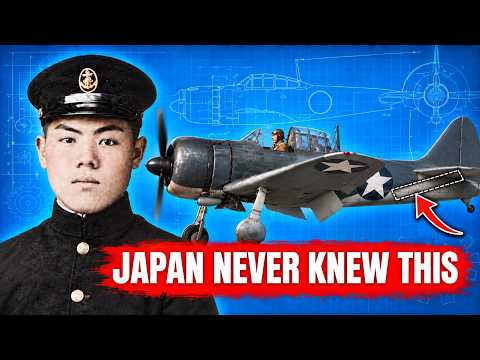
To understand the flaw, you first have to understand why the Zero was so feared. Climb with it and you lost. Turn with it and you lost. The Mitsubishi Zero was not a heavy fighter—loaded for battle, it weighed a little over 5,000 pounds, while the American fighters it met weighed 7,000 and up. The Japanese had bought that lightness at a brutal price: no armor plate behind the pilot, no bulletproof glass, no self-sealing fuel tanks. The designer, Jiro Horikoshi, had stripped the airplane of nearly everything that might save a pilot’s life to save weight. What he got in return was a fighter that could turn and climb like almost nothing else in the sky.
Armed with a pair of 20mm cannon and able to fly farther than anyone believed a fighter could—close to 2,000 miles—its range was, in 1941, witchcraft.
The first warning had come a year before the war. Clare Chennault, an American air adviser in China, sent Washington a detailed report on a new Japanese fighter that outturned and outclimbed everything the Allies owned. War Department analysts read it and called it nonsense, an aerodynamic impossibility, and filed it away. Then December came and the theory met the sky.
At Pearl Harbor, at Clark Field in the Philippines, over the Java Sea, Allied pilots who tried to fight the Zero on its own terms were cut down. The wreckage of a Zero shot down at Pearl Harbor told intelligence officers one useful thing: there was no armor, and the fuel tanks burned fast. Hit a Zero squarely, and it would often light up like a torch. But a dead airplane on the ground tells you nothing about how a live one flies—how quickly it rolls, where its controls go heavy at speed. Those were the questions getting men killed.
The worst of it came at Midway on the same June morning as the fight in the north. A Marine squadron put 25 fighters into the air against the Japanese carrier strike. Most were Brewster Buffalos, stubby and slow, and the Zeros tore them apart. 15 of the 25 never came home. Of the handful that limped back, only two could fly again. One survivor, Marine Captain Philip White, wrote a report so bitter it is still quoted today: “Any commander who ordered a pilot into that airplane against a Zero should count the man as dead before he ever left the ground.”
A Navy fighter pilot named William Leonard, who survived the war as a decorated ace, put the whole problem in a single phrase: “In those first desperate encounters, we were learning the folly of dogfighting with the Zero.”
That was the folly men kept dying to learn—a truth the Allies had no way yet to prove on paper. To prove it, they needed a Zero that could still fly, a whole one.
The Zero they needed was already in the air over Dutch Harbor. Its pilot was a 19-year-old named Tadayoshi Koga, slight, the son of a carpenter from rural Japan. He flew from the light carrier Ryujo, part of a force sent north to raid the Aleutians while the main Japanese fleet went for Midway.
On the morning of June 4th, Koga lifted off into gray Alaskan weather as the wingman in a three-plane section and went hunting for targets. What his section did next is not a clean story, and it should not be told as one. Before they reached the harbor, the Japanese fighters are believed to have caught an American patrol flying boat, a Catalina, down on the water and gunned its crew as the men tried to swim clear. All of them died. This was the war these pilots were fighting. Koga was a teenager a long way from home, and his section very likely helped kill helpless men in the sea. Both things are true.
Then they went in over the base and strafed—oil tanks, a warehouse, a hospital, a beached freighter. The defenders, National Guardsmen from Arkansas on the anti-aircraft guns, had hauled their weapons down off the hills overnight, and now they threw everything they had into the sky. Somewhere in that curtain of fire, a single bullet, no bigger than a man’s thumb, found Koga’s Zero. It punched through the belly of the airplane and cut the oil return line running back from the engine. It was a tiny wound, and it was fatal to the airplane. Oil began streaming out behind him in a thin, dark ribbon, and within minutes, the engine would seize.
Koga had a plan for exactly this. The Japanese had marked a flat green island called Akutan about 25 miles east as an emergency field, with a submarine standing offshore to recover any pilot who had to come down. Koga throttled back to nurse the dying engine and turned for the island. From the air, the ground on Akutan looked firm and grassy. It was not. It was muskeg—a thin skin of grass over soft, waterlogged bog. On the approach, Koga’s wingman saw water glinting through the grass and understood too late that this was no place to land on wheels. But Koga had already lowered his landing gear for a normal touchdown.
The main wheels struck the bog, dug in hard, and the Zero flipped onto its back, throwing up a wave of water and black mud. The 19-year-old was killed in the crash. The submarine searched offshore until an American destroyer drove it away. And the two pilots circling overhead could not bring themselves to do what their orders demanded—to put a burst of fire into their friend’s airplane and burn it—because they could not be certain he was dead. So they turned south and left it there. Right side up, it would have been a grave. Upside down in the mud, it had just become the most valuable airplane in the Pacific.
For five weeks, the Zero lay in the bog, and nobody knew it was there. Then in early July, an American patrol plane got lost. A Catalina flown by a Navy lieutenant named William Thies was coming home from a long overnight patrol in foul weather, off course and searching for any landmark. When Thies finally fixed his position, his route back took him straight over Akutan, an island usually avoided for its fog and vicious downdrafts. One of his men looked down, saw the shape of an airplane lying in the grass and the red circles of the rising sun on its wings.
Thies talked his superiors into letting him lead a party back. What they found when they reached it stopped them cold. The airplane was almost whole. The flip had bent the tips of the propeller, crumpled the canopy, and killed the pilot. But the airframe, the engine, the guns, the instruments were all intact. Here was the thing the Navy had been losing men for, lying in an Alaskan swamp.
They buried Koga in a shallow grave on a nearby knoll. Then they went to work on his airplane.
Getting it out was its own small war. The bog swallowed everything. The lifting tripod they rigged sank three and four feet into the mud. It took three separate salvage parties across several days to free the Zero, drag it out upside down on a makeshift sled, and haul it to a barge.
At Dutch Harbor, a crane finally turned it right side up, and the ground crews washed the mud of Akutan out of every seam. Then they crated it whole and loaded it aboard a transport bound for Seattle. And from there, it went south by barge to the Naval Air Station at North Island in San Diego.
What happened next happened behind a fence. The Navy built a tall stockade inside a hangar and posted Marine guards around it day and night. Mechanics straightened the fin and the rudder and the wing tips, rebuilt the landing gear that had sheared away, and carefully reshaped the bent propeller blades until they could bite the air again. They painted American stars over the rising sun.
By late September, Koga’s Zero was ready to fly again, this time under a new flag. Here was the thing the Allies had been dying to get their hands on for six months, rebuilt and ready. And the secret it had been keeping was still locked inside it. All it needed was a man willing to find out.
His name was Eddie Sanders. He spent a week just studying the Zero on the ground, learning its switches and its systems before he ever started the engine. On the 20th of September, 1942, he took Koga’s airplane up into the California sky. Over the next three and a half weeks, he would fly it 24 times, and he would pull from it the answers that so many Allied pilots—and the men of Fighting 221—had died without ever learning.
On the ground, the Zero was a lesson in Japanese cleverness. Inspection panels opened at the push of a finger on a small black dot. Everything was light, simple, elegant. In the air, it was everything the Allies had feared. At low speed, it could turn inside anything the Americans owned and climb away from them as if the ground had let go. Fight it the way it wanted to be fought—slow and turning—and you would lose, exactly as advertised.
But Sanders was not looking for what the Zero did well. He was looking for what it did badly. And on that very first flight, two flaws rose up out of the airplane and showed themselves.
The first was in the engine. The Zero ran on a float-type carburetor—the same basic idea as the float in a toilet tank, a device that depends on gravity holding fuel in a bowl. Shove the nose down hard into a dive the way a frightened pilot instinctively would, and for a moment, the airplane and everything in it goes weightless. Negative gravity. The fuel lifts away from where it is supposed to sit. The carburetor starves and the engine coughs and dies. For a few precious seconds in a dive, the most feared fighter in the Pacific had no power at all. Sanders wrote it down in four plain words: “Engine quits on pushovers.”
The second flaw was in the controls. At the gentle speeds of a dogfight, the Zero’s ailerons—the surfaces on the wings that roll the airplane onto its side—were light and quick. But as the speed climbed past 200 knots, they began to stiffen. By 250 knots, a pilot had to haul the stick with real force to roll the airplane at all. And it was always stiffer to the right than to the left. Sanders timed it. A roll to the right took close to a third again as long as the same roll the other way.
That was the whole secret. That was the flaw this story is built on. And it was real.
If this is the kind of history you came here for, take a second and subscribe—because knowing the flaw was only half the battle. What the Americans did with it comes next.
Now put the two together, which is exactly what the Americans did. If a Zero is behind you, do not climb and do not turn with it. Shove the nose down and dive. The dive opens the range fast, and the negative gravity of that push stalls the Zero’s engine so it cannot follow at once. Then, as speed builds, break to the right into the very move the Zero does worst.
Within weeks, that lesson was formal doctrine. Navy intelligence circulated Sanders’s findings to the fleet. The Army flew the captured Zero against its own fighters and wrote its own rules in December 1942: never dogfight the Zero, never fight it slow, and never follow a Zero up into a climb.
On April 1st, 1943, Marine pilot Kenneth Walsh found a lone Zero on his tail. He rolled into a diving half-loop, let his airspeed climb past 240 knots, and rolled hard right. Years later, Walsh said plainly that if he had rolled left the way instinct wanted, the Zero would have killed him. Instead, he lived—21 victories and the Medal of Honor.
So did one crashed Zero in an Alaskan bog doom Japan’s best pilots? The truth is quieter and more important. It took what pilots had been dying to learn by trial and error and turned it into cold, measured certainty—proven on the ground, before a green pilot ever needed it. It did not win the air war. It made the winning faster, and it spent fewer American lives getting there.
Koga’s Zero did not survive the war it helped turn. In February 1945, a Navy dive bomber ran into it on a runway at North Island, and what was left was scrapped. Tadayoshi Koga never went home. He was 19.
Now go back to that picture we left over Dutch Harbor. Cape, a Zero on his tail, hauling back on the stick and climbing—the wrong answer. The Zero climbed with him and shot him down. The thing that could have saved him was still locked inside an airplane lying in an Alaskan bog. A few miles away, a 19-year-old was carrying that answer to his own death and never knew it. It cost two young men their lives on the same gray morning to begin teaching it to everyone who came after.
If you could send one sentence back through time to John Cape in that cockpit, what would you tell him?
Report this article
Select a reason for reporting:






