On February 2, 1943, the frozen hell of Stalingrad finally fell silent. In the rubble-strewn ruins, 91,000 German soldiers—exhausted, starving, and frostbitten—laid down their arms. Among them was Friedrich Conrad Winkler, a 34-year-old decorated veteran. He had survived the cauldron of the Eastern Front, but his ordeal was only beginning. Within a week, he would be dead, one of the first of tens of thousands to perish in Soviet captivity.
The surrender at Stalingrad was supposed to be the end of their suffering. Instead, it marked the start of a slow, brutal vanishing. These men, who had once marched proudly for the Führer, would become ghosts—swallowed by the vast, unforgiving Soviet prison system. Their families back home would wait in agonizing uncertainty, never knowing whether their sons, fathers, and brothers were alive or dead.
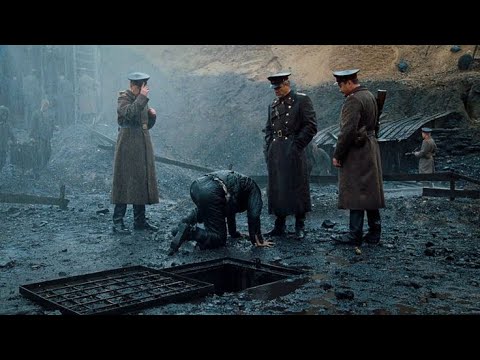
The roots of this tragedy were sown long before the first shot was fired. When Hitler launched Operation Barbarossa in June 1941, he declared a war of annihilation. “All Slavic peoples had to be eliminated,” he ordered, and his soldiers were told to liquidate anyone deemed a Bolshevik or accomplice. Villages were razed, towns destroyed, and millions of civilians murdered. This wasn’t war—it was extermination.
For the Soviet people, the invasion was a wound that would never heal. Over 27 million would die before the war ended. Every Russian soldier who marched westward had lost someone—a mother, a brother, a child. When the Red Army finally turned the tide, their fury was unleashed. “They were not committing war crimes,” one Soviet officer later recalled. “They were erasing the fascist pigs from the land.”
By the time the Sixth Army surrendered, the Soviets had no intention of following the Geneva Convention. Prisoners were marched for days through the frozen steppe, temperatures plunging to 50 degrees below zero. Those who fell behind were shot. Those who survived the march were packed into unheated boxcars, 100 men per car, with no food and no water. “Through the cracks in the wooden walls, we could see guards filling the locomotive’s boilers with water while inside we were dying of thirst,” recalled Eric Burkhart, a young soldier who had fought in the ruins of Stalingrad.
When the train finally reached Uzbekistan after 22 days, only six men remained alive in Burkhart’s wagon. Ninety-four had perished. In some cars, there were no survivors at all. The dead were piled in the center, their bodies decomposing as the survivors grew too weak to move them. The living crawled to the pile to die.
For those who made it to the camps, the horror continued. Typhus, dysentery, and malaria spread unchecked. Food was scarce—a thin cabbage broth, a few grams of bread. “Men became living skeletons with hollow cheeks and glassy eyes,” one prisoner remembered. “Their skin was gray, their uniforms rags. They had been imprisoned for less than a year.”
Of the 91,000 taken at Stalingrad, only 5,000 would ever see Germany again. The rest vanished—their bodies never recovered, their graves unmarked. Their families were left with nothing but silence.
But Stalingrad was just one chapter in a much larger story. Across the Eastern Front, millions of German soldiers fell into Soviet hands. And for many, the nightmare was only beginning.
The Soviet camp system was vast and merciless. By the spring of 1943, the Gulag administration had processed hundreds of thousands of prisoners, sorting them into categories that often determined life or death. Officers were separated from enlisted men, the healthy from the dying. “They made us strip naked in the snow,” one survivor recalled. “Those with SS tattoos were pulled aside. We never saw them again.”
Friedrich Winkler, had he lived, would have recognized the pattern. The men around him were dying not from bullets but from neglect—a deliberate, bureaucratic cruelty that required no executioners. The Soviet authorities simply looked the other way as hunger, cold, and disease did their work.
In the camps near the Volga, the mortality rate in early 1943 was staggering. Between February and May, of the 27,000 inmates in one collection camp, half were dead. The guards kept no records of names. “They were not violating international treaties,” a Soviet official later explained. “They were barely doing a service to the motherland.”
But not all prisoners were left to rot. The Red Army needed intelligence, and some captives possessed knowledge worth preserving. Officers with technical expertise or political value were pulled from the general population and given marginally better rations. The rest remained expendable.
By the summer of 1943, as the tide of war turned at Kursk, the number of German prisoners swelled. The camps could not absorb them. New facilities were hastily constructed—little more than open fields enclosed by barbed wire. Prisoners slept in holes dug into the earth, covered with scraps of canvas. “We were told to work to repay the damage done to the USSR,” recalled Gottlob Bidermann, an officer captured in 1945. “But there was no work that could repay what had been done.”
The labor battalions became the backbone of Soviet reconstruction. Prisoners rebuilt roads, factories, and entire cities. They mined uranium in Czechoslovakia, cut timber in Siberia, and laid railway tracks across the Urals. Rations were calculated to sustain life but not strength—600 grams of bread, thin soup, a few grams of sugar. Men collapsed daily, and those who could not rise were left where they fell.
In the Romanian camps, the hatred was even more personal. Romanian guards, who had been forced to fight alongside the Germans at Stalingrad, took revenge whenever they could. “When the convoy crossed the Bug River, the Romanians drowned the German officers in the water,” one witness testified. “They held their heads under until they stopped struggling.”
For the families back home, the silence was unbearable. Letters sent to the Soviet Union went unanswered. The Red Cross was denied access. In Berlin, the Gestapo compiled lists of the missing, but the files grew thick with names that would never be resolved. A mother in Saxony wrote to the authorities every month for three years, asking about her son. The final reply, in 1946, stated simply: “No information available. Presumed deceased.”
By 1944, the Red Army had captured over 700,000 Axis troops. The camps were overwhelmed. Prisoners were packed into whatever space could be found—abandoned factories, church basements, open fields. Disease swept through the ranks. Typhus claimed thousands each week. “We stopped counting the dead,” a camp doctor recalled. “We simply piled them outside the gate for the burial details.”
And still, the trains kept coming. The death trains, as the prisoners called them, rolled eastward through the endless steppe. Each journey lasted weeks. Each journey left a trail of frozen bodies along the tracks.
Among the prisoners who survived the journey east was a young lieutenant named Gottlob Bidermann. Captured in the Courland Pocket in May 1945, he had already witnessed the collapse of the Third Reich. But nothing prepared him for the reception that awaited. “They ripped the decorations from our uniforms and tore the watches from our wrists,” he wrote in his memoirs. “Then they made us stand in line with our arms raised for hours, while they stripped the rings from our fingers.”
Bidermann’s division had surrendered en masse, and the men were marched for three days without food. “We resorted to eating grass and tree bark,” he recalled. “When they finally gave us something, it was only thin cabbage broth.” By the time they reached a holding camp in Latvia, many of his comrades were already dead.
The camp was little more than an open field surrounded by barbed wire. There were no barracks, no latrines, no medical care. Prisoners dug holes in the ground for shelter. Rain turned the earth to mud, and the mud froze at night. “Men died in their sleep,” Bidermann wrote. “We would wake to find them stiff beside us.”
It was here that the prisoners received a visit from the National Committee for a Free Germany—a group of German defectors and communists who had fled to the Soviet Union before the war. They arrived with promises of better treatment and offers to deliver letters home. “They told us we had been betrayed by Hitler,” Bidermann remembered. “They said we could redeem ourselves by embracing communism.”
Many prisoners were skeptical, but some were desperate enough to believe. They wrote letters to their families, handed them to the committee representatives, and waited for replies that never came. “The letters were a ruse,” Bidermann later learned. “The Soviets used them to gather information. None ever reached Germany.”
The guards also conducted regular inspections for SS tattoos. Those who bore the telltale mark under their arms were taken away and never seen again. “We heard rumors that they were shot in the woods outside the camp,” Bidermann wrote. “No one ever confirmed it, but no one ever returned.”
In mid-July, the camp was broken up, and the prisoners were dispersed to labor camps across the Soviet Union. Bidermann was sent to Siberia, where he encountered Germans captured a year earlier. “They were living skeletons,” he recalled. “Their skulls were close to the bone, their cheeks hollow, their eyes lifeless. Their uniforms were rags, and they walked in wooden clogs.”
These men had been in captivity for less than a year. Bidermann realized with horror that their fate would soon be his own. “They were a cruel reminder that there was no hope for our future,” he wrote.
On November 7, 1945, the guards assembled the prisoners and made an announcement. “The Wehrmacht has ceased to exist,” they were told. “Ranks are abolished. You will now work to repay the damage you have done to the USSR.” The men were given new identities—numbers sewn onto their uniforms. They were no longer soldiers, but slave laborers.
For Bidermann, the next three years were a blur of hunger, cold, and exhaustion. He worked in mines, forests, and factories. He was transferred from Latvia to Siberia and finally to a labor camp near Gagra in the Caucasus. “We worked twelve hours a day, every day,” he recalled. “The food was barely enough to keep us alive. Men collapsed and were left where they fell.”
One day in 1948, Bidermann and fifty of his comrades were rounded up and placed in a boxcar. They had no idea where they were going. “At first we thought we were being transferred again,” he wrote. “But then we noticed that the train was heading west.”
Hope surged through the prisoners. For days, they watched the landscape change through the cracks in the boxcar walls. The forests of Siberia gave way to fields, then to towns. “We began to believe we were going home,” Bidermann remembered.
After a week, the train stopped at Frankfurt an der Oder. The doors were opened, and the prisoners were paraded before German and Allied authorities. “We were told to place all our possessions at our feet,” Bidermann wrote. “They examined every item carefully.”
Bidermann passed the inspection. But a senior lieutenant standing next to him carried a sealed wooden box. When the inspecting officer broke it open, he found an Iron Cross inside. The lieutenant was taken away and never seen again. “He did not return to Germany until many years later,” Bidermann wrote.
For those who did return, the homecoming was rarely joyous. Many found their families gone, their homes in ruins, their names erased from memory. “I knocked on my mother’s door, and she did not recognize me,” one survivor recalled. “I weighed forty-four kilos. She thought I was a beggar.”
Eric Burkhart, who had survived the death train to Uzbekistan, returned to Saxony in 1945. He was warned never to speak of what he had endured. In the Soviet zone, the suffering of German prisoners was a forbidden subject. “We were told to forget,” he said. “But how can you forget ninety-four men dying in a boxcar?”
It was not until German reunification in 1990 that Burkhart finally spoke openly. He met with other veterans of Stalingrad—including former Soviet soldiers. “In our youth we were mortal enemies,” he said. “Today we meet as friends.”
The numbers remain staggering. Of the 3.3 million German soldiers captured by the Soviet Union, 1.3 million never returned. Their bodies were never recovered. Their graves were never marked. Their families were left with nothing but silence.
Friedrich Conrad Winkler, who died within a week of capture, was one of the first. He would not be the last. The frozen steppe swallowed them all—the decorated veterans, the young conscripts, the officers who had believed in the Führer until the very end.
What do you think—were these deaths a just retribution for the atrocities committed on the Eastern Front, or a tragedy that should never have been allowed to happen?
Report this article
Select a reason for reporting:






