What happens when a movie star becomes so powerful that nobody on the set dares to tell her no? Golden Age Hollywood sold elegance, charm, and perfect smiles. But behind the cameras, some of its biggest women were feared for icy put-downs, explosive arguments, impossible demands, and ruthless feuds. Not every story was fair, and some difficult reputations were exaggerated. But the documented clashes are astonishing.
Bette Davis was serious about acting, and that intensity could make a set feel like a battlefield. Directors, co-stars, and studio executives described her as demanding, intimidating, and unwilling to accept decisions she thought weakened a scene. William Wyler later said she demanded a great deal from everyone, including herself. Olivia de Havilland admitted Davis nearly scared her to death when they first worked together.
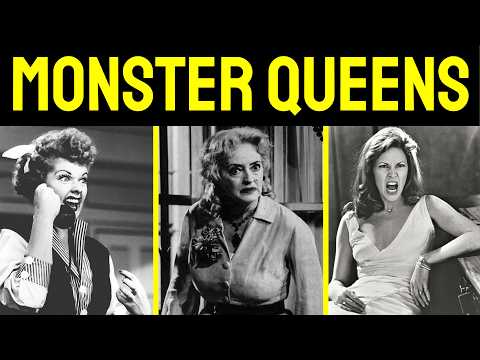
The most famous friction came from Davis’s long feud with Joan Crawford, but Crawford was hardly her only target. Davis criticized colleagues she considered vain, lazy, or untalented, and she could turn an interview into a verbal firing squad. Yet, the picture is more complicated. People who earned her respect often found her loyal, funny, and professional. With Bette, the rule was simple: if she thought you were wasting her time, she rarely hid it.
Behind Joan Crawford’s perfectly shaped eyebrows and immaculate wardrobe was one of Hollywood’s most controlled personalities. Crawford treated stardom like a military operation. Publicity had to be handled correctly, costumes had to flatter her, and professionalism mattered enormously. People who pleased her often received gifts, notes, and generous treatment. People who crossed her could discover how cold that famous face could become.
Her rivalry with Bette Davis became the industry’s favorite blood sport, especially during Whatever Happened to Baby Jane? Crew members remembered tension, strategic digs, and two legends watching each other closely. Crawford could also be extremely sensitive about lighting, appearance, billing, and how studios treated her after years of depending on her box office power. That need for control helped create the image of an actress who expected everyone else to orbit around her.
Still, accounts from the Baby Jane set suggest she often wanted a calm workplace. The diva reputation was real, but so was the discipline underneath it. If stories like these are your kind of classic Hollywood, subscribe now before we go deeper and share the video with someone who still thinks the golden age was always glamorous behind the scenes.
The soft voice and vulnerable screen image made Marilyn Monroe seem almost fragile, but on certain productions, her working habits could push crews to the edge. The most famous example is Some Like It Hot. Billy Wilder and the cast dealt with delays, forgotten lines, repeated takes, and constant uncertainty about whether a simple scene would move forward. One short line reportedly required dozens of attempts, turning seconds of screen time into an exhausting production problem.
Yet calling Monroe cruel would miss the point. The stories are less about her insulting everyone and more about the disruptions surrounding insecurity, dependence on acting coaches, health problems, and fear of getting a performance wrong. Wilder could be furious with her and still admit that the result on film was magical. That contradiction followed Monroe throughout her career. To audiences, she looked effortless. To people waiting under hot lights while another take was prepared, the effort could feel endless. Her diva legend grew from that gap between the image and the work.
Nothing about Marlene Dietrich’s image was accidental, and anyone who forgot that could quickly be reminded. She understood lighting, camera angles, costumes, makeup, and presentation at a level that sometimes made directors feel another director had entered the set. On Song of Songs, she demanded the full-length mirror she was accustomed to using and took a strong hand in arranging how she would be photographed. Stanley Kramer later remembered her giving instructions about lighting and camera placement on Judgment at Nuremberg.
That level of control could look outrageous, especially when actresses were expected to appear, hit their marks, and let male technicians make decisions. Dietrich did not play that game. Alfred Hitchcock joked that she seemed to be her own cameraman, designer, editor, hairdresser, composer, producer, and director. Co-workers could find the behavior exhausting, but there was a reason it worked. She knew how to manufacture Marlene Dietrich. The glamorous mystery on screen was built through relentless control offscreen.
Some stars develop diva reputations through perfectionism. Tallulah Bankhead did it through sheer force of personality. She could be hilarious, generous, outrageous, impatient, and exhausting within the same afternoon. During the Broadway run of The Skin of Our Teeth, stories spread of her resisting direction, leaving rehearsals, stealing focus, and dividing the company. Her dislike of conventional rehearsal became almost legendary.
Years later, when she guest-starred with Lucille Ball, the collision of two powerful personalities produced exactly the tension everyone expected. Bankhead reportedly objected when Ball tried to give her line readings and made it clear she would not be handled like an ordinary guest performer. The remarkable part is that once cameras rolled, she could deliver. That was the maddening pattern: chaos around the work, followed by a performance strong enough to make people forgive the chaos.
Bankhead never wanted to be easy. She wanted to be unforgettable, and anyone working around her had to survive the weather system that came with the star.
By the time Elizabeth Taylor reached the peak of her fame, she was not simply an actress. She was a financial event. Productions could be reshaped around her schedule, contracts, health, and fascination with her private life. Cleopatra became the ultimate symbol of that power. Delays and spiraling costs turned the film into a studio nightmare. And because Taylor was central to sequences, any interruption involving her could stop an enormous machine.
It would be unfair to blame the disaster on Taylor alone. The production suffered from unfinished scripts, changing directors, logistical problems, and genuine medical emergencies. Still, the public saw a star receiving an unprecedented salary while the studio burned money, and the diva label became impossible to separate from her name. Taylor also knew her value and negotiated accordingly. In old Hollywood, that confidence could be interpreted as arrogance.
She was capable of warmth and loyalty, but she moved through the industry knowing that entire companies were making fortunes from her face. That changed the balance of power.
Few actresses had less interest in pretending to be agreeable than Katharine Hepburn. She argued with directors, challenged scripts, ignored fashion rules, rejected publicity rituals, and spoke with a bluntness that could make executives sweat. During The Iron Petticoat, stories of professional tension became part of the production’s legend, especially as Hepburn and Bob Hope pushed different ideas about the film.
But Hepburn is a perfect example of why “difficult” can be a slippery word. People who watched her work also described professionalism, early arrivals, fierce preparation, and genuine camaraderie with crews. On other sets, she joked with grips, teased technicians, and behaved more like one of the workers than distant royalty. What frightened Hollywood was that she did not automatically defer to authority. If she believed the material was wrong, she said so. If she disliked a decision, she argued. To some colleagues, that was exhausting. To others, it was simply the behavior of a star who knew her craft and refused to act grateful for having opinions.
A Judy Garland production could inspire devotion and dread at the same time. At her best, she was one of the most instinctive performers Hollywood ever produced. During troubled periods, however, lateness, missed work, exhaustion, and uncertainty could throw schedules into confusion. Studios had spent years controlling her sleep, weight, work hours, and medication, and the damage from that system followed her into adulthood.
That history matters because the old “temperamental diva” label often erased what had happened to her. Directors and producers sometimes feared she would be unreliable. Yet, there were productions where she proved cooperative. Stanley Kramer knew her reputation when he hired her for Judgment at Nuremberg, but recalled that she arrived on time, worked professionally, and caused no trouble. Garland could lash out when overwhelmed, and colleagues sometimes paid the price for the chaos around her. Still, the fuller story is darker than simple bad manners. Hollywood helped create the conditions that made her difficult, then used those difficulties as evidence against her.
Control was the real secret behind Mae West’s swagger. She did not simply show up and deliver dialogue written by someone else. She built her persona word by word, by gesture, and by double meaning. Studio executives and censors tried to contain her, while West pushed back over scripts, costumes, jokes, and her screen image. That confidence could make collaboration difficult because she rarely treated her character as one part of a film. The movie had to sound like Mae West, move like Mae West, and sell Mae West.
Directors who expected obedience were dealing with the wrong woman. She had created a successful stage persona before Hollywood came calling. So, she did not behave like a grateful newcomer. She behaved like a brand owner protecting valuable property. Co-stars could find themselves operating inside her rhythm rather than their own. The attitude sometimes looked like vanity, but it was also business. West understood that if the studio controlled her image, the studio could eventually replace her.
The danger around Ava Gardner was never that she lacked charm. The danger was that charm could turn into fire without much warning. Her personal life, drinking, turbulent relationships, and impatience with studio control helped create a reputation for unpredictability. She hated phoniness, hated being managed, and could react strongly when she thought a production was disorganized or dishonest.
During 55 Days at Peking, the production was plagued by script problems and changes behind the camera, and Gardner openly disliked the disorder. Yet co-workers also remembered her warmth, humor, and willingness to work when she respected the people around her. If someone received the cold side of Ava, it usually meant she had decided they were wasting her time or trying to control her.
Silence was part of the Garbo mystique, but behind the scenes, it could feel less romantic. She disliked crowds, interviews, publicity rituals, visitors on the set, and almost every piece of machinery surrounding fame. When she wanted a closed set, people were removed. When she did not want to attend an event, even the Academy Awards could not tempt her. Sometimes the most intimidating diva behavior was simply making an entire industry reorganize itself around one woman’s desire to be left alone.
Few actresses could turn competition into theater as efficiently as Miriam Hopkins. On The Mating Season, director Mitchell Leisen remembered Hopkins behaving as though a supporting role should still revolve around her. She offered ideas, expanded moments, and even made suggestions about scenes that were not hers. Leisen reportedly handled the situation with almost comic patience: he allowed her to try what she wanted, then simply planned not to use material that pulled attention away from the actual leads.
Long before Norma Desmond declared that she was still big and the pictures had gotten small, Gloria Swanson had already lived through the era when a star could function like a private corporation. Her clashes with Erich von Stroheim on Queen Kelly became part of Hollywood history, but Swanson’s decision to stop the production was also a producer protecting her investment. In a system built around powerful men, Swanson insisted on being one of the people with the power.
Beauty made people underestimate how forceful Vivien Leigh could be. She was exacting about her work, intensely competitive, and emotionally volatile during periods when her health was unstable. Accounts from Laurence Olivier and others describe episodes of explosive behavior followed by embarrassment and remorse. Those periods should not be reduced to diva tantrums. Her medical struggles were real, and they affected both her and the people trying to work beside her.
A camera could not simply photograph Claudette Colbert any way it pleased. She knew which side of her face she preferred, understood exactly how she wanted to be lit, and was famous for protecting the image audiences expected. Her diva reputation was built less on cruelty than on a refusal to let convenience decide how she would appear before millions of people.
Behind Joan Fontaine’s delicate screen persona was a woman with enough competitive steel to sustain one of Hollywood’s longest family feuds. During Rebecca, Alfred Hitchcock deliberately intensified her insecurity, telling her that people on the set disliked her in order to deepen the character’s nervousness. Was she aloof, or was she surviving a set designed to make her feel isolated? When Fontaine disliked someone, she was not known for pretending otherwise, and Hollywood remembered every frost-covered sentence.
Being married to MGM production chief Irving Thalberg guaranteed that every success Norma Shearer achieved would be questioned by somebody. During one famous moment, Joan Crawford’s loud knitting during a close-up disrupted Shearer’s concentration. After Crawford ignored requests to stop, Shearer asked director George Cukor to send her home. Two stars, one close-up, and a pair of knitting needles functioning like weapons.
Every elegant turn Ginger Rogers made beside Fred Astaire concealed hours of argument, rehearsal, pain, and negotiation. The famous feather dress from Top Hat shed feathers during rehearsal and irritated Astaire and the crew who wanted it changed. Rogers held her ground because she believed the gown gave the number the movement it needed. She occasionally made the set tense, but she was usually fighting for something specific: a costume, a shot, a credit, or a piece of ownership over work that required just as much from her body as it did from his.
Comedy looked loose when Lucille Ball performed it, but the process behind that looseness could be brutally precise. Once she became one of television’s most powerful producers, she expected marks to be hit, lines to be learned, and timing to be exact. The same woman who scared a crew member could become someone else’s most important mentor.
Intensity was Susan Hayward’s professional weapon, and it did not always switch off when the director called cut. She came from a working-class background, fought her way through rejection, and treated the career as serious labor rather than a permanent cocktail party. Hayward did not need everyone to like her. She needed the camera to believe her.
No one ever accused Shelley Winters of being shy about an opinion. She spoke loudly, argued enthusiastically, and could turn a disagreement into entertainment, even when the people around her were not enjoying the show. Still, the aggression had another side. Winters could be generous to younger actors, politically committed, and willing to make herself physically unglamorous for a role long before that became awards-season strategy. She wanted respect more than prettiness.
Some stars tried to hide their ego. Zsa Zsa Gabor practically put rhinestones around hers and carried it into every room. She did not merely survive the diva label. She monetized it. If people called her vain, she gave them a bigger hat. If they called her extravagant, she talked about another diamond.
Few actresses announced stardom as confidently as Maria Montez. She made spectacular entrances, wore dramatic clothes, cultivated publicity, and behaved like a star because she wanted the industry to treat her like one. What makes her story especially amusing is that she was self-aware enough to joke about the whole performance. Montez treated diva behavior as a publicity language, and she spoke it fluently.
Before Garbo, Dietrich, or Swanson reached their full mythic status, Pola Negri had already shown Hollywood how a continental diva could dominate publicity. She arrived with European prestige, glamorous clothes, dramatic gestures, and an instinct for making every public appearance feel like an event. She could be theatrical because theatricality was part of what audiences bought.
Long before the phrase diva behavior became common, Mae Murray seemed to be inventing the manual. Success encouraged her to demand control over costumes, scripts, co-stars, and production decisions. The danger came when that confidence stopped matching her market power. Louis B. Mayer reportedly warned her against breaking with MGM, but Murray left anyway, convinced she could manage her career on her own terms. The decision contributed to a painful decline.
Rebellion was not a phase for Louise Brooks. It was practically her operating system. The most famous career decision came when she left Paramount and later refused to return for sound retakes on The Canary Murder Case. She simply refused the social bargain Hollywood preferred: take the money, smile for publicity, flatter the powerful, and keep quiet afterward. Brooks broke nearly every part of that agreement, which is exactly why her voice still feels modern.
A quiet disagreement was never the version people expected from Lupe Velez. Hollywood sold her as the Mexican Spitfire, and the publicity machine blurred her screen persona with stories of jealousy, shouting, and a temper that could erupt in public. It is important to remember how much racialized publicity shaped her reputation. Hollywood exaggerated the fiery Latina image because it sold tickets, then treated the resulting stereotype as evidence about the real woman.
Money, polish, and confidence surrounded Constance Bennett so completely that she could make other stars look underdressed simply by entering the studio. She promoted beauty products, invested, and treated celebrity as an asset. Rather than pretending the hierarchy did not exist, she became exceptionally good at playing it.
Audiences saw Ginger Rogers as quick, warm, and completely natural. Directors sometimes saw a nervous performer who could be incredibly hard to get in front of the camera. Her stage fright and insecurity were so intense that colleagues described elaborate efforts to reassure her before scenes. Her shyness was frequently mistaken for aloofness or temperament. She did not enjoy being a movie star in the social sense. She enjoyed acting when she could get past the terror surrounding the process.
Small in stature and quiet in many photographs, Margaret Sullavan could nevertheless terrify powerful men when she decided they were wrong. MGM executive Eddie Mannix reportedly said she was the only performer who could out-bully Louis B. Mayer. One famous story involved Henry Fonda: after she refused to contribute money to a fireworks collection and heard him complaining about it, Sullavan reportedly stood up, poured a pitcher of ice water over him, and calmly returned to her meal.
An air of seriousness followed Jennifer Jones through much of her career. She was protected and promoted by producer David O. Selznick, who shaped projects around her with an intensity that could make every production feel like a campaign for artistic greatness. Much of the supposed diva behavior around Jones came from the machinery surrounding her. Selznick’s obsession could make ordinary disagreements look like royal decrees.
Sweetness on screen did not mean endless sweetness between takes. Jeanette MacDonald was disciplined, image-conscious, and very specific about how she worked. On San Francisco, her routine irritated Clark Gable because he liked to begin shooting promptly while she needed more preparation time. Director W.S. Van Dyke accommodated her, leaving Gable to stew while the star finished getting ready. MacDonald rarely needed to raise the roof. A delay, a cool response, or a firm refusal could communicate the message just as clearly.
Beauty was both Hedy Lamarr’s greatest Hollywood asset and one of her deepest frustrations. Studios wanted the face. Lamarr wanted more control over the work. Eventually, she moved into producing, taking on projects that allowed her far more influence than the ordinary contract actress possessed. Imagine being repeatedly told that your face is your contribution while you are thinking about communications technology after hours. Sometimes the diva behavior was a protest against being treated like a beautifully lit object.
Tension arrived early on Wuthering Heights because Laurence Olivier had wanted Vivien Leigh opposite him, not Merle Oberon. During love scenes, Oberon complained about Olivier spitting while speaking with passion. Olivier reacted badly, and their exchanges escalated into open insults. The romance on screen was being created by two people who could barely tolerate each other between takes. Sometimes two actors could dislike each other enough to make every close-up crackle.
By the height of her fame, Gina Lollobrigida negotiated from a position most actors could only dream about. She later recalled contracts that gave her approval over scripts, directors, and co-stars along with a share of the profits. Hollywood liked beautiful women best when beauty made them compliant. Lollobrigida’s beauty gave her leverage, and she used it.
Nothing about Anna Magnani’s acting felt polished into harmlessness. She carried anger, humor, grief, and impatience onto the screen with such force that directors often seemed to be photographing weather. Magnani was difficult in the oldest artistic sense. She demanded that the work feel true. If a technician, producer, or co-star stood between her and that truth, diplomacy was rarely her first choice.
Few stars understood the machinery of glamour better than Lana Turner. Hair, wardrobe, entrances, photographers, romantic headlines, and studio publicity all fed the image, and Turner knew that the image had financial value. Turner represented the MGM ideal of manufactured glamour so perfectly that she eventually became powerful enough to influence the factory that had manufactured her.
Energy made Betty Hutton a star and sometimes made everyone around her exhausted. She performed at full volume, moved constantly, and threw herself into musical comedy with a physical intensity that could overwhelm quieter colleagues. Hutton had spent years being sold as unstoppable human dynamite. Eventually, the same industry that profited from that intensity decided it was too much trouble to manage.
A voice like Mercedes McCambridge’s could cut through a scene before she even raised it. That made her clash with Joan Crawford during Johnny Guitar almost inevitable. She was not content to be useful and invisible. If she believed somebody was taking her work, diminishing her role, or disrespecting her contribution, she was prepared to make the conflict impossible to ignore.
Mystery surrounded Gloria Grahame, even when she was standing under studio lights. She was talented, sensual, and famously preoccupied with altering the feature that bothered her most: her upper lip. Hollywood often wanted actresses to preserve a perfect face and then mock them for worrying about it too much. Grahame took that pressure to an extreme, and crews sometimes had to work around the consequences.
The water looked effortless when Esther Williams smiled through another MGM aquatic spectacle, but making those movies was physically punishing. One clash with director Richard Thorpe on Thriller of a Romance became especially memorable. After Williams realized she had made a mistake in a take just as the crew was leaving for lunch, Thorpe sarcastically called everyone back. Humiliated, she locked herself in her dressing room and refused to continue for the rest of the day. From Williams’s point of view, it was a boundary drawn after public disrespect.
Fire was part of Maureen O’Hara’s screen identity, and she carried some of that force into real life. During Ten Gentlemen from West Point, she walked off after a co-star became too physical during a scene. Her long relationship with director John Ford could be especially combative. She could be bossy, explosive, and brutally direct, but she was often reacting to an industry that respected toughness in men and called it temperament in women. She did not avoid conflict. She simply preferred a fight to surrender.
Volume was never Ethel Merman’s problem. Whether singing a Broadway anthem or expressing irritation, she had a voice designed to reach the back row without assistance. Her guest appearance on The Loretta Young Show produced a perfect clash of personalities. Merman’s casual profanity offended the famously proper Young, turning an ordinary rehearsal into a story people repeated for years. Merman did not whisper physically or emotionally. If she was pleased, you knew; if she was annoyed, the sound probably reached the parking lot.
One of the cleverest diva maneuvers in Golden Age Hollywood belonged to Rosalind Russell, and she later admitted it herself. During The Women, she believed her performance deserved above-the-title billing alongside Norma Shearer and Joan Crawford. The studio resisted, so Russell suddenly became sick after enough of the film had been completed that replacing her would be difficult. Eventually, Shearer agreed to share the prestige billing. Russell’s health improved with remarkable timing. It was manipulative, strategic, and extremely effective. In another industry, it might be called labor leverage. In Hollywood, it became evidence of diva nerve.
Kim Novak entered Hollywood as a studio-created beauty but resisted being treated like raw material. Vertigo produced the most famous example. Costume designer Edith Head showed her the gray suit and black shoes Alfred Hitchcock had chosen. Novak objected because the outfit felt restrictive and unlike her own instincts. She took the concerns directly to Hitchcock. Instead of a legendary screaming match, Novak later remembered a professional conversation in which the discomfort became useful to the character. Publicity later encouraged stories of a feud, helping transform independence into temperament.
That is a fitting place to end, because the diva label was often a weapon as much as a description. Novak could be opinionated, stubborn, and resistant to studio control, but treating everyone badly is another claim entirely. Sometimes Hollywood called a woman difficult because she delayed production. Sometimes because she insulted people, and sometimes because she simply said, ‘I don’t agree,’ when everyone expected her to smile.
Golden Age glamour was never as simple as the publicity photos. Some of these women truly frightened co-workers. Some fought vicious feuds, and others were called difficult because they demanded the same control powerful men already enjoyed. That is what makes the stories so fascinating. Which classic diva do you think deserves a deeper story, and whose reputation do you believe was the most unfairly exaggerated?
Report this article
Select a reason for reporting:






