September 1980. The world holds its breath as Iraqi tanks roll across the border into Iran. Saddam Hussein, the 42-year-old dictator of Iraq, is convinced that a single, decisive blow will cripple his neighbor. Iran is still reeling from the Islamic Revolution that toppled the Shah just a year earlier. Its military is in chaos, its economy in shambles, and its new leadership under Ayatollah Khomeini is fiercely anti-Western. Saddam sees an opportunity to assert Iraq’s dominance, reclaim disputed territory, and perhaps even spark an uprising among Iran’s Arab minority. He expects victory within weeks.
Instead, the conflict will drag on for eight brutal years, becoming the last total war of the 20th century. It will cost hundreds of thousands of lives, threaten global oil markets, and draw the United States into the Persian Gulf for decades to come. This is the story of how a regional rivalry spiraled into a devastating war that reshaped the Middle East.
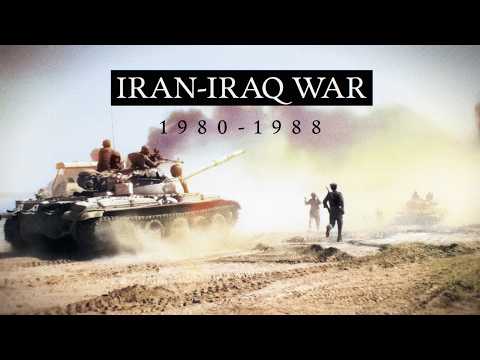
The roots of the conflict lie in the seismic shift of the Iranian Revolution. In 1979, the overthrow of the Shah—a staunch US ally—sent shockwaves through the region. Iran was suddenly controlled by Islamist forces vehemently opposed to American influence. For Saddam, this was both a threat and an opportunity. His own regime, though secular and nationalist, was wary of the revolutionary fervor spreading to Iraq’s Shia majority. “It is more useful to hit the Iranians now because they are weak,” Saddam reportedly told his generals. “If we leave them until they become strong, they will overrun us.”
Iraq’s military was larger and better equipped, with modern Soviet weapons and a battle-hardened officer corps. Iran, by contrast, had purged many of its top officers after the revolution, leaving its army disorganized. Saddam also counted on support from Arab minorities in Iran’s oil-rich Khuzestan province, whom he believed would welcome Iraqi troops as liberators. But he miscalculated.
The invasion began on September 22, 1980, with Iraqi airstrikes on Iranian airfields. Despite some initial gains, the Iraqis were soon bogged down. Iranian resistance was fierce. “Every day and every night we stay on board,” recalled a stranded cargo ship crew in Khorramshahr, a key port city. “Invading that pump will kill us.” The Iranians fought street by street, and the local Arab population did not rise up. Instead, they largely fled or joined the defense. By November, Iraq had captured Khorramshahr, but at a heavy cost. The city was reduced to rubble.
Iran, meanwhile, was galvanized. The external threat united many factions, even those opposed to Khomeini. “We should neither submit to imposed peace nor to imposed arbitration,” Khomeini declared. “We should continue the war until victory, and it is near.” The Revolutionary Guard, or Pasdaran, mobilized volunteers, including young boys, to the front. Their sacrifice would become a defining feature of the war.
By 1982, Iran had turned the tide. Its forces recaptured Khorramshahr and pushed the Iraqis back to the pre-war border. Saddam, stunned, offered a ceasefire, but Iran refused. “The Ba’ath Party regime is monstrous and perverted,” Khomeini thundered. “A veritable little Satan.” The war would continue, and Iran would take the fight into Iraq itself.
In July 1982, Iranian forces crossed into southern Iraq, aiming for the city of Basra, the heart of Iraq’s oil industry. They hoped the Shia majority would rise against Saddam. But the Iraqi defense held, and the local Shia did not revolt. Iraqi troops, fighting on home soil, used their superior firepower and chemical weapons to halt the advance. “We were desperate to make sure that Iraq did not lose,” a US official later admitted, explaining the international silence on Iraq’s use of mustard gas.
By 1983, the war had settled into a bloody stalemate. Iran launched wave after wave of human-wave attacks, often with young Basiji volunteers clearing minefields with their bodies. “I saw the first corpse and I was shocked,” recalled 13-year-old Zahed Haftlang. “Kids my age who’d lost their hands, their legs… all I could do was hold their hands, cry, and pray for them until they died.” Iraq, meanwhile, dug in, using its air superiority and artillery to grind down the Iranian assaults.
Both sides sought to internationalize the conflict. Iraq declared the Persian Gulf a war zone, attacking tankers carrying Iranian oil. Iran threatened to close the Strait of Hormuz. The United States, worried about oil supplies, sent warships to the Gulf. “It’s a pity they both can’t lose,” Henry Kissinger allegedly quipped. Washington quietly tilted toward Iraq, providing loans, intelligence, and dual-use materials, while also secretly selling arms to Iran in the Iran-Contra affair.
The war of the cities brought the conflict to civilian populations. Iraqi missiles and airstrikes pounded Tehran, Isfahan, and other Iranian cities, killing thousands. Iran retaliated with its own missile strikes on Baghdad and Basra. “We would watch a lot of propaganda like we are the best country in the world,” remembered Iranian author Marjane Satrapi. “My childhood friends would say the war is great and how brave the people are.” But the reality was far grimmer, as hospitals overflowed and families fled the bombings.
In 1986, Iran captured the Faw Peninsula, threatening Iraq’s access to the sea. It was their biggest success since 1982. But follow-up attacks gained little ground. Iraq, now led by a more cautious Saddam, expanded its elite Republican Guard and launched counterattacks. The war had become a meat grinder, with neither side able to deliver a decisive blow.
International pressure mounted. The UN Security Council passed Resolution 598 in July 1987, calling for a ceasefire and withdrawal. Iraq accepted, but Iran refused, demanding that Iraq be declared the aggressor. “We will continue the war until victory,” Khomeini insisted. But Iran’s economy was collapsing, with 50% inflation, and its military was starved of spare parts for its American-made equipment.
In 1988, Iraq launched its final offensives, recapturing the Faw Peninsula and inflicting heavy losses. Iran’s air defenses, though improved, could not stop Iraqi jets and missiles. The war of the cities intensified, with Iraq firing hundreds of Scud missiles at Iranian cities. “Thousands of Iranians fled to the countryside in fear of chemical attacks,” one observer noted. The tide had turned decisively.
By the spring of 1988, the war had reached its breaking point. Iraq, despite its oil wealth, was bankrupt. Iran, despite its revolutionary fervor, was exhausted. Both sides had mobilized millions of men, and both had seen their economies crippled. The international community, led by the United Nations, pushed harder for a ceasefire. But Khomeini, who had once declared that Iran would fight until victory, was now facing a grim reality. “Drinking poison” was how he later described the decision to accept the ceasefire. On July 20, 1988, Iran formally accepted UN Resolution 598, and on August 20, the fighting stopped.
The silence that followed was deafening. For eight years, the roar of artillery and the scream of jets had been the soundtrack of life for millions. Now, there was only the wind and the distant wail of mourners. The war had killed an estimated one million people, wounded nearly two million more, and displaced millions. Cities like Khorramshahr and Basra lay in ruins. Oil fields burned for months, and the waters of the Persian Gulf were littered with wrecks and mines.
In Baghdad, Saddam Hussein declared victory. He commissioned a massive monument, the Hands of Victory, to commemorate the “glorious triumph.” But the reality was far different. Iraq was $230 billion in debt, its army demoralized, and its economy shattered. The Kurdish genocide, known as the Anfal campaign, had killed tens of thousands of civilians and poisoned the land with chemical weapons. The Shia majority, though cowed, harbored deep resentment. Saddam’s Sunni-dominated regime had survived, but it was more isolated than ever.
In Tehran, the mood was somber. Ayatollah Khomeini, in a rare public address, admitted that accepting the ceasefire was like drinking poison. But he also framed it as a tactical retreat, a chance to rebuild and continue the revolution. “We will not forget the blood of our martyrs,” he said. “We will continue our struggle against the Great Satan and its allies.” The Islamic Republic had survived, but it was deeply scarred. The war had consolidated the regime’s power, but it had also bred a culture of martyrdom and suspicion of the outside world that would shape Iranian policy for decades.
The international legacy of the war was equally profound. The United States, which had secretly sold arms to Iran and openly supported Iraq, found itself entangled in the Gulf. In 1987, the US Navy launched Operation Praying Mantis, its largest surface fleet operation since World War II, after an Iranian mine damaged a US frigate. The following year, the USS Vincennes shot down an Iranian passenger plane, killing 290 people, in a tragic case of mistaken identity. These incidents cemented Iran’s view of America as an enemy and drew the US deeper into the region’s conflicts.
The Soviet Union, which had armed Iraq throughout the war, was on the verge of collapse. Its influence in the Middle East was waning, and the end of the Cold War would soon reshape the global order. France, which had supplied Iraq with Mirage jets and Exocet missiles, faced criticism for its role in the tanker war. Kuwait and Saudi Arabia, which had bankrolled Iraq, were now nervous about their aggressive neighbor. Israel, which had stayed on the sidelines, watched with concern as Iraq rebuilt its military.
But the most immediate consequence of the war was yet to come. Saddam, desperate to repay his debts and restore his prestige, turned his gaze southward. Kuwait, a wealthy emirate, had lent Iraq billions during the war. Now, Saddam accused the Kuwaitis of slant-drilling oil from beneath the Iraqi border and demanded compensation. “The war has taught us that we must be strong,” Saddam told his generals. “And strength means taking what is rightfully ours.” In August 1990, Iraqi tanks rolled into Kuwait, setting the stage for another devastating conflict.
The world watched in disbelief as Iraqi forces overran Kuwait in a matter of hours. Saddam had gambled again, but this time the stakes were even higher. “This will be remembered for a thousand years,” he declared, standing before his victory monument in Baghdad. But the international community, led by the United States, was already assembling a coalition of unprecedented size.
For Iran, the invasion was a bitter irony. The enemy that had devastated their country for eight years was now threatening the same oil-rich region they had fought over. “The aggressor has not changed,” Iranian state radio broadcast. “Only his target has.” Tehran remained officially neutral, but many Iranians quietly hoped the West would finally crush Saddam’s regime.
Operation Desert Storm began in January 1991 with a devastating air campaign. Iraqi forces, exhausted and demoralized from the long war with Iran, crumbled quickly. Within six weeks, Kuwait was liberated, and Saddam’s army was in retreat. The war ended with a ceasefire that left Saddam in power but crippled his military. “We were so close to finishing him,” a US commander later reflected. “But the coalition wasn’t built for regime change.”
In the aftermath, both Iran and Iraq counted their losses. Iraq had lost two wars in a decade, its infrastructure shattered and its people impoverished under sanctions. Iran, though isolated, had survived both the revolution and the war, its regime more entrenched than ever. “The war taught us that we can only rely on ourselves,” a former Iranian commander said. “And that the world will always side with our enemies.”
The scars of the Iran-Iraq War never fully healed. Veterans on both sides carried physical and psychological wounds for life. Families mourned the dead, and cities slowly rebuilt. The Middle East had been reshaped, and the seeds of future conflicts—from the 2003 Iraq War to the rise of ISIS—had been sown in those eight bloody years.
What do you think was the war’s most lasting legacy? Was it the consolidation of Iran’s Islamic Republic, the rise of Saddam’s overconfidence, or the beginning of America’s permanent presence in the Gulf? Share your thoughts in the comments below.
Report this article
Select a reason for reporting:






