Their stench was unbearable—even to their allies. But in the jungles of Vietnam, that stench was their greatest weapon. Forget Rambo. Forget the movies. What I’m about to tell you was buried in classified files for decades because it was too embarrassing for American generals to admit. While US soldiers were eating steak and listening to rock and roll, a ghost squad from Australia was doing the unthinkable. They stopped washing. They stopped acting like humans. They lay in their own filth for days just to become invisible.
Why did the Viet Cong put a price on their heads five times higher than an American Green Beret? What was the secret jungle diet that changed their body chemistry? And why did a US general scream at them for coming back alive without firing a single shot? This is the story of men who became animals to survive hell—and the generals who shamed them for it.
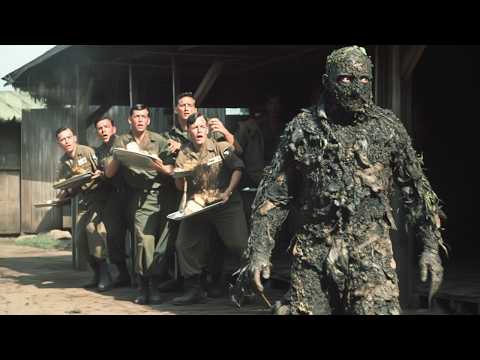
Saigon, 1968. In an air-conditioned office where the air felt unnaturally cold and dry, a scene was unfolding that could have been a death sentence for the entire American war machine. An American general—whose name history has mercifully erased from official protocols—slammed a stack of reports onto a polished mahogany desk. His face was flushed red, and the veins in his neck looked ready to burst.
Standing before him was an Australian officer of the Special Air Service Regiment, calm and unshakable as a statue. The general demanded only one thing: numbers. Not intelligence on enemy movements. Not tunnel maps. Not lists of food caches. He wanted statistics of eliminated enemies. In the headquarters of the United States Army, a cult reigned supreme—body count. Success was measured not by captured territory or saved lives, but by mountains of corpses reported on the evening news.
“Zero contacts. Zero shots fired. Zero bodies,” the report read. The general screamed that the Australians were cowards hiding in the bushes. He could not understand how an elite unit could spend thirty days in the jungle and not fire a single bullet. But the Australian officer stood his ground, knowing a truth the bureaucrat in the clean uniform could never grasp.
The Australians were not hiding from the war. They were dissecting it. While the Americans measured success in tons of dropped bombs, the SAS measured success in silence. They were gathering information that would later allow them to eliminate entire networks with surgical precision rather than blindly burning down half the jungle.
This was a collision of two completely different worlds. On one side stood the colossal, clumsy machine of the American army, obsessed with statistics and public relations. On the other stood silent professionals who knew that in the jungle, the man who shoots first often dies second. The Americans wanted a show for the cameras. The Australians wanted results—even if those results were invisible to the naked eye.
And yet the real horror was not in the office but back at the base. To understand why the Viet Cong called the Australians phantoms of the jungle, one simply had to look at an American fire support base. It was not a military outpost. It was a circus with guns.
An American base in Vietnam was a slice of America transplanted into the middle of a hostile jungle. Hot showers. Ice cream machines. Steaks grilling on barbecues every evening. Rock and roll blaring from speakers that could be heard for five kilometers. The smell of frying meat, diesel fuel, and expensive cologne drifted through the humid air—a scent trail that was practically a neon sign for the enemy.
For the Australian SAS, this level of comfort was not just a luxury. It was a suicide note. They knew that comfort kills. Every generator that hummed in the night masked the sound of sappers cutting through the wire. Every hot meal cooked in the open air told the enemy exactly where the mess hall was located. The Americans believed their technology and their comforts made them superior. But the jungle does not care about your lifestyle. The jungle only respects survival.
The Viet Cong did not attack these noisy, smelly bases head-on. They simply walked around them—or worse, used them as target practice. Vietnamese scouts could smell an American patrol coming from a mile away because of the soap, the toothpaste, the chewing gum. The Americans were walking targets, announcing their presence with every step and every breath.
The Australian soldiers knew that to defeat an enemy who lives in the jungle, you must become part of the jungle yourself. You cannot fight nature. You have to merge with it. And that meant giving up everything that makes a human being civilized. While the Americans were applying deodorant and putting on fresh socks, the Australians were preparing to descend into a primal state of existence. They understood that the price of survival was the abandonment of humanity.
To hunt the hunters, they had to shed their skin and become something else entirely—something darker, something quieter. The American general in Saigon could scream about body counts all he wanted. But out in the deep green hell of Phuoc Tuy Province, the rules were different. There, the loudest man is the first one to go home in a box. The Australians chose silence. And that choice would lead them into a nightmare that no training manual could ever predict.
What they were about to do would change the very definition of human endurance. The contrast between the two approaches was absolute. The American strategy relied on logistics, on the endless supply of ammunition and luxury goods delivered by fleets of helicopters. If a unit ran out of water, a chopper would drop a pallet of bottled water within the hour. If they wanted a hot meal, it was delivered. This created a dependency that was fatal. The moment the supply line was cut, the machine stopped working.
The Australians, on the other hand, built their entire doctrine on self-reliance and extreme austerity. They looked at the American bases glowing in the night like small cities and saw only vulnerability—a giant blind beast thrashing around in the dark, making noise and attracting predators. The SAS decided to be the shadow that moves between the trees. They rejected the ice cream and the steaks. They rejected the hot showers and the music. They chose a path of deprivation that would strip them down to their very core, removing every layer of civilization until only the predator remained.
But stripping away civilization comes with a terrible cost that no one spoke about. The decision to reject the American way of war was not just tactical. It was philosophical. It was an admission that technology cannot solve every problem. In 1968, this was heresy. The United States was the most technologically advanced nation on Earth, and its military leaders believed there was no problem that could not be solved with more bombs and more sensors. The Australians were effectively saying the Americans were wrong. They were saying that despite the billions of dollars, the thousands of helicopters, and the millions of artillery shells, the Americans were losing because they refused to adapt.
This arrogance was paid for in blood. Every day, young American men died because their position was given away by the noise of their equipment or the smell of their camp. The Australians watched this tragedy unfold and swore they would not make the same mistake. They would not be targets. They would be the ones watching from the darkness. They would be the ones who decide when the silence is broken.
But to achieve this, they had to undergo a transformation so radical and so repulsive that even their allies would look at them with disgust. And the first step into this abyss began with a simple bar of soap. The transformation began with an order that sounded like the ravings of a madman—a directive so contrary to every regulation of the modern army that it left young soldiers in absolute shock.
“Stop washing. Stop cleaning your teeth. Stop using deodorant.”
For the average Australian male raised in a culture that worshiped cleanliness, this was not just a military order. It was a descent into barbarism. But the officers knew what they were doing. They were about to strip these men of their civilization layer by layer until only the primal animal remained beneath the uniform. This was not a suggestion for a weekend camping trip. It was a calculated biological protocol that began exactly fourteen days before a patrol was scheduled to step into the helicopter.
For two full weeks, the barracks turned into a festering swamp of human odors. Soap was confiscated as if it were contraband narcotics. Toothpaste was banned. Shaving cream, aftershave, and laundry detergent were removed from the lockers. The goal was to eradicate the chemical signature of the twentieth century from their bodies. The human skin is a sponge, and for a western soldier, that sponge is soaked in artificial fragrances that scream foreigner to anyone with a trained nose. In the stifling heat of the tropics, the scent of Old Spice or Palmolive travels further than a shout.
But the rejection of hygiene was only the first nauseating step. To accelerate the process, the soldiers were subjected to what can only be described as chemical biohacking. They were issued specific medical compounds—including heavy doses of antimalarial drugs and vitamin B complexes—which had a singular, grotesque side effect: they altered the chemical composition of human sweat. The objective was to mask the sharp metallic tang of fear and the distinct acidity of a meat-eating westerner. They needed to smell like the vegetation, like the rot of the jungle floor.
Before deployment, these elite warriors would spend hours rubbing a mixture of red clay, charcoal, and decaying leaves into their skin and uniforms. They ground the dirt into their pores until their skin stopped looking like human flesh and started looking like part of the landscape. The result was a stench that could make a civilian vomit—a thick, earthy, organic odor that clung to them like a second skin.
When American officers visited the Australian sector, they would often recoil in visible disgust, covering their noses with handkerchiefs. They saw dirty, unkempt vagrants who looked more like beggars than soldiers. They wrote scathing reports about the lack of discipline and the sanitary hazards within the Australian ranks. They did not understand that this filth was a uniform more protective than any Kevlar vest. The Americans believed discipline meant a polished boot and a clean shave. The Australians knew that in Phuoc Tuy, discipline meant smelling like a swamp so that the predator stalking you would mistake you for a pile of mud.
Yet while the Australians were turning themselves into biological ghosts, their allies were making a fatal mistake that cost thousands of lives. The standard American infantryman was a walking chemical factory. He washed his uniform in industrial-strength detergents that contained optical brighteners—chemicals designed to make colors pop, which unfortunately also made the uniforms glow like Christmas trees under enemy night vision equipment. But worse than the visual betrayal was the olfactory one.
The American soldier smoked menthol cigarettes—specifically the Salem brand—which left a sweet minty trail that hung in the humid air for up to three hours after the smoker had moved on. He chewed mint gum to mask the taste of fear. He ate chocolate bars and drank sugary sodas. To a Viet Cong scout who had lived his entire life in the sensory deprivation of the jungle, an American patrol did not need to be seen to be detected. It could be smelled from three hundred meters away. The enemy trackers called it the smell of the white man—a cocktail of processed sugar, tobacco, dairy products, and artificial soap. It was a scent that did not exist in nature.
When the wind was right, a Vietnamese sniper could close his eyes and point his rifle solely based on the cloud of civilization drifting toward him. The jungle is a closed ecosystem. Introduce a foreign element and every living thing reacts to it. The monkeys go quiet, the birds take flight, and the enemy flips the safety catch off his weapon.
But the Australians were about to commit the ultimate act of betrayal against their own culture. If the ban on soap was difficult, the next phase of the doctrine was pure torture. It was called the Traitor’s Menu. The logic was ruthless: you are what you eat. A body fueled by beef steaks, potatoes, bread, and cheese produces waste products that smell distinctly Western—the ammonia levels, the proteins, the very bacteria in the gut. Everything screams outsider.
So the SAS command did the unthinkable. They banned Western food. Three weeks before a mission, the steaks and the beers were taken away. The mess hall was closed to the elite teams. Instead, they were switched to a strict, punishing diet of local Asian peasant food. This was not the sanitized Asian cuisine served in restaurants. This was the fuel of the jungle fighter. They ate cold boiled rice, often wrapped in banana leaves to avoid the metallic smell of mess tins. They consumed immense quantities of dried fish and nuoc mam—a fermented fish sauce that smells like concentrated decay to the uninitiated. They ate local vegetables, bamboo shoots, and bitter greens. They drank weak green tea instead of strong coffee.
The physical reaction was immediate and violent. Stomachs cramped, bodies rebelled, and energy levels fluctuated wildly as their metabolisms fought to adapt to this alien fuel. However, this culinary nightmare produced a biological miracle that defied medical science. By the end of the third week, the transformation was absolute. The chemistry of their blood had shifted. When an SAS trooper sweated now—and in the thirty-degree heat they sweated constantly—he no longer smelled of ammonia and beef. He smelled of fish sauce, garlic, and old rice. He smelled exactly like a Vietnamese farmer. He smelled like the enemy.
This was the ultimate camouflage. It went beyond sight and sound. It fooled the most primal sense of all. A Viet Cong sentry could be standing five meters away, and if the wind blew from the Australian toward him, his brain would register the scent as familiar. It would not trigger the alarm bells of danger. This was the secret weapon that no satellite could photograph and no general could quantify.
While the Americans were landing on hilltops with cases of cold soda and boxes of hamburgers—creating a logistical circus that attracted every enemy soldier within ten kilometers—the Australians were dissolving into the environment. They became ghosts not because they were invisible, but because they had ceased to be foreign. They had hacked their own biology to become one with the battlefield. They were starving. They were filthy. And they were wretched. But they possessed an advantage that no amount of American firepower could buy: they had erased themselves from the sensory map of the jungle.
But as they prepared to step into the darkness, they knew that smelling like the enemy was only half the battle. Now they had to hunt him. The operation that would later be whispered about in the corridors of power under the code name Phantom Trail began not with a bang, but with a silence so profound it felt heavy. Sergeant Darling and his team of five men stepped off the skid of the hovering helicopter and vanished into the green wall of the jungle. From that moment on, time, as the rest of the world understood it, ceased to exist.
For an American infantry battalion, moving through the jungle was a battle against vegetation. They hacked with machetes, cursed the thorns, and moved with the grace of a bulldozer. For the Australian SAS, moving through the jungle was an art form—a slow-motion ballet performed in a minefield. Their pace was agonizingly slow, a speed that would drive a standard commander to madness. They covered exactly three hundred meters in one hour. Three hundred meters. A healthy man could walk that distance in three minutes on a city street. But here, in the suffocating humidity of Phuoc Tuy, speed was a fatal error.
Every single step was a calculated risk. The point man would lift his boot, pause, and lower it gently, placing the outer edge of the sole down first. He would roll his foot inward, feeling for the snap of a dry twig or the trip wire of a booby trap. Only when the ground was confirmed safe would he transfer his weight. They did not break branches. They flowed around them. They did not speak. They used hand signals practiced until they were instinct.
But this obsessive slowness was about to reveal a secret that millions of dollars in American technology had missed. For months, high-altitude spy planes and the latest surveillance satellites had scanned this specific sector of the forest. The analysts in their air-conditioned rooms looked at the photos and saw nothing but unbroken canopy. They reported with absolute certainty that there was no enemy activity in the area. Yet they were wrong. The technology failed because it was looking for a highway—a scar on the earth. The Australians, moving at the speed of a snail, found what the machines could not.
Deep in the undergrowth, invisible from the air and barely visible from five meters away, lay a trail. It was a masterpiece of camouflage—a supply artery for the Viet Cong woven into the living jungle. The soil was packed hard by thousands of sandals, but overhead the branches had been tied together to block the sun. Sergeant Darling signaled for a halt. They had found the needle in the haystack. The intelligence reports were useless. The enemy was here, moving massive amounts of supplies right under the nose of the Allied forces.
A standard unit would have called in an air strike immediately, turning the grid square into a crater. But the SAS were not there to destroy the trail. They were there to destroy the network. To do that, they needed to know who was using it, when they moved, and what they were carrying. They needed to watch. And to watch, they had to disappear completely.
And so began a test of endurance that would push the human mind to the very brink of insanity. The team moved into a position less than two meters from the edge of the trail. Two meters. It is a distance you can cross in a single leap. It is close enough to reach out and touch a passing stranger. In this proximity, concealment is not enough. You need to cease being a biological entity. The order was given to establish a hard layup. This meant absolute, total immobility. For the next forty-eight hours, five men became statues of flesh and bone. They lay on the damp, rotting earth covered in their camouflage of mud and leaves, and they stopped moving.
This was the moment where the training separated the soldiers from the legends. Forty-eight hours without movement sounds difficult, but the reality is a torture that few can comprehend. The human body is not designed to be still. Muscles cramp and spasm. Blood circulation slows, causing limbs to go numb. The urge to shift, to scratch, to stretch becomes a screaming psychological need. But to move was to compromise the mission. To move was to invite a tragedy. So they lay there—five silent ghosts—while the jungle continued its life around them.
But the true horror of those two days was not the cramps. It was the degradation of their own dignity. Nature calls even for elite soldiers. But in a hard ambush position, you cannot ask for a timeout. You cannot crawl away to a latrine. You cannot even roll over to relieve yourself. The brutal, disgusting truth of the Phantom Trail operation is that these men were forced to urinate and defecate into their own uniforms. For forty-eight hours, they lay in their own waste. The warm, acrid smell of urine mixed with the swampy odor of the jungle, but thanks to their strict diet and lack of hygiene products, it blended into the background noise of decay. They wallowed in filth, creating a breeding ground for bacteria against their skin. But they did not flinch. This was the price of admission to the inner circle of the war.
As the sun rose and the heat intensified, the insects arrived. In the tropics, insects are not annoyances. They are predators. Columns of red ants marched across their hands. Mosquitoes thick as clouds landed on their faces, feasting on their blood. Imagine a mosquito landing on your eyelid. Imagine the itch, the burning sensation. Now imagine that you cannot swat it. You cannot blink rapidly. You cannot exhale sharply to blow it away. You must let it feed. You must let the ants bite. You must let the spiders crawl across your neck. To twitch is to die. Tears of physiological reflex rolled down their cheeks, mixing with the mud. But their hands remained frozen on the receivers of their rifles.
Then the ultimate test arrived. Walking softly down the trail they were watching, a squad of Viet Cong guerrillas appeared, moving with the confidence of men who own the forest. They passed so close to the hidden Australians that the mud from their sandals splashed onto the boots of the SAS troopers. One enemy soldier stopped. He stood less than one meter from Sergeant Darling’s face. The Australian could see the dirt under the enemy’s fingernails. He could see the pulse beating in the man’s neck. He could smell the tobacco smoke on his clothes. The enemy soldier looked directly at the patch of brush where Darling lay. He looked straight into the eyes of the hidden predator—but he saw nothing. He saw mud. He saw leaves. He saw shadows. He did not see the five men who had turned themselves into piles of refuse. The enemy soldier adjusted his rifle, turned, and walked on.
He had no idea that he had just stared into the face of a tragedy waiting to happen. He had no idea that five rifles were aimed at his spine. The discipline of the SAS had triumphed over the instincts of survival. They had become the jungle, and now—soaked in urine, covered in ants, and fueled by a cold, hard rage—they were ready to unleash hell on the enemy supply line.
But as the adrenaline faded, they realized that the hardest part of the mission was still to come. The reward for their agonizing patience was a treasure trove of intelligence that no satellite in orbit could have ever captured. Because the Australians had erased their chemical signature, the enemy soldiers walking the trail were fatally relaxed. They did not sniff the air for the scent of menthol cigarettes or soap because there was none to be found. They did not scan the bushes with the paranoia of hunted men because their instincts told them they were alone. This false sense of security was their undoing.
From their hidden vantage points, the SAS troopers were not just watching. They were dissecting the entire enemy operation. They counted the crates of ammunition. They identified the high-ranking officers by the way they walked and the pistols on their belts. They mapped the precise schedule of the couriers. For the first time in the war, the Allied command had a pair of eyes inside the very heart of the enemy’s logistical network. The five men in the mud were gathering data that would eventually allow the artillery to dismantle this supply route with the precision of a surgeon.
They saw the faces of the men who would be targeted. They noted the heavy mortars being carried toward the American bases. It was the perfect reconnaissance mission—a masterclass in invisible warfare. They had seen everything, and they had remained unseen.
The mission was a resounding success. And now it was time to call in the cavalry and unleash the firepower that would turn this trail into a memory. But just as they reached for the radio, the cruelest twist of the war was about to unfold. The transition from silent observer to active participant is the most dangerous moment for any reconnaissance team. Sergeant Darling signaled the radio operator to break the silence that had lasted for weeks. It was time to coordinate the extraction and the subsequent air strike.
The operator keyed the microphone of his radio set—a piece of technology that was heavy, temperamental, and about to become the instrument of their potential tragedy. He began to speak, but he did not speak like an American soldier who would scream coordinates over the roar of battle. He spoke in the underscore quote unquote—a technique of vocalizing using only the breath, bypassing the vocal cords entirely to produce a sound that carries no further than the handset itself.
High above the jungle canopy, an American forward air controller was circling in his Bird Dog aircraft. The pilot was accustomed to the chaos of standard infantry combat, where radios crackled with shouting, explosions, and panic. When the Australian signal reached his headset, it sounded like nothing more than static interference. The pilot, surrounded by the drone of his own engine and the hiss of the atmosphere, frowned. He keyed his mic and demanded that the ground station repeat the message. He demanded that they speak up. He asked for a clear, loud confirmation of their grid reference.
That demand for volume was a sentence of doom for the men on the ground. Down in the suffocating darkness of the undergrowth, the radio operator looked at his sergeant with eyes wide with panic. The American pilot was asking for the one thing they could not give him: noise. To raise his voice above a whisper would be to alert the enemy soldiers passing just meters away. It would be an act of immediate self-destruction.
The operator tried again, straining to make his whisper as distinct as possible without increasing the volume. He repeated the coordinates. He repeated the call sign. He pleaded with the breath in his lungs for the voice in the sky to understand. But the technology gap was too wide, and the cultural gap was even wider. To the American pilot, a radio call that could not be heard clearly was likely a ghost signal or a malfunction. He grew frustrated with the incomprehensible hissing in his ear. After several attempts to establish clear communications, the pilot made a decision that would haunt the operation. Believing the channel was empty or the signal was a glitch, he banked his aircraft and turned back toward the base.
The drone of the engine faded into the distance. The radio in the operator’s hand went silent. The group had not been discovered by the enemy, but they had been abandoned by their own allies. They were now alone in the heart of enemy territory, and the silence was deafening.
The departure of the American aircraft was not just a disappointment. It was a catalyst for disaster. The sudden roar of the plane’s engine followed by its abrupt exit had done the one thing the Australians had avoided for thirty days: it drew attention to their position. The Viet Cong commanders on the ground were not foolish. They knew that American spotter planes rarely circled a patch of empty jungle without reason. The silence that followed was heavy with menace. And then, inevitably, the shouting began. The enemy patrols turned off the trail and began to sweep the brush. The ghosts had been sensed. The time for hiding was over. The time for running had begun.
What followed was a nightmare of endurance that few humans could survive. Five men, emaciated from a diet of rice and dried fish, dehydrated and covered in their own filth, were forced to move. They did not sprint. They moved with a desperate, fluid urgency, slipping through the vegetation just meters ahead of the closing net. They were fueled by a cold, burning rage directed not at the enemy, but at their own allies. The incompetence of the big brother in the sky had turned a perfect surgical strike into a chaotic fight for survival.
Every step was a battle against exhaustion. Their muscles, atrophied from two days of absolute stillness, screamed in protest. But the jungle itself seemed to aid them, as if recognizing them as its own creatures. They broke contact—not with overwhelming firepower, but with the same uncanny stealth that had brought them there. They dissolved into the deep green, leaving false trails and booby traps for their pursuers.
When the extraction helicopter finally returned—piloted this time by an Australian crew who knew how to listen for the whisper—the team burst from the tree line like demons rising from the earth. As they scrambled aboard the chopper, the air crew recoiled. The smell that filled the cabin was indescribable. It was the scent of death, rot, and human waste. These were not soldiers anymore. They were feral things returning from a world where civilization had no place.
The return to the base at Nui Dat was not a parade of heroes. It was a medical emergency. When the adrenaline faded, the true cost of their biological warfare revealed itself in gruesome detail. The medics who cut the uniforms off their bodies were horrified by what they found beneath the rotting fabric. The skin of the soldiers, having soaked in urine and swamp water for forty-eight hours without ventilation, had begun to necrotize. Large patches of flesh were raw and weeping. Fungal infections had colonized their feet, eating away at the soft tissue between the toes until the bone was nearly exposed. This was trench foot on a level rarely seen since the First World War.
However, the physical rot was a small price to pay for the tactical miracle they had achieved. Despite the horror of their condition, the mission statistics were undeniable. Five men had penetrated the heart of the enemy’s logistics network. They had mapped a major supply route. They had identified key commanders. And most importantly, they had returned with zero casualties. Not a single man was lost.
Compare this to an American search-and-destroy mission in the same sector, which would have cost millions of dollars in fuel and ammunition, likely resulted in dozens of friendly casualties, and produced less actionable intelligence. The Australians had paid with their health, their dignity, and their sanity—but they had won.
In the end, history delivered a verdict that was as harsh as it was ironic. The United States lost the Vietnam War. Their strategy of body count, of overwhelming noise and firepower, failed to defeat an enemy who refused to play by their rules. The giant military machine crushed everything in its path, but it could not crush a shadow. The American generals who screamed for statistics eventually packed their bags and went home, leaving behind a legacy of failure. But the methods of the SAS—the silence, the patience, the integration with the environment—remained undefeated. And today, the ghost of that doctrine lives on in every elite unit in the world.
Decades later, when the United States found itself fighting in the mountains of Afghanistan and the deserts of Iraq, they finally opened the dusty archives of the Vietnam War. They looked at the reports they had once scorned. The modern operator of Delta Force or the Navy SEALs does not train to be a loud, heavy-hitting soldier like the infantry of 1968. He trains to be a ghost. He learns to survive with nothing. He learns to watch and wait. The dirty tactics of the Australian SAS—once called cowardly by arrogant officers—are now the gold standard of special operations.
The lesson of the Phantom Trail is written in the scars of the men who survived it. It is a lesson that warfare is not about who has the biggest gun or the fastest helicopter. It is about who has the will to endure the unendurable. The American generals wanted to conquer the jungle. The Australians agreed to become the jungle. And in the end, the jungle always wins. The five men who ate rice, smelled like rot, and lay in their own filth proved the ultimate truth of war: He who speaks loudest dies first. But he who can suffer in silence lives forever.
But the story does not end with medals or memorials. It ends in a small suburban house in Perth, where an old man waters his roses at dusk and refuses to shake hands with strangers. His neighbors call him odd. They do not know that every time a helicopter passes overhead, his hands still tremble.
He never spoke of the trail. Not to his wife, not to his children. The files stayed sealed, the generals stayed silent, and the jungle kept its ghosts. Some victories are so quiet that even the victors cannot hear them.
So ask yourself—when the history books praise the loud and the decorated, who remembers the men who won by disappearing? Was their silence cowardice, or the purest courage of all?
Report this article
Select a reason for reporting:






