Major William Thompson had three minutes to decide. An Australian SAS patrol was 3 km outside its authorized area, requesting immediate artillery support against enemy mortars. The coordinates fell within a restricted fire zone near a civilian village. Standard procedure demanded verification through the chain of command. But the Australian commander’s voice on the radio was insistent: enemy mortars were preparing to fire on Australian positions at Nui Dat. Delay meant friendly casualties. Firing without clearance could create an international incident and end Thompson’s career.
He authorized the mission. Sixty rounds of high explosive artillery destroyed six North Vietnamese mortar positions exactly where the Australians reported them. Eighteen enemy killed, no civilian casualties. A tactical success.
The next morning, Thompson’s battalion commander delivered a scorching assessment. He had violated fire support protocols, engaged targets without proper verification, taken an unauthorized patrol’s word without confirmation, and fired into restricted zones without brigade clearance. The fact that the Australians were correct and the mission succeeded was irrelevant to the procedural violations.
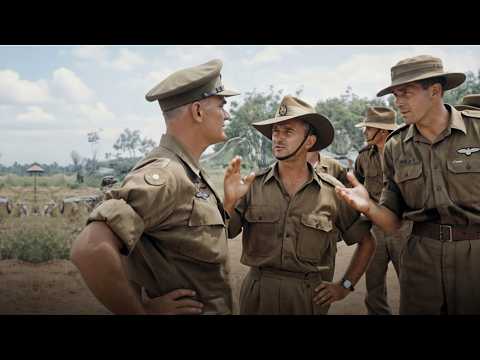
Thompson found himself in an impossible position that dozens of American officers experienced working with Australian SAS between 1966 and 1971. The Australians achieved exceptional tactical results through methods that violated American military procedures, command authority, and operational discipline. They operated outside assigned areas, engaged targets without authorization, demanded support for unauthorized operations, and put American officers in positions where following procedures could cost lives while violating procedures could cost careers.
This wasn’t occasional insubordination. It was a systematic cultural difference in how Australian and American forces understood orders, authority, and tactical decision-making. A difference that created constant friction, mutual frustration, and an alliance that succeeded despite fundamental incompatibility in command philosophy.
The cultural roots extended decades before Vietnam. The American military developed under conditions of overwhelming resources, large standing forces, and industrial-scale warfare where coordination of massive formations required centralized command and standardized procedures. Orders flowed down hierarchies. Subordinates executed orders as specified. Deviations required approval from higher authority. This system worked brilliantly for coordinating divisions, corps, and armies across global theaters in World War II and Korea. It created a military culture where following orders was a cardinal virtue, and initiative meant executing orders efficiently, not interpreting or modifying them.
Australian military developed under opposite conditions. Small forces, limited resources, fighting on distant frontiers far from higher command. Australian soldiers in World War I were notorious for casual discipline, questioning orders, and achieving tactical success through improvisation rather than adherence to British military procedure. Gallipoli, North Africa, and the Pacific campaigns reinforced this culture. Australian soldiers succeeded when allowed tactical freedom, failed when forced into rigid procedures designed for different circumstances.
By the 1960s, this cultural difference was encoded in doctrine. American military taught centralized control and detailed orders. Australian military, especially SAS, taught mission command and commander’s intent. American patrol leaders received specific instructions on routes, timings, actions at objectives, and coordination requirements. Australian patrol leaders received mission objectives and constraints, then determined their own methods for accomplishing the mission.
Both systems were logical within their contexts. Both were incompatible when forced to coordinate. When American officers tried to control Australian SAS operations using American methods, Australians interpreted American orders as guidance open to modification based on tactical circumstances. When American officers issued what they thought were binding directives, Australians heard suggestions they’d consider but might disregard if the tactical situation warranted different action.
The communication breakdown was subtle and pervasive. Americans and Australians spoke the same language but used different operational vocabularies. An American order to conduct reconnaissance in a specific grid square meant exactly that to American forces. To Australian SAS, it meant gather intelligence in that general area using whatever methods and locations seemed most effective. An American restriction against engaging enemy unless directly threatened meant exactly that to American forces. To Australian SAS, it meant avoid unnecessary contact, but engage if tactical opportunity presented itself and success was likely. An American coordination requirement meant get approval before acting. To Australian SAS, it meant inform relevant parties of your plans if time and security permit.
These weren’t misunderstandings or language barriers. These were fundamentally different interpretations of the same instructions based on different cultural assumptions about authority, initiative, and tactical decision-making.
The geographic boundary violations created the most documented friction. American military culture treated operational boundaries as absolute. Units operated within assigned areas. Movement outside boundaries required approval from higher headquarters. This system allowed coordination between adjacent units and prevented chaos when multiple forces operated in the same region.
Australian SAS viewed operational boundaries as general guidance that could be violated when tactical necessity required. If enemy forces were across the boundary, the mission to engage or observe those forces took precedence over the administrative boundary. If better terrain or approach routes existed outside the boundary, patrols would use them. Boundaries were planning tools, not restrictions.
Between 1966 and 1971, American liaison officers documented hundreds of instances where Australian SAS patrols operated outside assigned areas without authorization. These weren’t accidental boundary crossings or brief excursions. These were deliberate operations kilometers outside assigned boundaries, sometimes lasting days, conducted without informing American units responsible for those areas. The tactical results were often excellent. Australian patrols found enemy positions, gathered intelligence, and conducted ambushes in areas where American forces weren’t operating. But the coordination problems were severe. American artillery couldn’t provide fire support for patrols whose actual positions were unknown. American aviation assets planned flight routes assuming no friendly forces in certain areas, creating risk of friendly fire against unauthorized Australian patrols. American ground units conducting operations would encounter unidentified forces that might be enemy or might be Australian patrols that weren’t supposed to be there.
Captain James Rodriguez, American liaison officer to Australian task force in 1969, documented his frustration in official reports. An Australian patrol assigned to operate in coastal areas of Phuoc Tuy province was detected by American sensors 15 km inland in heavy jungle. When Rodriguez queried Australian operations, he was told the patrol had relocated to pursue enemy forces observed during their coastal reconnaissance. The patrol spent four days operating in an area where American units were planning a battalion-sized sweep operation. Only luck prevented friendly fire incidents when the American sweep encountered what they thought were enemy forces but were actually the unauthorized Australian patrol.
Rodriguez’s after-action report captured the impossibility of coordinating with forces that didn’t respect boundaries. He couldn’t plan fire support for units whose positions he didn’t know. He couldn’t coordinate with American units when Australian patrols might be anywhere in the province regardless of assigned areas. He couldn’t prevent friendly fire incidents when patrols deliberately operated in areas where they weren’t authorized.
The Australian response revealed the cultural gap. From the Australian perspective, the patrol commander had made a tactically sound decision to pursue enemy forces rather than remain in an assigned area where no enemy were present. The mission was gathering intelligence on enemy forces. The patrol had found enemy forces outside the assigned area and correctly modified their operation to accomplish mission intent. The fact that this created coordination problems for American forces was regrettable but secondary to accomplishing the mission.
From the American perspective, the patrol commander had violated explicit orders defining operational boundaries, created unacceptable risks of friendly fire incidents, and prioritized tactical opportunism over coordination that enabled larger operations. The fact that the patrol gathered good intelligence didn’t justify the violations and risks.
Both perspectives were valid within their frameworks. Neither could convince the other that their framework was correct.
The engagement authority violations created similar patterns of friction. American doctrine in Vietnam specified detailed rules of engagement defining when forces could initiate combat — rules designed to prevent escalation, minimize civilian casualties, and maintain political control over military operations. Typical rules for American reconnaissance patrols specified engaging the enemy only when directly threatened, when enemy forces met specific criteria of size and identification, and when engagement wouldn’t compromise the mission.
Australian SAS operated under different assumptions. The mission to gather intelligence included disrupting enemy operations when opportunity permitted. Patrol commanders held authority to engage when success was likely and risk was acceptable. Rules of engagement were guidelines for judgment, not restrictions requiring approval.
The result was Australian patrols engaging enemy forces in circumstances where American patrols would have observed without firing. This created tactical successes through ambushes and direct action that American reconnaissance doctrine discouraged. It also created situations where Australian combat operations surprised American commanders who thought they were coordinating reconnaissance missions.
Major Robert Chen, an American operations officer coordinating with Australian forces in 1967, described discovering that an Australian patrol assigned to reconnoiter a suspected enemy base camp had instead assaulted the position with helicopter gunships the patrol had requested without informing American headquarters. The assault succeeded brilliantly — 32 enemy killed, significant supplies captured, detailed intelligence gathered on enemy unit organization.
But Chen had been planning a larger American operation against the same base camp based on intelligence the Australian patrol was supposed to gather. The Australian assault compromised the American operation and forced Chen to develop new plans with less intelligence than the reconnaissance mission would have provided.
When Chen complained, the Australian response emphasized different operational priorities. The patrol commander had assessed the base camp as lightly defended and vulnerable to immediate assault. Waiting to conduct passive reconnaissance would have allowed enemy forces to disperse or reinforce. From the Australian perspective, a successful assault that destroyed the enemy position was a better outcome than reconnaissance that gathered intelligence for future operations that might not succeed as well.
The fire support coordination failures revealed how deeply the cultural differences affected tactical operations. Lieutenant Colonel David Morrison, an American artillery commander supporting operations in Phuoc Tuy province in 1968, documented multiple incidents where Australian patrols requested immediate fire missions without providing the information American procedures required. Patrols would provide target coordinates and urgency without confirming their own positions, identifying the target type, or explaining why immediate fires were necessary instead of planned fires through normal channels.
Morrison faced impossible choices. Deny fire support requests from allied forces in contact with the enemy, potentially causing Australian casualties, or authorize fire missions without proper verification, violating procedures designed to prevent friendly fire and civilian casualties.
The incident that crystallized his frustration involved an Australian patrol requesting a fire mission on coordinates that American intelligence identified as a village with known civilian presence. The patrol insisted the coordinates contained enemy forces preparing to attack Australian positions. Morrison had perhaps two minutes to decide whether to fire American artillery into a village based on one Australian patrol’s assessment, or deny the mission and risk Australian casualties if the patrol was correct about the enemy threat.
Morrison denied the fire mission and requested the patrol verify no civilians were present in the target area. The patrol responded that verification would take time they didn’t have, and if Morrison wouldn’t shoot, they’d call Australian artillery. Morrison ultimately authorized a modified fire mission with fewer rounds and delayed impact to allow civilians time to evacuate if they were present. The fire mission destroyed the enemy mortar positions exactly where the Australians had reported them. No civilians were injured.
But Morrison’s report emphasized the impossible position Australian procedures created. The Australians were correct about enemy presence, but they’d provided no information that would allow him to verify their assessment. He’d been forced to choose between refusing allied fire support requests or authorizing fires that could cause civilian casualties. Both options created unacceptable risks, and the choice had been forced by Australian failure to follow American coordination procedures.
The Australian perspective, documented in their own reports, emphasized that combat situations required immediate fires, not bureaucratic verification. Enemy mortars preparing to fire didn’t wait for artillery officers to complete coordination checklists. Patrol commanders requesting fire support had better situational awareness than distant fire support coordinators. Trust in patrol commander judgment should enable rapid fires rather than requiring verification that wasted precious time.
Both perspectives reflected valid concerns within their operational cultures. Neither could accept the other’s approach as superior.
The intelligence reporting disparities created strategic-level friction. Major Sara Williams, an American intelligence officer assigned to the Australian task force in 1970, spent months trying to reconcile Australian narrative reports — approximate coordinates, behavior-based descriptions — with American database requirements. “The intelligence was some of the best tactical intelligence available in Vietnam,” she wrote, “but nearly impossible to incorporate into American systems.”
Australian patrols also ran 14–21 days, far beyond American planning assumptions of 3–7. Captain Robert Taylor discovered this during Operation Federal when Australian patrols remained through all three phases, forcing last-minute verification to prevent friendly fire.
Major Thompson retired in 1985. In his final assessment, he wrote that the Australians achieved exceptional results precisely because they didn’t follow orders as Americans understood them. “They don’t follow orders, they achieve results. Both statements remain true.”
Fifty-five years later, American and Australian special operations still partner closely — still different, still friction-prone, still effective. The lesson endures: different doesn’t mean wrong.
So here’s the question for you: when an ally’s methods violate your procedures but consistently deliver results, should you enforce compliance or learn to coordinate around the difference?
Report this article
Select a reason for reporting:






