In the pre-dawn hours of January 12, 1945, the largest military offensive of World War II erupted through dense fog and heavy snow near the town of Baranów, Poland. German troops, roused from freezing bedrolls by a ferocious Soviet artillery barrage, barely had time to brace themselves as wave after wave of Russian shelling obliterated their positions. For every German tank, the Russians had seven. For every German soldier, there were ten Russians. Impossibly outnumbered, the Germans had no choice but to die where they stood, surrender, or break and run.
By nightfall, Soviet forces had penetrated twelve miles behind German lines and were still rolling forward. The Vistula offensive, launched a week ahead of schedule, caught the Germans utterly by surprise. Within days, Warsaw had fallen, and the Red Army was pushing westward along a 160-mile-wide front, straight into the heart of Germany.
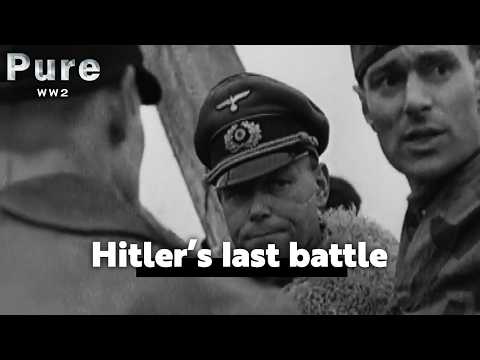
As the Russians advanced, they passed through countless villages and towns laid waste by the Nazis. The rotting corpses of peasants and suspected partisans still hung in streets where they had been executed years earlier. Now the Russians were out to repay the debt. Despite their commanders’ best efforts, rape, murder, and pillage were unleashed against any German unlucky enough to be trapped in the line of advance. Horrified civilians fled in blind panic, desperate to reach the safety of central Germany or surrender to the Western Allies. In sub-zero temperatures, pursued by the enraged Russians, tens of thousands froze, starved, or were gunned down.
Faced with this unprecedented disaster, Hitler refused to concentrate his remaining forces on defending the collapsing Eastern Front. Instead, he ordered a diversionary maneuver in Hungary, hoping the Russians would halt their advance to shore up their rear. It was a foolish ploy, and Marshal Zhukov was not taken in. The Germans were quickly driven out of Hungary, just as they were being driven out of East Prussia.
By mid-February, things on Germany’s western front fared no better. The Battle of the Bulge had failed, and the Allies were steadily pushing the Germans back toward the Rhine. Supreme Allied Commander Dwight Eisenhower knew the most effective way to deal with the situation was a two-pronged attack to divide the enemy’s overextended forces. While British Field Marshal Montgomery dealt with the northern end of the German line, US General Omar Bradley whittled away at them from the south. Still, it took five weeks to move the Allied front line sixty miles forward, and every mile was bitterly contested by an army now protecting their homeland.
As the Allies approached the Rhine, Hitler ordered it defended to the last man. German engineers opened floodgates along the river, flooding valleys and towns to impede the Allied crossing. It slowed the advance, but only for a few days. With the way through Germany now open, Eisenhower faced a major decision: should the Western Allies make a concerted push on Berlin, now only 300 miles to the east, or allow the Red Army the honor of taking the Reich’s capital? The decision was as much political as tactical. The alliance with Soviet Russia was fragile, and Eisenhower could not afford to lose American and British lives taking territory that would ultimately be handed to Russia. Nor could he risk an inadvertent clash between American and Russian forces that might spark a new war. Against the advice of Montgomery and the demands of Churchill, Ike decided to leave Berlin to Stalin’s men.
By March 1945, Hitler began to realize his great plan had failed. In his mind, however, the fault lay not only with his enemies but with the German people themselves. “If the war is lost, there is no need to take into consideration the basic requirements of the people,” he told Armaments Minister Albert Speer. “Those who remain after the battle are those who are inferior, for the good will have fallen.” On March 19, Hitler ordered the destruction of all industrial facilities, energy sources, railway lines, and food supplies. Four days later, he commanded that all prisoners—in forced labor camps, regular prisons, and prisoner-of-war camps—be moved to form a human shield against the advancing Red Army. Fortunately, Speer and Field Marshal Walter Model ensured this nightmarish order was never carried out.
As Stalin’s armies moved relentlessly toward Berlin, Hitler tried everything to encourage his exhausted troops. On April 14, he issued a directive to the men on the Eastern Front: “The enemy is trying to reduce Germany to rubble and exterminate our people. While men, children, and old people will be murdered, women and girls will be reduced to barrack [__].” There may have been some truth in portraying the Russians as merciless, but given Hitler’s own recent orders and Germany’s record of abuses, it was hypocrisy at its most outrageous.
If Hitler was determined to make his armies fight to the last man, most of his soldiers would have been only too happy to surrender—at least those facing American, British, or Canadian forces. But millions of fanatically dedicated men in the Waffen-SS and millions more trapped on the Russian front realized that surrender would be nearly indistinguishable from suicide. Many fought not only to save their own lives but to buy time for civilians to be evacuated. Bolstering every soldier’s fighting spirit was the very real fear of being summarily tried and executed by the SS or Gestapo if suspected of cowardice. By the beginning of 1945, even the slightest mention of withdrawal or surrender was a treasonable offense in Nazi Germany.
For the millions of dazed and terrified civilians trapped in the three-way struggle between two invading armies and a government clearly gone mad, the only possible choice was to try to survive long enough to surrender to the Western Allies. But for those still trapped in the eastern portions of Germany, that hope was dwindling rapidly.
By April 16, the Russians had crossed the Oder River and were well on their way to Berlin itself. For months, Hitler and the few generals he still trusted had been trying to devise ways to fend off the inevitable enemy attack on Berlin. As early as August 1944, desperate to fill the ranks of an ever-dwindling labor force, Joseph Goebbels, Hitler’s minister of propaganda, had ordered total mobilization. The work week was increased to sixty hours, and all public entertainment—cinemas, theaters, and restaurants—were closed. There had been no more fun in the Third Reich.
In a last-ditch attempt to bolster the strength of his collapsing armies, in October 1944 Hitler had demanded compulsory conscription of all able-bodied males between the ages of sixteen and sixty. When even these numbers proved inadequate, thousands beyond the age of retirement and thousands more who had hardly reached puberty were called into service. Most of the youth forces were drawn from the ranks of the Hitler Youth—boys who had spent their entire lives being taught that their Führer was little less than a god. Because their short lives had been filled with continuous indoctrination, many of these boys fought as fanatically as the most hardened SS units. US and British soldiers who found themselves facing these child warriors were faced with an awful moral quandary. Even in a war, killing children was inconceivable. But these children had sworn to defend their Führer to the death and were not to be underestimated nor trifled with.
Most of the new German recruits, young and old alike, were mustered into home guard or Volkssturm units. With weapons in critically short supply, those with real rifles, machine guns, or grenade launchers could consider themselves lucky. Many were armed with no more than crude homemade rifles from which reused shell cartridges were fitted with sharpened wooden slugs that could inflict horrible wounds at short range. With the help of this ad hoc army, three massive lines of defense stretching nearly 200 miles were built around the eastern perimeter of Berlin. There were tank traps, machine gun and artillery emplacements, and ditches to be filled with gasoline and oil and set afire when the time came.
Defending the city itself were the Third Panzer Army and the Ninth Regular Army. The Ninth Army was charged with guarding the perimeter of the city while the Panzers were stationed further afield. To the south was the Fourth Panzer Army and the remains of Army Group Center, which three and a half years earlier had led the attack into Russia. In reserve were the 56th Panzer Corps and the 12th Army. But all the armies were greatly reduced from their official strength and largely made up of raw recruits, old men, and boys. Inside the city limits of Berlin, there were also roughly 100 home guard battalions augmented by local SS police units. The total number of Germans rounded up, cobbled together, and recruited for the final battle against the vast forces of the Soviet Union totaled around one million men. By contrast, the combined Russian forces facing them included more than three and a quarter million battle-hardened troops, backed by an array of tanks, planes, and artillery, all far superior to anything remaining to the Germans.
Isolated in the underground Führerbunker, a completely out-of-touch Hitler still believed that his shattered military could stem the tide of battle if they really wanted to. On April 15, he told his troops, “The Bolshevik must and shall fall before the capital city of the Reich.” It was the ultimate delusion. Two weeks earlier, Soviet Premier Joseph Stalin had given his generals their final orders for the capture of Berlin. The day after Hitler’s overconfident speech, April 16, Russian artillery opened a massive barrage designed to soften up the first of Berlin’s three rings of defense. With an average of one artillery piece for every thirteen feet of a line fifty-five miles long—a total of more than 22,300 guns—the noise and destruction was beyond imagination. That evening, Russian soldiers could see Berlin burning in the distance.
Forty-eight hours later, the city’s outer ring of defenses cracked. By April 19, three days into the battle, Soviet forces had plowed through all three lines of defense and were heading into the northern outskirts of the city itself. In their dramatic advance, the Russians had trapped the Ninth Army, the Third Panzer Army, and much of the Fourth Panzer Army in isolated pockets southeast of the capital, thus making them useless in the defense of the city.
Hitler had not been out of Berlin since the beginning of the year. Initially, he had stayed on to direct the failing defense of the country, and then, as the enemy closed in, to organize the defense of the city. By April 20—the Führer’s fifty-sixth birthday—there were few escape routes left to Hitler or any Berliner. His birthday celebrations, which marked the last gathering of his inner circle, including Propaganda Minister Joseph Goebbels, SS Chief Heinrich Himmler, Party Secretary Martin Bormann, and Air Marshal Hermann Göring, was a grim affair. The engineers of Nazi tyranny took turns offering their congratulations to a leader who was hardly capable of understanding what was going on outside the confines of his bunker. Outside in the real world, Berlin lay in flaming ruins. Virtually all services had been destroyed, and the city center was little more than a bombed-out shell. As if to mark the Führer’s birthday, the Western Allies were carrying out their last major bombing run on the capital.
In the bunker, many of the guests urged Hitler to escape with them to Bavaria, where they were planning to mount a last-ditch defense. Hitler adamantly refused, believing that if he stayed behind, he could hold back the tide of history, insisting the Russians could still be driven out. He was encouraged in his delusion by reports from fanatical SS commanders who claimed they were about to mount a counterattack on both Russian and American positions. Late in the afternoon, everyone but Martin Bormann, Goebbels and his family, and a few guards and aides fled the bunker and the destruction of their empire.
In the streets of Berlin, the collapse came faster than even the most realistic of Hitler’s compatriots could have imagined. By April 22, even Hitler realized the Russians would overrun the city in days. Frantically, he ordered all units fighting in the West to abandon their positions and help fend off the Russians. As so often in recent months, by the time Adolf Hitler understood what was happening, it was too late.
The next day, Göring, safe in Bavaria, sent a telegram offering to take over leadership of the Reich. Hitler was beside himself with fury. He called Göring a traitor and ordered his arrest. But there was no one left to carry out the order.
On April 24, Zhukov’s armies advancing from the north and Konev’s from the south met in the southwest corner of Berlin. The following day, US and Soviet troops met at the village of Torgau on the Elbe River, cutting Germany neatly in half, exactly as Eisenhower had planned.
Inside the city, the battle raged room by room. Terrified of what would happen if captured by the Red Army, hundreds of women killed their daughters and then committed suicide. By the evening of the 27th, the remaining Berlin garrison was trapped in a narrow corridor barely ten miles long.
That same day, Hitler learned that even Himmler had been trying to negotiate an armistice with the Western Allies. The garrison commander reported only enough ammunition left to continue fighting for two days. Now even Hitler knew there was no hope left.
Deep in the Führerbunker, Hitler spent his final hours drafting his will, lashing out at everyone who had betrayed him. He stripped both Göring and Himmler of their offices, blamed the Jews for all the misfortunes that had befallen Germany, and nominated Grand Admiral Karl Dönitz as his successor. Later that evening, in a ceremony even more morose than his birthday party, Hitler married his longtime companion, Eva Braun.
By midday on April 30, the Russians were surging through the city center, closing in on the Reichstag and the chancellery beneath which lay the bunker. Shortly after 3:30 p.m., a single shot rang through the corridors. Aides found the bodies of Adolf Hitler and Eva Braun. She had taken cyanide. He had shot himself through the head. Their bodies were carried to the chancellor garden, doused with gasoline, and set alight. There would be no remains for the Russians to cart back to Moscow as trophies.
The next morning, Goebbels dressed his children in their finest party clothes, fed them cyanide-laced cakes, and then he and his wife killed themselves. On May 2, Berlin’s garrison commander informed the Russians by radio that he was willing to surrender the city. Minutes later, the city’s remaining defenders followed suit.
The surviving inhabitants were left with a bewildering concoction of defeat, loss, fear, and desperation. The Führer’s promises of national greatness now no more than a distant echo. Best estimates are that 100,000 German troops, an equal number of civilians, and approximately the same number of Russian soldiers were killed. A total of 300,000 men, women, and children had died among the smoldering ruins that had once been the heart of the Nazis’ twisted dream of world conquest.
What do you think history teaches us about the cost of absolute power?
Report this article
Select a reason for reporting:






