She was a ghost in plain sight—a Black woman who passed as white in a city that would have crushed her otherwise. Mary Ellen Pleasant was born into mystery, her origins shrouded in contradiction: was she born a slave on a Georgia plantation, or free in Philadelphia? The truth died with her, but the legend she built from nothing would shake the foundations of power in 19th-century America.
By the time she arrived in San Francisco in 1852, she had already buried one husband, inherited a fortune, and mastered the art of invisibility. As a domestic servant in the homes of the city’s wealthiest men, she was overlooked—and that was her greatest weapon. “I often wonder what I may have been with an education,” she later wrote, “but I have let books alone and study men and women.” And study them she did, eavesdropping on investment tips and gossip that would make her one of the richest women in the West.
But wealth was never the goal. Mary Ellen Pleasant was a soldier in a war that never ended. She funneled money to John Brown, financed his raid on Harpers Ferry, and when he was hanged, a note in his pocket read: “The ax is laid at the foot of the tree. When the first blow is struck, there will be more money to help.” It was signed “MEP”—and officials had no idea who she was. She was never suspected.
In 1865, she did the unthinkable: she walked into the city directory and changed her racial designation from white to Black. “I’d rather be a corpse than a coward,” she wrote. It was a declaration of war against the racism she saw rising around her. She sued streetcar companies for discrimination and won, desegregating San Francisco’s public transit. They called her the “Mother of Civil Rights in California.”
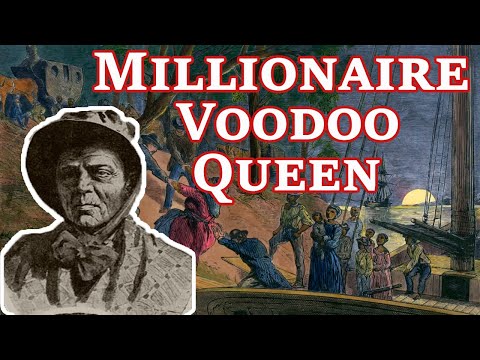
But power breeds envy. As her fortune grew—estimated at $30 million, nearly $850 million today—so did the hostility of white San Francisco. Rumors spread: her boarding houses were brothels, she practiced voodoo, she held a mysterious sway over the wealthy white men who flocked to her. When her business partner Thomas Bell died in 1899, his widow launched a smear campaign that branded Mary Ellen the “Queen of the Voodoos.” The press called her “Mammy Pleasant,” a name she despised. “I am not Mammy to everybody in California,” she snapped.
The legal battles that followed stripped her of her mansion, her fortune, and her reputation. She died in 1904, nearly penniless, in the home of friends. Yet her gravestone, added sixty years later, reads simply: “A Friend of John Brown.” The woman who had been both tycoon and abolitionist, voodoo queen and civil rights pioneer, had the last word after all.
Theresa Bell’s lawsuit was only the opening shot. Within months, the Bell family had consolidated their claim, and the courts—already inclined to believe the worst of a Black woman who had dared to accumulate so much—moved swiftly against her. Property after property slipped from her grasp, not because the evidence was against her, but because the law itself was. Deeds held in Thomas Bell’s name were ruled to belong to his heirs, regardless of who had paid for them or designed them.
Mary Ellen Pleasant did not go quietly. She fought every case with the same shrewdness that had built her empire, producing receipts, contracts, and witnesses. In one hearing, she stood before the judge and detailed the construction of her mansion, room by room, proving she had hired the architects and paid the builders with her own money. “I built that house,” she testified. “I paid for every brick.” But the court had already decided what kind of woman she was.
The press, meanwhile, had found its villain. The San Francisco Chronicle ran story after story painting her as a sorceress who had bewitched a weak white man and stolen his fortune. Readers devoured the tales. Some claimed she had poisoned Bell. Others whispered that she kept a voodoo altar in her attic and that strange lights burned in her windows at night. The more absurd the accusation, the more eagerly it was believed.
What the newspapers never printed was the truth: that Mary Ellen Pleasant had spent decades quietly funding schools, churches, and legal defenses for Black San Franciscans. That she had hired former slaves when no one else would, paying them fair wages and teaching them trades. That she had personally escorted fugitives onto ships bound for freedom. Her generosity was invisible; her supposed sins were front-page news.
By 1901, she had lost nearly everything. The mansion on Octavia Street—the one she had designed, built, and filled with treasures—was sold to satisfy debts. She packed what little remained and moved into a modest room in a friend’s house. Visitors who came to gawk at the fallen “Voodoo Queen” found instead a sharp-tongued old woman who refused to apologize for her life.
She was not finished. Even in poverty, she began writing. She drafted three separate autobiographies, each one a defiant correction to the record. “The papers have made me a monster,” she wrote in one. “But I have only ever been a woman who refused to kneel.” She sent letters to editors, demanded retractions, and corrected reporters who dared to call her Mammy to her face.
Her health declined as the new century dawned. Friends who visited described her as frail but formidable, her mind as sharp as ever. She spoke often of John Brown, of the old days on the Underground Railroad, of the slaves she had helped reach Canada. “They will forget me,” she said to one visitor. “But the work will remain.” She asked that her gravestone bear a single line, a message to history: A Friend of John Brown.
On January 4, 1904, Mary Ellen Pleasant died quietly in her sleep. She was eighty-nine years old—or perhaps eighty-six, depending on which birth year one believed. Even in death, she remained a mystery. The obituaries were brief and condescending, reducing a titan of industry and a warrior for justice to a curiosity, a relic of a stranger age.
Yet even as the earth closed over her grave, the legend refused to die. In the decades that followed, Mary Ellen Pleasant’s story was retold in whispers and half-truths, each generation adding its own layer of myth. The voodoo queen, the black City Hall, the woman who dined with senators and dressed as a servant to spy on them—she became a ghost story, a cautionary tale, a footnote. But ghosts, as she herself had once been, are not so easily dismissed.
In the 1970s, as a new wave of Black historians began digging through archives, they found her name scattered across documents like breadcrumbs: lawsuits, deeds, letters, court transcripts. “She was everywhere,” one researcher noted, “once you knew where to look.” The evidence of her genius was undeniable—the fortune built from nothing, the Underground Railroad routes she financed, the streetcar desegregation she won decades before Rosa Parks. Slowly, the monster the newspapers had created began to dissolve, revealing the woman beneath.
In 1992, the city of San Francisco officially declared a day in her honor. A small park near the site of her mansion—the smallest in the city, fittingly—was named Mary Ellen Pleasant Park. It sits on a steep hillside, a quiet patch of green where the wind carries the scent of eucalyptus. Locals say that on foggy nights, you can hear the rustle of leaves and the soft thud of eucalyptus nuts falling, as if an unseen hand is tossing them at passersby. Some say it’s her ghost, still keeping watch over the city she helped build.
The gravestone she requested took sixty years to arrive. When it finally came, in 1965, it bore the simple inscription she had asked for: A Friend of John Brown. But those who know her story understand that the words are only a fragment of the truth. She was also a friend to the enslaved, to the freed, to the forgotten. She was a friend to justice itself.
Her three autobiographies, contradictory as they were, remain the closest thing to a firsthand account. In one, she wrote: “I have been called many things—a witch, a queen, a mammy, a thief. But I know who I am.” That knowledge, unshakable and defiant, was her true inheritance. It carried her from a plantation to a mansion, from obscurity to infamy, from wealth to poverty, and finally to a grave that would not stay silent.
Today, historians still argue over the details of her life. Did she really finance John Brown’s raid? Was she born free or enslaved? Did she practice voodoo, or was that just another lie invented by her enemies? The answers may never be certain. But what is certain is the mark she left on the world—a mark that no smear campaign, no court ruling, no newspaper headline could erase.
In the end, Mary Ellen Pleasant got the last laugh. The woman they called Mammy, the woman they tried to bury under scandal and racism, is now remembered as a pioneer. Her name is spoken with reverence in classrooms and books, in the halls of civil rights organizations and the quiet corners of history. She was invisible once, and she made that invisibility her power. Now, she is invisible no more.
And yet, for all the recognition that came late, the most radical thing about Mary Ellen Pleasant was never the fortune or the legend—it was the audacity of a Black woman who refused to be defined by anyone but herself. She walked into a city directory and changed her race back to Black when passing as white would have kept her safe. She sued streetcar companies and won. She fed John Brown’s war and buried his secret in her pocket. She built a thirty-room mansion with her own hands and her own money, and when they took it from her, she kept writing.
There is a particular cruelty in being forgotten while you are still alive. Pleasant knew it. She watched the newspapers turn her into a monster, watched her friends grow quiet, watched the city that had made her rich decide she had no right to be. “I have only ever been a woman who refused to kneel,” she wrote—and she never did, not to the courts, not to the press, not to the racism that tried to erase her.
The park that bears her name is small enough to miss if you walk too fast. But the eucalyptus trees remember. The wind through those leaves carries a whisper of her voice, sharp and certain, still correcting the record. She asked for one line on her gravestone, and she got it: A Friend of John Brown. But the real inscription is the life she lived—a life that proved a Black woman could outsmart an empire and still keep her soul.
So the next time you ride a streetcar in San Francisco, or walk past a plaque that bears her name, or hear someone called “Mammy” and flinch—remember her. Remember the woman who passed as white to spy on the powerful, who turned invisibility into a weapon, who died nearly penniless but never poor in spirit. Her story is not a tragedy. It is a blueprint.
What would you risk to be remembered as yourself—not the myth, not the monster, but the woman who refused to kneel? Tell us in the comments below.
Report this article
Select a reason for reporting:






