You’ve seen the scene. Major Dick Winters, seated in a jeep, watches as Captain Herbert Sobel tries to slip by without saluting. Winters calls out, “Captain Sobel, we salute the rank, not the man.” It’s a moment of pure, satisfying revenge—one that Band of Brothers fans have cheered for years. But what if I told you that this iconic encounter never happened the way the series showed it? The real story is far more complicated, and the truth behind those words is more fascinating than any scripted drama.
The confrontation between Winters and Sobel is one of the most memorable moments in Band of Brothers, but it’s also one of the most heavily fictionalized. The series places it in Austria, after the war, with Lewis Nixon as a witness. In reality, the encounter took place months earlier, in a small French town, and the witnesses—if there were any—were not who you think. The truth, as revealed by Winters himself and other sources, is a tale of timing, memory, and the fog of war.
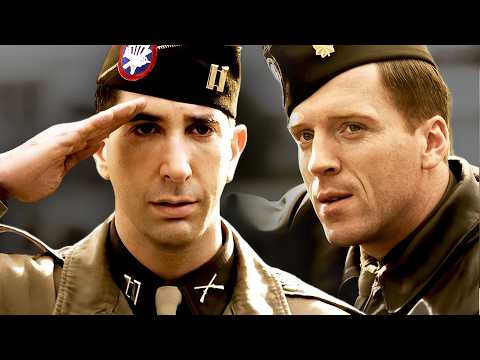
To understand the real story, we need to go back to where it all began: the training camps of Easy Company, where Herbert Sobel was the commanding officer. Sobel was a disciplinarian, a man who demanded perfection but lacked the tactical skills and leadership qualities needed for combat. His treatment of the men, particularly his targeting of Winters, created a deep rift. The breaking point came when the non-commissioned officers staged a mutiny, refusing to serve under Sobel. Winters, though not the instigator, was caught in the middle. Sobel was eventually transferred out, but the bitterness lingered.
According to Winters, the real encounter happened in Mormelon, France, in early 1945, shortly after he was promoted to major. Winters was walking down a deserted street when he saw Sobel approaching. Instead of saluting, Sobel dropped his head and tried to walk past. It was then that Winters called out, “Captain Sobel, we salute the rank, not the man.” Sobel stopped, faced Winters, and snapped off a salute. “Yes, sir,” he said, before moving on. For Winters, it was a moment of sweet revenge—a debt paid in full.
But here’s where it gets tricky. Winters’ own accounts vary. In his memoir, he recalled saying, “Captain, we recognize and honor the rank,” a slightly different phrasing. And the witnesses? Some sources say David Kenyon Webster and John Martin were nearby, with Martin quipping, “I like to see officers pull rank on each other.” Others, including Winters himself, imply there were no witnesses at all. The truth is, memory is fallible, and even Winters’ recollections changed over time.
Then there’s the version told by Don Malarkey in his memoir, Easy Company Soldier. Malarkey claims he was the only witness, and that the encounter happened after the war, in Austria, when Winters was driving him to the airport. According to Malarkey, they stopped for gas, and Sobel, now a supply officer, approached them. Winters asked, “Don’t you salute a superior officer?” and then added, “You’re not saluting the man, you’re saluting the rank.” Sobel whipped off the fastest salute Malarkey had ever seen. This version is wildly different from the others, and it’s unclear why Malarkey’s memory diverges so much.
So which version is true? The answer is murky. Winters’ account is the most credible, but even he acknowledged that the series altered the timing and details. The encounter did happen, but not in Austria, not in a jeep, and not with Nixon smirking in the background. The real moment was quieter, more personal, and perhaps even more meaningful because of it.
But why does this matter? Because Band of Brothers is more than just a TV show; it’s a cultural touchstone that shapes how we remember World War II. The changes made to the Winters-Sobel encounter are largely forgivable—they condense the story for dramatic effect. However, they also remind us that history is not a single narrative but a collection of perspectives, each with its own biases and gaps. The truth is out there, but it’s rarely as neat as a scripted scene.
As we delve deeper into the real story, we’ll explore the complex relationship between Winters and Sobel, the mutiny that tore Easy Company apart, and the lasting impact of their confrontation. The truth, as you’ll see, is far more intriguing than fiction.
The seeds of that confrontation were planted long before Mormelon. Herbert Sobel was the man who built Easy Company from the ground up—drilling them into the finest outfit in the 506th, then leading them so poorly in the field that his men lost all faith. The mutiny of the NCOs wasn’t a rebellion against discipline; it was a desperate plea to survive. They knew that following Sobel into combat would get them killed.
And at the center of it all stood Dick Winters, the quiet lieutenant Sobel had once tried to court-martial over a latrine inspection. That petty act—a humiliation engineered to break Winters—backfired spectacularly. Colonel Sink refused to sign the court-martial, and from that moment on, the balance of power began to shift. Sobel’s authority was never the same.
What’s striking, though, is how Winters himself later reflected on Sobel. In interviews, he never gloated. He acknowledged that Sobel’s brutal training saved lives in Normandy, that the man’s discipline forged the company that would hold the line at Bastogne. “He was a good man, but he wasn’t a leader,” Winters once said. It’s a remarkably generous assessment from someone who had every reason to be bitter.
Sobel, for his part, never publicly complained about how he was treated—not by his men, not by the officers who passed him over, not even by history. He served out the war in supply roles, far from the glory he had craved. When he returned to civilian life, he ran a small business, lived quietly, and rarely spoke of Easy Company. Some veterans said he seemed genuinely proud of what his men accomplished, even if he wasn’t part of it.
But the encounter in Mormelon—the salute, the quiet rebuke—wasn’t just about revenge. It was about a man who had been humiliated finally standing on equal footing with his tormentor. Winters had earned his major’s oak leaves in the mud of Holland and the snow of the Ardennes. Sobel had earned nothing but a reputation for cruelty. When Winters called out, “We salute the rank, not the man,” he was saying something deeper: the rank is all you have left, and I will honor it, but I will never honor what you did to us.
That distinction—between the rank and the man—is the key to understanding the real story. It wasn’t a petty act of revenge. It was a statement of principle from a man who had learned that leadership is not about demanding respect but about earning it. Sobel never understood that. Winters built his entire career on it.
So why does the truth matter, especially when the fictionalized version is so satisfying? Because the real story reveals something deeper about both men—and about the nature of memory itself. Winters’ revenge wasn’t a cinematic moment with a jeep and a smirking Nixon; it was a quiet exchange on a deserted street in a war-torn French town. And yet, in its own way, it was more powerful.
Consider what it took for Winters to say those words. He had spent years watching Sobel belittle, humiliate, and endanger his men. He had been the target of Sobel’s petty vendettas, including that absurd court-martial over a latrine inspection. And now, after proving himself in combat, after earning the rank that Sobel had once wielded so poorly, Winters found himself face to face with the man who had tried to break him.
But Winters didn’t gloat. He didn’t shout or make a scene. He simply reminded Sobel of the one thing that still mattered: the rank. “We salute the rank, not the man,” he said. It was a lesson Sobel had failed to learn as a commander, and now he was being taught it by the very lieutenant he had once tried to destroy.
What’s fascinating is how differently the men who witnessed—or claimed to witness—the encounter remembered it. John Martin’s quip, “I like to see officers pull rank on each other,” reduces the moment to a bit of military theater. Don Malarkey’s version, with its gas-station setting and Winters driving him to the airport, feels like a scene from a different war entirely. And Winters’ own accounts, varying between “we salute the rank, not the man” and “we recognize and honor the rank,” suggest that even he wasn’t entirely sure of the exact words.
This isn’t unusual. Human memory is notoriously unreliable, especially when it comes to moments of high emotion. Over the years, veterans’ recollections often blend with the stories they’ve heard from others, with the dramatizations they’ve seen, and with the narratives they’ve constructed to make sense of their experiences. The Winters-Sobel encounter has become a kind of legend, and like all legends, it has grown and shifted with each retelling.
But here’s what remains constant across every version: the salute. Whether it happened in Mormelon or Austria, whether Winters was walking or driving, whether there were witnesses or not, the core of the story is the same. Sobel tried to avoid saluting, and Winters forced him to. The rank was honored, even if the man was not.
And that, perhaps, is the real point. In the end, the encounter wasn’t about revenge—it was about closure. Winters had carried the weight of Sobel’s abuse for years, and in that single moment, he let it go. He didn’t need to humiliate Sobel; he just needed to remind him of the code they had both sworn to uphold. The rank, not the man. It was a lesson in leadership, delivered by a man who had learned it the hard way.
So the next time you watch that scene in Band of Brothers—Winters in the jeep, Nixon’s knowing smirk, Sobel’s reluctant salute—remember that the truth is both simpler and more complicated. The real encounter was quieter, more personal, and perhaps even more meaningful. It wasn’t about payback. It was about a man who had finally earned the right to demand respect, and who chose to do so with dignity rather than anger.
That’s the story worth telling. And it’s a reminder that history, for all its messiness, is always more fascinating than fiction.
So what actually happened in Mormelon? The most credible account comes from Winters himself: a quiet street, no jeep, no Nixon, no audience. Just two men and the weight of everything unsaid between them. “My revenge was sweet,” Winters later wrote. “Sobel’s debt to me had been paid in full.”
That word—revenge—is telling. Winters never pretended it was noble. He admitted the satisfaction, then moved on, as he always did. Sobel saluted, said “Yes, sir,” and disappeared into history.
Maybe that’s why the scene endures. Not because it’s accurate, but because it captures something true: the moment the student surpasses the teacher, and chooses to be gracious about it. Band of Brothers gave us the myth. The truth gave us the man.
Which version do you prefer—the cinematic salute or the quiet street? And does it matter if history gets polished for the screen?
Report this article
Select a reason for reporting:






