You know the faces. Hitler, Himmler, Göring, Goebbels, Mengele. The iconic monsters of the 20th century. But beneath that infamous surface lies another layer—the ones who actually did the work. Not the men who signed orders in Berlin, but those who stood in the room during the executions, who chose which line went right and which went left, who took notes while a human being died in front of them, who drew a salary, wore a uniform, and discovered they enjoyed it.
They are not famous. Most never spent a single night in a cell. Some married, had children, collected pensions, and were buried under headstones with no mention of what they did. One lies in a Jewish cemetery in California. Another died of old age in Cairo, wanted by three governments that didn’t know he was dead. One disappeared so completely that historians still argue whether she died in 1945 or in the 21st century, surrounded by grandchildren.
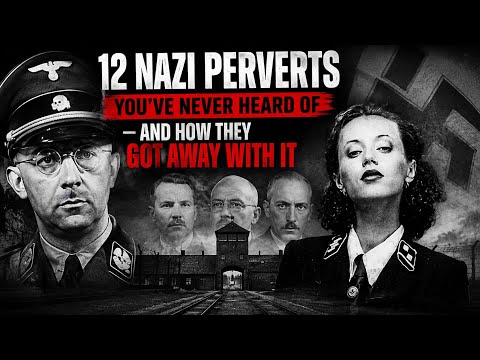
This is a story about twelve people who enjoyed it. Not out of obedience, not out of career ambition, not because of the flimsy excuse each of them later used. But for pleasure. That distinction matters because the image of the ordinary Nazi bureaucrat has become familiar—the man behind the desk claiming he only processed forms. But the people in this story didn’t just sit behind the desk. They went and looked.
A warning before we begin: some of what follows is difficult, and I will not soften it, because softening is a form of lying. I will not invent anything either. Where the evidence is thin, I will tell you. Where a story has hardened over decades, I will tell you which parts still hold.
We start with the worst of them. The last three parts come at the end for good reason.
We begin with a man who never held a weapon in his life, yet is responsible for more deaths than most who did. Eugen Fischer was born in 1874 in Karlsruhe, into a well-off family that valued books and expected him to become someone. He did. He studied medicine, then anthropology, then ethnography, collecting qualifications like other men collect debts. By his thirties, he had a reputation as a serious scholar.
In 1908, he traveled to German South West Africa—today’s Namibia—to study a community of mixed German and Nama ancestry living around the settlement of Rauboth. Consider that date for a moment. Fischer arrived in that colony four years after the German army began the extermination of the Herero and Nama peoples, driving survivors into the Omaheke desert and sealing the water wells behind them. Tens of thousands died. Fischer walked into the aftermath of a genocide with a notebook and calipers, measured the skulls of survivors, and published a book arguing that people of mixed ancestry were biologically inferior to Europeans and should be granted only limited rights. He recommended keeping them alive only as long as they were useful. That book was published in 1913.
It was read, among others, by a young Austrian in a cell at Landsberg prison, working on a manuscript of his own. The textbook Fischer later co-authored on human heredity and racial purity became the closest thing the Nazi movement had to a scientific reference, and it gave a party of street fighters what they desperately craved: the approval of universities.
By 1927, Fischer was director of the Kaiser Wilhelm Institute for Anthropology, Human Heredity, and Eugenics in Berlin, one of Europe’s most prestigious research institutions. When Hitler seized power, Fischer did not resist. He did not need to be persuaded. He became rector of the University of Berlin. He served as an appellate judge in the hereditary health courts, meaning that when a German citizen appealed against a sterilization order, Fischer was among those who decided whether to accept or reject the appeal. Hundreds of thousands were sterilized under those laws. He approved the scientific aspects that made it acceptable.
Then came the children. In the years after World War I, French colonial troops from Senegal, Morocco, and Madagascar were stationed in the occupied Rhineland, and some fathered children with German women. These children were German citizens, attending German schools. In 1937, the state decided to erase their existence. Fischer’s institute provided the examiners who assessed them. Hundreds of children were secretly sterilized without their consent, without their parents’ knowledge in many cases, and without any legal basis whatsoever. Some were twelve years old. There was no official record to speak of, because everyone involved understood this was illegal even by the standards of a regime that had legalized almost everything.
Fischer retired in 1942 and handed his institute to his favorite student, Verschuer. Verschuer had a favorite student, a young doctor with a gap between his front teeth and an interest in twins. When this student was assigned to Auschwitz, he began sending materials to Berlin. Eyes, blood samples, internal organs packed, labeled, and marked ‘urgent.’ The student’s name was Josef Mengele, and the pipeline he fed ran straight to the building Eugen Fischer built.
After the war, nothing happened to him. Nothing at all. He was never charged, never tried, never called as a witness in any significant proceeding. He lived quietly in Freiburg, received an honorary membership in the German Anthropological Society in the 1950s, corresponded with colleagues, and died in 1967 at the age of 92. Somewhere in Germany, there were men and women in their forties who could not have children because of a decision his institute made about their faces when they were children in school.
The second person we’ll discuss spent 60 years living a normal life in one of the most liberal cities in the United States. Alfrieda Rinkel was born in Leipzig in 1922. Her father was a communist who died in a concentration camp—a detail that was supposed to complicate the story but didn’t complicate it at all. In 1944, at twenty-two, she left her factory job and took a better-paying position at the Ravensbrück women’s camp, about 50 miles north of Berlin. She was assigned as a dog handler. That job title might sound administrative at first glance, but the true purpose of the dogs quickly becomes clear. Ravensbrück held over 100,000 women throughout its existence. By the summer of 1944, the camp was catastrophically overcrowded, with prisoners sleeping four to a bed and marching out at dawn each day to labor sites in the surrounding countryside. The dogs were the means by which a handful of guards controlled this vast number of starving women. A handler would walk through the camp with a dog trained to attack, and the dog did not need to be released to do its job. Everyone in the camp was fully aware of this arrangement.
Alfrieda continued in this work until April 1945. During the ten months she spent there, thousands of women died at Ravensbrück from starvation, disease, exhaustion, execution, and finally in a gas chamber built by the SS in the camps during the last winter of the war. No investigator ever proved that Rinkel personally set her dog on a specific prisoner. That is worth stating clearly because the internet has claimed otherwise. What is documented is that she accepted the job voluntarily, continued in it until the camp was nearly overrun, then left and never mentioned it again.
In 1959, she emigrated to the United States. On immigration papers, in the box asking about her wartime activities, she omitted Ravensbrück entirely. Three years later, she married a man named Fred Rinkel, a German Jew who had fled Germany in 1938 and whose relatives could not escape. They lived in San Francisco for 42 years. By all accounts, it was a happy marriage. They donated to Jewish charities. They bought a double headstone in a Jewish cemetery in Colma, with both their names pre-engraved, leaving one side ready. Fred died in 2004, and he died without knowing. That is what his wife later said, and there is no evidence to contradict her account.
Two years after his death, investigators from the Justice Department’s Nazi-hunting unit searched German records and found her—an 84-year-old widow in a San Francisco apartment. She did not contest the matter. In September 2006, she left the country, becoming the first female concentration camp guard to be deported by the United States, and returned to Germany to live with her sister. German prosecutors examined the case and concluded they could not prove a specific crime against a specific victim after 60 years. She was never tried. She died in 2018. Her husband’s surviving relatives learned her identity from a newspaper. The headstone and the grave had to be dealt with. And the thing that finally caught up with her was not a witness or a confession, but a form she filled out incorrectly in 1959, waiting its turn in a filing cabinet.
The third name is the only one on this list who escaped punishment entirely and spent the rest of his life bragging about it. Alois Brunner was born in 1912 in a village in Burgenland, on the Austrian border, to a family of small farmers whose labor he despised. He joined the Austrian Nazi Party as a teenager, when membership was still illegal, and later worked his way into Adolf Eichmann’s office in Vienna—the Central Office for Jewish Emigration. Eichmann later described him as his closest friend. That is not a compliment that reflects well on anyone, especially coming from Eichmann.
Brunner’s talent lay in planning and organization. He was skilled at stripping a family of everything they owned in a single visit, moving people from apartment to assembly point to train station without giving them time to think, and forcing Jewish community leaders to perform the administrative work of destroying their own community. He perfected this method in Vienna, where nearly 47,000 people were deported under his supervision. Then the SS began deploying him elsewhere.
In February 1943, he arrived in Thessaloniki, home to one of the oldest and largest Sephardic Jewish communities in Europe, a community that had existed there since the fifteenth century. Within five months, that community was gone. More than 40,000 people were loaded onto trains and sent to Auschwitz. The ancient cemetery was destroyed and its headstones used as building materials. From Greece, he went to France. In June 1943, he took personal command of the transit camp in the northern suburbs of Paris. Here Brunner’s image shifts from mere administrator to something else. He ran the Drancy camp himself, patrolled its yard, beat prisoners with his hands, and organized a manhunt in Nice and the surrounding Riviera for Jews hiding under false identities, using informants and body searches, with a personal zeal his colleagues considered excessive. Twenty-three thousand people went east from Dr. Si’s house under his authority. Among the last convoys were children taken from the homes where they had been hiding, some too young to know their real surnames.
Then he did the same in Slovakia. The total number of people usually attributed to him across four countries is around 128,000. Then he vanished completely. He was never brought to the Nuremberg trials, never imprisoned anywhere. He slipped out of Germany, worked for a time under a false name, and by 1954 was in Damascus, living as Georg Fischer, a businessman fond of expensive suits. The Syrian government provided him protection for the rest of his life, and it is said they exploited his expertise in interrogation. Israeli intelligence found him twice, with letter bombs. The first, in 1961, cost him an eye. The second, in 1980, cost him several fingers of his left hand. Neither killed him.
In the 1980s, he gave interviews to German and American journalists from a Damascus apartment. Asked if he regretted anything he had done, he replied that the Jews deserved what they got, that he would do it all again, and that his only regret was that he had not finished the job. Then he hung up the phone and returned to his life. France sentenced him to life in prison in absentia in 2001. No one knows with certainty when he died. The best current evidence suggests he lived until around 2010, ill, nearly blind, in an underground room, under guard rather than protection in his final years. He was 98. He was the last major perpetrator of the Holocaust to die free.
Our fourth name is a woman who said in a courtroom that submitting to the experiments was an honor. Herta Oberheuser was born in Cologne in 1911 and qualified as a dermatologist in the late 1930s. She joined the Party, then the women’s organizations, then hit the ceiling the Third Reich imposed on ambitious women in the professions. Promotion was slow, and the important work went to men. In 1940, she saw an advertisement in a medical journal seeking doctors for a women’s camp at Ravensbrück, and she applied. The purpose of the doctors at Ravensbrück was not to treat anyone. The camp was designated as a site for medical experiments, under the supervision of Karl Gebhardt, Himmler’s personal physician and one of Germany’s leading surgeons.
After Heydrich died from an inflamed wound in 1942, Gebhardt came under pressure to prove that sulfa drugs could not have saved him, because he himself had chosen not to administer them. He needed data, so he decided to get it from the prisoners. Seventy-four young Polish women, most from Lublin, most arrested for resistance activity, many still teenagers, were selected. Deep incisions were made in their legs, and bacteria causing gas gangrene and tetanus were injected into those wounds. To make the injuries more closely resemble battlefield wounds, they packed them with wood splinters, ground glass, and dirt. Then they closed the wounds and waited, recording the progression. Sometimes they treated them, sometimes they deliberately did not, to form a control group. Bones were broken and deliberately set badly. Bone fragments, muscle tissue, and nerves were removed and transplanted between patients. Oberheuser prepared the patients, administered anesthesia when needed, took notes, and performed part of the surgery.
The survivors of that group called themselves the ‘Rabbits,’ and enough of them survived to enter a courtroom at Nuremberg and show a panel of American judges what had been done to their legs. There is a second charge against her that receives less attention. Children in the camp were killed by injections of oil and a barbiturate called Evipan so that their limbs could be removed for study. Oberheuser was directly involved. The time between injection and removal was measured in minutes. She was the only woman among the 23 defendants in the Doctors’ Trial. She denied everything that could be denied and reframed what remained. She claimed she had been sent to Ravensbrück against her will, which was not true because she had responded to an advertisement. She said the experiments were not crimes. Then she said something that has stayed in the minds of everyone who has read the trial transcript: that the women selected for the experiments were lucky because they received better food, better accommodation, and medical care that the other prisoners did not get. She did not mention how many died screaming from infections deliberately planted in their bodies.
The court sentenced her to 20 years, of which she served seven. She was released in 1952 for good behavior, moved to Stocksee in Schleswig-Holstein, and opened a family practice treating children and others. She worked there for four years until a former Ravensbrück prisoner walked into her waiting room, recognized her face, and began writing to her. Her license was revoked in 1958 after a legal battle she nearly won. She lived quietly until 1978 and expressed no recorded remorse.
Our fifth name did not invent the concentration camp, but invented what happened inside it. Theodor Eicke was born in 1892 in a village in Alsace, the eleventh son of a railway station master in a region that had only been under German rule for twenty years, where the local French population made their feelings clear. Eicke hated them for it, and the hatred lasted. He left school without qualifications, joined the army at seventeen, and spent World War I as a paymaster—a detail worth noting for a man who would later present himself as a warrior.
Peace did not suit him. He tried to become a policeman but was repeatedly fired for political agitation. He found work as a security officer at a chemical company and joined the Nazi Party and the SS in 1928. By 1932, his presence had become so intolerable to the regional party leader, Josef Bürckel, that Bürckel ordered him committed to a psychiatric institution in Würzburg. This is not a rumor. A senior Nazi official looked at Theodor Eicke and concluded that the appropriate place for him was a closed ward. But Himmler had a different opinion. Himmler pulled Eicke out of the institution, and in June 1933 appointed him commandant of Dachau, the first permanent camp, which was then something close to a chaotic operation where guards beat prisoners to death at will and were sometimes prosecuted by local courts.
Eicke’s contribution was to make that cruelty systematic. He drafted a disciplinary code that specified precisely which infraction warranted which punishment, how many blows, how many days in a cell, and how long a guard could shoot at a prisoner merely for approaching the fence. He instilled in his guards the principle of absolute harshness. He told them that pity was treason and dismissed any man who showed tenderness toward prisoners. He designed the camp layout, the roll-call square, and the routine of standing for hours in all weather. He gave the guard units the death’s head as their emblem. Within two years, this model was copied in every camp in Germany, because Eicke was promoted to Inspector of Concentration Camps and given the authority to implement it. Sachsenhausen, Buchenwald, Ravensbrück, Mauthausen, and eventually the camps in the East. All of them were run according to rules Eicke laid down at Dachau. Every commandant, including Rudolf Höss of Auschwitz, learned the trade at his feet.
In the summer of 1934, Hitler decided to eliminate the SA leadership. Ernst Röhm was arrested and held at Stadelheim prison in Munich. When he refused to shoot himself, Eicke entered the cell with another officer and carried out the execution on his behalf. He was rewarded with a promotion. In 1939, he took a field command, and the Totenkopf Division was formed largely from camp guards. As expected, the division fought with men trained to fight in camps. In May 1940, near the village of Le Paradis in northern France, one of its companies opened fire with machine guns on 97 British prisoners of war who had surrendered after running out of ammunition, then advanced along the line with bayonets. Two men survived by staying still beneath the bodies.
Eicke himself was described by everyone who served with him as ferocious, corrupt, quick-tempered, and a heavy alcoholic. A man who started fights even in his officers’ club. On 26 February 1943, while piloting a light reconnaissance aircraft over the front south of Kharkov to locate one of his units, he was shot down by Soviet ground fire. His division launched an operation to recover his body. He was buried near the village of Odok Nino, and his grave was lost within months when the front retreated. There is no place to go and see him.
Our sixth name is a woman whose crimes are confirmed and whose fate is unknown. Hildegard Neumann was born in 1919 in Czechoslovakia to a German-speaking family in the Sudetenland. She was in her early twenties, working in an ordinary job, when she volunteered for the SS women’s auxiliary and was sent to Ravensbrück for training in October 1944. Training at Ravensbrück took a few weeks and involved learning the rules and punishments and learning not to see the prisoners as human. Afterward, most of the trainees were distributed to camps throughout the Reich. Neumann performed well and quickly, so well that within a short time she became chief overseer at Theresienstadt, responsible for the guards there. She was 25 years old.
Theresienstadt was the strangest place in the entire system, and its strangeness was the point. It was an eighteenth-century fortress town in Bohemia that the SS filled with elderly German and Austrian Jews, decorated war veterans, famous musicians, professors, and children. It was promoted as a spa resort, a gift from the Führer, a place where the elderly could spend the rest of the war in comfort. Families paid for their stay in advance and arrived with luggage tags and hotel expectations. In reality, Theresienstadt was closer to a temporary holding pen with a train platform. Around 155,000 people passed through it, of whom about 33,000 died of hunger and disease in a town built for about 7,000 soldiers. And about 88,000 were transferred east, most to Auschwitz and Treblinka. Of the 15,000 children who passed through Theresienstadt, only a few hundred ultimately survived.
The deception was not limited to the name. In June 1944, a delegation from the Red Cross was permitted to visit, and the SS spent months preparing for it. They deported thousands to reduce overcrowding, painted buildings, planted flower beds, opened a café and a bank that issued its own worthless currency, staged an opera for children, and escorted the inspectors along a pre-rehearsed route. The delegation submitted a positive report. A propaganda film was made afterward. Most of the actors were killed in Auschwitz within weeks of the filming’s completion.
Neumann was in that town during the final year, and her position meant she had a hand in determining whose name went on the deportation lists. The women’s section of the camp passed through her office. She was young. She is said to have been striking, and the survivors’ testimony that mentions her is uniformly hostile. Then she disappeared. She was never arrested, never tried, and her name never appeared in any postwar proceeding that reached a verdict. No one knows where she went in the spring of 1945. There is a persistent story that she lived a long life in Germany under her married name, that she had two children, and that she died peacefully in her nineties. There is also no documented evidence for that story that would satisfy a serious historian. She may have died in the chaos of that April. She may have sat in a kitchen in the 1990s watching a documentary about Theresienstadt with her grandchildren in the room. That absence is itself damning evidence of how thoroughly Europe stopped looking.
Our seventh name should be as famous as Mengele but is not. Aribert Heim was born in 1914 in Bad Radkersburg in southern Austria, the son of a policeman. He was athletic, popular, and a skilled ice hockey player, and he trained as a doctor in Vienna. In 1940, he joined the Waffen-SS. In October 1941, he was transferred to Mauthausen, a granite quarry camp above the Danube, for about seven weeks. Seven weeks. Remember that number for what he accomplished during it.
The testimony against Heim comes from prisoners who worked in the camp infirmary and survived to describe what they saw. Healthy young men were selected on arrival, not because they were sick, but because Heim wanted to see what was inside them. Water, gasoline, and poison were injected directly into the heart, and a stopwatch was used to time how long each substance took to kill. Abdominal surgery was performed without anesthesia to observe how long a man could remain conscious. Organs were removed from the living. He is said to have selected one prisoner because he admired his teeth and to have kept the skull afterward on his desk as an artifact. There was no medical purpose behind any of it. There was not even the cover of a research question of the kind Gebhardt hid behind at Ravensbrück. It was curiosity in its purest and most obscene form, carried out by a man in his twenties who was given a building full of people and told that none of them mattered.
After Mauthausen, he served in Finland, was captured by the Americans in 1945, was held briefly, and was released because no one connected the pleasant young Austrian doctor with the quarry camp where he had worked for less than two months. He settled in Baden-Baden, married, had children, and practiced gynecology for over a decade. He was beloved by his patients. In 1962, when West German prosecutors finally began to move, someone warned him. He left his home and did not return. For the next 47 years, one of the world’s most wanted men remained a ghost in a file, his name appearing on wanted lists, rewards posted, raids triggered in Chile, Spain, and Argentina. He was in Cairo. He converted to Islam, took the name Tarek Hussein Farid, and lived in a modest hotel in a popular neighborhood, where he was known for his quietness, his kindness to children, and his distribution of sweets.
He died of cancer in 1992, and his death remained secret for another 17 years until journalists found a family that had kept his belongings out of loyalty to a man they loved. In a worn suitcase were his letters, his medical reports, his identity papers, and his personal memoirs. This is worth reflecting on. Forty-seven years of successful hiding collapsed because paper remains. It stays in a box, in an attic, in a drawer no one opens, and then one day someone reads it and an entire hidden life is exposed. The same principle applies in reverse to the people we actually want to remember. If you have your grandfather’s name, a single photograph of him in uniform, and a box of things no one ever explained to you, that is usually enough to reconstruct where he served and what he went through. I have written a guide detailing how to do that using American service records, titled ‘Find Your Grandfather’s War.’ The link is in the description if you want to look at it.
Aribert Heim was never tried, never interrogated, never forced to explain what he did with a stopwatch in the autumn of 1941. And the reward for information leading to him remained posted long after he was buried.
Our eighth name ran the women’s camp at Auschwitz and founded an orchestra to play while women died. Maria Mandl was born in 1912 in Münzkirchen, a village in Upper Austria, the daughter of a shoemaker. She was intelligent but had no prospects. She spent some time working in Switzerland, then returned and joined the Nazi Party in her mid-twenties. In 1938, she worked as a guard at Lichtenburg, one of the first camps in Saxony, and discovered she was very good at the job. That term needs clarification. Being good at this job meant being terrifying, and Mandl worked hard at it.
She was promoted to Ravensbrück in 1939. In October 1942, she was sent to Auschwitz-Birkenau as chief of the entire women’s camp, where tens of thousands of female prisoners were under her authority and every female guard reported to her. She was 30 years old, earning an excellent salary, plus housing and food rations that most Germans in their own country would have envied. The survivors called her ‘the Beast,’ and they were not exaggerating. She would patrol the camp roads, and any woman who looked at her was beaten until she lost consciousness, or worse. She stood at the selections, sending women to the gas chambers with a gesture, and supplied Mengele with the women he requested.
The number of deaths usually attributed to her responsibility is around half a million. But the detail that remains stuck in memory is the orchestra. Mandl established a women’s orchestra at Birkenau, and she was personally very proud of it. She recruited musicians, provided them with instruments, slightly improved their conditions, and for a time delegated leadership of the ensemble to Alma Rosé, the famous Viennese violinist and niece of Gustav Mahler. The orchestra played every morning as the labor columns left and every evening as they returned so the guards could count the rows in time. It also played when new transports arrived, because music on the train platform calms people before they are sorted into two lines. Mandl would come to listen in the evening and weep at the beautiful passages.
There is another story about her, reported in the accounts of many prisoners. She would sometimes choose a favorite prisoner from among the new arrivals, usually a child, provide comfortable conditions, dress them, feed them, and treat them like a pet. When she grew bored, the child was sent to the gas chamber, and Mandl would find another prisoner. In 1944, she was transferred to a subcamp of Dachau. In August 1945, an American patrol arrested her in the mountains of southern Bavaria, and she was handed over to Poland. In 1947, she was tried in Kraków with other Auschwitz staff. Former prisoners from across Europe came to testify, including musicians from her orchestra. She wept in the dock, begged repeatedly for mercy, and said she had loved the prisoners in her own way. She was hanged in Kraków on 24 January 1948, two weeks after turning 36.
Our ninth name is responsible for more Polish deaths than any other officer. Friedrich-Wilhelm Krüger was born in Strasbourg in 1894 to a military family that settled his fate before he could object. He became a lieutenant in the Prussian infantry, fought honorably in World War I, then joined a paramilitary unit and entered the Nazi movement in 1929. What distinguishes him is that he changed uniforms repeatedly, moving between the SA and the SS at precisely the right moments, including a stint in an SA command that was supposed to get him killed during the Night of the Long Knives but did not.
In October 1939, he was appointed Higher SS and Police Leader in occupied Poland, based in Kraków, making him the senior police officer in a country of over 20 million people that Nazi leadership had decided to dismantle. He began by targeting the educated classes in an operation known as ‘Extraordinary Pacification.’ Thousands of teachers, priests, lawyers, doctors, officers, and Polish political figures were arrested and shot in the forests surrounding the cities, based on the idea that a nation lacking a leadership class becomes merely a source of labor. He then established a retaliatory policy for attacks on Germans, with predetermined calculations. For every German killed, a specified number of Polish civilians were rounded up from the streets and executed. Villages suspected of supporting the resistance were burned with their inhabitants inside the buildings. Deportations to extermination centers in eastern Poland went through his police apparatus.
The liquidation of the Warsaw Ghetto in the spring of 1943 was carried out by men under his command, and it was Krüger who appointed Jürgen Stroop to complete the task when the first commander proved too slow. Then there is Zamość. In late 1942, the area around that city was selected for German settlement, and nearly 110,000 Poles were expelled from their homes in the middle of winter. Their children were sorted by appearance. Those who looked sufficiently Germanic—several thousand of them—were taken, given new names and new birth certificates, and placed with German families to be raised as Germans. Most were never found again. Those who were found after the war often did not believe it because they remembered no other life.
The total number of civilians targeted under Krüger’s authority in Poland is usually cited as around one and a half million. He was so brutal that even the German civil administration found him excessive, and Hans Frank, the Governor-General who was himself far from merciful, spent years trying to get rid of him. Frank succeeded in November 1943, and Krüger was pushed into a field command, eventually leading an SS mountain corps in the Balkans. As the Reich collapsed, he made his way to Austria, and on 10 May 1945, as Allied forces approached the village of Gundausen, he shot himself. He was 51. He never answered a single question about his children.
And that brings us to the last name and the highest-ranking man on this list by a wide margin. Ernst Kaltenbrunner was born in 1903 in Ried im Innkreis in Upper Austria to a family of lawyers, and became a lawyer himself. He was enormous, nearly two meters tall, with powerful hands and dueling scars on his face that created an initial impression he did not need to improve upon. He joined the Austrian SS when it was illegal. He was imprisoned for it in 1935, and after the Anschluss in 1938, he was rewarded with command of the SS in Vienna.
In 1942, Reinhard Heydrich, head of the Reich Security Main Office, was attacked in Prague by Czechoslovak agents and died of his wounds. That office was the central operations hub of Nazi terror, housing the Gestapo, the criminal police, the intelligence service, and the department responsible for organizing the deportation of Europe’s Jews. Himmler ran it for a few months, then in 1943 handed it to Kaltenbrunner. Kaltenbrunner was not merely an administrator; he tightened procedures and pressed for higher numbers of convictions, demanding greater efficiency from a system that had only death as its output. Under his tenure, deportations continued to the end, including the destruction of Hungarian Jewry in 1944, when 400,000 people were sent to Auschwitz in less than two months. Kaltenbrunner signed execution orders for prisoners in the camps as Allied forces approached, so that only those still capable of hard labor remained alive. He personally ordered the killing of 50 Allied airmen recaptured after escaping from Stalag Luft III—a war crime committed against uniformed prisoners of war, in flagrant violation of every convention Germany had signed.
After the July 1944 assassination plot, he oversaw the investigation and the arrests that followed, which resulted in the deaths of thousands of Germans. There are testimonies that he visited Mauthausen and watched a demonstration of a gas chamber, then the crematorium, then a hanging, then a shooting, so that he could compare methods. He denied it. He was in the Führerbunker on 20 April 1945 when Hitler emerged to inspect a group of teenage Hitler Youth. The next day, Kaltenbrunner left Berlin for the Austrian Alps. In May, he was hiding in a hunting lodge high above Lake Altaussee. Local men who knew the mountain reported him. An American patrol climbed up on 12 May and arrested him without resistance.
At Nuremberg, he denied everything, claiming that documents bearing his signature were forged. He said the Gestapo had nothing to do with him. He claimed he did not know the purpose of the camps—a claim that required the court to believe that the head of the Reich Security Main Office was the only man in Europe who had not heard of them. He suffered a cerebral hemorrhage during the trial and appeared in court afterward pale and exhausted, which aroused no sympathy. Even his subordinates testified against him. On 1 October 1946, he was convicted of war crimes and crimes against humanity. In the early hours of 16 October, he was hanged in the gymnasium of Nuremberg prison, the third of the condemned to die, and the highest-ranking SS officer to face the court.
Twelve people. Doctors, guards, administrators, a lawyer, and the son of a paymaster from a border village. None of them was born a monster, and none of them was forced to become one. Each was given a choice, and each made it, and some were disappointed only by the slow pace of promotion. Half of them died in their beds. That is what makes this list worth knowing more than the list of the famous ten. The famous ten look like history. These look like colleagues, neighbors, the woman at the end of the street with her dog, the doctor who was so good with children.
That is the real lesson, and it is a hard one. The machinery of atrocity does not require monsters. It requires ordinary people who are willing to go and look—and who discover, to their own surprise, that they enjoy what they see.
So here is the question I leave with you: if the banality of evil wears a friendly face and lives quietly among us, what would you have done differently—and how would you know? Tell me in the comments.
Report this article
Select a reason for reporting:






