The jungle didn’t care about rank, firepower, or the flag on your shoulder. It only cared about weight. And in the suffocating heat of Vietnam, the American soldier was losing that fight before he ever fired a shot.
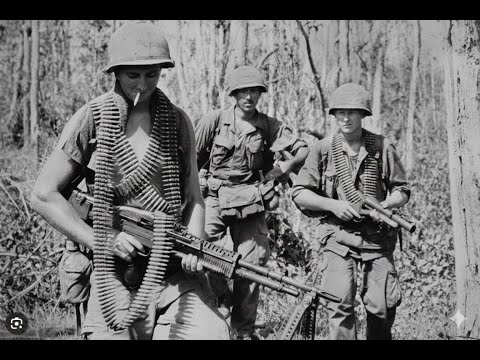
An infantryman’s pack often ballooned to 80 or 100 pounds—canned rations, ammunition, radios, water. Every step was a war against gravity. Every patrol, a slow, loud, exhausting crawl through enemy territory. When you move slow and loud, you’re not a phantom. You’re a target.
Half a world away, the Australian Special Air Service Regiment had learned a different lesson—one written in blood and hunger across the jungles of Borneo and Malaya. Lighter is faster. Faster is quieter. Quieter is survival.
Their long-range patrols lasted ten to fourteen days, deep in contested territory where resupply was impossible and discovery meant annihilation. So they made a radical choice: slash the pack to under fifty pounds. Even for two weeks in the bush.
Ammunition, radio batteries, demolition gear—non-negotiable. Everything else, especially food and water, was mercilessly scrutinized and discarded. The difference was immediate and visual. The American staggered under a mountainous pack, spine bent into a permanent stoop. The SAS trooper moved with lean, economical efficiency—pack riding high, hands free, eyes up, ready to react.
But this philosophy demanded a terrifying compromise. If they weren’t carrying food, they had to find it.
For the SAS, the jungle wasn’t just a battlefield. It was a larder. They packed only a meager emergency stash—a few dehydrated soup packs, compressed energy bars, and a tiny tin of Vegemite, prized for its dense vitamin B content. These rations were designed to last three or four days. After that, the soldier’s stomach became his own responsibility.
They had to eat the jungle to beat the enemy.
This pushed their diet into territory that wasn’t just unorthodox—to their American allies, it was utterly repulsive. The very act of feeding themselves became a testament to extreme discipline and iron will.
The planning phase for a long-range patrol was a masterclass in calculated deprivation. Every item was weighed, scrutinized, justified. If it didn’t directly contribute to the mission or immediate survival, it stayed behind. Food was the first luxury sacrificed.
An American MRE provided thousands of calories of processed food, complete with a heating element and plastic spoon. The SAS pack was starkly minimal: a few concentrated energy blocks—hard slabs of pressed oats and sugar designed only to delay exhaustion. A few packs of dehydrated soup mix, perfect for warming the soul on a cold jungle night without a telltale fire. And Vegemite—a dense, black, salty paste that packed a powerful punch of B vitamins, crucial for maintaining energy during prolonged calorie deficiency. A tiny tin was often prized more highly than a tin of luxury meat.
The crucial psychological element was that the rations were deliberately insufficient. They were designed not to sustain the trooper, but to buy him time. By the end of the first week, the soldier had two choices: find food or face the inevitable physical and mental degradation of starvation.
This created a massive advantage in stealth. An SAS patrol could lie motionless in a final hide for seventy-two hours, perfectly camouflaged, consuming only sips of water and micro-portions of their reserves. They produced virtually no waste—no cans, no plastic packets, no telltale kitchen refuse. They were truly phantoms.
In stark contrast, US special forces carried much heavier rations—more palatable, but still bulky. This created friction when units worked together. An American observer embedded with an SAS patrol often faced a brutal choice: carry massive weight to sustain his comfort and expose the patrol, or starve alongside his Australian comrades.
To witness the SAS on patrol was to see men living at the extreme edge of endurance. They operated in a state of controlled hunger. Their minds sharpened by low caloric intake. Their survival dependent on acute observation. They had replaced the weight of food with the weight of knowledge—which leaf was safe to chew, which insect held protein, which creature moved slow enough to be caught without a fight.
This deliberate embrace of deprivation transformed the SAS trooper from a traditional soldier into a hunter-gatherer. It allowed him to achieve the ultimate tactical goal: a logistical footprint of zero.
But this wasn’t a desperate invention of the Vietnam War. It was the product of a grueling curriculum honed in another theater—the Malayan Emergency and the Indonesian Confrontation in Borneo. There, the SAS learned that textbook doctrine was useless. They had to become experts in deep-penetration patrolling, and the most critical aspect was indigenous knowledge.
The Australians learned directly from the local tribes—the Iban trackers in Borneo, the ethnic groups in Malaya who had survived in the jungle for millennia. They absorbed lessons on what to eat, what to touch, what to avoid. Lessons that Western military manuals simply did not contain.
The jungle will sustain you—provided you know how to ask it.
This meant comprehensive training in ethnobotany. SAS troopers learned to identify wild yams, tubers, and fruits—separating the nutritious from the toxic. They knew which vines yielded drinkable water and which would paralyze the throat. They understood that water pooling in leaves or boughs, though pure-looking, could be instantly fatal if consumed without filtration, due to parasites and larvae.
They learned to track and hunt small game without firing a shot—using snares and silent traps that left no noise signature. They read the habits of insects and animals to find water sources. This deep knowledge became the fundamental difference between the SAS and their American counterparts. While US special forces received survival training that was often theoretical, for the SAS, this intimacy with the environment was a precondition for service.
When they deployed to Vietnam, they brought this institutional memory with them. The jungles of Phuoc Tuy were geographically different from Borneo, but the principles remained the same. Because they were trained by masters of the environment, the SAS approached the Vietnamese jungle not with apprehension, but with quiet confidence.
They knew that when their scant rations ran out, they had the skills—the Borneo curriculum—to literally eat the jungle and keep moving. To maintain the silence and stealth that were their ultimate weapons.
Once the rations were gone, they turned immediately to the most abundant, reliable source of protein in the jungle: insects and their larvae. For the average Western soldier, this was a line rarely crossed. For the SAS, it was essential survival and tactical discipline.
In the humid, decaying environment of the jungle floor, protein rots quickly. Large game is difficult to hunt, difficult to clean, and requires fire—a loud, smoky beacon to the enemy. Insects and larvae, however, are everywhere, almost silent to acquire, and offer a dense, nutritious payload.
The key was knowledge—knowing where to look and what was safe. The SAS troopers were masters of finding what they grimly called “jungle seafood.” Their preferred foraging grounds were rotting logs, damp earth, and the inner cores of certain plants. They would peel back bark or split open decaying wood to reveal plump, cream-colored grubs and beetle larvae—calorie-dense, high in fat and protein. While the sight would induce vomiting in the uninitiated, including many US Green Berets who encountered the Australian habits, the SAS consumed them with pragmatic efficiency.
A mouthful of larvae was the difference between maintaining alertness during a twelve-hour static watch and succumbing to weakness. Preparation was key. While some larvae were safe raw, most were lightly cooked to kill parasites. Crucially, this was done over a minimal, smokeless heat source—a sliver of heat from a tiny self-contained fire, or more often, roasting the insects on a hot rock heated deep within a carefully managed fire pit, allowing heat to dissipate without releasing telltale smoke.
Ants were another staple. Certain species of large jungle ants and their eggs provided a powerful acidic burst of protein and flavor. The troopers learned to locate termite mounds and extract the pale, wingless insects, often eating them by the handful.
The tactical advantage was profound. An American patrol might spend valuable daylight hours fishing or risking a snare for a small bird, creating noise and leaving a large physical footprint. The SAS could stop silently, consume a handful of protein-rich jungle seafood, and resume movement in minutes—leaving nothing but disturbed leaves.
The ability to look at a rotten log and see not decay, but dinner, was the ultimate psychological hurdle overcome by the SAS. It marked them as creatures of the jungle, capable of sustaining themselves where their more conventionally supported allies would quickly wither.
This adaptation was a quiet, powerful testament to their superior integration into the hostile environment of Vietnam. And it was only the beginning. Because the most concentrated, reliable source of fresh meat in the Vietnamese jungle was yet to come—and it would earn them a name that would echo through the Special Forces community for decades.
The snake was the prize. For most Western soldiers, a snake meant danger—a threat to be killed with a burst of automatic fire or avoided entirely. For the SAS, it was a silent, perfectly packaged meal.
Snakes were abundant near water, trackable without the explosive noise of a firearm, and free of the large internal parasites common to mammals. Catching one required only quiet focus, not the exhausting pursuit of jungle fowl or wild pig.
But Vietnam is home to some of the world’s most deadly venomous snakes—the king cobra, the banded krait, aggressive pit vipers. Misidentifying or mishandling one meant a sudden, agonizing death, often far from medical help.
The training was meticulous. They learned movement patterns, coloration, defense mechanisms. They distinguished between a snake ready to strike and one sluggish from a recent feed—vulnerable. The preferred method was swift and surgical: pin the head with a stick or rifle butt, grab just behind the skull, sever the head. The muscular body, still writhing with reflex, was safely contained.
Preparation was immediate. The head was buried far away, eliminating the venom. The skin was stripped, the long pale meat roasted on a stick or cut into a light stew—always over residual embers or hot stones, producing minimal smoke. The meal never betrayed the patrol’s position.
To their American counterparts, who were often terrified of the fauna, the sight of an Australian calmly preparing a venomous cobra for dinner was a shocking display of self-sufficiency and iron nerve. The “snake eaters” moniker became a badge of honor—not just survival skills, but psychological dominance over the most hostile aspects of the environment.
Food scarcity could be tolerated for days. Water scarcity was a rapid killer. Dehydration in the suffocating heat could cause incapacitation, delirium, heat stroke in hours—compromising the entire patrol.
A gallon of water weighs 8.3 pounds. For a fourteen-day patrol, carrying sufficient water was logistically impossible. So the SAS developed extreme expertise in field hydrology. The most dangerous source was the obvious one—rivers and streams, often polluted or deliberately booby-trapped. Drinking untreated river water was a guaranteed route to dysentery and exposure.
They focused on silent water. They tapped water vines—cutting at the base first, then higher up, so pressure wouldn’t suck the liquid back into the roots. The fluid was often bitter, but sterile and life-saving. They collected dew by wrapping cloth around smooth tree trunks, or used waxy leaves and plastic sheeting as overnight dew traps.
For groundwater, they dug a hole beside a contaminated source and filled it with layers of crushed charcoal, sand, and cloth—a rudimentary filter that reduced sediment and made purification tablets more effective. They knew which plants held water: pitcher plants, bamboo boughs. All silent. All invisible.
A large US unit refilling canteens at a stream created an audible, visible target. An SAS trooper collecting condensation from a vine was a ghost.
The tactical advantages were manifold. Reduced noise signature: no cans, no foil, no plastic torn open in the still air. Zero logistical footprint: every scrap burned to ash or buried. Increased range and endurance: thirty pounds lighter meant greater distances, higher situational awareness, and the ability to sprint when extraction went hot. And psychological resilience: operating in controlled hunger, sustained by unsettling food, built an iron resistance to panic. They had already conquered starvation. What was left to fear?
When US Green Berets encountered the Australian patrols, they reacted with a mixture of revulsion and awe. They were horrified by the meals—but they could not deny the results. The SAS patrols were consistently lighter, stealthier, and maintained a higher tempo of operations with fewer casualties than any other unit in the task force.
The survival diet was never the end. It was the means to achieve ultimate stealth. By carrying only what was essential and trusting their ability to forage, the SAS eliminated the bulky, noisy logistical chain that compromised larger units. Their lighter packs allowed speeds and maneuverability that astonished the enemy, who struggled to track patrols that left virtually no trace.
The enduring lesson of the snake eaters is that true resilience is not about strength of arms but adaptability of mind and body. Success is found not through conforming to standard procedures, but through deliberately rejecting them when the environment demands innovation. The refusal to be weighed down by conventional rations was their greatest gamble—and their most brilliant move.
It forced them to master the environment, turning the hostile jungle into a dependable supplier. It allowed them to remain in the shadows longer, strike harder, and disappear without a trace. The human spirit, stripped to its barest essentials and armed with knowledge, is the most formidable weapon of all.
So here’s the question that lingers long after the last patrol fades into the jungle: if you were dropped deep in enemy territory with only three days of food and no hope of resupply—would you have the nerve to eat the jungle, or would the weight of your own comfort betray you? Let me know in the comments.
Report this article
Select a reason for reporting:






