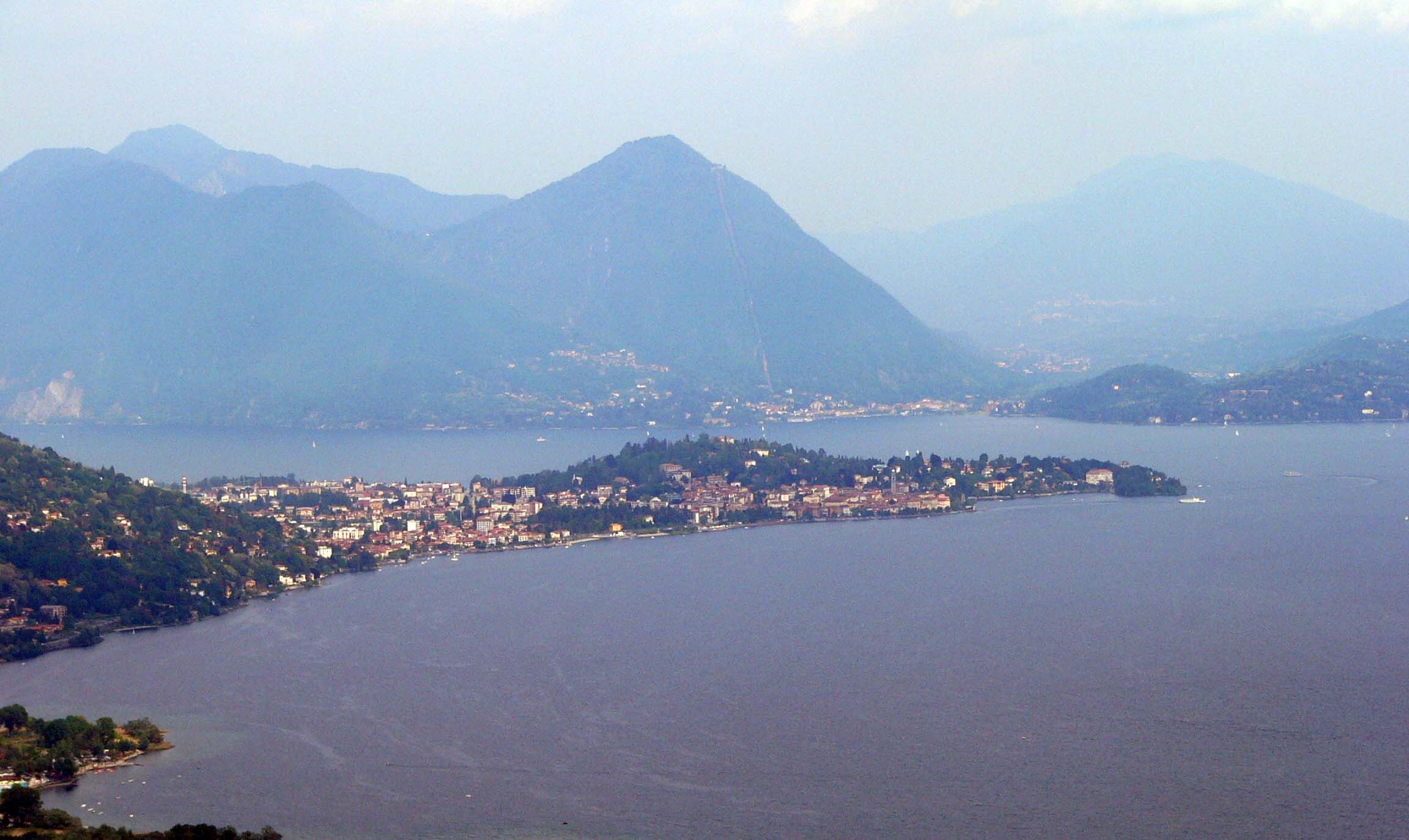
On the afternoon of Saturday, April 15, 2017, an old woman sat in an armchair in a small apartment in Verbania, a town on the shore of Lake Maggiore in northern Italy. Earlier that day she had eaten her usual raw egg and a few biscuits.
Then her caretaker noticed that she had stopped breathing.
Her name was Emma Morano. She was 117 years and 137 days old.
And with her last breath, something larger than one life quietly came to an end. She was the last person on Earth known to have been born in the 1800s.
The headlines that weekend called her the world’s oldest person. But the number was the least surprising thing about her. The real story is what a girl born in a small Piedmont village in 1899 had to survive to get there, and the one decision, made in 1938, that turned her into the woman the world finally met.
Her story begins with a sheet of paper.
On December 3, 1899, a young man walked into the town hall of Civiasco, a small village in the province of Vercelli, in Piedmont. His name was Giovanni Morano. The clerk wrote down his age, 22, and his trade: “minatore”, a miner.
He had come to register a daughter, born a few days earlier, on November 29, 1899. Her mother was Matilde Bresciani.
The baby’s names were written in looping ink: Emma Martina Luigia.
That handwritten birth record still exists. More than a century later, it would prove something no one else alive could claim. Emma had been born in the final weeks of the 1800s, before the calendar ever turned to 1900.
She was the eldest of eight children, five girls and three boys. The family moved with her father’s work, first to the Ossola valley, then to Pallanza, on Lake Maggiore.
Pallanza is now part of the town of Verbania. Emma would live there for the rest of her very long life.
Long life, as it turned out, ran in the family. Her mother, an aunt and some of her siblings lived to around 90. One sister, Angela, reached 102.
But nobody in that household could have imagined what lay ahead for the eldest girl. Nor how much of it would hurt.
At 16, Emma went to work in a factory that made jute bags. It was hard, plain labor, and it was only the beginning of a working life that would stretch on for half a century.
Then the world went to war.
When the First World War came to Italy, Emma was still in her teens. At some point in those years she became engaged. Then her fiancé was called to the front.
She never saw him again.
Decades later, speaking to the Italian newspaper La Stampa in 2011, Emma said simply that her fiancé had died in the war. She assumed he was gone, and she never found out more.
What happened next was not a love story.
Another man wanted to marry her. Emma did not love him. According to her own account, he did not accept no for an answer.
When she recalled his proposal more than eighty years later, she quoted it word for word.
“Either you agree to marry me or I will kill you.”
She married him. “I was 26. We got married,” she said, as flatly as if she were reading from a list.
The year was 1926. His name was Giovanni Martinuzzi.
It is hard to read those words side by side. A threat of death, followed by a wedding. In the Italy of the 1920s, a young working woman had very few ways out of a situation like that.
The marriage was, by every account, unhappy. Her husband beat her.
Emma kept working. She kept living in Pallanza. And for more than a decade, she endured.
In 1937, something changed. Emma gave birth to a son, her only child.
For a few months, there was a baby in the house.
Then, when he was just six months old, the little boy died.
The record says almost nothing more about those few months. But what Emma did next says a great deal.
In 1938, Emma Morano ended her marriage.
To understand how unusual that was, you have to picture Italy in 1938. The country was under Fascist rule, and women were expected to be submissive wives.
Divorce did not even exist in Italian law. It would not become legal until 1970, more than three decades later.
Emma could not get a divorce. So she did the next thing she could. She separated from her husband and refused to live with him.
Her own words about that moment are some of the proudest she ever spoke on record. “I separated from him in 1938. I think I was one of the first in Italy to do that.”
Her longtime doctor, Carlo Bava, later put it even more plainly. “She abandoned the husband in the Fascist era, when women were supposed to be very submissive.”
Legally, the two remained husband and wife until his death decades later. But Emma never went back to him. She never married again.
Asked by The New York Times, many years later, why she had stayed on her own, she gave an answer that could stand as the motto of her entire life.
“I didn’t want to be dominated by anyone.”
So what did a woman alone do in the decades that followed? She worked.
Emma’s working life began at the jute bag factory and went on for decades, well past the age when most people stop. The exact finish line depends on who is telling the story.
Emma herself once said, “I worked in a factory until I was 65, then that was that.” Other accounts say she kept working for years after that, and only retired at around 75.
Either way, the picture is the same: a small, stubborn woman who got up, went to work and answered to herself.
And then there were the eggs.
Ask anyone who knows one thing about Emma Morano, and they will tell you about the eggs. For roughly 90 years, according to Guinness World Records, she ate three eggs a day.
Two of them raw. One cooked. Her doctor confirmed the routine in his own words: “Two raw, and one fried.”
She said the habit began when she was young, on the advice of a doctor. Some accounts say it was meant to treat anemia. Whatever the reason, she never stopped.
Alongside the eggs came fresh pasta and raw meat, and, in Dr. Bava’s words, she “has never eaten much fruit or vegetables.” Some doctors told her to cut out the eggs. She ignored them, only easing down to two a day, plus a few biscuits, in her final years.
It would be tempting to say that the eggs kept her alive. Emma herself liked to credit two things for her long life: raw eggs, and staying single.
But there is no proof that eggs did anything special for her, and her doctor reportedly believed the real secret was in her genes. Remember that family where so many people reached 90, and one sister reached 102.
Meanwhile, a quiet race was under way, and Emma was winning it without leaving her chair.
One by one, the people born in the 1800s disappeared. Each year, the list of verified survivors from that century grew shorter.
Emma kept going.
In 2013 she became the oldest living person in Italy, and in Europe. In the years that followed she passed the oldest Italians ever recorded, one after another.
Italy noticed. In December 2011, President Giorgio Napolitano had already made her a Knight of the Order of Merit of the Italian Republic. On her 116th birthday, Pope Francis sent his congratulations.
Then, on May 13, 2016, came the moment that turned a quiet old woman from Lake Maggiore into international news. The world’s oldest living person, Susannah Mushatt Jones, died.
Emma Morano, aged 116, was now the oldest person alive on Earth.
Guinness World Records confirmed the title that month, after reviewing research by the Gerontology Research Group. That old birth record from Civiasco had suddenly become world news.
By then, Emma had not left her apartment for years. She lived in a single room and received care around the clock.
Scientists wanted to know what everyone wanted to know. In 2014, according to the Italian news agency ANSA, researchers from Harvard Medical School had visited her as part of a study on immunity to disease.
On November 29, 2016, she turned 117. “I’m happy I have turned 117!” she said.
Marco Frigatti of Guinness World Records said she could “teach us all a lesson of the value of a life well lived.”
She was, by then, only five years younger than the oldest person ever recorded, Jeanne Calment, who lived to 122 years and 164 days.
But the clock that had been so generous with Emma was finally running down.
In the spring of 2017, her doctor noticed she was sleeping more and talking less. Dr. Bava kept visiting.
On Friday, April 14, he saw her for what would be the last time. As she did on every visit, she held on to him. “She thanked me and held my hand,” he said.
The next afternoon, she was sitting in her armchair. She had eaten her raw egg and her biscuits. And then her caretaker realized she was no longer breathing.
“She didn’t suffer,” Dr. Bava said. “I’m happy she didn’t suffer but passed away that way, tranquilly.”
The mayor of Verbania, Silvia Marchionini, chose words that sounded almost like a sports commentary. “She reached an incredible finish line.”
She was buried in the cemetery of Pallanza, in the lakeside town she had called home for almost her entire life.
A Guinness spokesperson described her as “the last person to be born in the 1800s.”
So is the viral claim true? Yes, with one small twist that makes it even more interesting.
Emma Morano really was the last verified living person born in the 1800s, meaning any year up to and including 1899. But strictly speaking, the nineteenth century ran from 1801 to the end of 1900.
That sounds like hair-splitting, but it comes from how the calendar was built. There was no year zero, so the first century ran from year 1 to year 100, and every century since has ended in a year with two zeros.
By that definition, two women born in 1900 outlived her. Violet Brown of Jamaica, born March 10, 1900, became the world’s oldest person after Emma died, and held that title for only five months, until her own death in September 2017. Nabi Tajima of Japan, born August 4, 1900, lived until April 21, 2018.
Tajima, not Emma, was the last known person born in the nineteenth century. Some reports in 2016 and 2017 blurred the two ideas, which is why the phrase “last of the 19th century” has followed Emma’s name ever since.
In other words, Emma closed the door on the 1800s. Tajima closed the door on the century.
Either way, the woman from Civiasco had watched an entire era vanish around her. She was born in one century, survived the First World War and the Fascist years, and lived deep into another century entirely.
And through all of it, she held on to one decision she had made in 1938, alone, at a time when it took real courage: to live the rest of her life on her own terms.
A lost fiancé, a forced bride, a buried baby, and then a woman who walked away and outlived everyone else born in the 1800s.
Maybe the eggs had nothing to do with it. Maybe it was all in her genes. Or maybe a part of the answer lies in the decision she made in 1938, when walking away took more courage than staying.
Tell us honestly: would you have had the courage to do what Emma did in 1938?
Report this article
Select a reason for reporting:






