In the dead of night, a Taliban fighter kneels in the dirt, wrists bound, surrounded by shadows that move with chilling purpose. He doesn’t beg for water or mercy—he asks one question: “Are they the Australians?” The answer could mean the difference between life and death. Because in Uruzgan province, by 2008, the men of Australia’s Special Air Service Regiment had become something more than soldiers. They were a legend, a nightmare, a name whispered in fear.
This is the story of how a small regiment from Perth became the most feared force in Afghanistan—and the reckoning that followed when Australia dared to ask what its heroes had done in the dark.
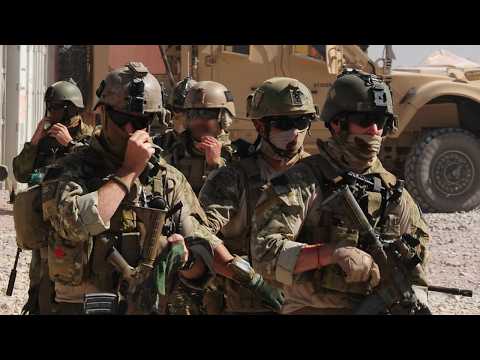
The Taliban had learned the rhythm of war. They knew the Dutch held bases, the Americans came loud and slow. But there was one group they spoke of in lower voices. Some called them “the tall ones.” Others, “the foreigners who came in the dark.” They were the SASR, and their reputation preceded them like a shadow. They moved without sound, struck without warning, and seemed to know exactly which door to kick in before the dogs even barked. Fear travels faster than any patrol, and it did half the work before the soldiers arrived.
By late summer 2008, that reputation faced its ultimate test. A small patrol of Australians, Americans, and Afghans drove into the Khaz Uruzgan valley, unaware that 100 to 200 Taliban fighters waited in the high ground. Among them was a 29-year-old trooper named Mark Donaldson. Before the day ended, he would sprint across open ground under relentless fire—not to kill, but to save.
The ambush was perfect. Gunfire poured from three sides, rockets slammed into vehicles, and within seconds, the patrol was wrecked. Nine Australians were wounded; an American sergeant was killed. In the chaos, a vehicle carrying an interpreter took a direct hit, throwing him into the open—wounded, exposed, and certain to die. The enemy owned every inch of that ground. To go back for him was suicide.
But Mark Donaldson ran. He broke from cover and sprinted 80 meters into the killing zone, bullets and rockets tearing the air around him. Every stride, his mates expected him to drop. He didn’t. He reached the interpreter, hauled him up, and carried him back—alive. That single act of valor earned him the Victoria Cross, the first awarded to an Australian in 40 years. It also cemented the legend: these were men who would run toward the very thing that every instinct screams to flee.
Less than two years later, another SAS soldier would earn the same medal for charging machine-gun nests alone. Two Victoria Crosses in two years from one small regiment. By 2010, the Australians were untouchable—heroes at home, nightmares abroad. But the same year the second medal was pinned, darker things were happening in other compounds, on other nights. Things that would take a decade to drag into the light.
Because the fear the Taliban felt wasn’t just respect for skill. It was something colder. A captured fighter’s dread wasn’t that he might lose a fair fight—it was that surrender might not save him at all. Whispers moved through the valleys: with the Australians, putting your hands up in the dark might buy you nothing. For years, those whispers were dismissed as propaganda. But they didn’t fade. And in 2016, Australia did something few armies ever do: it turned and investigated itself.
Paul Brereton, a major general and a Supreme Court judge, led the inquiry for four years in near-total secrecy. His team pored over operation logs, mission reports, and the sworn testimony of soldiers who had been on the ground. They weren’t chasing Taliban propaganda—they were listening to Australian veterans describe, under legal protection, what they had witnessed their own side do.
The final report, released in November 2020, broke something in the country. It found credible information that Australian Special Forces had unlawfully killed 39 people in Afghanistan. Not in the chaos of firefights, but prisoners and civilians—people who had been captured, controlled, and posed no threat. The report detailed 23 separate incidents involving 25 soldiers. And then it described something even darker: junior soldiers ordered by senior men to kill a prisoner in cold blood as their first kill. They called it “blooding.”
A young trooper, desperate to be accepted, would be handed a bound prisoner and told to shoot him dead—so he had blood on his hands like everyone else. Afterwards, weapons and radios were sometimes planted on the bodies, and false reports were written to dress the killings up as fair fights. The inquiry described a subculture—a small, secret group where this horror had become normal, taught to each new intake as simply the way things were done.
This is the other half of the answer. Why would a captured fighter beg not to face these men? For years, the proud answer was that they were the best—and the best are always frightening. But the inquiry pointed to a darker truth: some of them had stopped seeing a prisoner as a man to be captured and started seeing him as a problem to be erased. The dread in those valleys may not have been superstition at all. Some of it was simply accurate.
We must hold both truths at once. The overwhelming majority of the men who served did their brutal, thankless job with honor, broke no law, and have since carried the public shame earned by a handful of others. That is its own injustice. But the report was just as clear that what the few did was real, deliberately hidden, and carried on for years while the nation cheered.
The damage spread far beyond the regiment. A former senior Afghan official said it plainly: “The conduct of foreign special forces, the endless night raids, and the killings of locals had in the long run helped the Taliban more than any battle they ever won—because every wrongful death handed the enemy ten furious new recruits.” The very tactics that built the legend may have helped lose the war.
In the end, the whole story can be seen in two men. Both from the same regiment, both holding the same medal—the Victoria Cross—and standing at opposite ends of everything that medal can mean. The first is Mark Donaldson. His story has never been in doubt. He ran into that fire and carried a wounded stranger out. He left the army, wrote a book, and spoke openly about the cost of war. His Victoria Cross sits clean and in the light.
The second man is where the legend and the reckoning crash head-on. This film will not name him for legal reasons, but for a while the whole country knew his name. He came from the same regiment and wore the same Victoria Cross, earned at Tizak for courage that has never been seriously challenged. After he left the army, newspapers reported that he had committed war crimes in Afghanistan. He denied every word and sued for defamation. He did not clear his name. A Federal Court judge ruled against him, finding that the newspapers had proved their most serious claims substantially true—that he had been complicit in the unlawful killing of unarmed Afghan prisoners. He appealed and lost. He took it to the High Court, which declined to hear the case. No criminal court has ever convicted him, and he has always insisted he did nothing wrong.
So there it is: two Victoria Crosses, one small regiment. One medal clean in the light. The other tangled in the most serious findings an Australian court has ever made against a decorated soldier. The same unit produced both men. The same brutal selection, the same training, the same valleys, the same long nights. The thing that made these soldiers magnificent and the thing that made them frightening were never separate—they grew from the same root.
The reckoning is not finished. The Brereton inquiry could only find credible information; it could not send anyone to jail. So the government created a separate body of police and lawyers to build criminal cases that must be proved beyond reasonable doubt. That work is slow and still ongoing. The first charges have been laid. More may follow. After all the medals and headlines, the law has finally made its way to Uruzgan to ask out loud what those valleys had been whispering all along: What exactly happened in those rooms in the dark?
Behind it all stand the thousands of veterans who served honorably and came home to find their service stained by other men’s crimes. And the Afghan families in villages most Australians will never see, still waiting for anything that might look like justice for their dead.
So why would a captured Taliban fighter beg not to face the Australian special forces? The honest answer is that there were two reasons, braided so tightly they are almost impossible to pull apart. The first is the one the country is rightly proud of: these were genuinely among the finest soldiers in the war—patient, silent, ferociously skilled. To face them in any fair fight was simply to lose. The second is the one the country is still learning to live with: for some of these men, on some nights, the rules that protect a man the moment he surrenders had quietly stopped applying. And a fighter kneeling in the dark had no way of knowing which kind of Australian had come through the door—the hero who would risk his life to save another, or the one for whom a prisoner was just a problem to be solved before the helicopter arrived.
They wore the same uniform. They carried the same winged dagger. And that not knowing is the fear at the cold heart of anyone but them.
Today, the Brereton report sits in the public record for anyone who wishes to read it. The army has worked through almost all of its recommendations, trying to change the culture that allowed the darkness to take root. There has been bitter argument over whether to strip medals from the commanders who led those squadrons. There has been real anguish among the thousands who served with honor and feel betrayed by the few who did not.
The men who did the killing, if the criminal courts come to agree with the inquiry, may yet spend their lives in prison. And the families of the dead, out in those Afghan villages, are still waiting—almost all of them—for anything that even resembles justice.
The regiment itself is still there. Still based in Perth, on that far western edge of the country. Still quietly doing the necessary, dangerous, thankless work that nations ask of such men, and then would very much prefer never to think too closely about. The winged dagger still means what it has always meant: Who dares, wins.
But Australia has learned, in the hardest way there is, that there is a price for building men who will dare absolutely anything. And the price is not always paid by the enemy out there in the dark. Sometimes it is paid years later by the country that made them, standing in a courtroom, finally finding the courage to ask what it had been so proud of and so afraid to look at for so long.
It would be easier if this were a simple story. If the men the enemy feared had all been monsters, we could condemn them and move on. If they had all been clean heroes, we could salute them and sleep soundly. The hard truth is that they were neither and both—often inside the same squadron, and sometimes, it seems, inside the very same man.
That is what makes Uruzgan so difficult to put down. It refuses to let us feel only one thing about it. When a country reaches for its very best men and asks them to go into the dark year after year, it cannot then act shocked when a few of them come back changed. The fear the enemy felt was earned, every last bit of it. The question Australia is left holding, long after the final aircraft came home, is how much of that fear it should ever have been proud of in the first place.
There is no clean answer to that. There may never be one. And sitting honestly with that discomfort—refusing to look away—may be the only proper way left to honor both the men who truly deserved their medals and the men in those villages who simply deserved to live.
So here is the question that remains, long after the medals have been pinned and the report filed away: when a nation builds warriors capable of anything, who bears the weight of what they become—the men themselves, or the country that asked them to go?
Report this article
Select a reason for reporting:






