When crowds press against museum glass to stare at the dead, do we ever ask what it cost them to defeat time? We marvel at the illusion of immortality. But from nameless bog victims to sacred monks, they achieved eternity only to lose their dignity. They are former humans trapped as eternal spectacles under the fluorescent lights of the living.
In part two of 20 Famous Mummies, we explore the cold tragedy of their endless display. Watch until the end to see whose silence speaks the loudest. Share your thoughts below. Now sit back, relax, enjoy the video.
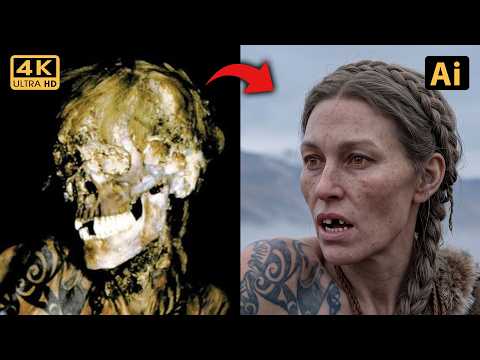
Number one. For nearly 4,000 years, the Taklamakan Desert kept a secret beneath its freezing sands. Around 1800 BC, a young woman known today only as the Beauty of Xiaohe was laid to rest. Buried in an overturned wooden boat, she wore a white felt hat while the arid salt and bitter cold worked to simply halt her decay. Her delicate skin and long eyelashes survived the centuries intact.
She waited in the dark, safe from the elements, until the earth finally gave her up in 2003. Her striking face immediately became a museum centerpiece. She conquered time only to lose her privacy.
Number two. The sudden stench of decay was overpowering that excavators fled the room. When they tore the heavy bandages from Queen Ahmose-Nefertari in 1885, three millennia of reverence evaporated. A massive black resin coffin had kept her safe since the 16th century BC. She was the founding matriarch of the New Kingdom, standing beside the pharaoh to drive out invaders and rebuild a broken nation.
Her people worshipped her as a deity, offering daily prayers to her cult long after her physical passing. Yet, the modern world only saw an ancient artifact to be stripped bare and displayed. Her legend survived the centuries. Her dignity did not.
Number three. The bronze axe shattered his forehead before he could even raise a shield. Ruling a fractured Egypt around 1560 BC, Pharaoh Seqenenre Tao rode out to face the Hyksos invaders. He fell in the dust, hands bound behind his back as enemies surrounded him. A dagger sliced his cheek. A mace crushed his skull. With his army broken, the battlefield execution was swift.
Embalmers recovered his battered corpse days later, forced to preserve him in a frantic rush. They could not mask the severe physical trauma of his final moments. Today, curious tourists simply stare at an ancient casualty of war. His twisted grimace permanently locked in rigor mortis.
Number four. Her elaborate braids were woven with striking precision. For three millennia, the dry Egyptian sands preserved the dark, intricate styling of Lady Rai. Born around 1530 BC, she was not a queen or conqueror. She was a royal nursemaid. Embalmers treated her with unusual care, securing her delicate features and her slender frame. That carefully styled hair remained intact.
They intended to grant her a quiet, eternal rest to reward her lifelong devotion to the crown. Instead, that very preservation sealed her fate. Unearthed in 1881, her body was relocated into a public glass case. She spent her life serving Egyptian royalty. Now, she spends her eternity serving curious tourists.
Number five. She survived the erasure of her heretic son, only to be stripped of her royal name. For three millennia, Queen Tiye, born around 1398 BC, lay in anonymity. Grave robbers had ransacked her burial, leaving her damaged and carelessly dumped in a side chamber. Discovered in 1898, excavators simply labeled her the elder lady. Her thick hair spilled across a face frozen in quiet defiance.
Grand monuments did not restore her legacy. It was a single lock of her hair kept in a miniature coffin by her grandson Tutankhamun that finally proved her identity. Today, Egypt’s formidable matriarch sits exposed under glass, her majesty reduced to a forensic match.
Number six. He inherited a golden age and spent his reign holding on to the past. Pharaoh Merneptah took the throne around 1213 BC, already an old man shadowed by his father, Ramesses the Great. He defended Egypt’s borders against Libyan invasions and the Sea Peoples, carving his victories into stone. Yet, military triumphs could not stop his physical decline.
He suffered from severe arthritis and dental decay, ruling a fading empire until his death a decade later. Royal embalmers packed his frail body with salt to guarantee eternity. Excavators found him hidden away in 1898. Arthritis, worn teeth, and dried salt. Is this the true reality of a god king or just a cruel spectacle?
Number seven. Searing heat and dry salt baked the Taklamakan Desert. Around 1000 BC, an unknown traveler known today as Cherchen Man was laid to rest in this barren wasteland. Mourners placed him deep in the sand alongside three women and an infant, dressing his corpse in a bright burgundy tunic and woven leggings. The harsh climate immediately went to work.
Severe aridity drained every drop of moisture from his flesh, halting decay before it could even begin. He became a freeze-dried ghost of the Bronze Age. He sought a quiet oblivion under the dunes. Instead, the desert refused to let him fade, turning his tragedy into a public spectacle.
Number eight. She died in her 20s, entombed within a lens of solid ice, buried deep in the Siberian permafrost during the 5th century BC. The Princess of Ukok slept alongside six sacrificed horses. Her skin was intricately inked with mythical creatures, preserved flawlessly by the freezing earth. Excavators hacked away that sanctuary in 1993, ripping her from a sacred slumber to face the blinding glare of a modern laboratory.
The ice had halted time, trapping her quiet agony. Scans peered through her ancient flesh, finding the severe breast cancer that ultimately killed her. Today, she sits as a captive specimen, her private terminal pain exposed forever to the public eye.
Number nine. Pazyryk Chief, a Scythian warlord of the 5th century BC, wore his biography carved into his flesh. Intricate tattoos of mythical beasts coiled up his arms and legs. He ruled the harsh Altai Mountains, commanding a nomadic cavalry that dominated the Eurasian Steppes. He hoarded massive wealth and struck fear into neighboring kingdoms.
But his reign was cut short in his 50s. Embalmers removed his brain and stuffed his skin with dry grass. They entombed the chief in solid ice to freeze him in time. His nomadic empire crumbled to dust long ago. Yet today his faded ink sits quietly under museum glass. A few delicate lines outlasting a ruthless conqueror.
Number ten. The dark peat bog offered no quiet resting place, only a cold preservation of terror. Around 290 BC, a ritual sacrifice in Denmark claimed the life of the Grauballe Man. Villagers forced him to his knees in the freezing mud, pulling his head back before a sharp blade sliced deep across his throat. They dumped his broken body into the murky water, leaving the acidic peat to tan his skin into tough, leathery brown.
He lay hidden for millennia, frozen in his final agony. Unearthed in 1952, he did not find peace above ground. Instead, the execution wound that ended his life became his defining attraction for curious museum crowds.
Number eleven. The teenager known as the Egtved Girl was strangled and pushed into a freezing bog around 54 BC. Half her head was shaved in a deliberate ritual marking. Villagers wrapped a woven woolen band around her throat, pulling the rough fabric until she died. Her frail body was then shoved deep into the acidic mud.
The stagnant water immediately went to work tanning her skin and preserving her asymmetrical face for over two millennia. Unearthed in 1897, she did not find a quiet rest above ground. She now sits permanently under museum glass. She remains a haunting vision of ancient sacrifice, the murder weapon still tied tight around her neck.
Number twelve. A servant is not holy if she is not busy. Born into poverty in 1212, Zita of Lucca spent her life as a domestic worker. While famous saints led crusades, Zita baked bread and scrubbed floors. She served a wealthy Italian family for nearly 50 years, answering hostility with quiet endurance.
When she died in 1272, she was buried in a local basilica. Three centuries later, excavators found her naturally mummified. The dry air had preserved the maid just as effectively as royal embalmers. Today, her darkened remains sit on public display. The woman who spent her life bowing to the elite now has the world kneeling before her.
Number thirteen. He was only 8 years old. Around 1500, Inca priests led the boy high into the freezing Andes. Thin air starved his lungs as they climbed Mount El Plomo. They fed him fermented corn beer to numb the altitude. He fell into a heavy slumber inside an icy tomb. The mountain preserved his sleeping body for five centuries.
Discovered in 1954, the Boy of El Plomo now sits behind museum glass, frozen asleep, never to wake.
Number fourteen. Can a single lie freeze time? German knight Christian Friedrich von Kalbutz tested that boundary with a bold oath. “If I am the murderer, let my body never rot.” He stood accused of murdering a local shepherd in 1690. His noble title and a sworn denial earned an easy acquittal.
He survived until his passing at 51 in 1702, expecting a quiet rest inside the family vault. Yet, when locals opened the crypt decades later, every other corpse had turned to dust. Kalbutz’s alone remained intact, his leathery flesh stubbornly defying the earth. He now draws crowds as a public spectacle. Did God preserve him as punishment or just dry air?
Number fifteen. The agonizing process of self-mummification demanded years of rigorous discipline. Born in 1687, the Japanese monk Shinyokai Shonin willingly subjected his body to slow starvation. He survived on pine needles and bark, stripping away all body fat. He then drank poisonous tea to expel fluids and repel maggots.
Finally, he descended into a cramped stone tomb alive, ringing a small bell in the dark until the sound permanently ceased in 1783. He starved and poisoned himself by choice to achieve spiritual enlightenment. Yet today, his skeletal remains sit dressed in ornate robes behind glass. His ultimate religious sacrifice was reduced to a haunting spectacle for curious crowds.
Number sixteen. Jeremy Bentham meticulously planned his own eternal display. Born in 1748, the philosopher decided death would not end his public presence. He spent his life designing legal systems and championing human rights. Other scholars left behind books. Bentham left behind his actual corpse.
He instructed surgeons to dissect him and wire his skeleton together. He actively volunteered to become a museum spectacle. He wanted to sit in a wooden cabinet greeting university students forever. Yet the preservation process ruined his face. They replaced it with wax, placing his real head between his feet. He sought to conquer time on his own terms. Today, a genius sits reduced to a macabre curiosity.
Number seventeen. General Juan Prim survived decades of combat across three continents, yet his final battle ended in a snowy Madrid alleyway in 1870. Gunmen shattered his shoulder and hand at point-blank range. He bled out inside his own capital, dying three days later.
For over a century, official history recorded a simple shooting. Modern autopsies revealed deep furrows on his neck. Someone had strangled the wounded leader to guarantee his permanent silence.
Number eighteen. In 1845, the Franklin expedition sailed into the frozen Northwest Passage and vanished. Among the lost crew was 20-year-old stoker John Torrington. Lead poisoning and starvation ravaged the trapped sailors. His crewmates chipped a shallow grave into the solid permafrost before marching to their own deaths.
Exhumed over a century later, his pristine face stared back at researchers. The ice had preserved a nightmare, a silent monument permanently frozen in time.
Number nineteen. Fleeing the law in 1906, outlaw Hazel Farris consumed a lethal dose of arsenic rather than face a judge. The poison stopped her heart, but the massive chemical concentration acted as a potent natural embalming agent. Her desperate suicide was ruthlessly exploited for profit. For decades, her mummified remains were sold and dragged across the country as a macabre carnival prop.
Number twenty. In 1973, the Buddhist monk Luang Pho Daeng sat cross-legged, slowed his breath to nothingness, and allowed his body to naturally mummify in eternal stillness. He sought absolute liberation from the material world. Instead, his sacred vessel became an unavoidable tourist destination.
Temple guardians placed a pair of dark Ray-Ban sunglasses over his hollow eye sockets, a bizarre collision between the profoundly sacred and the mundane. So we ask you, dear viewer: when the glass finally fogs over, whose silence do you think speaks the loudest?
Report this article
Select a reason for reporting:






