You’ve been lied to about paratroopers. They’re the elite, the tip of the spear, the warriors who jump from perfectly good aircraft into hell itself. The 101st Airborne, the 173rd, the screaming eagles—the best of the best. Wrong.
Because in the jungles of Vietnam, those legendary American paratroopers ran into something that made them look like loud, clumsy amateurs. Something that walked everywhere. Something that moved through the green hell so quietly the enemy called them ghosts. Australian infantry. Not special forces. Just ordinary infantry battalions.
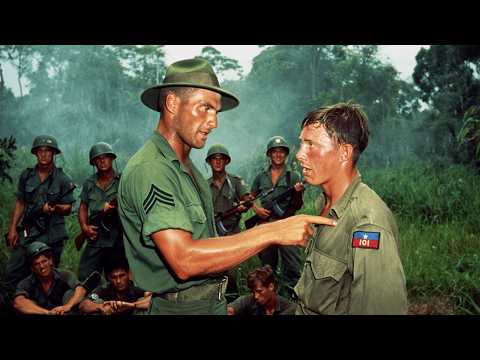
From 1965 to 1972, Australian infantry battalions in Phuoc Tuy province achieved kill ratios that made Pentagon analysts think there was a clerical error. 15 to 1. Sometimes 20 to 1. On exceptional operations, 50 to 1. These weren’t one-off ambushes. This was standard operating procedure. The American paratroopers? 3 to 1 on a good day.
That’s not opinion. That’s arithmetic you can verify in the official records—the ones buried deep in the archives because they embarrassed the brass.
The 173rd Airborne Brigade arrived in Vietnam in May 1965. First major American ground combat unit in country. Elite paratroopers. Highly trained, motivated. They brought shock and awe. Firepower. Helicopters and artillery and the full weight of American military doctrine. They got shredded.
By December 1965, the 173rd had taken casualties that made commanders question whether the conventional American approach was working. Operation Hump. Operation Marauder. Firefights where the Viet Cong melted away before artillery could register targets. Where American patrols walked into ambushes they never saw coming. Where the jungle itself seemed to be the enemy.
Then the Australians arrived. First Battalion, Royal Australian Regiment. 1 RAR. May 1965. 800 men. No fanfare, no press coverage. Just infantrymen who trained in the swamps of Queensland and the scrub of the Northern Territory. They set up in Bien Hoa and started running patrols.
The Americans watched with amusement. The Australians didn’t use helicopters for insertion. They walked everywhere. 5-day patrols, 7-day patrols, sometimes 10 days on foot in 100-degree heat.
American paratrooper doctrine was speed and violence: helicopter insertion, make contact, call in artillery and air support, extract, do it again tomorrow. The jungle was just terrain to be crossed as quickly as possible. The Australian doctrine was the opposite. The jungle wasn’t terrain. It was home. You lived in it. You became part of it. You moved through it so quietly you could walk within meters of the enemy and they’d never know you were there.
“We thought they were crazy,” Lieutenant Colonel John Hayes, 173rd Airborne, later admitted. “Walking everywhere in that heat, no helicopter support. Living in the jungle for a week at a time—it looked like suicide.”
By September 1965, the casualty reports told a different story. 1 RAR had made contact with Viet Cong forces 47 times. Confirmed enemy KIA: 178. Australian casualties: four wounded, zero killed.
The Americans were reading these reports and checking them twice. The numbers didn’t make sense. Elite paratroopers were taking 15% casualties per month. Australian infantry were operating at near-perfect efficiency. Something was very wrong with America’s understanding of jungle warfare—or something was very right about Australia’s.
In November 1965, the Pentagon sent observers to study Australian operations. What they documented would eventually force the entire American tactical approach to be reconsidered. But the lessons came hard, because American military culture—especially paratrooper culture—doesn’t like being told that guys who walk everywhere are better than guys who jump out of planes.
The friction started in December 1965. Joint operations between 1 RAR and elements of the 173rd Airborne in Phuoc Tuy Province. Dense jungle, known VC stronghold. The plan: Australian infantry would lead long-range reconnaissance patrols. American paratroopers would provide quick reaction force and fire support. On paper, it made sense. In practice, it was a collision between two completely different military philosophies.
First patrol out. Mixed Australian-American composition: 12 Australians, eight Americans. Five-day patrol into VC-controlled territory. The Americans brought standard combat load—ammunition, grenades, rations, radio. Total weight about 60 pounds. Noisy metal-on-metal gear that clinked and rattled. The Australians looked at them like they’d shown up in clown suits.
An Australian private from the Blue Mountains, a sheep shearer named Tommy Wright, pulled aside an American corporal. “Mate, you can’t patrol in that.”
The American corporal—paratrooper qualified, two tours in Germany, decorated—looked down at Wright. “This is standard airborne load.”
Wright shook his head. “Not in this jungle. It’s not.”
The Australians taped everything. Every metal surface wrapped in cloth or rubber. Grenades secured so they couldn’t shift. Ammunition distributed to eliminate rattling. Packs adjusted so nothing moved. The noise difference was immediate and striking. The Americans sounded like a hardware store falling downstairs. The Australians sounded like nothing at all.
But sound was just the beginning. The patrol moved out at 0600 hours. The Americans set the pace they’d learned in airborne school: fast, aggressive, cover ground. The Australians kept stopping. The Americans kept bumping into them. After two hours, the Australian patrol commander, Lieutenant Peter Hines from Perth—former law student, 23 years old—called a halt. He pulled the American NCO aside.
“We need to talk about pace.”
The American sergeant looked confused. “We’re barely moving.”
“Exactly,” Hines said. “And every VC within 500 meters knows exactly where we are.”
This was the first lesson, the one that would echo through every joint operation for the next three years. The lesson American paratroopers learned the hard way. Speed kills you in the jungle. Silence keeps you alive.
The Australian patrol method was brutal in its simplicity. Move 20 meters. Stop. Listen for three minutes. Scan for five. Move another 20 meters. Stop. Listen. Scan. All day, every day, for however many days the patrol lasted.
The Americans thought it was insane. You’d never cover ground. You’d never find the enemy. You’d waste time and energy. The Australians had a different view.
“We’re not looking for the enemy,” Hines explained. “We’re becoming part of the terrain. When we’re ready, the enemy shows himself. Then we kill him.”
The American sergeant radioed back to base. “These Australians are moving at about one kilometer per hour. Request permission to set our own pace.”
The reply came from someone who’d already read the casualty reports. “Negative. You follow their procedures. Observe and learn.”
The sergeant didn’t like it. His men liked it less. But orders were orders.
By day three, things changed. The patrol was 12 kilometers from base, dense triple-canopy jungle. The kind where sunlight doesn’t reach the ground. Where visibility is measured in meters, not football fields. The Australians moved with a rhythm the Americans were starting to recognize. Stop. Listen. Watch. Move. Stop. Watch.
At 1420 hours, the point man froze. Australian private named Jack Morrison, grew up tracking kangaroos in the Northern Territory. His hand came up. The patrol melted into the jungle. 12 Australians, eight Americans—20 men who suddenly became invisible.
The American sergeant heard nothing, saw nothing. The jungle looked exactly like it had for the past three days. Green, dense, empty. Morrison stayed frozen for four minutes. Then his hand moved in a signal. Enemy, close, moving.
The Americans still heard nothing. Then, maybe 40 meters ahead, a sound. Voices—Vietnamese, casual conversation. The kind of talking you do when you’re not expecting contact, when you think the jungle belongs to you.
Morrison hand-signaled: Six enemy, moving parallel, unaware.
Hines made a decision. He signaled: Let them pass.
The Americans couldn’t believe it. Six VC right there—easy targets, the whole reason they were on patrol—and the Australians were letting them walk away. The VC patrol passed within 30 meters, never looked in the right direction, never sensed 20 enemy soldiers lying in the jungle watching them. They disappeared into the green.
The Australian patrol waited 15 minutes of absolute stillness. Then Hines signaled, “Move.”
That night at the patrol base, the American sergeant finally asked, “Why didn’t we take them?”
Hines was cleaning his rifle. “Because six VC aren’t worth compromising the patrol. We’re not here to kill the enemy. We’re here to gather intelligence.” He corrected himself. “Those six were moving casually. Talking. That means this area isn’t a stronghold. It’s a transit route. They’re moving between positions, which means there’s something bigger nearby. Tomorrow we find it.”
The American sergeant was quiet. Then: “How did your point man hear them? We were right behind him. We heard nothing.”
“He didn’t hear them,” Hines said. “He sensed them.”
“Sensed them?”
“Jack’s from the Territory. Been tracking animals since he could walk in the bush. You don’t wait to hear things. You feel when something’s wrong. The jungle tells you—if you listen properly.”
This was the second lesson. The one that took American observers months to understand. The one that eventually appeared in after-action reports under different terminology, but which the Australians understood instinctively. The jungle is alive. It has a rhythm. When something disrupts that rhythm, you can feel it—if you’re paying attention. Bird calls, insect noise, the way leaves move, the smell of the air. Australian infantry didn’t search for the enemy. They became so attuned to the jungle that the enemy’s presence registered as wrongness, as disruption, as opportunity.
American paratroopers were trained to dominate terrain. Australian infantry were trained to disappear into it.
Day four, the patrol found what Hines was looking for: a trail, not a big one, maybe 18 inches wide, but used regularly. Worn earth, broken vegetation, and fresh bootprints moving northeast. Hines studied it for 20 minutes without touching it, then moved the patrol back 200 meters to set up an observation post.
“We don’t ambush unless we know exactly what we’re hitting,” Hines explained. “Could be three VC. Could be a company. We watch first, understand the pattern, then we decide whether to kill or report.”
For 18 hours, they observed seven groups use the trail—small parties carrying supplies. The Americans were antsy. Easy targets right there. But Hines didn’t give the order.
On the fifth morning, Morrison signaled again. Enemy, different direction, closer. This time, the Americans heard it too—movement, multiple individuals coming toward them from the west, not on the trail. A VC patrol, eight men in tactical formation, searching. They’d been compromised.
Hines made rapid hand signals. The Australians shifted instantly, creating an L-shaped ambush. The Americans followed, trying to match the fluid silence. The VC moved closer: 60 meters, 50, 40. Hines waited. The discipline was extraordinary—20 men lying in the jungle, no one moving, no one breathing loud.
30 meters. 25. 20. 15. Hines fired first. Single shot. The pointman dropped. Then the jungle exploded—Australian SLRs controlled fire, each man selecting targets. The L-shaped ambush meant the enemy walked into a crossfire they couldn’t escape. It lasted eight seconds. Eight VC dead. Zero Australian casualties. The Americans hadn’t fired a shot.
Hines signaled, “Move.” The patrol was 500 meters away in four minutes, moving fast and silent. That night, the American sergeant asked the question Pentagon observers would ask for years: “How did you know to wait until 15 meters?”
Hines was matter-of-fact. “Inside 20 meters, the ambush is guaranteed. Beyond 20, they might have time to react. We wait until we can’t miss.”
“But they were compromised. How did you stay so calm?”
“They were searching, but they weren’t certain,” Hines said. “If we’d opened fire at 50 meters, we might have missed some. They’d have gone to ground, called for help, turned into a running firefight. This way: clean kill, rapid extraction, no follow-up contact.”
The American sergeant was silent, then: “This is nothing like what we’re taught.”
“I know,” Hines said.
The patrol extracted the next day, walked back to base—15 kilometers, no helicopter, just bootlegs. The after-action report documented what happened, but it couldn’t document what the Americans had learned. That could only be understood by living it. The Australians didn’t fight in the jungle. They lived in the jungle and killed from it.
Back at Bien Hoa, the American observers compiled their findings. The 173rd Airborne requested more joint operations—not for Australian support, for Australian training. The ego hit was substantial, but the numbers didn’t lie. And the soldiers who survived would carry those lessons forward, walking quietly, patiently, methodically—like ghosts.
So, what do you think? Did the paratroopers’ elite status blind them to a better way of war, or was the Australian approach only possible for soldiers raised in the bush? Share your thoughts in the comments below.
Report this article
Select a reason for reporting:






