What if you could stare into the eyes of Albert Einstein, hear the silent comedy of Charlie Chaplin, or feel the peaceful resolve of Mahatma Gandhi—not through faded photographs, but as living, breathing faces? Thanks to the relentless march of artificial intelligence, the veil between past and present is thinner than ever. In this exclusive series, we resurrect twenty of history’s most iconic figures, reconstructing their likenesses from reliable historical sources with breathtaking precision. Prepare to come face to face with the legends who shaped our world.
But this is no mere gallery of ghosts. Each face carries a story—of genius, sacrifice, rebellion, and triumph. From the tragic brilliance of a young mathematician to the controversial legacy of a Nobel Prize founder, these are the men and women who altered the course of humanity. Their eyes hold secrets, their expressions whisper of battles fought and worlds changed. And now, they are here, waiting to meet you.
Our journey begins with a prodigy who died at just 27, yet left a mark on mathematics that echoes through centuries. Niels Henrik Abel, the Norwegian genius whose work on elliptic functions was only fully recognized after his death, now stares back at us—a young man whose frail body belied a mind of fire. Tuberculosis took him, but not before he proved the impossible: that general quintic equations have no solution by radicals. His legacy, the Abel Prize, stands as mathematics’ highest honor, a testament to a flame extinguished too soon.
Then, we shift to the bustling coffeehouses of 18th-century England, where Joseph Addison penned essays that shaped modern prose. With his witty, clear style, Addison co-founded The Spectator, and his words still resonate today. But Addison was more than a writer—he was a politician, an orator, a symbol of Enlightenment culture. As we bring his face to life, you can almost hear the clink of porcelain and the murmur of intellectual debate.
From the pen to the stethoscope, our next icon abandoned a promising academic career to build a hospital in the heart of Africa. Albert Schweitzer, theologian, philosopher, and organist, devoted nearly 50 years to treating the sick in Gabon, driven by his philosophy of ‘reverence for life.’ The Nobel Peace Prize in 1952 cemented his status as a global symbol of compassion. His reconstructed image captures the quiet determination of a man who chose service over comfort.
But not all legends are peaceful. Giordano Bruno, the Italian monk who dared to imagine an infinite universe, was burned at the stake for his heresy. His face, reborn through AI, reflects the defiance of a man who chose death over silence. ‘Perhaps you pronounce this sentence against me with greater fear than I receive it,’ he reportedly said. His tragic end became a beacon for intellectual freedom.
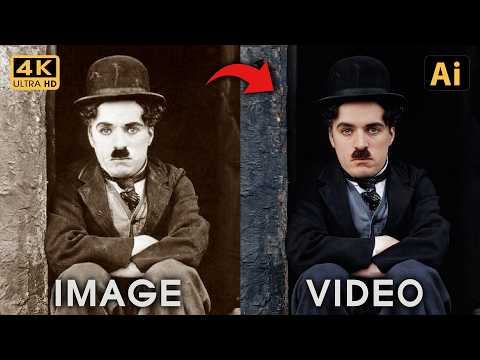
The 20th century brings us faces we thought we knew—Albert Einstein, with his wild hair and gentle eyes, the father of relativity who reshaped our understanding of space and time. Charlie Chaplin, the Tramp, whose silent comedy masked a profound humanism. Mahatma Gandhi, the frail leader who brought an empire to its knees through nonviolence. Each face is a doorway to an era, a conflict, a triumph.
As we delve deeper, you’ll meet a Portuguese explorer who circumnavigated the globe, a nurse who braved battlefields, and a chemist who turned dynamite into a force for peace. Their stories are woven into the fabric of our world, and now, they stand before you, reconstructed with unprecedented fidelity. Who will you meet first? The choice is yours, but be warned: once you’ve looked into these eyes, history will never feel the same.
Let us step into the laboratory of Robert Boyle, the Irish natural philosopher who, in 1662, formulated the law that bears his name. Boyle’s law—pressure and volume inversely related—became a cornerstone of modern chemistry. As a founding member of the Royal Society, he championed experimental methods over mystical alchemy, and his reconstructed face reveals the meticulous curiosity of a man who helped birth modern science. ‘The book of nature is a great book,’ he once wrote, and his eyes still gleam with the thrill of discovery.
From the quiet of the lab, we move to the soaring melodies of Johannes Brahms. The German composer, often called Beethoven’s spiritual successor, poured profound emotion into classical forms. His Hungarian Dances and German Requiem still stir the soul, and his face—reconstructed with AI—shows the gentle, introspective genius who lived simply and dedicated his life to art. Brahms died of liver cancer in 1897, but his music remains immortal.
Then there is Jean Calvin, the French theologian whose strict doctrines reshaped Protestant Europe. From Geneva, Calvin’s ideas on predestination and discipline influenced politics and society for centuries. His stern visage, now brought to life, reflects the unwavering conviction of a man who believed he was doing God’s work. ‘We are not our own,’ he wrote, and his legacy—both revered and debated—endures.
Art lovers, prepare yourselves for Paul Cézanne, the French painter who bridged Impressionism and Cubism. Once rejected by the academic establishment, Cézanne’s bold use of form and color paved the way for Picasso and Matisse. His face, weathered by years in Provence, carries the quiet determination of an artist who never stopped seeing the world differently. The Card Players and Mont Sainte-Victoire stand as testaments to his vision.
And who could forget Anton Chekhov? The Russian physician and writer mastered the short story and the stage, crafting works like The Cherry Orchard and The Seagull with subtle psychological depth. Despite battling tuberculosis, Chekhov wrote until his final days, his face a mirror of the gentle irony and deep empathy that defined his characters.
Our journey continues with Bertrand Russell, the British philosopher and logician who co-authored Principia Mathematica. A fierce advocate for peace and human rights, Russell’s Nobel Prize in Literature in 1950 honored his profound contributions. His reconstructed image captures the sharp intellect and rebellious spirit of a man who never stopped questioning authority.
Then we meet Ferdinand Magellan, the Portuguese explorer who initiated the first circumnavigation of the globe. Though he died in the Philippines in 1521, his expedition proved the Earth was round and opened a new era of exploration. Magellan’s face, etched with the resolve of a seasoned sailor, reminds us of the daring that expanded our world.
Finally, for now, we encounter Ernest Hemingway, the American writer whose concise, powerful prose won him the Nobel Prize in 1954. Works like The Old Man and the Sea and A Farewell to Arms left an indelible mark on literature. Hemingway’s rugged face, with its hint of adventure and melancholy, speaks of a life lived intensely—and a legacy that continues to influence writers worldwide.
Each of these figures, resurrected through AI, invites us to look closer, to listen deeper. Their stories are not just history—they are a conversation across time, and we are only just beginning to hear their voices.
But the resurrection does not stop at the threshold of the twentieth century. Step now onto the deck of a paddle steamer churning up the Hudson, where Robert Fulton stands at the helm of the Clermont. In 1807, his vessel steamed from New York to Albany, and with that journey, the age of river transportation was transformed forever. Beyond steamboats, Fulton’s restless mind probed submarines and canal systems, and his reconstructed face carries the quiet confidence of a man who saw the future before others could imagine it.
From the water we move to the soil—specifically, the muddy, bacteria-rich soil that yielded one of medicine’s greatest breakthroughs. Selman Waksman, a Ukrainian-born American microbiologist, sifted through hundreds of soil-dwelling organisms until he found streptomycin, the first antibiotic effective against tuberculosis. The Nobel Prize followed in 1952, and his face, reborn here, reflects the patient tenacity of a scientist who understood that salvation often hides in the humblest places.
Now let us travel further back, to the Venetian docks of the thirteenth century, where a young merchant named Marco Polo set out on a journey that would last twenty-four years. He crossed Asia to the court of the Yuan dynasty, and his account, The Travels of Marco Polo, opened European eyes to the wonders of the East. His AI-reconstructed visage holds the wide-eyed curiosity of a man who saw what few had seen and returned to tell the tale.
And then there is Alfred Nobel—a face that embodies one of history’s most haunting paradoxes. The Swedish inventor of dynamite grew wealthy from the arms industry, yet a premature obituary that branded him ‘the merchant of death’ drove him to a profound reckoning. In his will, he redirected his fortune toward the Nobel Prizes, the world’s most prestigious honors. His reconstructed eyes seem to ask a question that still echoes: what legacy will you leave behind?
Beside him stands a gentler soul—Clara Barton, the ‘Angel of the Battlefield.’ During the American Civil War, she carried medical supplies to the front lines and cradled the wounded, then spent years searching for missing soldiers. Her tireless efforts brought the International Red Cross to America, which she officially founded in 1881. Her face, softened by compassion yet hardened by war, reminds us that mercy can be a form of courage.
As these twenty faces gather in the mind’s eye—the mathematician, the philosopher, the explorer, the healer—a strange sensation takes hold. They are no longer names in a textbook or dates on a timeline. They breathe. They watch. They wait.
Yet the most unsettling truth is this: every reconstruction you have seen is only as faithful as the historical record allows. Some faces were drawn from portraits painted centuries after death; others from death masks, letters, and the careful triangulation of bone and shadow. The AI does not invent—it remembers. And what it remembers, it now offers back to us, asking only that we look closely and listen well.
So here they stand, twenty legends pulled from the fog of centuries. The mathematician who died too young, the monk who chose fire over silence, the nurse who walked into gunfire with bandages. They are not ghosts anymore—they are mirrors. Each reconstructed face asks the same quiet question: what will you do with the time you have?
Because history is never truly finished. It waits in the soil for a Waksman, in the coffeehouse for an Addison, in the heart of a prisoner for a Gandhi. ‘The book of nature is a great book,’ Boyle wrote, and it is still being written—by hands like yours.
The AI has done its work. It remembered what we nearly forgot. But memory alone changes nothing unless someone dares to look back and then step forward. These faces have crossed oceans of time to meet your eyes. The least we can do is meet them halfway.
So tell us—whose eyes will you seek first, and what will you ask them?
Report this article
Select a reason for reporting:






