In the dense jungles of Phuoc Tuy Province, November 1967, an American intelligence officer stared at a battered notebook tossed onto a table by a sun-weathered Australian sergeant. Outside, the aftermath of a massive American operation—150 elite paratroopers, helicopters, artillery, and napalm—had yielded nothing but frustration. Three days of searching, and not a single enemy contact. Yet here was a five-man Australian SAS patrol, fresh from three weeks in the same jungle, with a notebook containing precise coordinates of 17 enemy positions, movement schedules, and hidden supply lines. The officer’s blood ran cold. How could five men achieve what an entire battalion could not? The answer would challenge everything the US military believed about war.
The Australian sergeant then pulled out a hand-drawn map, revealing every trail, water source, and ambush site across 60 square kilometers—details invisible to American aerial reconnaissance. This was no fluke. It was the result of a revolutionary doctrine forged in the remote outback of Western Australia, where soldiers trained with Aboriginal trackers, mastering skills honed over 40,000 years. They learned to read bent grass, smell human sweat from dozens of meters away, and move without leaving a trace. By 1962, this ancient knowledge was codified into a doctrine that prioritized invisibility over firepower. While American forces relied on massive firepower and technological dominance, Australian SAS operators became ghosts, slipping through the jungle undetected, gathering intelligence, and striking with lethal precision.
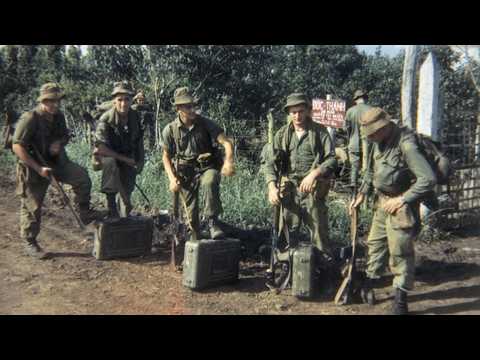
The numbers are staggering: American forces achieved a kill ratio of 10:1, but at an enormous cost—7 million tons of bombs and 15 billion rounds of ammunition. Australian SAS, with patrols of five men, achieved a confirmed kill ratio of 500:1, losing only two men to direct enemy action while eliminating over 500 enemy combatants. How? The answer lies in the ‘absence doctrine’—the philosophy of projecting nothing at all. Australian patrols stopped using soap and deodorant days before missions, ate enemy rations to mask their scent, and moved with such stealth that they covered only two to three kilometers a day. They maintained radio silence for days, communicated through hand signals, and left no trace. The Vietcong, who relied on detecting American noise and technology, found themselves hunted by an enemy they could not see, hear, or predict.
They called them Ma Rung—jungle ghosts. The psychological impact was devastating. Vietcong commanders reported that the jungle itself seemed to fight against them. Patrols vanished without a trace. Supply caches exploded in the night. The Australians deliberately cultivated this supernatural dread, leaving strange symbols and arranging bodies to evoke forest spirits. It was calculated terror, and it worked. Entire enemy units refused to operate in areas where the Ma Rung were rumored to be active.
Yet, despite the undeniable success, the American military establishment ignored the lessons. Reports recommending the adoption of Australian methods were classified and buried. The metrics of success—body counts and territory controlled—did not align with the quiet, intelligence-driven approach of the SAS. As the war dragged on, thousands of American lives were lost pursuing a doctrine that had been proven inferior. The ghost strategy was a road not taken, a revolutionary approach that could have saved countless lives. But the story doesn’t end there. The jungle ghosts left behind a legacy that would eventually reshape modern special operations—but at what cost? The answer lies in the classified archives, in the memories of those who witnessed the impossible, and in the question that still haunts military strategists today: What if they had listened?
But the notebook wasn’t the end of the demonstration. The Australian sergeant, a lean man named Callaghan with eyes the color of dried tobacco, flipped to a page near the back and tapped a single line of penciled coordinates. “This one’s a regimental headquarters,” he said quietly. “D445’s command element. Been there eleven days. We watched it for six.” The American captain felt the floor tilt beneath him. Eleven days. His paratroopers had swept within two kilometers of that grid square and reported it clear.
He asked the obvious question, and he asked it with more edge than he intended. Why hadn’t the Australians called it in? Why hadn’t they leveled the place when they had the chance? Callaghan’s answer would follow the captain for the rest of his life. “Because the moment we call it in, it stops being ours.” An air strike would kill maybe a dozen men and scatter the rest. But a headquarters left in place, unwatched and unsuspected, could be read like a book for months—every courier, every order, every reinforcement traced back to its source.
The captain reached for the notebook, and Callaghan let him. The pages were a masterclass in patient violence. Rice cache inventories with dates and estimated consumption rates. Names of village headmen, cross-referenced with the routes their ox-carts took. A sketch of a tunnel entrance disguised as a termite mound, complete with the angle of the sun at which the camouflage failed. None of it had come from satellites or intercepts. All of it had come from men lying motionless in the mud for eighteen hours at a stretch, breathing through their mouths, counting footsteps.
Then Callaghan said something that cut deeper than any of it. “You want to know the difference between your boys and mine, Captain? Your boys are afraid of the jungle. Mine learned to be part of it.” He explained it without cruelty, which somehow made it worse. An American patrol moved through hostile ground, weapons up, eyes darting, every sense screaming threat. The jungle was an enemy to be survived. But the Aboriginal trackers had taught the Australians something else entirely—that the jungle was a language, and a man who learned to speak it could ask it questions. Where did the column pause? Which branch was broken upward or downward? Where had a man set down his rifle to relieve himself? The forest answered, if you knew how to listen.
The captain thought of the aerial photographs stacked in his command tent, those pristine images of unbroken green canopy that had told him nothing. Sixty square kilometers of jungle reduced to a flat green smear. And here was a hand-drawn map that showed the same ground the way a hunter sees it—not as terrain, but as a living record of everyone who had ever crossed it.
Outside, a helicopter wound up somewhere in the distance, and the tent canvas shivered. Callaghan glanced at the sound with the faintest flicker of distaste, as though someone had spat on the floor. “You can hear that bird from four kilometers out,” he said. “Charlie hears it too. By the time your boys land, he’s already poured the tea and gone home.” He folded the map with deliberate care, corner to corner, and slid it back into his rucksack. The interview, clearly, was over.
But the captain wasn’t finished. He asked the question that would eventually find its way into a classified report, a report that would sit in a vault for forty years. “If we gave you a battalion—your methods, our numbers—how long to clear this province?” Callaghan considered it for a long moment, and when he answered, his voice carried no boast at all. “Six months. Maybe less. But you won’t give me a battalion, Captain. Your army doesn’t want the province cleared. It wants the province to look like it’s being cleared.”
He was right, of course. The captain knew it even then, standing in the humid dimness with the smell of canvas and gun oil in his nose. The machinery behind him—the helicopters, the artillery, the napalm canisters stacked like cordwood—was not designed to win a war of shadows. It was designed to produce photographs, briefings, and numbers that could survive a hearing in Washington. A five-man patrol that killed nothing for a month but mapped an entire enemy logistics network would be called a waste. A battalion that burned a village and counted forty bodies would be called progress.
Callaghan shouldered his rucksack and paused at the tent flap. “One more thing,” he said, not turning around. “That notebook? Keep it. Study it. And when your generals ask why five men did what five thousand couldn’t—” He let the sentence hang, then pushed out into the blinding green light. The captain never learned what the sergeant had meant to say. But he wrote his report anyway, in language he knew would be dangerous, and he filed it up the chain where it vanished into the silence the Australians understood so well.
What he could not have known, sitting alone with the battered notebook and the distant thrum of departing helicopters, was that the war had already decided its own answer. The machinery would grind on for another six years. The body counts would climb. And somewhere in the archives, a single penciled line of coordinates—the headquarters of the D445 battalion, watched for six patient days and never called in—would wait for a historian to find it and ask the question the captain had been afraid to ask aloud.
Years later, after the war had ended and the archives had begun to give up their secrets, a young historian found the notebook in a box of declassified Australian field reports. It was still there, the penciled coordinates of the D445 headquarters, never struck through, never bombed, never lost. Beside them, in Callaghan’s careful hand, a single word: “ours.”
She traced the line with her finger and understood, finally, what the American captain had felt that day. Not humiliation. Something closer to grief. The ghost strategy had never been a secret weapon. It had been a choice, offered freely, and declined.
The jungle has grown back over those trails now. The tunnels have collapsed. But the doctrine lives on in every silent operator who crosses hostile ground without a sound, in every commander who learns to ask what he can not reveal. Five men held a province, and the world took forty years to notice.
So here is the question that still waits in the archives, unanswered and patient as a hunter in the mud: if silence could win what bombs could not—why did no one listen until it was too late? Tell us what you think in the comments below.
Report this article
Select a reason for reporting:






