June 1943. Three German generals stood on the Liverpool docks, watching ships gather in the harbor. They were prisoners of war now, and they were about to see something that would change everything they believed.
The Nazi propaganda machine had prepared these men for every battlefield scenario except one. No one had told them what they would find when they arrived in Canada as captives. What they would discover there would dismantle every lie they had been taught about the enemy—and about their Führer.
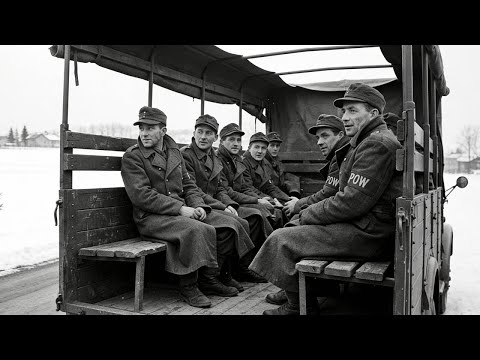
General Friedrich von Weber was 52 years old. He came from a long line of Prussian military officers. His father was a general. His grandfather was a general. Friedrich had always believed this was his destiny. He commanded a division in the Afrika Korps in North Africa. In May 1943, Allied forces surrounded his position in Tunisia. He had no ammunition, no food, no water left. He surrendered to save his men from pointless death. But he expected his own death would come shortly after.
Every briefing he had ever attended told him the same thing. The enemy executes captured officers. The enemy tortures prisoners for information. The enemy does not honor the Geneva Convention. Those were the lies he had believed without question.
General Hans Junker was 44 years old. Before the war, he taught philosophy at a German university. He was intelligent and careful with his words. The Nazi Party admired his ability to make their ideas seem clever and logical. They brought him into the Wehrmacht as a strategic planner. He helped design battle plans based on what he thought he knew about the enemy. He believed Canada was a frozen wasteland with no real factories or wealth. He believed the British Empire was collapsing. He believed Jewish conspirators controlled North America and squeezed the last resources from a dying continent.
He was captured in November 1942 during Operation Torch when Allied forces landed in North Africa. He expected show trials and public executions. He expected to be used as a propaganda tool and then killed. He was certain of it.
General Otto Kretschmer was 38 years old, the youngest of the three. He came from a working-class family. He joined the navy as a young man and worked his way up through talent and hard work, not family connections. He commanded a U-boat, one of the submarines that hunted Allied ships in the Atlantic. His mission was to sink supply convoys carrying food and weapons to Britain. He was good at his job. He sank 47 ships before his submarine was destroyed by depth charges off Gibraltar in March 1943. He and his crew were pulled from the water by British destroyers. He expected to be thrown back into the ocean. He expected revenge.
Instead, they gave him a blanket and hot soup. That was the first crack in his beliefs. But he convinced himself it was temporary kindness before the real punishment began.
He had been taught that Britain and Canada were starving because of him and men like him. He believed their naval blockade was effective. He believed the enemy was desperate and running out of everything.
The three men spent time in British prison camps in Egypt after their capture. The camps were basic, but they were not brutal. They received food every day. They were not beaten. They were not tortured. This confused them, but they convinced themselves it was only because the British needed information. They believed the real treatment would come later.
For months, they waited for the cruelty they had been promised. Then in June 1943, guards told them they were being transferred. No one said where. They were loaded onto trucks with hundreds of other German officers. They were all high-ranking—colonels, generals, naval commanders. They were taken to the coast and told they would board ships. Some prisoners whispered this was the end. They would be taken out to sea and drowned. Others said they would be sent to labor camps in Siberia where they would freeze to death. No one knew the truth.
Now they stood on the Liverpool docks and Friedrich von Weber could not believe what he was seeing. More than 120 ships gathered in the harbor—massive vessels, well-maintained, fresh paint, organized in perfect formations. He counted them twice because the number seemed impossible. This was just one convoy, one single group of ships. How many other convoys were there?
Germany had been sinking Allied ships for years. U-boats had sent hundreds of vessels to the bottom of the ocean. Yet here were more than a hundred ships in one place, looking new and ready.
Hans Junker watched the British sailors working the docks. Their uniforms were clean and new, not patched or worn. They moved with energy, not the exhaustion of starving men. Crates of supplies were being loaded onto ships. Mountains of supplies. If Britain was desperate and collapsing, why did everything look so organized and abundant? The numbers did not add up. The reality before his eyes did not match what he had been taught.
Otto Kretschmer stared at the ships with the trained eye of a naval officer. He was an expert in vessels. He knew what poor maintenance looked like. He knew the signs of a struggling navy. These ships showed none of those signs. The hulls were solid. The equipment looked modern. The crews looked professional and healthy. He had risked his life and his crew’s lives attacking convoys like these. He thought every ship they sank pushed the enemy closer to defeat. But looking at this harbor, the enemy seemed to have endless ships. How was that possible?
Guards began organizing the prisoners into groups. A British officer announced they would board the SS Duchess of York, a converted luxury liner. Friedrich von Weber felt a cold fear settle in his gut. It was no longer fear of death. It was something worse. Fear that everything he believed might be wrong. Fear that every decision he made, every order he gave, every man who died under his command might have died for lies.
The three generals did not know each other yet. They were just three men among hundreds of prisoners. But they were all thinking the same thing as they looked at the massive convoy gathering before them. If the enemy could afford this much resources just to transport prisoners, what did that mean for everything they had been told? What did it mean for the war they believed they were winning?
Guards ordered them to move forward. It was time to board the ship. Time to sail to Canada. Time to face whatever waited for them there.
Friedrich von Weber picked up his small bag and walked toward the gangway. Behind him, Hans Junker and Otto Kretschmer did the same. None of them realized that the next few months would teach them more about truth and lies than their entire lives had before. None of them realized that the sight of Canada would shatter their faith in everything they had fought for. They only knew that something felt very wrong. The enemy was not supposed to look like this. Strong, organized, abundant, and confident. What would happen next? That question burned in all their minds as they stepped onto the ship that would carry them across the Atlantic to a country they had been taught to despise and underestimate. What happened next would change them forever.
The SS Duchess of York was not what any of them expected. Friedrich von Weber climbed the gangway expecting to be shoved into a cargo hold with hundreds of other men. He expected darkness, cold, and the smell of too many bodies packed together. Instead, a British naval officer checked a list and pointed him toward a cabin on the third deck. A cabin, not a hold, not a cage. A real room with a door.
Inside, he found a bed with an actual mattress, a small desk, a round porthole, steam heat, and pipes running along the wall. He sat on the bed and tested the fabric with his hand. It was softer than the cot he had used in his command tent in Africa. He was a prisoner on an enemy ship, and yet he had been given a better bed than he had as a free general leading troops.
None of it made sense.
There were 847 German prisoners aboard this ship. Most were officers. Colonels and majors filled the lower decks. Generals received private cabins. Senior colonels shared rooms with only one or two others. No one was chained. No one was beaten during boarding. The guards were British and Canadian, and they were professional. Firm but not cruel. They gave orders and expected them followed, but there was no violence in their actions.
The first meal came two hours after they left port. Guards distributed metal trays through the cabins. Friedrich stared at his plate with confusion. Two thick slices of white bread, real butter—not the chemical substitute—a piece of cheese the size of his palm, hot coffee that actually smelled like coffee and not the bitter grain-based imitation Germany had been drinking for two years, an apple. A real, fresh apple.
He ate slowly, trying to understand. This was more food than he had given his officers in Tunisia. His men had been living on reduced rations for months before the surrender. They had mixed sawdust into bread to make it stretch. And here he sat, a prisoner, eating real butter on white bread.
Hans Junker occupied the cabin next to his. Friedrich could hear him through the thin wall, pacing back and forth. Everyone was trying to make sense of what was happening.
Otto Kretschmer spent most of his time at the round porthole watching the ocean. He was a U-boat captain. He knew these waters well. He had hunted in them before. On the second day of the voyage, he began counting the ships in the convoy. He could see 67 vessels from his window, and he knew there were more beyond his range of sight. All of them appeared well-maintained, modern, and strong. He had spent three years trying to sink ships like these. Germany celebrated every convoy they destroyed. They were told each sinking brought the enemy closer to starvation and defeat.
But looking at 67 ships in a single convoy, Otto realized something terrifying. They had barely scratched the enemy at all. For every ship Germany sank, the Allies seemed to build five more.
On the third day, Hans Junker was permitted to visit the ship’s library. It was a small room with wooden shelves bolted to the walls. The books were organized and cared for. There were German classics, which surprised him. But what shocked him more were the newspapers. They were three weeks old, censored for security, but they were real Allied papers. He read about factory output numbers, new shipyards opening in America, women working in aircraft plants in Canada. The photographs showed massive industrial facilities that should not have existed if the Allies were desperate and collapsing.
Either these newspapers were entirely fabricated, or everything he had been taught was a lie. He did not know which option frightened him more.
The guards themselves were strange. They wore clean uniforms that looked new, not patched and sewn like German uniforms had become. They were well-fed. There were no holes in their boots. A young Canadian guard from Saskatchewan brought drinking water to the generals’ deck every morning. His name was Morrison. He was 24 years old, friendly in an informal way that seemed wrong for someone guarding enemy prisoners.
One morning, Friedrich offered him a cigarette from his small stash. Morrison accepted and mentioned he had grown tobacco on his family’s farm back home. Friedrich asked how large the farm was. Morrison said it was 3,200 acres. Friedrich assumed he was lying. No ordinary soldier’s family owned that much land. That was wealth beyond what most German officers could imagine.
On the fifth day, a storm hit. The ship pitched and rolled in heavy seas. Guards moved through the corridors to ask prisoners to secure anything loose in their cabins. Some guards worked alongside prisoners to tie down cargo in the holds. They distributed extra blankets to men who were seasick. They did not use the chaos to be cruel or to steal from the prisoners. They simply did their jobs and helped where help was needed.
Friedrich watched a Canadian guard catch an elderly German colonel who lost his balance when the ship lurched. The guard made sure the man was safe before continuing on his way. Something small like that, something human like that. It should not have mattered, but it did.
After seven days out of Liverpool, the sound of the ship’s engines changed. The vessel was slowing. Land was near. Friedrich stood at his porthole and watched the Canadian coast emerge through the morning fog. Hans Junker came to stand beside him, and Otto Kretschmer soon joined them. The three men stared at Halifax harbor as it appeared before them.
Hans had expected ruins, wrecked buildings, desperate people. Signs that the U-boat war was working. Instead, he saw dozens of ships at anchor, all looking intact and operational. Shipyards busy with cranes moving. Buildings that showed no damage. The shock hit him like cold water. And strangest of all, the city was lit. Lights in windows, streetlights. A city at war with its lights on at night without fear of bombers.
Friedrich noticed the garbage containers on the ship’s deck as crew members emptied them before docking. The bins were full of food scraps, bread crusts, half-eaten apples, leftover vegetables. The crew threw away more food than German civilians received in their weekly rations.
Something was very wrong with everything they had been told about this war.
The ship docked in Halifax at 6:47 a.m. on June 16. The temperature was 18 degrees Celsius, warm for that time of year. The sun was shining.
Friedrich von Weber descended the gangway expecting angry crowds. He expected people screaming in their faces, throwing stones, spitting on them. In Germany, if enemy prisoners marched through cities, civilians attacked them. That was normal. That was what happened in war.
But the Halifax docks were busy with work only. Dock workers carried cargo onto ships. Some glanced at the prisoners with mild curiosity, nothing more. A few looked bored. No one seemed to hate them. No one seemed to care much about them at all.
They were taken to a temporary detention facility for processing. A military doctor examined every prisoner. The examination was thorough. The doctor checked teeth, looked at old wounds, listened to heart and lungs. Friedrich had an infected wound on his arm from Tunisia. It had been suppurating for six months. No one in the prison camps in Egypt had the time or supplies to treat it properly. The Canadian doctor looked at it, frowned, and cleaned it immediately with fresh bandages. He gave Friedrich real antibiotics, sulfa drugs that actually worked. It was the first proper medical care Friedrich had received in half a year.
Hans Junker could not stop counting things during processing. It was how his mind worked. He counted 67 staff members working in the processing center. That seemed like far too many for just handling prisoners. The building had central heating, even though it was summer, which was extravagant. Every office had a telephone. He counted eight typewriters being used for paperwork. In German military offices, they were lucky to have one typewriter per battalion. Everything was freshly painted. The furniture looked new. The floors were clean. This was a temporary processing center, and it looked better than permanent German military headquarters he had seen.
After processing, they were moved to a train. Friedrich expected cattle cars. That was how Germany transported prisoners, packed into freight cars with no windows or seats. But these were passenger cars from the Canadian Pacific Railway. Real seats. Windows they could look through. Guards distributed boxed lunches to each prisoner.
Friedrich opened his box slowly. Inside, he found two sandwiches made with white bread and real meat, an apple, three cookies, and a small thermos of hot coffee. This was more food than he had seen in a single meal for months. He ate one sandwich and kept the other, distrusting the availability of more food later.
The train headed west through Nova Scotia and into New Brunswick. Friedrich watched the countryside pass by his window. Small towns appeared every few miles. The houses had glass windows, not boards covering empty frames. Cars sat in driveways. Ordinary people owning cars. Shops displayed goods in their windows. Children played in yards, well-dressed and healthy-looking. He saw no signs of bomb damage anywhere, no rubble, no war marks except some buildings with flags and recruitment posters.
Otto Kretschmer watched the farms with the attention of someone who understood he was seeing something important. The farms were large and used modern equipment. The grain silos were full. The livestock looked healthy and well-fed. In Germany, most farms had given up their horses and tractors to the military. Farmers worked by hand. Old men and women did work that young people had done before. But here, he saw new tractors in fields, full barns, and prosperity that should not exist in a country at war.
He also counted freight trains. Every time a freight train passed in the opposite direction toward the coast, he recorded it in his mind. By the end of the first day of travel, he had counted 34 freight trains. All of them were fully loaded with goods heading east toward the ports, toward the ships, toward Britain. He had been told Canada could barely feed itself. But 34 loaded freight trains in one day told him a different story. The calculations did not lie. The propaganda did.
On June 19, after three days from landing in Halifax, the train arrived at its destination. Camp 30 in Bowmanville, Ontario. The camp was located about 60 kilometers east of Toronto. As the bus carried them from the train station to the camp, Friedrich looked out the window and tried to understand what he was seeing. The camp sprawled over 600 acres of land. There was a double fence around it, yes, but the guard towers did not have machine guns pointed down at the yard. The barracks were real buildings made of wood and brick, not tents or rough shacks. He could see a sports field with grass. Trees lined the walkways. Gardens produced vegetables. Smoke rose from the kitchen buildings, and the smell reminded him of his grandmother’s cooking. Real food, properly prepared.
They were escorted to their assigned barracks. A Canadian officer led Friedrich, Hans, and Otto to the section reserved for generals. Each man was shown to a private room measuring 10 by 12 feet. A real bed with a mattress and pillow, a window with curtains, a small desk and wooden chair, a reading lamp, and a radiator for winter. Friedrich sat on the bed and pressed his hand into the mattress. It was springy and responsive. It was soft. It was more comfortable than the bed he had used at his command headquarters in Tunisia when he was a free general leading men into battle.
The camp commander gathered all the new arrivals in the dining hall. Lieutenant Colonel James Taylor stood at the front of the room and addressed them in clear, firm German. He said the camp held 550 German officers ranging in rank from captain to general. They would receive the same food rations as Canadian officers. They could organize their own activities, educational programs, and entertainment. They would be treated as officers and gentlemen, and the same behavior was expected of them. The Geneva Convention would be followed to the letter.
Hans Junker listened to these words and felt his mind trying to dismantle them, to find the trap. This had to be some kind of psychological warfare. Make them comfortable to break their morale? Make them feel guilty? Make them soft? But why spend so many resources on prisoners if the nation was desperate?
That evening came their first dinner in the camp. Friedrich entered the dining hall and saw the menu posted on the wall. Roast beef, potatoes, carrots, fresh bread with butter, coffee, apple pie. He sat down and a server placed a full plate in front of him. He stared at it. The portion was larger than what he had given his soldiers in Africa. He had led men before. He was the one who decided how much food they received. He had watched them grow thin on half rations while he told them they were winning. And here he sat now, a prisoner, eating more than his soldiers ever got. The thought made him feel sick. Not because of the food, but because of what it meant. If the enemy could feed prisoners at this level, Germany had already lost this war.
Days turned into weeks, and weeks into months. June became July, then August, then September. A routine developed in Camp 30, and with that routine came discoveries that slowly shattered everything the prisoners believed. Under the Geneva Convention, generals were not required to work, but the camp offered voluntary work assignments. Prisoners could earn 20 cents a day in camp currency. They could use the money to buy cigarettes, candy, or books from the camp store. Some generals volunteered to work in the gardens or organize the library. Otto Kretschmer got a job in the camp library. It gave him access to newspapers that were three weeks old for security reasons, but they were still more recent than anything he had seen in years.
Friedrich von Weber noticed new things every day. Fresh vegetables arrived at the dining hall daily from Ontario farms. The camp had its own generator as backup to the main power grid. A backup generator for prisoners. The medical facility had an X-ray machine, a dental clinic, and a full pharmacy with real medicines. The guards worked in three shifts and always wore clean uniforms. Friedrich watched what the guards ate during their lunch break. It was the same food the prisoners received. In Germany, officers always ate better than enlisted men. Always. But here, guards and prisoners ate the same meals. That simple fact disturbed Friedrich more than he wanted to admit.
Hans Junker spent his time in the camp library. The library contained 3,400 books. German classics sat on the shelves alongside English novels, technical manuals, history books, and even some current Allied publications approved for prisoner reading. The camp ran an educational program that allowed prisoners to take correspondence courses from Canadian universities. Real universities, real courses. Some of the younger officers were working toward degrees. The camp organized weekly concerts where prisoners performed music. The YMCA provided musical instruments, violins, a piano, trumpets. Someone had spent money to give enemy prisoners musical instruments.
Mail from home arrived every few weeks, heavily censored, but it arrived. Hans read letters from his family in Germany. His mother wrote about food shortages. His sister described the air raids on Munich. His nephew mentioned that school was now only three days a week because there was no coal to heat the building. Every letter from home made the abundance in Canada seem more wrong. His family was suffering while he lived in warmth and comfort with three meals a day.
Otto studied the newspapers like they were battle plans. The photographs showed Canadian factories with women working in aircraft plants. New ships being launched from shipyards he had never heard of. Production numbers that seemed impossible. The camp received a visit from an inspector from the International Red Cross from Switzerland. The inspector confirmed the camp exceeded Geneva Convention requirements. Otto watched the trucks arriving at the camp every week. He counted 23 delivery trucks in a normal week. All of them looked new. None were broken down or patched.
The camp sports field had real equipment—footballs, volleyball nets, even ice skates stored in a shed for winter. A guard was assigned to the generals’ barracks. His name was Corporal David Morrison. He was 24 years old and came from Regina, Saskatchewan. Over the weeks, Friedrich had cautious conversations with him. The conversations were casual, almost friendly, which seemed strange. Morrison talked about his family’s farm. It was actually 3,200 acres. He had two brothers in the army and another in the navy. His hometown had 8,000 people, and 400 of them had joined the military. Before being drafted, Morrison owned a truck and a tractor. He finished high school at eighteen and could have gone to university but chose to enlist instead.
Friedrich could not understand this. In Germany, that level of wealth meant you were nobility or a senior Nazi Party official. Land ownership, vehicle ownership, and education through age eighteen with the option for more. Morrison was just an ordinary farmer’s son, yet he lived better than most German officers. The social structure made no sense. How could ordinary people own all this? And if ordinary people owned this much, how much did the nation as a whole own?
July brought a heat wave. The camp distributed extra water rations. They installed additional showers so prisoners could cool their bodies. They provided cold drinks with meals. Friedrich watched this and thought about extravagance. If the nation was desperate, it would not waste resources cooling prisoners. But the comforts kept flowing.
August saw the publication of the camp newsletter, a paper written and printed by the prisoners. It published statistics about the camp. 550 officers held here, a staff of 320 guards, plus 80 administrative workers. Nearly 400 staff for 550 prisoners. Germany could not afford such numbers for anything.
Prisoners wrote letters home, though they had to be careful what they said. Censors read everything. Friedrich wrote to his wife. He said he was being treated well and food was sufficient. He could not write the truth. She would not believe it. The censors might think he was forced to lie. Hans wrote to his mother. He told her not to worry about his health. He said they had medical care. He did not mention that the medical care was better than hospitals in Berlin. Otto wrote to his brother who was still fighting in Italy. He asked him to stay strong and remember his duty. He wanted to warn his brother that everything they had been told was a lie, but he could not write that. The letter would never be delivered, and it might cause trouble for his family.
By September, the camp had divided into groups. Some prisoners still believed completely in the Nazi cause. They insisted that everything around them was propaganda and tricks. When Germany won the war, the truth would emerge. This group represented about 30% of the camp. Another 50% were doubters. They could not deny what they saw, but they tried to find excuses. Maybe Canada was just lucky. Maybe Canada was special because it was far from the fighting. Maybe the Americans were supporting them with resources. These men saw the truth but were afraid to accept what it meant. The remaining 20% had converted. They admitted secretly that Germany had lied to them. They believed the war was lost. But saying it out loud was dangerous. True believers watched for traitors.
Friedrich, Hans, and Otto were all in the doubter group, though each day pushed them toward conversion. One night in late September, the three sat together in Friedrich’s room. They had become friends through shared confusion and fear. Friedrich spoke first. He said his men had died believing they were fighting a collapsing enemy. He had told them the enemy was desperate. He had believed it himself. Hans admitted that Hitler either had intelligence agencies that lied to him, or the lying was intentional. He could not finish the thought. Finishing it meant admitting that everything was a planned deception. Otto said he had sunk 47 ships, and maybe 1,200 men had died because of him. Yet the enemy had more ships now than when the war started. How many German submariners had died trying to stop resources that were available in unlimited supply?
The three men sat in silence after that conversation. Saying the truth out loud made it real in a way that thinking it secretly had not.
September 30 arrived. Autumn was settling over Ontario. The camp began preparing for winter. They started distributing winter coats to prisoners. The coats were new, made from Canadian military surplus. Friedrich took his coat and read the label sewn into the collar. It said “Made in Winnipeg, Manitoba, 1943.” The coat had been made this year. It had been made for prisoners. Brand new winter coats for enemy prisoners, while German soldiers wore patched coats made from whatever fabric they could find.
Friedrich sat on his comfortable bed in his warm room holding his new coat in his hands. He thought clearly and very calmly: “We are losing this war. We have already lost. Everything we were told was a lie. Everything we fought for had no basis.” This thought should have made him angry, but he felt tired instead. Very, very tired.
December arrived in Ontario with cold that cut through clothing. The camp stayed warm. The barracks temperature remained at 20 degrees Celsius, warm enough for men to sit comfortably in their rooms. Friedrich received a letter from his wife in early December. She wrote about another air raid on Berlin. Food rations had been reduced again. There was no coal for heating. She and their daughter wore all their clothes together to stay warm. Meanwhile, Friedrich sat in his warm room with electric lights that stayed on all day and night. Hot water flowed from the taps every morning. This contrast made him feel like he was living in two different worlds at the same time.
The camp commander announced a special Christmas program. Lieutenant Colonel Taylor said there would be religious services, Catholic and Protestant, led by the prisoners themselves. There would be a day off from the usual routine. And that evening, there would be a traditional Christmas dinner. The prisoners were suspicious. Some thought this was just propaganda. Others expected forced re-education disguised as celebration. Hans Junker thought it must be psychological warfare, designed to make them comfortable to break their morale. But why spend resources on breaking men who were already captured? It did not make sense.
Christmas morning came cold and clear. Snow covered the camp yards. Religious services were held in the main hall. Prisoners who wished to attend could choose the Catholic or Protestant service. No one forced them. No one watched who went and who stayed away. The guards simply opened the hall and let the men decide for themselves.
Friedrich attended the Protestant service. A German chaplain who was also a prisoner led the prayers. The guards stood outside respectfully and did not interrupt. The day passed slowly. Men wrote letters home. Some played cards. Others read books from the library.
At five in the evening, the call came for dinner. Friedrich walked to the dining hall with Hans and Otto. Other prisoners streamed in from all directions. The dining hall was arranged differently. Tables were covered with white tablecloths. Real tablecloths, not paper. Each place had a real plate, not a metal tray, actual silverware, and a cloth napkin folded beside each plate. A small name card showed where each man should sit.
The menu was posted on the wall. Friedrich read it twice because he did not believe it the first time. Roast turkey with full portions, stuffing, cranberry sauce, gravy, mashed potatoes, roasted carrots, Brussels sprouts, and fresh bread with real butter. For dessert, apple pie and ice cream, and real coffee to drink. Each table had a small bowl of candy in the center.
Friedrich sat down and the server placed a full plate in front of him. The turkey was sliced into thick pieces. Steam rose from the mashed potatoes. The bread roll was still warm. He stared at it and could not move. His hands rested on the table on either side of the plate. He remembered Christmas 1942 in the Afrika Korps. His men had received half rations of bread, some canned meat if they were lucky, no coffee—only the fake kind made from burnt grain—no sugar, no butter. Officers received the same as ordinary soldiers because there was not enough to distinguish. He remembered telling his men they were winning. He remembered their thin faces trusting him.
He thought of the letter from his wife. Christmas rations for civilians in Berlin were 500 grams of bread for a whole week, 100 grams of butter, no meat, no sugar, no coffee. His wife wrote that their daughter was always hungry, always. And here he sat looking at a feast. 550 prisoners all eating like this. He tried to do the math. This meal multiplied by 550 prisoners multiplied by 35,000 German prisoners estimated to be across Canada. The resources. The casual expenditure of food that his people were dying without.
Friedrich picked up his knife. It was made of solid steel, heavy and strong. He knew Germany was melting church bells for metal for the war. And here, guards gave prisoners steel knives for Christmas dinner. He put the knife down carefully and could not pick it up again.
Corporal Morrison was serving food at the next table. He looked over and noticed Friedrich had not touched his plate. Morrison walked over, his face showing concern. He asked if everything was all right, if the food was not to Friedrich’s liking. Friedrich looked at this young man from Saskatchewan. This farmer’s son who owned more land than German nobility. He tried to keep his voice steady. He said the food was excellent. That was exactly the problem. Morrison did not understand. Friedrich explained carefully. In Germany, his wife and children would not have turkey today. No butter, no coffee. Maybe bread if they were lucky. And he sat here as a prisoner eating like this. How was this possible?
Morrison thought about it and answered simply. The Geneva Convention required them to treat prisoners according to their rank. And it was Christmas. It just seemed like the right thing to do. That word—right. The casual assumption that it was enough to treat enemies well because it was the right thing to do. Friedrich apologized and left. He stood and walked back to his barracks. He sat on his bed in his private room with its curtains and radiator. He sat there for a long time.
After dinner, the prisoners organized a Christmas celebration. One of them had a harmonica that had been smuggled in somehow. Others made instruments from what they found around them. They gathered in the common hall and began to sing. They sang “Silent Night,” the old German carols everyone knew from childhood.
Hans stood at his window watching the guards outside. Morrison stood in the cold Ontario night listening. As the prisoners sang, Morrison stood quietly and respectfully. He did not mock them. He did not interrupt. He just stood in the cold while enemy prisoners sang in a heated building. Hans watched this and understood something. The enemy was showing respect for German culture more than the Reich had shown for any people it occupied. The enemy treated their traditions with dignity while Germany burned books and destroyed cultures. The reversal was complete.
Evening came. Otto received a package that had been delayed since October. It was from the International Red Cross. Inside were five packs of real cigarettes, two chocolate bars, a tin of coffee, a wool scarf, and a small book. The package was donated by civilians. Enemy civilians had spent their own money to send gifts to German prisoners. He read the label on the package. It said: “Donated by the Regina Women’s Auxiliary, Saskatchewan.” Regina, Morrison’s hometown. Maybe people there knew men killed by U-boats. Maybe Morrison himself had lost friends because of the submarines. Yet the women of his town had sent gifts to a U-boat captain.
At 11:30 that night, Friedrich, Hans, and Otto sat in Friedrich’s room. They were past pretending now. Otto spoke first. He said they had been lied to. Completely. And deliberately. Hans tried to resist. Maybe Canada was unique, distant, protected. Maybe the rest of the Allies were still struggling. Friedrich interrupted him. He asked Hans directly if he had seen any sign in the past six months that these people were desperate or collapsing. Any sign at all. Hans was silent for a long time. Then he said no.
Friedrich spoke the truth they were all thinking. They had lost this war. They had lost it before it began. They just did not know it. Because they had been lied to about what they faced. Otto said all those men on the ships he sank. The convoys they attacked. The enemy was not clinging desperately to the last of their resources. They were using only a tiny fraction of what they had. Germany had never really hurt them. Not truly.
Hans spoke quietly, with a terrifying realization in his voice. If they lied about the enemy’s resources, what else did they lie about? Silence filled the room. The answer to that question meant confronting everything. Their beliefs about the Reich. About the war. About why they fought. About everything they had done.
Friedrich looked at the leftover food that some prisoners had been allowed to take from dinner. What was wasted here would have fed his entire crew in Africa for two days. He thought very clearly. I helped lead men to their deaths in a war based on complete lies about the enemy we faced. That is the truth I must carry now.
January 1944 arrived with bitter cold and heavy snow. Inside the heated barracks, Friedrich von Weber began reading everything in the camp library about Canadian history and economics. He learned that Canada had only 11.5 million people. That was smaller than he had thought. Yet this small nation produced more aluminum than Germany by 1943. They built 398 naval vessels between 1939 and 1944. Women made up 30% of the industrial workforce. Most men who joined the military were volunteers, not conscripts. Friedrich did calculations in his notebook. Germany was in total war mobilization. Every person was regimented, every resource controlled. Yet they were outproduced by a smaller nation of volunteers. Everything about Germanic superiority was refuted by simple mathematics.
February brought a new purpose. Friedrich began teaching mathematics to younger officers. Many had not finished their education before the war. He discovered he was better at teaching than he had been at leading soldiers. Perhaps he always had been.
In March, another letter arrived from his wife. Berlin was bombed again. Their daughter had been evacuated to the countryside for safety. The food situation was dire. He read the letter in his heated room with electric lights burning. The shame he felt was not the shame of being a prisoner. It was the shame of what he had participated in. What he had helped cause. He replied to the letter carefully. The censors would read every word. He said he hoped the war would end soon for her sake. There had been enough sacrifice. What he could not write was the truth burning in his mind. We are sacrificing for nothing. It was always pointless.
Hans Junker resisted the transformation longer than the others. Through January, February, and March, he argued with prisoners who expressed doubts about the Nazi cause. He insisted the ideology was correct, even if the information about enemy resources was wrong. They fought for principles, not just for materials. But his arguments sounded hollow even to himself.
In April, newspapers arrived with news of preparations for D-Day. The papers were months old, having arrived in September, but they described Operation Overlord. 156,000 soldiers landed on the first day, 5,000 ships, 11,000 aircraft. The logistics were impossible by any standard Hans had learned. No desperate nation could organize something of that magnitude.
In May, a new prisoner arrived from France. He had been captured during the fighting after D-Day. He brought news that made the true believers angry and the converted silent. Allied forces were discovering concentration camps. The initial reports described conditions inside. The details were specific. Too specific to be simple propaganda. The true believers dismissed it all as lies. But the reports kept coming with each new prisoner. The details matched. The numbers matched. The locations were real places soldiers had seen.
Hans sat in the library in June reading the philosophy books he had once taught. He reread Kant’s writings on the moral law. Something happened in his mind. If everything he had been told about the enemy was a lie—which his own eyes had proven for a year now—then why would he assume anything else he was told was true? What else had been hidden? The question terrified him because he knew the answer was everything. Everything was lies.
July brought news of the assassination attempt on Hitler. Berlin’s response was mass arrests and executions. A terrified purge of the officer corps. Hans understood clearly then that a government afraid of its own military was not confident. Confidence came from honesty and strength. This was the fear of men who knew their power was built on lies.
In August, he began writing a philosophical treatise in German. He never planned to send it home. He just needed to write it to process what he now understood. The title was about the dangers of ideology separated from concrete reality. He worked on it for months. Writing helped him think.
By September, Hans found Friedrich alone in the library office. They spoke for the first time with complete honesty. Hans admitted he had been wrong about everything. The ideology, the war, the certainty he had taught his students. He had helped create the intellectual framework that justified all of this. Friedrich told him they were all wrong, but the question now was what they would do with this knowledge. Hans said they could not do anything while they were prisoners. Friedrich disagreed. They could refuse to lie anymore, even if only to themselves. That was something important. That was the beginning.
Otto Kretschmer adapted faster because he was younger. In January, he began learning English from the guards. Morrison taught him during evening shifts when things were quiet. By February, Otto volunteered to work on the camp newspaper. He became a translator, working with German and English texts. Reading in multiple languages showed him how propaganda worked. The omissions, the emphasis, the framing. He could now identify the same techniques in old German newspapers. He saw how he had been manipulated.
In March, he studied naval warfare in the camp library. He read about Allied escort carriers, new sonar systems, and expanded air patrols. He realized then that the U-boat war had become obsolete by 1943. His successes came from short tactical surprises before the Allies adjusted their defenses. All those deaths, of German submariners and Allied merchant sailors, were for a strategy that could never win.
Between April and June, he taught engineering classes to younger officers. He explained diesel mechanics, navigation, and electrical systems. Teaching practical knowledge felt better than anything he had done in years.
In July, he had a long conversation with Morrison about life in Saskatchewan. Morrison described how his grandfather had homesteaded the land. The government gave land free to settlers who worked it. When a neighbor’s barn burned down, the entire community gathered to build a new one. No one expected payment. It was just what neighbors did. The local school taught Morrison through age eighteen at no cost to his family. He volunteered for the army because he felt it was his duty, not because anyone forced him.
Otto realized Morrison’s life story was impossible in Germany under any government they had known. Free land, community cooperation without government control, free public education, voluntary military service. These were not signs of weakness. These were the things that built the industrial capacity that defeated the U-boats. These values created the abundance he saw every day.
The camp divided more clearly as the months passed. The true believers shrank to 15%, mostly Waffen-SS officers who refused to see reality. They performed the Nazi salute when guards were not watching. They believed in final victory despite all evidence. The doubters were now 25%. They accepted that Germany was losing but avoided the deep questions about why. They protected themselves emotionally by not thinking too deeply. The new converts grew to 60%. They believed the war was a mistake built on lies. Some wanted Germany to lose quickly, to end the suffering. Some began to imagine a different Germany, built on new principles.
Friedrich, Hans, and Otto became informal leaders of the converted group. They did not preach. They did not argue with the true believers. They simply modeled a different way—learning, adapting, accepting reality, and thinking about what came next.
In October, an SS officer confronted Friedrich in the dining hall. The man said Friedrich had betrayed his oath to the Führer by accepting captivity too comfortably. Friedrich answered calmly. He said he had kept his oath to Germany. The two were not the same thing. The SS officer called him a defeatist and a traitor. Friedrich said the betrayal was lying to soldiers about the enemy they faced, sending them to die in a war that could not be won. He knew this because he had done it himself. He had to live with that. Other prisoners intervened before it became a fight, but the division was clear. Some men still clung to ideology despite everything their eyes showed them.
Lieutenant Colonel Taylor noticed these changes. He wrote in a report that senior officers like von Weber, Junker, and Kretschmer clearly understood the war was lost. They were preparing mentally for a return to a defeated Germany. He believed these men might be valuable in the reconstruction process. They had proven they could face difficult truths and adapt.
Morrison told Friedrich one evening that he seemed different from when he first arrived. Friedrich asked how. Morrison said he had stopped arguing and insisting. He had started accepting. Friedrich asked what he was accepting. Morrison said maybe accepting that the world was as it was, not as Friedrich had been told it was. Friedrich was silent for a long time. Then he said that was harder than any battle he had fought.
November 30 arrived. Friedrich received another letter from his wife. She and their daughter were safe despite the bombing. He felt relief, but also fear. The war would end soon. He would return to a destroyed homeland. He would face Germans who still believed the lies. He would have to decide whether to stay silent about what he had learned or speak the truth and face the consequences. In his heated room with electric lights, hot water, and three meals a day, he sat thinking about returning to a place where people lacked all these things. How could he explain where he had been? How could he tell them what he knew now? Would they hate him for surviving in comfort? Would they call him a traitor for seeing the enemy’s humanity? These questions had no good answers.
On May 8, 1945, Lieutenant Colonel Taylor gathered all prisoners in the main hall. Silence filled the room as he walked to the front. He spoke in clear German. Germany had surrendered unconditionally. The war in Europe was over. They would be repatriated according to Geneva Convention protocols. Processing would begin within weeks.
The prisoners reacted in different ways. The loyal believers denied it. They said it was just propaganda. They insisted final victory was still coming. The doubters felt numb. Relief that the killing would stop mixed with fear about what unconditional surrender meant for Germany. The converted felt something more complex. Relief that the suffering would end. Fear for their families. Dread of returning to see the destruction up close.
Friedrich returned to his room. He sat on the bed that was more comfortable than any bed he had slept in during the war. He thought about how he had spent the last years of the war here in comfort while his countrymen suffered. Was that better or worse than dying for lies? He remembered Christmas dinner 1943. The moment his ideology cracked when he saw the turkey and butter and thought of his hungry family. He had been given eighteen months to process the truth. His people would have only a single day. What would they do when they learned what he knew?
Between May and August, the Red Cross organized repatriations. Prisoners were allowed to take the clothes Canada had provided. Their personal letters, books from an approved list, and small personal items—nothing that showed Canadian abundance. They did not want to destabilize post-war Germany with evidence of how well prisoners had lived.
In July, photographs arrived from liberated concentration camps. Full documentation, clear images. Prisoner discussions became sharp and sometimes violent. The loyal believers still insisted it was all fabricated. Impossible. Propaganda. But many of the converted felt sick looking at the images. Hans, after seeing photographs from Bergen-Belsen. These were the logical results of the ideology he had partly accepted. This is where lies lead when taken to their conclusion.
Otto found Friedrich in the library. He asked if they had known. Did they know it was this bad? Friedrich answered carefully. They knew something. They ignored what they knew. They accepted comfortable lies. That was not innocence.
August brought the final weeks. The prisoners organized farewell events. A concert, sports tournaments, final religious services. Morrison found Friedrich during his last guard shift. He wished the general good luck and hoped things would not be as bad as he feared. Friedrich asked Morrison a question that had bothered him for two years. Why had Morrison been kind to them? He was never cruel, never vengeful, always professional. Why?
Morrison thought about it. He said prisoners did not deserve to be kicked when they were down. That was not what Canada fought for. Friedrich asked what they did fight for then. Morrison answered simply: “So that everyone, when the war ends, can go home and live a decent life. Your side and ours. Everyone. Just a decent life.” Friedrich realized this young farmer had said in one sentence what three years of Nazi ideology could not. He told Morrison that was a nobler cause than anything he had ever killed for.
The last night came on August 20. Friedrich, Hans, and Otto sat up late in Friedrich’s room. Hans asked if they should tell people at home what they had seen in Canada. “Who will believe them?” Otto wondered. Friedrich said the more important question was who would forgive them for seeing it, and living in comfort while Germans suffered. Hans asked if they should stay silent then. Friedrich said no, but they must choose the right time to speak. Germany would be in chaos. People needed to survive first, then rebuild, and maybe then they could hear the truth.
Otto asked what that truth was. Friedrich answered: “They fought for lies. Their enemy was more humane than their leaders. Ideology separated from reality leads to catastrophe. And ordinary men like Morrison showed them what they should have been all along—simply decent.”
September 1945. The train to Halifax reversed the journey they had made two years earlier. They watched the Canadian landscape pass by the windows, still rich, still intact, still prosperous. They compared it mentally to what they would soon see. The ship to Europe was a converted troop ship. Rations were lower than camp levels, but sufficient. The prisoners were quiet and deep in thought. Approaching Germany meant facing the consequences of a war they now understood had been lost from the start.
Friedrich watched the young Canadian guards on the ship, nineteen or twenty years old. The war had just ended as they finished training. They had never seen combat. They would return to their homes, farms, universities, and normal lives. The German boys their age were dead, crippled, or broken. One generation destroyed while another was saved. What was saved by losing early instead of late? The German boys who might have died for lies got a chance at life instead.
September 15. Hamburg appeared through the morning fog. Rubble. Absolute rubble. 60% of the city destroyed. Debris filled the streets. Civilians looked thin, ragged, and desperate. Friedrich knew intellectually this destruction had happened, but seeing it made it real, painful, and overwhelming.
The British were running the processing center. They recorded each prisoner’s information and allowed them to leave. Each man received 50 German marks worth almost nothing, discharge papers, travel permits, and civilian clothes from captured German stocks. The clothes were poor quality, already starting to wear. Hans took off the shirt he had received in Canada and put on the German civilian clothes. The fabric was cheap substitute, poorly made, falling apart. He held the Canadian shirt again. It was sturdy, warm, and well-made. This contrast taught him more than any lecture could have.
Friedrich traveled to Berlin to find his family. The city was destroyed beyond imagination. 70% of buildings were uninhabitable. People lived in the rubble. Everyone was hungry, desperate, and traumatized. He found his wife and daughter in a cramped apartment shared with two other families. His wife was thin but alive. His daughter did not recognize him at first. Three years had passed. He had gained weight in Canada, which he had to explain. The suffering had made her look older than her age. His wife asked about his imprisonment. He could not tell the truth. He said they survived and that was all that mattered. But she saw his new clothes. She saw he was healthy and well-fed. Her eyes held confusion and resentment. He had been living in comfort while they starved.
Hans returned to Munich. The university was destroyed. His home had been destroyed by bombing. His mother was living with his sister’s family. His academic career was over. No universities, no students, no books. His mother asked if the enemy had treated him badly. He answered carefully that they followed the Geneva Convention. She did not understand what that meant. He did not elaborate. How could he explain that he had eaten better as a prisoner than she had as a civilian?
Otto returned to Hamburg. The U-boat pens were destroyed. All naval infrastructure was gone. He found his brother who had survived the Italian campaign. His brother was working in rubble clearance for the British occupation forces. His brother said Otto had been gone for three years while they kept fighting and lost everything. Otto said he was sorry. His brother asked sorry for what? You were a prisoner. You could not fight. You survived. Otto wanted to say he had survived in comfort that would shame him if his brother knew. But he only said yes, I survived.
The three men realized the same truth. They could not tell anyone about captivity in Canada. It would be seen as collaboration, betrayal, undeserved privilege, and evidence of weakness. They had to carry this knowledge alone. The transformation they had undergone could not be shared. Not yet. Maybe never.
October 1945. Friedrich stood in destroyed Berlin watching Germans dig through rubble. He remembered the warm barracks of Camp 30, the full meals, the comfortable beds. He thought about the price Germany paid for the war, but also about what Germany had lacked in the first place. Honesty, decency, simple humanity that the enemy had shown them. That was harder to rebuild than any building.
The post-war years were difficult for all three men. Friedrich von Weber settled in West Germany in the British zone. He found work teaching mathematics at a secondary school. He never discussed his time in Canada except in letters to Hans and Otto. In 1948, his wife died from an illness caused by years of malnutrition. Friedrich blamed himself for staying healthy while she slowly weakened. He quietly supported democratic reconstruction but never joined political parties. In 1949, he wrote a memoir about his captivity in Canada. He titled it “What the Enemy Taught Me,” but he hid the manuscript. It was too dangerous to publish while former Nazi officials were on trial.
Hans Junker worked in reconstruction in Munich. By 1947, he returned to teaching at a rebuilt secondary school. He focused on teaching philosophy that emphasized critical thinking and questioning authority. He never spoke explicitly about the Reich or the war, but his entire teaching approach was a reaction against the easy ideology he had once believed. Students noticed he paused before answering questions, as if reviewing his thinking. It was a habit he had acquired from his transformation in Canada. In 1949, he married a widow whose husband had fallen in the war. He helped raise her children and built the family he had denied himself during his years of ideology.
Otto Kretschmer worked on the Hamburg docks on reconstruction projects. In 1946, he was offered a position teaching marine engineering. He used the knowledge from the Canadian camp library and his observations of Allied naval technology. He quietly advocated for Germany’s acceptance of Marshall Plan aid from America. He argued they should learn from those who defeated them, not resent them. Some colleagues described him as sympathetic to the Allies. He never defended himself. He knew what he knew. In 1948, he helped found a technical school focused on practical education without ideology.
The 1950s brought the division of Germany during the Cold War. Friedrich and Hans both lived in West Germany. They lost contact with comrades who ended up in East Germany. They realized their understanding of Allied humanity came from Western nations like Canada, Britain, and America. Germans captured by the Soviets had completely different experiences. Their knowledge was specific, not universal. Cultural values mattered.
In 1955, West Germany became a sovereign state again. Veterans began writing memoirs. Friedrich read many books by former soldiers. None mentioned receiving good treatment from their captors. Everyone emphasized suffering and hardship. He understood why. National narrative required sacrifice for recovery. His truth did not fit that narrative.
Otto considered publishing his own story. His brother advised against it. Germany was not ready to hear that they had been wrong about everything. Let time pass first.
In 1963, the Canadian government announced a program. Former prisoners could visit the camps as tourists. Friedrich, Hans, and Otto all applied. The three returned to Camp 30, now closed, but its buildings preserved. They walked through the empty barracks together. They saw their old rooms, the dining hall, the library. Lieutenant Colonel Taylor met them there. He was 68 years old and retired, living nearby. He showed them camp records and photographs from their time there. Taylor told them Canada had tried to prove that civilization could continue even in war. Treating prisoners with dignity was not weakness. It was a reminder of what they were fighting for.
Friedrich replied that Taylor had succeeded more than he knew. What Friedrich learned at Camp 30 changed him more than any battle. The war defeated German armies, but this place defeated their ideology.
They found Morrison still farming in Saskatchewan. The three generals flew to Regina to see him. Morrison was 44 years old and did not understand why they had come. He said he was just a guard doing his duty. Friedrich explained that Morrison had shown them what duty could mean without cruelty. He had shown them that strength allows mercy. For three years, Morrison was the face of the enemy, and his face taught them they had been lied to about everything. Morrison said he had only treated them as he would want to be treated. It did not seem complicated. Hans said that simplicity and moral clarity were what they had lost. They had spent decades complicating things and creating ideology to justify cruelty. Morrison had surpassed all that by simply being a decent human being.
The 1970s brought publications. In 1971, Friedrich published his memoir at age 79. “What the Enemy Taught Me” became a bestseller in Germany. Some accused him of spreading Allied propaganda. Others praised his honesty. He wrote that in three years of Canadian captivity, he was never beaten, never starved, never humiliated. He was treated better than he had treated his own prisoners in Africa. This made him ashamed, but the shame led to understanding. They had fought for a cause that required cruelty because its ideology was false. The truth does not require any cruelty to defend itself.
Hans wrote a philosophical book titled “On the Limits of Ideology.” It was published after his death in 1975 at age 76. He dedicated it to Corporal Morrison, who had shown him that wisdom often resides in simplicity, not complexity.
In 1978, Otto gave an interview to the Canadian Broadcasting Corporation for a documentary about prisoner-of-war camps. He said he had sunk 47 ships and killed nearly 1,200 men, all in service of lies. Then he was captured and treated with humanity by the families of the men he had killed. That disparity between his cruelty and their mercy was an account he carried in his heart every day.
The 1980s saw the emergence of educational programs. Canadian schools used the history of prisoner-of-war camps as a teaching tool. Camp 30 became an educational center. Friedrich’s memoir became required reading in some German schools. In 1985, Otto lectured at the University of Hamburg on engineering ethics and wartime lessons. His core message was that technical expertise without moral clarity easily serves evil. He used his personal story as a warning.
Friedrich died in 1989 at age 97, just before the fall of the Berlin Wall. His last words to his daughter were to tell young people to always question what they are told about their enemies. He had learned the truth from his enemies. It had saved his soul, though it came too late to save his honor.
Hans had died in 1975, but he left letters for his former students to open on their anniversaries. A 1990 letter explained why he paused before answering questions. He had learned late in life that certainty is often a mask for lies. He wanted his students to see a person thinking, doubting, and questioning. That was true education.
Otto lived until 1997 at age 92. He donated his papers to the University of Hamburg, including detailed diaries from his captivity in Canada. In his final interview in 1996, he said he regretted surviving in peace while others suffered. He felt that regret every day, but he never regretted learning what he learned. Living with shame and truth was better than living with comfort and lies.
Morrison died in 2002 at age 83 in Regina. His obituary mentioned he had served in World War II and guarded German prisoners. His family noted that several German veterans had corresponded with him for decades. They never understood why it meant so much to him. Morrison simply said the war was over and it was time to be friends.
Research in the first decade of the 2000s revealed that more than 34,000 German prisoners were held in Canada during the war. Fewer than 1% attempted escape, compared to 15% in some American camps. A 1946 survey showed that 67% of prisoners in Canada reported their treatment was fair or good. Many prisoners emigrated back to Canada after the war, including 28 from Camp 30. Three of them became university professors in Canada. Morrison’s farm hosted a reunion for six former prisoners in 1983.
The contrast with other camps was stark. 35% of German prisoners died in Soviet camps. 27% of Allied prisoners died in Japanese camps. 57% of Soviet prisoners died in German camps. Canada’s approach proved that humane treatment was possible even in total war, but many lessons were never learned. Modern conflicts still repeat the same failures. Ideology still overrides concrete reality. Enemies are still dehumanized. Soldiers are still deceived about enemy conditions.
Friedrich’s words remain relevant. We were defeated by an enemy who treated us with dignity. That contradiction destroyed our ideology more effectively than any battle. Cruelty may win territory, but decency alone wins lasting peace.
Today, Camp 30 is preserved as a historical museum. School groups visit and read a plaque bearing Morrison’s quote: “It didn’t seem right to kick a man when he was down. That’s not what we were fighting for.” A student asked the teacher a question: “If they could treat enemies like this in war, why can’t we treat people like this in peace?” The teacher had no answer. That question is the true legacy of Friedrich von Weber, and it remains unanswered.
Report this article
Select a reason for reporting:






