The air was thick with the stench of wet earth and burnt metal. In the pitch-black Italian night of April 1945, a handful of exhausted New Zealand soldiers lay frozen in the mud, their breath rising in white puffs. Just 200 meters away, a fanatical German major and 120 entrenched troops held a vital crossroads, sworn to fight to the death. Two brutal Allied attacks had already been repulsed, leaving 34 Kiwis dead or bleeding in the muck. And the usual solution—calling in heavy artillery—was absolutely forbidden. A small Italian village and a field hospital packed with wounded soldiers lay perilously close to the target. One wrong shell, and innocent civilians and injured men would be slaughtered.
As the German major’s arrogant voice boomed through a loudspeaker, taunting the Kiwis to go home, a young lieutenant named Mac McAllister—a sheep farmer from Canterbury who loved tinkering with old radios—noticed something no one else did. Beneath the major’s bluster, he heard a faint hum. A hum he knew well from his barn. The loudspeaker was wired directly into the house’s electrical system. In that moment, a wild idea began to form. A plan that would change everything.
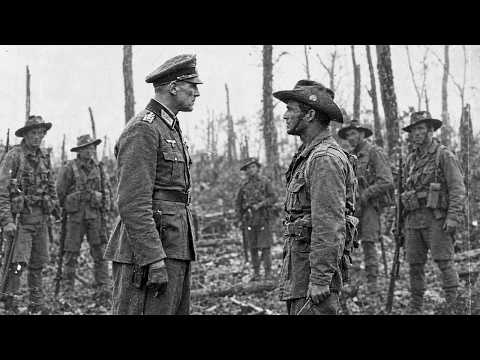
Mac wasn’t a celebrated hero. Before the war, he spent his days shearing sheep and fixing broken fences, not studying military textbooks. Most of the officers around him had graduated from fancy military academies and knew every rule in the book. But Mac knew how to fix a broken wire with a piece of chewing gum and a prayer. And he saw an opportunity where the experts saw only a dead end.
The plan was audacious: hijack the German major’s own loudspeaker using a captured German radio, and simultaneously breach the eastern wall—the only section without a cellar and clear of civilians—with 200 kg of captured explosives. But the commanding officer was furious. “This is the insane fantasy of a sheep shearer!” he bellowed, spilling his coffee. The senior signals officer scoffed, insisting that connecting an enemy radio to an enemy loudspeaker would blow the radio’s fragile glass tubes in seconds. They told Mac to stop wasting everyone’s time and wait two days for a flamethrower tank to arrive.
But a grizzled sergeant major, a veteran of Greece, Crete, and Alamein, stepped forward. He reminded the commander of a time when New Zealanders were surrounded by German tanks in the desert—they didn’t wait for permission or heavy tanks; they used their wits and fought their way out. “Kiwis win when they use their brains and courage,” he said. The commander, exhausted, finally relented. Mac had until sunrise.
With no proper tools, Mac and his mates scavenged what they could. They welded an old agricultural blade to a tiny tracked carrier to make a makeshift plow. Twelve soldiers dug a 15-meter trench by hand, freezing in the cold mud every time a German flare lit up the field. Behind them, others hauled heavy crates of captured explosives. By 4:30 AM, the trench was finished, the charges were set against the eastern foundation, and the captured radio was wired once more into the loudspeaker line.
Mac brought forward a young German prisoner who just wanted to go home. His hands trembled as he took the microphone, but his voice was steady and clear. He broadcast a fake order: Berlin had surrendered, and all troops were to cease fighting immediately. The message echoed across the silent fields and into the stone rooms. At that exact moment, Mac pressed the detonator.
A blinding white flash lit up the farm. A deafening roar shook the ground like an earthquake. In less than four seconds, the entire eastern stone wall collapsed into a giant cloud of white dust and falling rock. The major’s loudspeaker crashed down with it. The massive explosion echoed across the distant hills, then an eerie silence fell. A thick cloud of pale white dust rose high into the night sky, blotting out the stars. The cold night air reeked of wet limestone, crushed brick, and the sharp, gray smell of gunpowder.
For two full days, 34 Kiwis had been wounded trying to advance, and nothing had worked. But in less than four seconds, everything changed. The entire eastern wall lay flat on the ground like a row of toy blocks. Six German soldiers were trapped under heavy rocks, and 20 more were pinned behind shattered timber and fallen stone. The rest were coughing in the thick white fog, their ears ringing from the blast. And in the smoke, they remembered that calm German voice that had just spoken through the loudspeaker, telling them the war was over and Berlin had surrendered.
Inside the shattered farmhouse, chaos reigned. German soldiers stared at each other with wide, terrified eyes. Their mighty loudspeaker lay in pieces in the dirt, and they could no longer hear their commander screaming orders. The stone building was filled with dust and darkness, and the silence from the rooftop was more frightening than any explosion.
Just fifteen minutes after the blast, the first German soldier stumbled out through the gaping hole where the eastern wall had stood. His hands were raised high, clutching a dirty white handkerchief. Behind him came another, then another. Within twenty minutes, forty-one German soldiers walked out onto the cold grass with their hands up, blinking in the yellow glare of the Kiwi searchlights, shivering from cold and fear but alive.
The Kiwis watched them warily, rifles ready, but not a single shot was fired. The German major remained inside with fewer than fifty men. His stone fortress was now wide open and broken. The radio was silent, and half his men were already sitting on the grass as prisoners. He had no way to defend against an assault from both sides.
As the pale morning sun crept over the hills at dawn, the major finally emerged from the ruined front door. He no longer looked like a proud commander. His gray uniform was covered in white stone dust, and his face was crimson with rage. He stomped his polished black leather boots in the mud and marched straight toward the New Zealanders, screaming at the top of his lungs.
He shouted that the fake radio broadcast was a dirty trick, a disgraceful war crime, a dishonorable lie. He puffed out his chest and demanded to speak to a real British officer with fancy brass buttons. He waved his arms and yelled that the New Zealanders were nothing but a bunch of farm boys, not real army men at all.
The Kiwis didn’t get angry. In fact, they found the whole thing rather funny. They stood in their muddy boots, sipping hot black tea from tin cups, and smiled at the furious German officer. Later that evening, an officer wrote a short line in the official war diary of the New Zealand Division. The page simply read: “Enemy commander was highly indignant, and our men found it most amusing.”
It was a funny moment after two days of extreme danger. The Kiwis had defeated an enemy who swore he would fight to the death, and they did it without losing a single man in the final attack. The road was now wide open.
Kiwi engineers rushed forward with their small tracked carriers and shovels. In just three hours, they cleared all the broken rocks and debris from the crossroads. By noon, the ground shook with a massive sound. It was an armored column of the 2nd New Zealand Division. Over 200 heavy tanks, supply trucks, and armored cars rolled through the intersection on their way to Bologna.
That bold trick bought precious time. Army planners estimated that Mac’s plan had sped up the entire spring offensive by 48 hours. Two full days were saved, allowing the Allied army to push deep into enemy lines before the Germans could build new defenses.
The wisdom of Mac’s idea became even clearer the next day. Thirty hours after the farmhouse fell, the heavy Churchill Crocodile flamethrower tank finally arrived from the rear lines. It was a giant green steel monster with a thick hose at the front. Command sent the tank five kilometers north to clear another stone house where German soldiers were hiding. The tank moved forward and sprayed a massive stream of liquid fire onto the walls. The heat was so intense that the stone cracked, and the entire building erupted in roaring yellow flames. The house burned to black ash.
But when the smoke cleared, the soldiers discovered a horrifying tragedy. Eleven Italian civilians had been killed, including mothers and small children who had been hiding in the cellar, by the fire and smoke. That was the terrible end Mac had prevented at the crossroads. If they had waited for the flamethrower tank, the nearby village and field hospital might have met the same tragic fate.
Word of Mac’s clever trick spread quickly through the army camps. Signals officers from the Fifth Corps came to examine the modified radio and the spliced wires. They carefully noted every measurement and step Mac had used. Over the following month, in May 1945, as the Allied army pushed through northern Italy toward Trieste, the signals unit used Mac’s loudspeaker trick in three more locations.
Each time, they seized enemy loudspeakers, ordered trapped soldiers to surrender, and broke their will to fight without destroying everything around them. What began as a simple idea in the mud by a Canterbury sheep farmer became a powerful tool that saved hundreds of lives in the final weeks of the war.
The war in Europe ended just a few weeks later in May 1945. The roaring guns across the Italian valleys fell silent, and the smoke finally faded into the blue sky. But the army never forgot the clever trick Mac pulled in the dark.
In 1946, senior officers in London sat in quiet offices studying how to win wars. They wrote a long official report on psychological warfare—the practice of using words, tricks, and ideas to defeat the enemy without firing a single shot. In that British report, the officers wrote about the New Zealand soldiers and their loudspeaker attack. They described it as a brilliant and clever field trick invented by men from the far south of the world.
In the years that followed, during other conflicts like the Korean and Vietnam Wars, armies began using aircraft and special broadcast trucks to speak directly to enemy soldiers. They learned that changing an enemy soldier’s mind could end a battle faster, and it all began with simple lessons learned in the mud of Italy.
Over time, Mac’s clever idea became a standard rule for armies around the world. Military schools today teach a subject called electronic warfare. It teaches soldiers that the best way to stop an enemy is not always by blowing him up with huge bombs. Instead, the smartest move is to control the tools the enemy uses to communicate with each other. When you control a commander’s radio, phone, or computer, you strip him of his ability to lead his men. And if his troops cannot hear his orders, their fear grows, their courage fades, and they stop fighting.
Mac had proven that a simple wire and a captured radio could break the will of a fortress when heavy artillery was completely forbidden. After the victory in northern Italy, Mac did not stay in the army. He had no wish to become a famous general or spend his life in a formal uniform. Once the fighting ended, he packed his simple cloth bag, handed in his military boots, and boarded a slow ship home to New Zealand.
He went straight back to his farm in Canterbury. The rolling green hills, the clean cold breeze, and the smell of fresh grass were waiting for him. Mac returned to shearing sheep, mending broken wooden gates, and spending his quiet evenings in his shed. He loved tinkering with old radios on his wooden table, just as he had before the war.
Mac never received a shiny medal for what he did at that farmhouse. There was no grand military parade in his hometown, and no fancy decorations were pinned to his chest. Senior officers in command took the credit for opening the road to Bologna. And Mac was perfectly happy to let them. He was a quiet, humble man who believed he was just doing his job to help his mates come home safely.
He lived a long and peaceful life surrounded by his family and his sheep. In 1987, Mac passed away quietly at the age of eighty. Six years later, in 1993, his family gathered his old wartime belongings and donated them to the Waiouru Army Museum in New Zealand. Among the old photos and faded letters was his small war diary with the brown leather cover.
When museum workers opened the diary to the page from that cold April night in 1945, they found one short sentence written in pencil. Mac had written: “The loudspeaker problem was solved. The major didn’t like it much.”
That short sentence showed the true spirit of that man and the soldiers he served with. His story teaches us a big lesson about how new ideas really work. Great innovations and clever solutions almost never come from huge committees or thick rule books. Generals sitting far away in warm, safe offices often cannot see what is really happening on the ground. They want to follow the old rules even when those rules no longer work.
Real innovation happens when ordinary people are close enough to the problem to see the small details everyone else missed. Mac was lying in the wet mud, breathing the smell of damp earth, and listening to the hum of the wires. And because he was at the heart of the action, he saw an opportunity where the experts saw only a dead end. It took a simple sheep farmer with an open mind to realize that the major’s greatest strength was actually his greatest weakness.
This historical lesson is still just as important in our modern world today as it was in 1945. People today face new challenges with computers, internet networks, drones, and information that travels around the world in a second. Yet the rule remains exactly the same. The person who wins is not always the one with the most money, the biggest machines, or the loudest voice. The person who wins is the one who can adapt quickly, think outside the box, and use whatever tools are available to solve a stubborn problem.
When traditional methods fail, stubborn people try to repeat the same failed plan, but smart people look for another way around the wall. The Kiwis did not have a flamethrower tank or heavy air support. All they had was a pair of pliers, an old captured radio, a modified tractor plow, and the courage to try something completely untested. History books often spend their pages talking about famous leaders who stood on platforms and moved little flags on giant paper maps. But real history is usually made in the dark, in the mud, by ordinary people who refused to give up.
When a stubborn German major fortified himself behind thick stone walls and swore to fight to the end, the New Zealanders did not panic and did not sacrifice their friends’ lives. They looked at the stone fortress, they looked at the humming wires, and they simply decided there was a better way to get the job done. That calm, clever, practical approach is the Kiwi way. It saved innocent lives in an Italian village long ago, and it is a timeless lesson in human creativity that will never fade.
So the next time you face a wall that seems impossible to break, ask yourself: are you waiting for a flamethrower tank that might never come—or are you listening for the hum of a wire that could change everything? What “loudspeaker” in your own life is just waiting to be hijacked?
Report this article
Select a reason for reporting:






