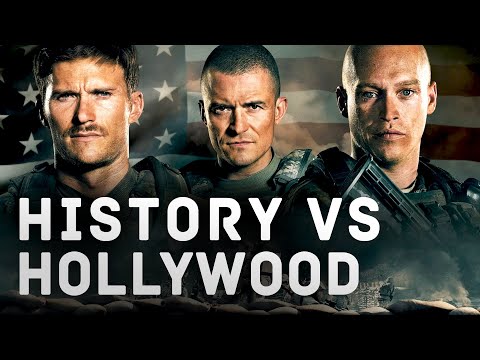
October 3, 2009. A remote outpost in northeastern Afghanistan, just 14 miles from the Pakistan border. Three hundred Taliban fighters swarming down the mountainsides. Fifty-four U.S. soldiers trapped in the valley below. This is the Battle of Kamdesh—a fight for survival that would become one of the deadliest and most heroic engagements of the Afghan war. Hollywood brought it to the screen in The Outpost, but how much of what you saw actually happened? The answer might surprise you.
From the moment the film begins, you’re dropped into the suffocating tension of Combat Outpost Keating. And that tension? It’s real. The men stationed there were attacked three to four times a week—sniper fire, small arms, mortars. They were sitting ducks, surrounded by three steep mountains, with the high ground firmly in enemy hands. As one soldier put it, “It doesn’t get any better.” The movie captures that dread perfectly, but the true story behind the outpost is even more harrowing.
The film opens with the death of First Lieutenant Benjamin Keating, whose armored vehicle rolls off a cliffside—a gut-wrenching moment that sets the tone for everything that follows. But here’s where Hollywood takes some liberties. In reality, Keating’s death occurred three years earlier, in 2006, not 2009. He wasn’t with the 61st Cavalry Regiment as depicted, but the 71st. And the soldiers portrayed by Scott Eastwood and Caleb Landry Jones? They weren’t even there. Yet the core of the tragedy remains: Keating was in the truck with Staff Sergeant Vernon Tiller when it went over the edge. Tiller survived; Keating didn’t. The camp was renamed in his honor that December.
Then there’s Captain Robert Yllescas—played by Milo Gibson, son of Mel Gibson—whose death is pushed up in the timeline for dramatic effect. In the film, he’s killed instantly by a radio-controlled IED on a footbridge. In truth, Yllescas died in 2008, not 2009, and he didn’t die on that bridge. He was blown off it, yes, but his body ended up on a helicopter landing area, clinging to life. He was evacuated to the States and survived for over a month before succumbing to his wounds on December 1, 2008. The film also introduces Private First Class Younger, a character who corresponds to a real marine lieutenant named Chris Briley—psychologically traumatized by witnessing the attack and extracted from the camp. That part? Accurate.
But the heart of the film—the Battle of Kamdesh itself—is where The Outpost truly shines. On that October morning, over 300 Taliban fighters attacked 54 U.S. soldiers. Rocket-propelled grenades and mortars set the camp ablaze. The enemy breached the wire. “We’re taking this [expletive] back,” Sergeant Clint Romesha rallied his men, just as he does on screen. The film’s depiction of the battle is almost painfully accurate, thanks in large part to the surviving veterans who served as technical advisors—including Medal of Honor recipient Ty Carter, portrayed by Caleb Landry Jones. Carter’s real-life dash from the cover of a Humvee to rescue a wounded soldier named Stephan Mace is shown almost exactly as it happened.
Of the 53 soldiers who fought that day, eight lost their lives and 27 were wounded. They prevented the base from being overrun. But why was an outpost built in such a vulnerable location in the first place? That’s a story in itself—one that involves strategic blunders, bureaucratic decisions, and a chain of events that led to an inevitable nightmare. The movie hints at it, but the full truth is even more damning.
As the credits roll and the dust settles, you’re left wondering: how much of what you just saw was real? The answer is more than you might think—and less than you’d hope. But the courage? That was never in question.
To understand why Keating was doomed from the start, you have to go back to the decisions that put it there. The outpost wasn’t built for defense—it was built for a different kind of war entirely. In the early years of the Afghan conflict, commanders wanted small bases scattered throughout the valleys to maintain a presence, to win hearts and minds, to show the local population that American forces weren’t going anywhere. But someone forgot to ask the mountains what they thought of that plan.
The location was chosen near the town of Kamdesh because it sat along a key supply route and a river valley. Strategically, it made sense on a map. On the ground? It was a death trap. Three steep mountains surrounded the outpost on nearly every side, giving Taliban fighters the perfect vantage point to rain down fire whenever they pleased. The soldiers knew it. Their commanders knew it. Even the Afghan locals knew it.
By the time the 3rd Squadron, 61st Cavalry Regiment arrived in 2009, the outpost had already been slated for closure. The military had finally recognized what the men on the ground had been saying for years: Keating was indefensible. They were going to shut it down. But before they could, the Taliban decided to shut it down for them.
The film doesn’t spend much time on the bureaucratic back-and-forth that kept Keating operational long past its expiration date. It doesn’t need to. The result speaks for itself—a remote camp, undermanned and surrounded, waiting for the inevitable. What the movie does capture brilliantly is the sense of fatalism that hung over the men. They weren’t naive. They knew what was coming.
And when it came, it came with terrifying speed. The assault began just before dawn on October 3rd, 2009. Mortars and rocket-propelled grenades hammered the camp from the surrounding ridges. Within minutes, buildings were on fire, ammunition storage was compromised, and Taliban fighters were pouring through the wire. The men of 3-61 Cavalry found themselves fighting for their lives in a battle that would last nearly twelve hours.
What makes The Outpost stand apart from so many war films is its refusal to sanitize the chaos. The confusion, the desperation, the split-second decisions that meant life or death—it’s all there. And much of that authenticity comes from the men who lived it. Ty Carter, Clint Romesha, and other survivors walked the actors through the battle step by step. They corrected details. They insisted on accuracy. They wanted the world to see what they saw.
One of the most striking moments in the film is Carter’s rescue of Specialist Stephan Mace. In real life, Carter ran through a hail of gunfire, exposed himself to enemy fire multiple times, and helped pull Mace to safety. Mace, badly wounded, would later die of his injuries. Carter received the Medal of Honor for his actions—the second soldier from the battle to do so, after Romesha. These weren’t Hollywood heroes. They were real men who did extraordinary things under impossible circumstances.
And yet, for all the film’s fidelity to the fight, there’s a quieter truth it can only gesture at—the human cost that lingered long after the cameras stopped rolling. The men who survived Kamdesh didn’t simply walk away when the last Taliban fighter retreated. Many carried invisible wounds: the nightmares, the hypervigilance, the guilt of the ones who didn’t make it. Chris Briley, the real-life counterpart to Private First Class Younger, was evacuated for psychological trauma—and his story was far from unique.
What the movie also compresses is the aftermath. In the days following the battle, the survivors faced the grim task of accounting for the dead and clearing the wreckage. The outpost, already slated for closure, was abandoned within days. Keating was gone—not with a ceremony, but with a convoy of battered vehicles rolling out of the valley. The Taliban claimed victory; the Americans claimed survival. In truth, it was both and neither.
The film ends on a note of hard-won triumph, and that’s fair enough. But the real story kept going. Clint Romesha and Ty Carter both received the Medal of Honor—Romesha in 2013, Carter in 2014. They accepted the accolades not for themselves, they insisted, but for the men who never came home. “I wear this for them,” Carter said at his ceremony, and he meant every word.
There’s another detail the movie doesn’t show: the investigation that followed. Military officials wanted to know how a base so vulnerable had been left so exposed. The answers were uncomfortable. Reports cited inadequate force protection, poor intelligence, and a chain of command that had ignored warnings for months. Keating hadn’t fallen because of bad luck. It had been a disaster waiting to happen, and everyone at the top knew it.
Yet the soldiers themselves never blamed the brass—at least not publicly. They blamed the terrain, the enemy, the fog of war. They did their jobs. They held the line. And when the dust settled, they went home to families who barely recognized them, to VA hospitals with waiting lists, to a country that had already moved on to the next headline.
That’s the part Hollywood can’t fully capture: the long, quiet aftermath. The way a firefight that lasts twelve hours can echo for a lifetime. The way a valley in Afghanistan can follow a man back to a suburb in Ohio or a ranch in California. The Battle of Kamdesh ended on October 3rd, 2009. For the men who fought it, it never really ended at all.
So when you watch The Outpost and see those soldiers scrambling through the smoke, remember this: the film is a tribute, not a documentary. It gets the broad strokes right—the courage, the chaos, the brotherhood. But the finer details, the ones that matter most, live in the memories of the men who were there. And those memories don’t fade when the credits roll.
What the movie leaves out, the survivors carry with them every single day. And that, more than any battle scene, is the truest story of Kamdesh.
Perhaps the most telling detail of all is what happened to the men after the cameras stopped rolling. Some went on to careers in the military. Others struggled. Some spoke openly about their experiences; others never did. Ty Carter became an advocate for mental health, speaking candidly about his own PTSD and the stigma that keeps so many veterans from seeking help. Clint Romesha wrote a memoir. Stephan Mace’s family received his posthumous Silver Star. Life went on—but Kamdesh never fully let go.
The outpost itself is gone now. The valley belongs to the Taliban again, as it has for most of its history. The mountains don’t care who fights over them. They just watch. But the men who fought there—and the eight who died there—left something behind that no enemy could ever take: the simple, stubborn fact that they held.
So the next time you watch The Outpost, remember that the film is a window, not a mirror. It shows you the courage, but it can’t show you the cost. That part is carried by the men themselves, and by the families of the fallen, in the quiet moments no movie can ever capture.
What do you think—does Hollywood have a responsibility to get every detail right, or is it enough to honor the spirit of the men who fought? Let us know in the comments below.
Report this article
Select a reason for reporting:






