At 24,000 meters above the New Mexico desert, the SR-71 Blackbird was more than a plane—it was a gamble, a titanium miracle, and a cold war secret. Test pilot Bill Weaver and reconnaissance expert Jim Zwayer were pushing the edge of the possible at Mach 3.2 when, without warning, one engine exploded. The aircraft disintegrated around them. Weaver was thrown into the void, free-falling from the edge of space. He didn’t know if his parachute would open. He didn’t know if he was alive or dead. And somewhere below, a nation held its breath.
But this is not just a story of survival. It’s the story of how the SR-71 Blackbird became the fastest, highest-flying manned aircraft ever built—a machine that could outrun missiles, map the world in minutes, and stare down the Soviet Union without ever firing a shot. It’s a story of engineering genius, political brinkmanship, and the men who risked everything to fly higher and faster than anyone before.
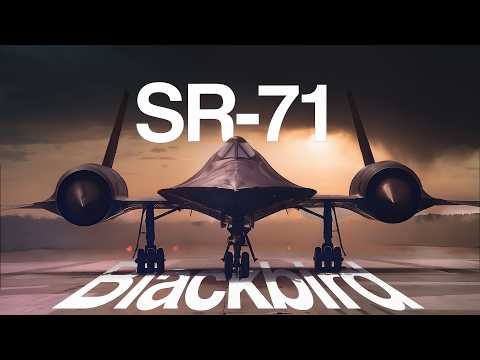
The Blackbird was born from fear. In the late 1950s, the Cold War was heating up, and the CIA needed a spy plane that could fly over the Soviet Union undetected. The U-2 was vulnerable, and the Soviets were developing missiles that could reach it. So Lockheed’s Skunk Works, led by the legendary Kelly Johnson, set out to build something radical: an aircraft that could fly at 25,000 meters and Mach 3.2, with a radar cross-section smaller than a bird’s. “We had to figure out what the Soviet Union was doing, especially with their missile program,” recalls one CIA official. “We had a vital need to understand the Soviet military machine.”
But building such a plane was a monumental challenge. Aluminum would melt at the temperatures generated by air friction at Mach 3. The only material that could withstand the heat was titanium—and the largest supplier was the Soviet Union itself. Through a network of shell companies, Skunk Works secretly bought Soviet titanium to build the plane that would spy on them. “The trick was to get the titanium without revealing that you were building something like the Blackbird,” says a former engineer. “It was a security challenge.”
Working with titanium was unknown territory. It was so hard that it damaged standard machining equipment, forcing Skunk Works to develop new production processes. The plane’s panels had to fit loosely on the ground because they would expand and lock tight at high temperatures. The fuel tanks were the skin of the aircraft itself, and they leaked on the ground. “You see this plane sitting on the ground with a puddle of fuel under it,” laughs a crew chief. “But it’s not a problem, because once it’s airborne, the heat seals everything.”
By 1962, strange craft were seen streaking across the sky near Area 51, fueling UFO rumors. Two years later, President Johnson revealed the SR-71—though he accidentally called it the SR-71 instead of RS-71, and the name stuck. “No one wanted to contradict the president,” shrugs a historian. “So it became the SR-71.”
The first official test flight took place on December 22, 1964, with test pilot Bob Gilliland at the controls. “One look and you could see it was tall and fast and big and long,” Gilliland recalls. “There were a lot of guys around the world who would have loved to be in my position.” The flight was a success, but tragedy struck in January 1966 when Bill Weaver’s plane broke apart at Mach 3. Weaver survived, but Jim Zwayer was killed. The investigation revealed that optimizing the plane’s performance had made it less stable.
Despite the setbacks, the Blackbird became operational in 1967, and its performance was staggering: three times the speed of sound, 25,000 meters altitude, and engines producing 160,000 horsepower. “It’s a good feeling to know that when you fly, you’re going higher and faster than anyone else in the world,” says a pilot. The SR-71 could survey 100,000 square miles in an hour, and its cameras could photograph a golf ball from 25,000 meters.
But the Blackbird was not invincible. In 1968, it was tracked by enemy radar for the first time, and ground-to-air missiles became more effective. On August 26, 1981, a North Korean missile was fired at an SR-71. Pilot Maury Rosenberg watched the missile pass by. “At Mach 3, the time from launch to impact is less than 50 seconds,” he explains. “We started a left turn, and I saw the missile explode about a mile away.” The Blackbird’s speed saved it—just as Kelly Johnson had predicted.
No SR-71 was ever lost to enemy fire, an unparalleled record. But by 1990, satellites were taking over the reconnaissance role, and the Blackbird program was canceled. On its final flight, it set a speed record from Los Angeles to Washington, D.C., in just over an hour. “Many of us thought the retirement was premature,” says a former pilot. “Just months later, Saddam Hussein invaded Kuwait, and the system we needed was the Blackbird.”
Today, the SR-71’s legacy lives on in stealth technology and in the hearts of aviation enthusiasts. It remains the fastest and highest-flying manned air-breathing aircraft ever built. “It’s the embodiment of the perseverance, ingenuity, and patriotism of the men and women who built it,” says a historian. “And of those who flew it in service of six presidents.”
But the story of the Blackbird is not just about records and technology. It’s about the men who flew it, the risks they took, and the peace they helped preserve. As the world stood on the brink of nuclear war, the SR-71 was a silent sentinel, a reminder that knowledge is power—and that sometimes, the fastest way to peace is to fly higher and faster than anyone else.
Weaver’s survival was a miracle of engineering and luck, but the loss of Jim Zwayer weighed heavily on the program. The investigation that followed was brutal. Every design decision, every trade-off between speed and stability, was scrutinized. “We learned that at Mach 3, you don’t get second chances,” a Skunk Works engineer later admitted. “The aircraft had to be perfect—or as close to perfect as humanly possible.”
By 1967, the fixes were in place. The Blackbird was ready for operational duty, and the 9th Strategic Reconnaissance Wing at Beale Air Force Base began assembling its cadre of elite pilots. None of them had ever seen the plane up close. “You can’t imagine how it felt to watch that thing come in,” one pilot recalled. “It was breathtaking. We realized we were going to fly the most advanced machine ever built.”
The SR-71 didn’t just break records—it shattered them. It could cruise at 3,200 kilometers per hour, faster than a rifle bullet. Its engines swallowed 3,000 cubic meters of air per second—the equivalent of two million people breathing at once. “You have so much power,” a pilot said. “It’s smooth, it’s quiet, it’s just delicious.”
But the Blackbird was never meant to fly over the Soviet Union. The U-2 shootdown in 1960 had made sure of that. Instead, it was called to war in Vietnam. In March 1968, an SR-71 flew its first combat mission, locating a Viet Cong supply depot deep in the jungle that had been used to besiege American Marines at Khe Sanh. The ground-mapping radar revealed the secret location, and B-52 bombers finished the job.
From then on, the Blackbird became the eyes of the free world. It monitored the 1973 Arab-Israeli War, tracked Soviet fleet movements, and provided critical intelligence during crises from the Middle East to the Far East. “You come back, and the intelligence community is just buzzing,” a pilot said. “They’re like ants on sugar. What changed? Did they introduce a new defense system? What do we see that’s different?”
But the Blackbird was no longer invisible. In 1968, it was tracked by enemy radar for the first time. Ground-to-air missiles were becoming more effective. The crews knew that sooner or later, they would be attacked. That day came on August 26, 1981, over North Korea. Pilot Maury Rosenberg was flying a mission over the DMZ when a Soviet-made missile streaked toward him. “The time from launch to impact is less than 50 seconds,” he explained. “We started a left turn. I saw the missile pass on the right and explode.”
At Mach 3, the missile missed by just two seconds. The Blackbird’s speed had saved it again—just as Kelly Johnson had predicted. The Soviets even developed the MiG-25 Foxbat specifically to catch the SR-71, but no Blackbird was ever lost to enemy fire. It was an unparalleled record.
Yet the end was coming. By the late 1980s, satellites were taking over the reconnaissance role. In March 1990, the Blackbird program was canceled. On its final flight, an SR-71 flew from Los Angeles to Washington, D.C., in just one hour, four minutes, and twenty seconds—a record that still stands. “Many of us thought the retirement was premature,” a former pilot said. “Just months later, Saddam Hussein invaded Kuwait, and the system we really needed was the Blackbird.”
Today, the SR-71’s stealth technology lives on in the B-2 bomber and the F-117 Nighthawk. Its legacy is written in the records it set and the peace it helped preserve. “It’s the embodiment of the perseverance, ingenuity, and patriotism of the men and women who built it,” a historian said. “And of those who flew it in service of six presidents.”
The Blackbird proved what we can do when we face an impossible challenge. “Give men and women a task, give them the authority and the resources,” a program veteran reflected, “and it’s amazing what you can create.” But perhaps its greatest legacy is the plane that helped keep the peace when the world stood on the edge of nuclear war. This is the fastest plane ever built. It helped win the Cold War. And that should be a pretty good little achievement.
Decades later, the SR-71 Blackbird still captures the imagination. At the Smithsonian’s Steven F. Udvar-Hazy Center, visitors stand beneath its titanium skin, marveling at the sleek, sinister shape. “It looks like it’s going Mach 3 just sitting there,” a young engineer whispers to her father. He nods, remembering the Cold War headlines. “My dad worked on the fuel lines,” he says. “He never talked about it. Now I understand why.”
Veterans of the program gather annually at Beale Air Force Base. They share stories of midnight launches, of the stars wheeling overhead at 80,000 feet, of the quiet pride in knowing they were the eyes of the free world. “We weren’t just pilots,” one says, raising a glass. “We were sentinels.” The toast is to Kelly Johnson, to Bill Weaver, to Jim Zwayer, and to all who flew higher and faster than anyone before or since.
The Blackbird’s legacy endures in every stealth aircraft that followed, in every satellite that now watches from above, and in the hearts of those who still look up when they hear a sonic boom. It was a machine born of fear, but it became a symbol of what humanity can achieve when we dare to push the boundaries of the possible.
So the next time you see a shooting star, remember: it might just be the ghost of a Blackbird, still streaking across the sky, still watching over us. And ask yourself—what impossible challenge will we dare to conquer next?
Report this article
Select a reason for reporting:






