The North Atlantic, November 5, 1940. A convoy of thirty-eight merchant ships plows through freezing, black waves, carrying the lifeblood of a besieged nation. Suddenly, a shadow looms on the horizon—a warship, silent and deadly. Aboard the lone escort, HMS Jervis Bay, Captain Edward Fagan peers through the mist. His ship is a converted passenger liner, armed with obsolete guns. The enemy is the Admiral Scheer, a pocket battleship with eleven-inch cannons that can hurl destruction from miles away. Fagan has seconds to decide: flee, or fight a battle he cannot win.
He chooses to fight.
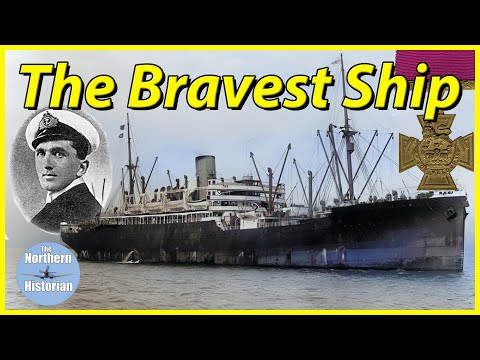
“Order the convoy to scatter,” Fagan commands, his voice steady. “We will engage the enemy.” The words hang in the icy air. Around him, young sailors—many barely out of their teens—stare at their captain, then at the monstrous silhouette growing larger by the minute. They know what this means. They know the odds. And yet, not a single man flinches.
Fagan was born for the sea. The son of a vice-admiral, he entered the Royal Navy at twelve, forged by tradition and duty. He had already proven his courage in the First World War, diving into burning oil to rescue survivors. Now, at forty-nine, he faces his final test. The convoy—thirty-eight ships carrying tanks, aircraft, and ammunition—is all that stands between Britain and starvation. If the Scheer reaches them, it will be a massacre.
The Admiral Scheer opens fire first. A shell screams across the water and slams into Jervis Bay’s forward deck, exploding in a shower of steel and fire. The front gun is obliterated, its crew killed instantly. “Steady!” Fagan shouts from the bridge, his knuckles white on the rail. “Keep her heading straight for them!” Another salvo hits the bridge, shredding the compass platform and killing the men beside him. Shrapnel tears into Fagan’s right arm, nearly severing it. He doesn’t stop. He doesn’t even look down.
With one arm, he continues to direct the ship, ordering the remaining guns to fire. The old six-inch cannons roar, but their shells fall short—the Scheer is too far away. The German battleship, unscathed, turns its full fury on the little escort. Explosion after explosion rocks Jervis Bay. Fires rage below deck. Water pours in through shattered hull plates. Yet the ship stays on course, a blazing shield between the convoy and destruction.
For twenty-two minutes, Fagan and his crew endure the unbearable. They buy time—precious, desperate minutes—as the merchant ships scatter into the darkness. Then, a final shell strikes the bridge. Captain Edward Fagan is killed instantly, his body never found. Moments later, Jervis Bay rolls over and sinks, taking 187 of her 254 crew with her. But the convoy—thirty-one ships—escapes. Their cargo reaches Britain. The war effort survives.
Fagan’s sacrifice earned him the Victoria Cross, but his story doesn’t end there. The Admiral Scheer, frustrated and empty-handed, will hunt the scattered convoy for hours. What happens next—the desperate cat-and-mouse game across the freezing Atlantic—will test the limits of human endurance and luck. But for now, one thing is certain: a captain who knew he could not win chose to fight anyway. And that choice changed everything.
The scattered convoy was not yet safe. As Jervis Bay slipped beneath the waves, the Admiral Scheer turned her guns toward the fleeing merchant ships, her captain, Theodor Krancke, determined to salvage the raid. Her spotter plane droned overhead, radioing positions through the gloom. One by one, the pocket battleship’s eleven-inch shells found their marks. She sank seven merchantmen that night, taking 253 lives into the cold deep. The sea, already merciless, offered no mercy still.
But the darkness and the delay had done their work. Thirty-one ships—the great majority of HX84—kept their engines at full ahead, their stokers shoveling coal until their hands bled, their helmsmen steering blind through black water. Behind them, the Scheer’s fuel gauges crept toward empty. Krancke knew he could not chase every ship to the horizon. He broke off the hunt and turned for home, his victory hollow, his quarry gone.
Word of the battle reached London within days. The Admiralty, accustomed to grim tidings, read the report in silence. A converted liner. Seven obsolete guns. Twenty-two minutes against a battleship. And a convoy saved. When the recommendation for the Victoria Cross crossed the desk of King George VI, it was approved without hesitation—one of the few awards of the war gazetted on the spot, so overwhelming was the evidence of valor.
Yet the story of Jervis Bay did not live only in medals and memorials. It lived in the letters the survivors wrote home—men who had floated for hours in oil and freezing spray, hauled aboard rescue ships with burns across their backs. They wrote of Fagan standing on the bridge with one arm, shouting orders through the smoke. “He never left,” one stoker recalled. “Not once. Not until the end.”
In Southsea, where Fagan had learned to sail as a boy, his name was carved into the stone of the war memorial overlooking the Solent. In London, at the Royal Naval College, cadets studied the action as a case in the doctrine of sacrifice—how a weaker force, by accepting annihilation, can purchase something more valuable than survival. And in the United States, still neutral that November, newspapers ran the story under headlines that asked a single question: what kind of man sails toward certain death so that others might live?
The answer, those who knew Edward Fagan said, was simple. A man who had been taught his whole life that the sea demands everything, and that duty is not a burden but a privilege. He had stood on that bridge not because he wished to die, but because the convoy behind him carried the hopes of a nation—and he would not let them down.
But the story of that November night had one more chapter to write—one that unfolded far from the medals and the memorials, in the cold waters where the survivors still drifted. As Jervis Bay sank, the men who had escaped her decks clung to rafts and overturned boats, their bodies numb, their voices hoarse from shouting into the wind. They had watched their captain die. They had watched their ship disappear. Now they faced the ocean alone.
Among them was a young signalman named Thomas Yates, barely nineteen, who had been blown clear of the bridge when the final shell struck. He floated for hours, lashed to a piece of wreckage, reciting the names of his shipmates to stay awake. “Fagan,” he whispered into the dark. “Fagan. Fagan.” The name became a prayer, a rhythm, a reason not to let go.
Dawn came gray and pitiless. The sea was empty. No ships, no smoke, no sign that anything had ever happened there. Yates later said he heard nothing but the slap of waves against his raft—and then, faintly, the drone of an engine.
It was a British Sunderland flying boat, dispatched from Northern Ireland after the Admiralty received the first distress signals. The crew spotted the oil slick first—a black stain spreading across the water like a wound—then the tiny specks of men waving from the swells. They dropped life rafts and circled low, marking the position for rescue ships. By nightfall, the Swedish tanker Stureholm had changed course and was steaming hard toward the coordinates, her captain volunteering without hesitation.
The Stureholm arrived the next morning. Her crew pulled sixty-five men from the water—burned, blinded, half-frozen, but alive. Yates was among them. He would later testify at the inquiry, his voice breaking as he described the captain’s final moments. “He gave us twenty-two minutes,” he said. “Twenty-two minutes to get away. He knew what it would cost him. He paid it.”
Not all the survivors were found. Some drifted for days, their rafts carried by currents into the vast emptiness of the Atlantic. One group of nine men was never located. Their names were added to the long list of the missing, men whose graves are the sea itself.
Back in Germany, Captain Theodor Krancke filed his report with a note of grudging admiration. He had sunk a converted liner and seven merchant ships. He had not stopped the convoy. “The escort’s resistance,” he wrote, “was beyond anything we expected from such a vessel.” It was as close to a tribute as an enemy could offer.
And in Britain, the story of Jervis Bay began to spread—through pubs and parlors, through newspapers and radio broadcasts, through the quiet conversations of families who had lost sons and husbands and fathers. It became a story people told their children when the bombs fell and the nights seemed endless. It became a story about what one man could do when everything was lost.
Yet even as the legend grew, the war moved on. New convoys formed. New battles loomed. The Atlantic remained a killing ground, and the men who sailed it knew that Fagan’s sacrifice was not the last such act of courage the sea would demand.
Years later, when the survivors gathered for the first reunion of HX84, Thomas Yates stood before them with a single photograph—Fagan on the bridge, one arm already gone, his face calm. “He never saw the end,” Yates said. “But he saw what mattered. He saw us getting away.” The room fell silent, and then a veteran in the back rose to his feet, and then another, and another, until every man stood for a captain who had given them the only thing he had left.
The Victoria Cross, presented to Fagan’s widow, is now displayed in the chapel at Dartmouth, where he once trained. Cadets still pause before it, reading the citation that speaks of “valour in the face of overwhelming odds.” They do not know the cold of that night, the taste of oil and salt, the sound of a ship dying beneath their feet. But they know the name. And they know what it means.
For in the end, the story of Edward Fagan and HMS Jervis Bay is not about a ship—it is about a choice. A choice made in twenty-two minutes of fire and iron, when one man decided that duty was worth more than survival. The convoy reached Britain. The war continued. And somewhere in the deep, the sea still holds the men who paid for it.
What would you have done, standing on that bridge, knowing you could not win?
Report this article
Select a reason for reporting:






